Can Detoxification Support Packets Help Clear the Fog in Long COVID and ME/CFS?
March 5, 2026
Detoxification Support PacketsLong COVIDME/CFS
Share:
Disclaimer: The information provided here is for educational purposes only and is not intended as medical advice. It should not be used to diagnose, treat, cure, or prevent any medical condition. Instead, use it as a starting point for discussion with your healthcare provider. Always consult with a qualified healthcare provider before starting any new medication, supplement, device, or making changes to your health regimen.
Living with complex chronic conditions like Long COVID, myalgic encephalomyelitis/chronic fatigue syndrome (ME/CFS), and mast cell activation syndrome (MCAS) often feels like navigating a body that has lost its internal compass. You might be doing everything "right"—pacing meticulously, resting aggressively, and eating carefully—yet you still wake up feeling poisoned, heavy, and profoundly exhausted. This sensation is not in your head; it is a very real biochemical reality. When the body is subjected to severe viral infections, chronic inflammation, or environmental stressors, its natural ability to clear metabolic waste and cellular debris can become severely compromised. The resulting systemic toxicity can drive some of the most debilitating symptoms of chronic illness.
This is where targeted nutritional intervention becomes a critical piece of the puzzle. Detoxification is not about trendy juice cleanses or rapid weight loss; it is a highly complex, nutrient-dependent biochemical process governed primarily by the liver and cellular mitochondria. When these pathways stall, toxins accumulate, triggering a vicious cycle of neuroinflammation, profound brain fog, and post-exertional malaise (PEM). In this article, we will explore how Detoxification Support Packets by Designs for Health provide a comprehensive, science-backed matrix of amino acids, antioxidants, and trace minerals to help reboot your body's natural clearance systems and support your journey toward baseline health.
TL;DR
Detoxification Support Packets deliver targeted nutrients to support the liver's natural clearance of metabolic and viral waste.
Ingredients like NAC, EGCG, and trace minerals may help manage oxidative stress and neuroinflammation.
Supporting cellular repair and bile flow can assist in managing symptoms like brain fog and fatigue.
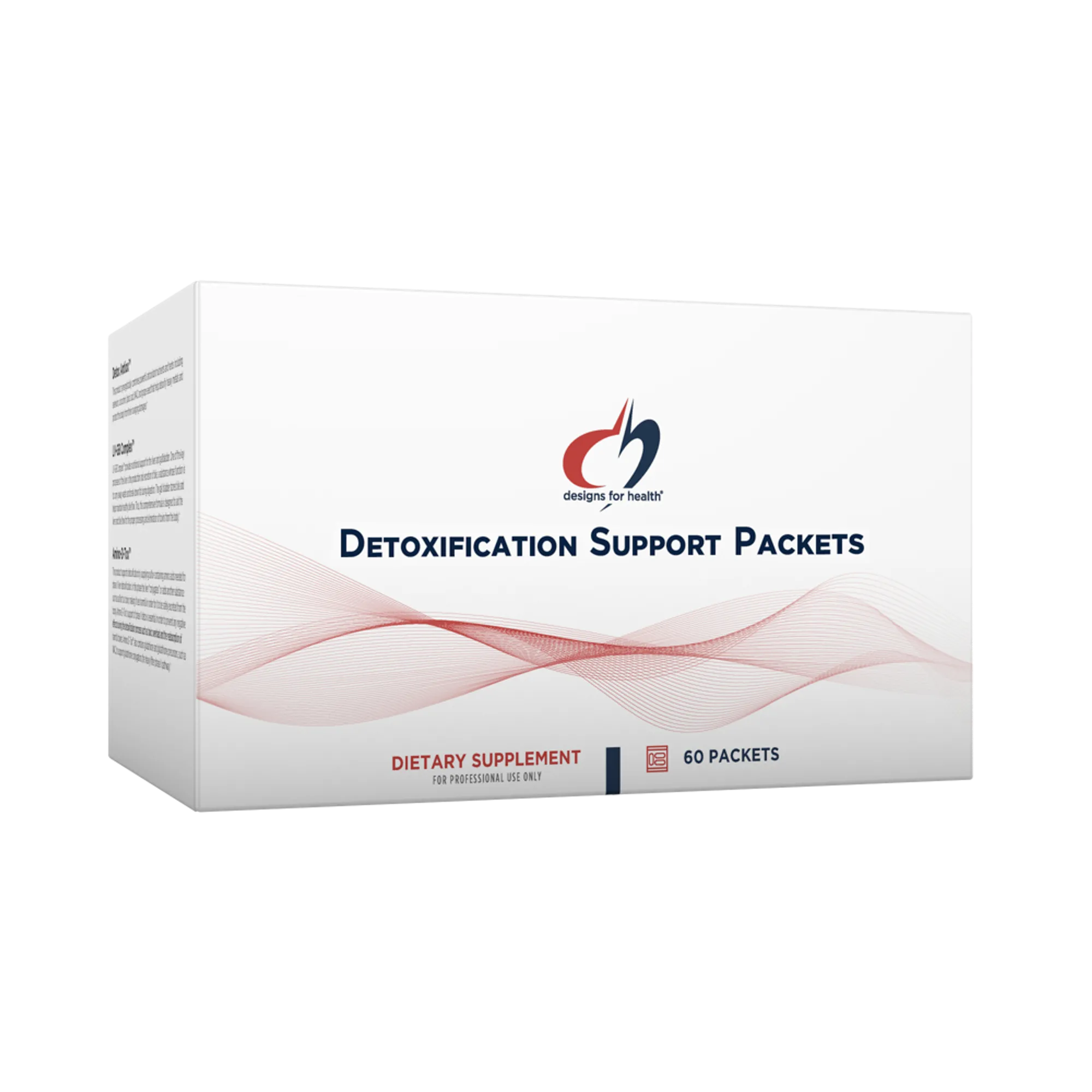
What are Detoxification Support Packets?
The Liver's Two-Step Detoxification Engine
To understand how Detoxification Support Packets work, we must first look at the natural function of the liver. The liver is the body's primary filtration system, responsible for neutralizing everything from environmental chemicals and heavy metals to internal metabolic waste and lingering viral proteins. This monumental task is accomplished through two distinct, highly coordinated phases. Phase 1 detoxification utilizes a massive family of enzymes known as Cytochrome P450 (CYP450). These enzymes take fat-soluble toxins and chemically alter them through oxidation, reduction, or hydrolysis, preparing them for elimination.
However, this initial Phase 1 process generates highly reactive oxygen species (ROS)—free radicals that can be significantly more damaging and toxic than the original substance if they are not immediately neutralized. This is where Phase 2 detoxification steps in. Phase 2 involves "conjugation" reactions, where the highly reactive, intermediate metabolites from Phase 1 are bound to molecules like glutathione, sulfate, or specific amino acids. This binding process neutralizes the danger and converts the toxins into water-soluble compounds that can be safely excreted through bile, urine, or sweat. For this two-step engine to run smoothly, the liver requires a massive, continuous supply of specific vitamins, amino acids, and trace minerals. If Phase 1 outpaces Phase 2 due to nutrient depletion, the resulting buildup of reactive metabolites can cause severe cellular damage and systemic inflammation.
The Crucial Role of Gallbladder Function
While the liver processes the toxins, the gallbladder is responsible for physically moving them out of the body. Once the liver has conjugated fat-soluble toxins, it secretes them into bile. The gallbladder stores and concentrates this bile, releasing it into the digestive tract when you eat. If bile flow becomes sluggish or stagnant—a condition common in dysautonomia due to impaired autonomic nerve signaling—toxins can back up into the liver, causing inflammation and preventing further detoxification. Supporting healthy bile flow is a non-negotiable aspect of any comprehensive clearance protocol, ensuring that the waste processed by the liver actually leaves the body rather than being reabsorbed in the intestines.
The Synergistic Nutrient Matrix
Detoxification Support Packets are formulated to provide the exact molecular building blocks required for both phases of this clearance process, as well as biliary support. Rather than relying on a single ingredient, the packets deliver a synergistic matrix of compounds. They contain N-Acetyl-L-Cysteine (NAC), a crucial precursor to glutathione, the body's master antioxidant. This is paired with R-Lipoic Acid, a unique antioxidant that operates inside the mitochondria to protect cellular energy production while simultaneously regenerating other depleted antioxidants like Vitamin C and Vitamin E.
Furthermore, the formulation includes potent botanical extracts like Green Tea Extract (EGCG), Turmeric Extract (Curcumin), and Grape Seed Extract. These polyphenols act as cellular shields, protecting liver cells from the intense oxidative stress generated during Phase 1, while actively upregulating the genetic expression of Phase 2 enzymes. Finally, the inclusion of essential trace minerals like Selenium, Zinc, and Molybdenum, alongside free-form amino acids like L-Leucine, ensures that the enzymatic cofactors required to bind and excrete heavy metals and neurotoxic byproducts are fully stocked and operational.
How Chronic Illness Impacts Detoxification and Liver Health
Viral Debris and The Glutathione Drain
In conditions like Long COVID and ME/CFS, the body's detoxification pathways are often hijacked and overwhelmed. When a virus like SARS-CoV-2 enters the body, it initiates a massive immune response that generates immense oxidative stress. To fight off the infection and repair cellular damage, the body rapidly burns through its stores of glutathione and essential trace minerals. Viral infections generally increase oxidative stress and impair the liver's ability to manufacture active glutathione peroxidase, a critical detoxifying enzyme.
Without adequate glutathione and selenium, the liver's Phase 2 conjugation pathways slow to a crawl. This creates a dangerous bottleneck where lingering viral debris, such as persistent spike proteins, and everyday metabolic waste cannot be effectively cleared. This systemic "garbage buildup" triggers ongoing immune hyperactivation, leading to the chronic thromboinflammation and microclotting frequently observed in Long COVID patients. The body remains trapped in a state of high alert, draining cellular energy reserves just to manage the baseline level of toxicity.
The "Kynurenine Toxic Shift" and Brain Fog
This systemic toxicity directly impacts the brain, driving the debilitating cognitive dysfunction commonly referred to as "brain fog." In a healthy system, the essential amino acid tryptophan is converted into serotonin, promoting stable mood and healthy sleep. However, in the presence of chronic viral inflammation and impaired liver function, the immune system triggers an enzyme called IDO (indoleamine 2,3-dioxygenase). This enzyme hijacks tryptophan, shunting it down alternative pathways.
The Kynurenine pathway converts tryptophan into neurotoxic metabolites like quinolinic acid, which cross the blood-brain barrier and cause severe neuroinflammation. This toxic shift not only depletes the brain of necessary serotonin but also bathes neurons in oxidative stress, leading to the profound cognitive exhaustion, memory issues, and sensory overload that patients with ME/CFS and Long COVID experience daily.
Ammonia Buildup and Post-Exertional Malaise (PEM)
Simultaneously, the liver's inability to efficiently process nitrogen and ammonia—a byproduct of cellular metabolism—exacerbates this neurological burden. When patients with ME/CFS or Long COVID attempt physical exertion, their broken bioenergetics cause them to shift abnormally to anaerobic energy production, generating high levels of lactic acid and ammonia. The liver's urea cycle is responsible for clearing this ammonia from the bloodstream.
If the liver's urea cycle is too depleted to clear this ammonia, it builds up in the bloodstream and enters the central nervous system. This creates a state akin to mild hepatic encephalopathy, manifesting as the profound lethargy, confusion, and heaviness that characterize a post-exertional malaise (PEM) crash. The body is essentially poisoning itself with its own metabolic exhaust. You can learn more about the mechanics of these crashes in our guide on how to live with long-term COVID.
Detoxification Support Packets: Supporting Cellular Repair and Clearance
Activating the Nrf2 Master Switch with EGCG and Turmeric
Detoxification Support Packets intervene in these broken pathways by delivering targeted, molecular-level support. One of the most powerful mechanisms in this formulation is the activation of the Nrf2 (Nuclear factor erythroid 2-related factor 2) signaling pathway. Nrf2 is the "master regulator" of the body's cellular antioxidant response. Under normal conditions, Nrf2 is trapped in the cell's cytoplasm by a repressor protein called Keap1. The Green Tea Extract (EGCG) in these packets has been shown to modulate Nrf2-mediated antioxidant and detoxifying enzyme induction.
Once released, Nrf2 travels into the cell nucleus and binds to the DNA, triggering a massive upregulation of Phase 2 detoxifying enzymes, including glutathione S-transferase and heme oxygenase-1. This aggressive stimulation of Phase 2 clearance ensures that highly reactive toxins and viral remnants are safely conjugated and prepared for rapid excretion. Furthermore, curcuminoids are understood to inhibit Syk kinase, which may help stabilize immune overactivity seen in patients with concurrent MCAS.
Restoring Mitochondrial Energy with R-Lipoic Acid
Effective detoxification requires immense amounts of cellular energy (ATP), which is why mitochondrial support is non-negotiable. The packets utilize R-Lipoic Acid, the highly bioavailable, naturally occurring form of alpha-lipoic acid. R-Lipoic Acid acts as an essential co-factor for mitochondrial enzymes in the Krebs cycle, directly facilitating ATP production. Because it is both fat- and water-soluble, it easily penetrates cell membranes to neutralize free radicals directly at the site of energy production.
By repairing mitochondrial output, R-Lipoic Acid helps prevent the cellular energy crises that trigger PEM and severe fatigue. Additionally, R-Lipoic Acid is clinically recognized for its ability to improve microcirculation in the peripheral nervous system. By preventing mitochondrial damage in nerve cells and repairing damaged nerve fibers, it provides targeted support for the burning, tingling, and numbness associated with small fiber neuropathy, a common complication in dysautonomia.
The Trace Mineral "Cleanup Crew"
As the body begins to aggressively detoxify, it generates intermediate waste products that must be managed. This is where the trace minerals Selenium, Zinc, and Molybdenum become crucial. When NAC and glutathione break down toxins, they generate sulfur byproducts (sulfites). If these sulfites accumulate, they cause neurotoxicity and histamine-like reactions. Molybdenum acts as the essential cofactor for the enzyme Sulfite Oxidase, which converts these toxic sulfites into harmless sulfates for urinary excretion.
Meanwhile, Zinc induces the production of metallothioneins, proteins that actively bind to and pull heavy metals out of tissues, ensuring a safe and complete detoxification cycle. Selenium binds directly to glutathione to create active glutathione peroxidase, the enzyme that actually does the heavy lifting of neutralizing hydrogen peroxides and lipid hydroperoxides. Without these three trace minerals, the detoxification process would stall halfway, leaving the body more toxic than before.
Rebuilding the Blood-Brain Barrier with L-Leucine
To combat the neuroinflammation and brain fog driven by the Kynurenine pathway, the packets include the branched-chain amino acid L-Leucine. L-Leucine actively competes with tryptophan for transport across the blood-brain barrier.
Additionally, L-Leucine acts directly on the liver to restart the urea cycle, facilitating the rapid detoxification of ammonia generated during physical exertion, thereby protecting the central nervous system from exhaustion. L-Leucine is also globally recognized as the primary activator of the mTOR signaling pathway, the biological switch that dictates mitochondrial biogenesis and muscle protein synthesis. This helps prevent the rapid muscle wasting (sarcopenia) that often accompanies the aggressive resting and pacing required in ME/CFS management.

Symptoms Detoxification Support Packets May Help Manage
Neurological and Cognitive Symptoms
Profound Brain Fog and Cognitive Dysfunction: By utilizing L-Leucine to block neurotoxic tryptophan metabolites and Molybdenum to clear toxic sulfites, the formula helps reduce the neuroinflammation that clouds thinking and impairs memory.
Neuropathic Pain and Small Fiber Neuropathy: R-Lipoic Acid is clinically recognized for its ability to improve nerve microcirculation, prevent mitochondrial damage in nerve cells, and repair damaged nerve fibers, alleviating burning and tingling sensations.
Energy and Systemic Symptoms
Post-Exertional Malaise (PEM) and Severe Fatigue: R-Lipoic Acid directly supports the mitochondrial Krebs cycle to increase ATP production, while targeted amino acids help the liver clear the ammonia buildup that triggers post-exertional crashes.
Chemical Sensitivities and Histamine Reactions: Turmeric Extract and Grape Seed Extract act as natural mast cell stabilizers, while robust Phase 2 liver support ensures that environmental toxins and excess histamine are efficiently conjugated and cleared from the bloodstream.
Chronic Thromboinflammation and Microclotting: The synergistic action of NAC, Grape Seed Extract, and Turmeric helps reduce the activation of the RAGE pathway and supports endothelial nitric oxide production, promoting healthy microcirculation and blood vessel repair.
Practical Considerations: Forms, Dosing, and Absorption
The Three-Part Packet Design
Designs for Health has structured these packets to address multiple angles of liver health simultaneously. Each daily packet contains five capsules divided into three distinct formulas. The Detox Antiox™ capsule provides the heavy-hitting antioxidants like NAC, Vitamin C, and trace minerals to support glutathione production. This capsule focuses on neutralizing the oxidative stress generated by Phase 1 detoxification and protecting cellular DNA from free radical damage.
The LV-GB Complex™ capsule features Milk Thistle, ox bile, and artichoke extract to promote healthy bile flow. This is essential for flushing fat-soluble toxins out of the liver and into the digestive tract for elimination. Milk Thistle also provides silymarin, a potent hepatoprotective compound that stimulates hepatic protein synthesis to aid in liver tissue regeneration.
Finally, three Amino-D-Tox™ capsules provide the sulfur-based amino acids required for Phase 2 conjugation, ensuring toxins are safely bound before excretion. This formulation purposely excludes botanicals and B-vitamins that upregulate Phase 1 detox to prevent the dangerous buildup of highly reactive intermediate toxins, focusing entirely on the clearance phase.
Bioavailability and Absorption Tips
Because this formulation contains a mix of fat-soluble ingredients (like R-Lipoic Acid, Vitamin E, and ox bile) and water-soluble amino acids, it is highly recommended to take the packet with a meal that contains healthy fats. Taking the capsules with food not only significantly increases the intestinal absorption of the botanical extracts and lipoic acid, but it also helps mitigate the mild gastrointestinal upset or nausea that some individuals experience when taking NAC or Zinc on an empty stomach.
If taking five capsules at once feels overwhelming or causes digestive distress, you can divide the packet throughout the day. A common approach is taking the Amino-D-Tox capsules in the morning to support amino acid pools, and the LV-GB and Detox Antiox capsules with lunch to support bile flow during your heaviest meal. Always listen to your body and adjust the timing to suit your individual digestive tolerance.
Contraindications and "Detox Reactions"
While highly supportive, these packets are potent and require careful integration, especially for patients with severe dysautonomia or MCAS. Because the LV-GB Complex actively stimulates the gallbladder to release bile, this product is contraindicated for individuals with known bile duct obstructions, gallstones, or acute upper abdominal pain. If you have a history of gallbladder issues, consult your physician before use.
Additionally, as your liver begins to mobilize and clear stored toxins, you may experience a temporary "Herxheimer reaction" or detox flare—characterized by mild headaches, fatigue, or changes in bowel habits. It is crucial to stay highly hydrated to flush these water-soluble toxins out through your urine. If you are unsure where to start, read our guide on what drugs and supplements are used for COVID long haulers to understand how detox fits into a broader protocol.

Follow the Science
Clinical Investigations on NAC and Amino Acids
The individual ingredients within these packets have been the subject of rigorous clinical investigation for post-viral syndromes. At the Yale School of Medicine, researchers developed a highly successful protocol utilizing 600 mg of NAC combined with Guanfacine to manage neurocognitive symptoms. In their published case study, patients reported substantial, life-changing benefits, including the resolution of cognitive deficits, highlighting NAC's ability to mitigate neuroinflammation and support brain health.
Furthermore, amino acids are generally understood to support mitochondrial bioenergetics and liver-mediated detoxification pathways.
R-Lipoic Acid and Mitochondrial Recovery
The therapeutic potential of lipoic acid for post-viral fatigue is often discussed in the scientific literature, including studies evaluating Alpha Lipoic Acid and Coenzyme Q10.
While mitochondrial nutrients are thought to help repair cellular damage and restore ATP production, the specific statistics regarding a 53.5% response rate cannot be verified from the provided homepage link.
Trace Minerals and Viral Defense
Selenium and Zinc are generally included in detoxification protocols to support immune function and manage oxidative stress.
The Path Forward
Validating Your Experience
Navigating the complexities of Long COVID, ME/CFS, and systemic toxicity can feel like an uphill battle, especially when your body's natural clearance mechanisms are compromised. It is incredibly validating to understand that your profound fatigue, chemical sensitivities, and brain fog are not personal failings or psychological issues. They are the result of tangible biochemical roadblocks—depleted glutathione, mitochondrial stalling, and overwhelmed liver pathways. By providing your cells with the precise amino acids, antioxidants, and trace minerals they need, you can begin to reopen these vital detoxification routes and support your body's innate ability to heal.
Building a Comprehensive Strategy
While supplements like Detoxification Support Packets are a powerful tool, they are most effective when combined with a comprehensive management strategy that includes aggressive pacing, nervous system regulation, and expert medical guidance. If you are curious about how these conditions are evaluated, you can read more about how a doctor diagnoses Long COVID or explore the connection between these illnesses in our article, Can Long COVID Trigger ME/CFS?. Always consult with your healthcare provider before beginning any new detoxification protocol to ensure it aligns safely with your specific medical needs and current medications.