Can D-Mannose Support Bladder Health in Long COVID and MCAS?
March 5, 2026
D-MannoseLong COVIDMCAS
Share:
Disclaimer: The information provided here is for educational purposes only and is not intended as medical advice. It should not be used to diagnose, treat, cure, or prevent any medical condition. Instead, use it as a starting point for discussion with your healthcare provider. Always consult with a qualified healthcare provider before starting any new medication, supplement, device, or making changes to your health regimen.
For many individuals navigating the complex landscape of chronic illness, the daily struggle extends far beyond the most visible symptoms of fatigue or brain fog. Imagine waking up with severe pelvic pressure, a burning urgency to use the restroom, and a heart rate that inexplicably spikes the moment you stand up. You visit an urgent care clinic, convinced you have a severe urinary tract infection (UTI), only to be told a few days later that your urine culture is completely negative for bacteria. This frustrating, painful, and deeply invalidating experience is incredibly common among patients living with Long COVID, mast cell activation syndrome (MCAS), and dysautonomia. When the autonomic nervous system and immune system are severely dysregulated, the bladder often becomes a hidden battleground, leading to a vicious cycle of inflammation, urinary retention, and recurrent pain.
In the search for relief, many patients are repeatedly prescribed broad-spectrum antibiotics, which can further devastate an already fragile gut microbiome without addressing the root cause of their bladder dysfunction. This is where targeted nutritional support becomes a vital piece of the puzzle. D-Mannose, a simple, naturally occurring sugar, has emerged as a powerful tool for supporting a healthy urinary tract environment. Unlike traditional treatments that indiscriminately eradicate bacteria, D-mannose works through a fascinating biomechanical process, acting as a molecular decoy to gently flush irritants from the mucosal surface of the bladder. In this comprehensive guide, we will explore the intricate biochemistry of D-mannose, examine how conditions like POTS and MCAS impact urinary function, and discuss how this unique compound can help you reclaim control over your bladder health and overall quality of life.
TL;DR
D-mannose is a simple sugar that may help support urinary tract health by flushing out irritants.
It acts as a molecular decoy, binding to bacteria so they can be naturally eliminated.
For those with Long COVID, POTS, or MCAS, it supports bladder health without disrupting the microbiome.
Pure D-mannose powder is recommended to avoid triggers found in fillers or acidic cranberry products.
What is D-Mannose?
A Unique Simple Sugar with a Specific Destination
To truly appreciate how D-mannose supports the urinary system, we must first understand its unique biochemical structure and how the human body processes it. D-mannose is a naturally occurring monosaccharide, specifically a C-2 epimer of glucose. This means that while it shares the same chemical formula as glucose, the spatial arrangement of its atoms differs slightly at a single carbon position. This seemingly minor structural difference profoundly alters how the body interacts with the molecule. D-mannose is found naturally in small quantities in various fruits, most notably cranberries, apples, and pineapples, as well as in certain glycoproteins within the human body. However, the amounts obtained through a standard diet are typically insufficient to exert a therapeutic effect on the urinary tract, which is why concentrated supplementation is often utilized.
When you ingest a D-mannose supplement, the journey it takes through your body is remarkably different from that of standard dietary sugars. Unlike glucose, which is rapidly absorbed into the bloodstream and aggressively shuttled into cells by insulin to be burned for cellular energy, D-mannose is absorbed in the upper gastrointestinal tract but is only minimally metabolized by human tissues. The body does not readily convert it into glycogen or use it for ATP production. Instead, the vast majority of ingested D-mannose remains intact as it circulates through the bloodstream. Within a matter of hours, it is filtered out of the blood by the kidneys and excreted directly into the urine. This unique pharmacokinetic profile is precisely what makes D-mannose so effective; it allows the compound to reach highly concentrated, therapeutic levels exactly where it is needed—within the bladder and urinary tract.
The Molecular Decoy: The FimH Mechanism
The primary mechanism of action for D-mannose lies in its ability to act as a highly specific molecular decoy against uropathogenic bacteria. The vast majority of community-acquired urinary tract infections (approximately 80 to 90 percent) are caused by Uropathogenic Escherichia coli (UPEC). For these bacteria to cause an infection, they cannot simply float freely in the urine; they must physically anchor themselves to the mucosal surface of the bladder wall. If they fail to attach, the natural flow of urine will simply wash them out of the body. To achieve this crucial anchoring, UPEC bacteria are equipped with microscopic, hair-like surface appendages known as type 1 pili or fimbriae.
In a healthy human bladder, the uroepithelial cells that line the mucosal surface are coated with naturally occurring mannosylated glycoproteins, particularly a protein called uroplakin 1a. The bacterial FimH protein has evolved to have a remarkably high natural affinity for these specific mannose residues. When UPEC enters the bladder, the FimH adhesins bind tightly to the uroplakin 1a receptors, utilizing a sophisticated "catch-bond" mechanism that actually strengthens the grip when subjected to the sheer force of urine flow. This firm attachment allows the bacteria to colonize the tissue, form protective biofilms, and eventually invade the host cells, triggering a robust inflammatory response and the classic symptoms of a UTI.
This is where supplemental D-mannose intervenes. Because the concentrated D-mannose excreted into the urine is structurally identical to the mannose residues on the bladder wall, it floods the environment with alternative binding targets. The bacterial FimH adhesins cannot distinguish between the free-floating D-mannose in the urine and the uroplakin 1a on the bladder lining. Consequently, the FimH proteins bind to the supplemental D-mannose instead. At the molecular level, free D-mannose establishes up to 12 direct hydrogen bonds with specific amino acid residues in the FimH binding pocket, completely saturating the bacteria's grappling hooks. Once neutralized in this manner, the bacteria are rendered entirely incapable of attaching to the tissue and are harmlessly flushed out of the body during normal urination.
How Chronic Illness Impacts the Urinary System
Dysautonomia and the "POTS Bladder"
To understand why urinary issues are so prevalent in the chronic illness community, we must examine how conditions like Long COVID and dysautonomia directly compromise the neurological control of the bladder. The lower urinary tract is entirely governed by the autonomic nervous system (ANS), which coordinates the complex, involuntary dance between the detrusor muscle (the bladder wall) and the urethral sphincters. In patients with Postural Orthostatic Tachycardia Syndrome (POTS) and other forms of dysautonomia, this autonomic signaling is frequently disrupted. This disruption often manifests clinically as a neurogenic bladder, sometimes referred to specifically as the "POTS bladder." This condition is heavily driven by small fiber neuropathy, a common comorbidity where the tiny, unmyelinated nerve fibers that provide sensory and autonomic feedback to the organs become damaged or dysfunctional.
When small fiber neuropathy affects the bladder, patients often lose the normal sensation of bladder fullness and experience impaired detrusor contractility. As a result, the bladder fails to empty completely during urination, a condition known as urinary retention. Urodynamic studies of POTS patients frequently reveal significantly elevated post-void residual (PVR) urine volumes. This stagnant pool of retained urine acts as an ideal breeding ground for bacterial overgrowth, drastically increasing the patient's susceptibility to recurrent UTIs. Furthermore, the relationship between dysautonomia and infection is fiercely bidirectional. While POTS increases the risk of UTIs, the onset of an infection acts as a severe physiological stressor that dramatically exacerbates systemic POTS symptoms. A brewing bladder infection can cause a patient's baseline tachycardia, hypovolemia, and dizziness to spiral out of control, often before localized urinary symptoms even become apparent.
Mast Cell Activation Syndrome and Interstitial Cystitis
Beyond neurological dysfunction, immune dysregulation plays a massive role in chronic bladder pathology, particularly for those with mast cell activation syndrome (MCAS). Many patients diagnosed with recurrent UTIs or Interstitial Cystitis (IC)—also known as Bladder Pain Syndrome—are actually suffering from unrecognized mast cell activity within the bladder mucosa. Mast cells are key players in the immune system, responsible for releasing inflammatory mediators like histamine in response to threats. Research indicates that patients with IC have a significantly higher density of mast cells embedded in their bladder lining compared to healthy individuals. In MCAS, these mast cells become hyper-reactive, degranulating inappropriately in response to minor triggers such as stress, certain foods, or microscopic bacterial fragments.
When mast cells in the bladder degranulate, they release a flood of histamine and cytokines directly into the local tissue. This localized histamine storm causes severe inflammation and directly damages the bladder's protective glycosaminoglycan (GAG) layer. The GAG layer is a vital mucous coating that acts as a waterproof barrier, preventing the acidic and highly concentrated toxins in urine from seeping into the underlying bladder tissue. When this barrier is compromised by mast cell inflammation, normal urine irritates the exposed sub-mucosal nerves, triggering severe burning, pelvic pressure, and an agonizing urge to urinate. This exact mechanism perfectly mimics the symptoms of a bacterial UTI, which explains why so many MCAS and Long COVID patients experience agonizing bladder flares despite their urine cultures repeatedly testing negative for active bacterial growth.
D-Mannose: Supporting the Urinary Tract and Mucosal Surface
Neutralizing Bacterial Triggers and Supporting Flare Management
For patients navigating the complex web of Long COVID, POTS, and MCAS, D-mannose offers a highly targeted mechanism of action that addresses multiple facets of urinary dysfunction simultaneously. The most immediate benefit of D-mannose supplementation is its ability to neutralize uropathogenic E. coli before it can trigger a systemic immune cascade. As we established, bacterial infections are massive physiological stressors that can induce severe post-exertional malaise (PEM) and exacerbate autonomic instability. By acting as a molecular decoy, D-mannose safely binds to the FimH adhesins of these bacteria, ensuring they are flushed from the stagnant urine pools often found in patients with neurogenic bladder retention. This supportive clearing is essential for breaking the vicious cycle where a hidden bladder infection triggers a debilitating POTS or ME/CFS crash.
Crucially, this mechanism is highly beneficial even for patients whose primary issue is non-bacterial Interstitial Cystitis driven by MCAS. Mast cells are incredibly sensitive to bacterial endotoxins and fragments. Even if a full-blown bacterial infection is not present, dormant bacterial biofilms or dead bacterial fragments embedded in the bladder wall can continuously trigger localized mast cell degranulation. By consistently flushing these microscopic irritants from the mucosal surface, D-mannose removes a primary trigger for mast cell activation.
Protecting the GAG Layer and Preserving the Microbiome
Beyond its anti-adhesive properties, D-mannose plays a supportive role in promoting a healthy mucosal surface. When the bladder is free from the constant assault of adhering bacteria and the subsequent mast cell degranulation, the damaged glycosaminoglycan (GAG) layer is finally given the opportunity to heal. Some urological research suggests that D-mannose may help stimulate local fibroblasts to produce more collagen and proteoglycans, the building blocks of the GAG layer. As this protective mucous barrier is restored, the underlying nerves are shielded from the acidic urine, which dramatically reduces the sensations of burning and hypersensitivity that plague patients with chronic bladder pain syndromes.
Perhaps the most vital advantage of D-mannose for the chronic illness community is its ability to support urinary health without acting as an antibiotic. Patients with Long COVID and ME/CFS frequently suffer from severe gut dysbiosis, characterized by a loss of beneficial bacteria like Bifidobacterium and an overgrowth of opportunistic pathogens. Repeated courses of broad-spectrum antibiotics for recurrent UTIs further decimate this fragile microbiome, worsening systemic inflammation and immune dysregulation. D-mannose is a biomechanical anti-adhesive, not a bactericidal agent. It does not kill bacteria, nor does it inhibit their cellular growth. Because it exerts no selective evolutionary pressure, it does not contribute to antimicrobial resistance, and it leaves the delicate balance of the gut and vaginal microbiomes entirely undisturbed. This makes it an exceptionally safe, long-term strategy for living with long-term COVID and managing chronic susceptibility.
Symptoms D-Mannose May Help Manage
Targeted Relief for Complex Bladder Symptoms
When integrated into a comprehensive management plan, D-mannose can help alleviate several distressing symptoms associated with neurogenic bladder, interstitial cystitis, and chronic immune dysregulation. By addressing the root biomechanical and immunological triggers in the urinary tract, patients may experience relief from the following:
Frequent and Urgent Urination: By clearing bacterial irritants and allowing the inflamed mucosal lining to calm down, D-mannose helps reduce the hypersensitivity of the bladder nerves, decreasing the constant, agonizing signaling that the bladder needs to be emptied immediately.
Bladder Pain and Burning (Dysuria): As the protective GAG layer of the bladder is allowed to heal without the constant disruption of mast cell degranulation and bacterial adhesion, the underlying tissue is shielded from acidic urine, significantly reducing burning sensations during and after urination.
Recurrent UTI Susceptibility: For patients with POTS and neurogenic bladder who suffer from urinary retention, D-mannose acts as a daily flush, binding to bacteria in the post-void residual urine and helping to keep them from colonizing the stagnant fluid.
Systemic Dysautonomia Flares: By helping to keep localized bladder infections from taking hold, D-mannose helps eliminate a major physiological stressor, thereby reducing the frequency of infection-triggered tachycardia, dizziness, and hypovolemic flares.
Unexplained Pelvic Pressure: By reducing localized mast cell activation and the resulting histamine-driven inflammation in the bladder wall, patients often experience a reduction in the heavy, aching pelvic pressure characteristic of Interstitial Cystitis.
It is important to note that while D-mannose is highly effective at managing these specific symptoms, it is not a cure for the underlying autonomic neuropathy or mast cell disease. However, by removing the immense burden of chronic bladder inflammation, patients often find they have more systemic energy available to focus on broader recovery and rehabilitation efforts.
Practical Considerations: Forms, Dosing, and Absorption
Choosing the Right Form: Purity Matters
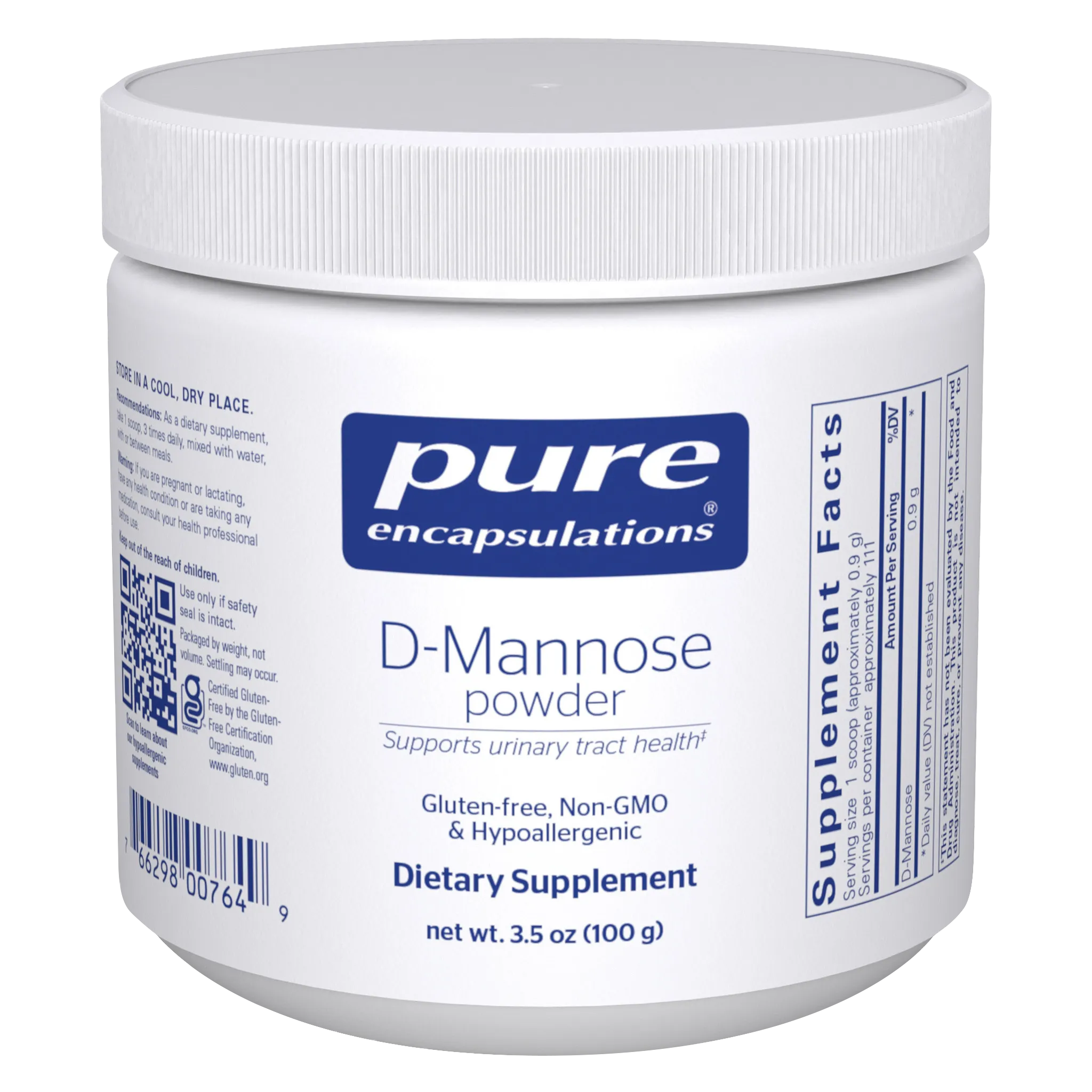
When selecting a D-mannose supplement, the specific form and formulation are of paramount importance, particularly for individuals with mast cell activation syndrome (MCAS) and severe chemical sensitivities. D-mannose is widely available in both capsule and powder forms. However, many commercial capsules contain various excipients, flow agents, and fillers—such as microcrystalline cellulose, magnesium stearate, or silicon dioxide—to expedite the manufacturing process. For a healthy individual, these additives are generally harmless. But for an MCAS patient whose immune system is already hyper-vigilant, these seemingly inert fillers can act as potent triggers, inducing systemic allergic reactions or localized bladder flares. This is why utilizing a 100% pure D-mannose powder, such as the formulation provided by Pure Encapsulations, is highly recommended. A pure powder ensures that you are delivering the active molecular decoy to your bladder without introducing unnecessary immunological variables.
Another critical consideration is the common misconception that cranberry juice or cranberry extract is an acceptable substitute or companion to D-mannose. While cranberries do naturally contain trace amounts of D-mannose, they are also highly acidic and rich in specific organic acids. For patients dealing with Interstitial Cystitis or mast cell-driven bladder pain, this high acidity acts as a severe chemical irritant. Ingesting concentrated cranberry products can directly trigger mast cell degranulation in the bladder lining, stripping away the fragile GAG layer and causing excruciating pain. Urological experts explicitly advise patients with IC and MCAS to avoid cranberry products entirely. Pure D-mannose powder isolates the beneficial anti-adhesive sugar without the damaging acidic profile of the whole fruit, making it the safest option for a compromised mucosal surface.
Dosing, Timing, and Metabolic Considerations
Optimal dosing and timing are essential for maximizing the FimH decoy mechanism. Because D-mannose is water-soluble and rapidly excreted by the kidneys, its concentration in the bladder peaks within a few hours of ingestion and then declines as you urinate. Therefore, to maintain a consistent saturation of the bladder environment, divided doses throughout the day are generally more effective than a single massive dose. The suggested use for concentrated powders is typically around 0.9 grams (one scoop) mixed with water, taken up to three times daily, either with or between meals. Adequate hydration is absolutely crucial when taking D-mannose; the mechanism relies entirely on the mechanical flushing action of urine to sweep the neutralized bacteria out of the body. If you are dehydrated, the bacteria, even if bound to D-mannose, will remain stagnant in the bladder.
Patients often express concern about taking a "sugar" supplement, particularly those monitoring their blood glucose levels or managing metabolic comorbidities alongside Long COVID. Fortunately, the unique pharmacokinetic profile of D-mannose makes it incredibly safe in this regard. Because the human body lacks the specific enzymes required to efficiently metabolize D-mannose into glycogen, it does not significantly interfere with blood sugar regulation or trigger massive insulin spikes. The vast majority of the compound passes through the bloodstream untouched before being filtered by the kidneys. Furthermore, D-mannose is generally very well tolerated, with no major known drug interactions. However, at very high doses, some individuals may experience mild gastrointestinal upset, such as bloating or loose stools, due to the unabsorbed sugar drawing water into the intestines. As always, it is important to start with the recommended dose and adjust based on your individual tolerance.
Follow the Science
The Evolution of Clinical Evidence
The scientific understanding of D-mannose has evolved significantly over the past decade, characterized by a fascinating journey of clinical discovery, mechanistic validation, and rigorous re-evaluation. Early clinical trials sought to translate in vitro success into real-world applications. A highly cited 2014 clinical trial by Kranjčec et al. followed 308 women with recurrent UTIs over six months. The study reported that daily D-mannose prophylaxis was incredibly effective, reducing recurrence rates to 14.6%, which was statistically comparable to the antibiotic nitrofurantoin (20.4%) and vastly superior to the no-treatment control group (60.8%). These early results positioned D-mannose as a revolutionary, non-antibiotic supportive measure.
However, as is common in medical research, larger and more rigorous trials have recently provided a more nuanced picture. In April 2024, the landmark MERIT trial (d-MannosE to prevent Recurrent urine InfecTions) was published in JAMA Internal Medicine. This phase IV, double-blind, placebo-controlled randomized clinical trial tracked 598 women across 99 primary care centers in the UK. Participants took 2 grams of D-mannose daily for six months. Surprisingly, the study found no statistically significant difference in the reduction of future UTIs between the D-mannose group (51.0% recurrence) and the placebo group (55.7%).
Relevance for Chronic Illness and Future Research
While the 2024 data on long-term prophylaxis for the general population is mixed, the clinical relevance of D-mannose for the chronic illness community remains highly significant. Studies evaluating D-mannose for the acute flushing of symptoms during active flare-ups continue to show promise.
Looking to the future, researchers are actively developing synthetic mannoside analogs designed to overcome the pharmacokinetic limitations of natural D-mannose. Because natural D-mannose is rapidly excreted, maintaining high enough concentrations in the bladder to saturate all FimH receptors 24/7 can be challenging.
The Path Forward
Reclaiming Your Quality of Life
Living with the unpredictable and often invisible symptoms of Long COVID, POTS, and MCAS is an exhausting journey. When debilitating bladder pain, urgency, and recurrent infections are added to the mix, it can feel entirely overwhelming. It is deeply validating to understand that your urinary symptoms are not in your head; they are the direct physiological result of autonomic neuropathy, impaired bladder emptying, and mast cell-driven inflammation destroying your mucosal lining. You are dealing with a highly complex, interconnected system that requires a nuanced, compassionate approach to healing. D-mannose offers a scientifically grounded, non-antibiotic strategy to help break the cycle of bacterial adhesion and immune hyper-reactivity in the urinary tract.
While D-mannose is a powerful tool, it is most effective when utilized as part of a comprehensive, multi-disciplinary management plan. Managing a neurogenic bladder and MCAS often requires a combination of targeted nutritional support, proper hydration, pelvic floor physical therapy, mast cell stabilizers, and careful pacing to avoid post-exertional malaise. By protecting your bladder's mucosal surface and helping to keep hidden infections from triggering systemic dysautonomia flares, you can create a more stable foundation for your overall recovery. Always consult with your healthcare provider or urologist before starting any new supplement, especially to ensure your post-void residual volumes and kidney function are being properly monitored.