Can Curcumin Phytosome Support Inflammation and Brain Fog in Long COVID and ME/CFS?
March 6, 2026
CurcuminLong COVIDME/CFS
Share:
Disclaimer: The information provided here is for educational purposes only and is not intended as medical advice. It should not be used to diagnose, treat, cure, or prevent any medical condition. Instead, use it as a starting point for discussion with your healthcare provider. Always consult with a qualified healthcare provider before starting any new medication, supplement, device, or making changes to your health regimen.
Months or even years after an initial viral infection, many individuals find themselves trapped in a relentless cycle of debilitating symptoms. Whether you are navigating the unpredictable waves of Long COVID, the profound energy depletion of myalgic encephalomyelitis/chronic fatigue syndrome (ME/CFS), the dizzying spells of dysautonomia, or the systemic hypersensitivity of mast cell activation syndrome (MCAS), the underlying thread often points back to one central issue: chronic, unresolved inflammation. When the immune system remains locked in a hyperactive state, it can wreak havoc on your joints, muscles, brain, and autonomic nervous system.
Finding targeted, science-backed ways to cool this inflammatory fire is a cornerstone of managing complex chronic illness. Enter curcumin, the potent bioactive compound found in turmeric. While turmeric has been utilized in traditional medicine for millennia, modern clinical research has uncovered exactly how curcumin operates at a molecular level to modulate inflammation. However, standard curcumin is notoriously difficult for the body to absorb. In this article, we will explore how advanced formulations like Thorne’s Curcumin Phytosome (featuring Meriva® technology) overcome these absorption barriers to deliver targeted support for neuroinflammation, joint discomfort, and mast cell stabilization.
What is Curcumin Phytosome?
The Golden Spice and Its Bioavailability Limitations
Turmeric (Curcuma longa) is a vibrant yellow spice that has been a staple in Ayurvedic and traditional Chinese medicine for over 2,000 years. The primary health-promoting properties of turmeric are attributed to a group of polyphenolic compounds known as curcuminoids, with curcumin being the most abundant and biologically active. At a cellular level, curcumin is a pleiotropic molecule, meaning it has the remarkable ability to interact with multiple molecular targets simultaneously. It is widely recognized in the scientific community for its potent antioxidant, anti-inflammatory, and immunomodulatory effects.
However, despite its profound potential in laboratory settings, standard unformulated curcumin has a major clinical flaw: exceptionally poor oral bioavailability. When you consume standard turmeric powder or basic curcumin extracts, the compound is rapidly metabolized by the liver and intestines, rendered water-soluble, and quickly excreted from the body. Very little of the active, free curcumin actually makes it into the bloodstream to reach the tissues, joints, and brain where it is needed most. This poor absorption has historically limited its effectiveness as a therapeutic intervention for systemic inflammatory conditions.
The Phytosome Solution: Meriva® Technology
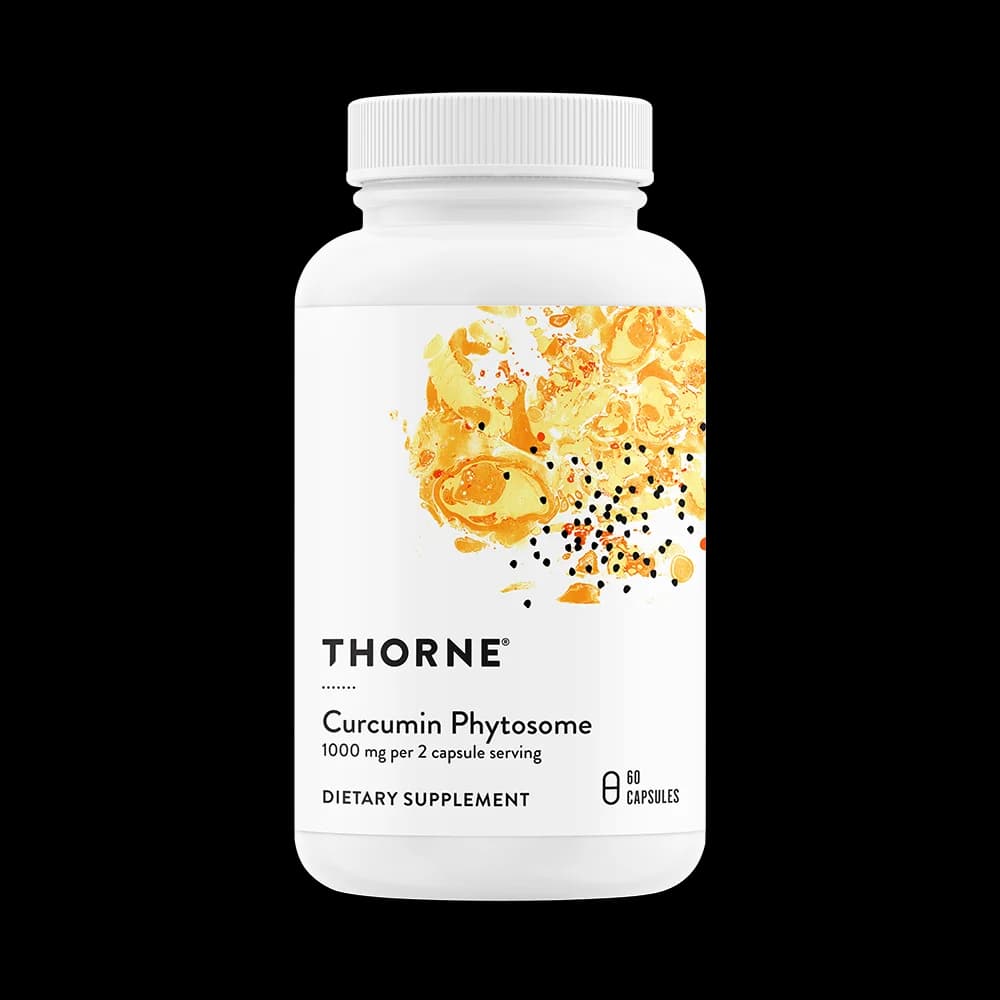
To solve this critical absorption issue, researchers developed advanced delivery systems. Thorne’s Curcumin Phytosome utilizes a patented formulation known as Meriva®, created by the botanical extract company Indena. The Phytosome technology binds curcumin extract to a phospholipid complex sourced from sunflower oil, specifically utilizing phosphatidylcholine. Phospholipids are a type of dietary lipid (fat) that naturally make up the outer membrane of every human cell.
By encasing the curcumin molecule within this lipid-friendly phospholipid shell, the Meriva complex effectively disguises the curcumin. Because the human intestinal tract readily absorbs lipids, this phytosome structure allows the curcumin to easily cross the gut barrier and enter the systemic circulation without being prematurely degraded. This molecular pairing transforms a poorly absorbed compound into a highly bioavailable therapeutic agent, ensuring that the active curcuminoids can reach the central nervous system, muscle tissue, and joints.
The 29x Absorption Breakthrough
The clinical superiority of the Meriva formulation was demonstrated in a landmark pharmacokinetic study published in the Journal of Natural Products. In this randomized, double-blind, crossover human trial, researchers compared the absorption of the Meriva phytosome complex against a standard, unformulated curcuminoid mixture. By measuring the plasma concentrations of the three major curcuminoids (curcumin, demethoxycurcumin, and bisdemethoxycurcumin) in the blood of human volunteers, the results were staggering.
When mathematically adjusted for the dose size, the overall absorption of curcuminoids was found to be 29-fold higher for the Meriva group compared to the standard curcumin group. Furthermore, the absorption of specific, highly potent curcumin analogues like demethoxycurcumin (DMC) increased by up to 50- to 60-fold. This massive increase in bioavailability is why Meriva has become the most clinically studied curcumin on the market, backed by over 35 human clinical trials. It allows patients to achieve therapeutic blood levels of curcumin at much lower, more manageable doses.
How Chronic Illness Impacts the Inflammatory System
The Cytokine Storm and Long COVID Neuroinflammation
To understand why highly absorbed curcumin is so valuable, we must first examine how complex chronic illnesses disrupt the body's natural homeostasis. In the case of Long COVID, the initial SARS-CoV-2 infection can trigger a hyperinflammatory immune response, often referred to as a "cytokine storm." Even after the acute virus has been cleared, the immune system in many Long COVID patients remains locked in a state of chronic activation. This ongoing immune dysregulation leads to the continuous overproduction of pro-inflammatory cytokines, such as Interleukin-6 (IL-6) and Tumor Necrosis Factor-alpha (TNF-α).
When these inflammatory cytokines circulate systemically, they can cross the blood-brain barrier and activate microglia—the primary immune cells of the central nervous system. This state of neuroinflammation is a primary driver of the severe cognitive dysfunction, memory issues, and "brain fog" that Long COVID patients experience. The brain's neural networks become inflamed, slowing processing speeds and making even simple cognitive tasks feel exhausting.
Oxidative Stress and Mitochondrial Dysfunction in ME/CFS
In myalgic encephalomyelitis/chronic fatigue syndrome (ME/CFS), patients suffer from profound energy depletion and post-exertional malaise (PEM), where symptoms crash following minor physical or mental exertion. Research indicates that a major underlying mechanism of ME/CFS is severe oxidative stress. Oxidative stress occurs when there is a dangerous imbalance between reactive oxygen species (free radicals) and the body's natural antioxidant defenses.
These free radicals damage cellular structures, particularly the mitochondria—the powerhouses of the cells responsible for generating adenosine triphosphate (ATP) for energy. When mitochondrial membranes are damaged by oxidative stress, energy production plummets, and the body shifts into a state of chronic fatigue. Furthermore, this oxidative damage triggers a vicious cycle of inflammation, as the body attempts to repair the damaged tissues, further depleting the patient's already limited energy reserves.
Mast Cell Degranulation in MCAS
For patients with mast cell activation syndrome (MCAS), the inflammatory dysfunction originates in the mast cells. Mast cells are a critical part of the immune system, acting as first responders that release chemical mediators (like histamine) to protect the body from pathogens or allergens. However, in MCAS, these cells become hyper-responsive and unstable. They inappropriately break open—a process called degranulation—and dump massive amounts of histamine, leukotrienes, and prostaglandins into the bloodstream without a valid trigger.
This systemic flood of inflammatory mediators causes a wide array of unpredictable symptoms, including flushing, severe gastrointestinal distress, rapid heart rate (often overlapping with dysautonomia and POTS), and widespread joint and muscle pain. Because standard antihistamines only block histamine after it has been released, patients with MCAS often struggle to find therapies that can stabilize the mast cell membrane and prevent the inflammatory cascade from starting in the first place.
Curcumin Phytosome: Supporting the Body's Defenses
Trapping NF-κB: Halting Inflammation at the Source
Curcumin Phytosome supports the body by intervening directly in the genetic pathways that drive chronic inflammation. One of its most profoundly researched mechanisms is its ability to inhibit the NF-κB (Nuclear Factor kappa B) pathway. NF-κB is a master transcription factor that regulates the expression of hundreds of genes involved in inflammation and immune responses. When activated by stress or viral fragments, NF-κB travels into the cell nucleus and instructs the DNA to produce pro-inflammatory cytokines like IL-6 and TNF-α.
Pharmacological studies demonstrate that curcumin actively blocks an enzyme called IκB kinase (IKK). By blocking IKK, curcumin prevents the NF-κB molecule from detaching from its inhibitor protein. As a result, NF-κB remains trapped in the cellular cytoplasm and cannot enter the nucleus. By halting this process at the genetic level, curcumin effectively shuts off the cellular "faucet" that pours inflammatory cytokines into the bloodstream, offering profound support for the systemic inflammation seen in Long COVID and dysautonomia.
Suppressing COX-2 for Joint and Muscle Comfort
For patients dealing with the severe joint stiffness and muscle aches common in ME/CFS and generalized chronic illness, curcumin offers targeted musculoskeletal support. Pain and acute inflammation are largely driven by an enzyme called Cyclooxygenase-2 (COX-2), which converts arachidonic acid into inflammatory prostaglandins. While traditional non-steroidal anti-inflammatory drugs (NSAIDs) like ibuprofen directly block the COX-2 enzyme, they can cause severe gastrointestinal damage with long-term use.
Curcumin takes a different, gentler approach. Rather than just blocking the enzyme, research shows that curcumin downregulates the expression of COX-2 mRNA. By suppressing the upstream activation of NF-κB, curcumin tells the cell to produce less of the COX-2 enzyme in the first place. This helps maintain a balanced inflammatory response in the joints and muscles, alleviating minor aches and supporting recovery from exercise-induced muscle soreness (DOMS) without the harsh side effects associated with synthetic COX-2 inhibitors.
Stabilizing Mast Cells and Modulating Histamine
Curcumin is increasingly recognized as a potent, natural mast cell stabilizer, making it a valuable tool for those managing MCAS and histamine intolerance. In vitro and in vivo studies reveal that curcumin stabilizes the mast cell membrane by inhibiting Syk kinase, a crucial enzyme required for the cell to degranulate. Furthermore, curcumin dose-dependently reduces the influx of intracellular calcium, which is the physical trigger that causes mast cells to dump their contents.
By increasing intracellular cyclic AMP (cAMP)—which acts as an internal brake—curcumin prevents the release of histamine, leukotrienes, and prostaglandins. Recent lipidomics research has shown that curcumin successfully suppresses β-hexosaminidase, a key marker of mast cell degranulation. This comprehensive blockade helps prevent the systemic allergic responses and hypersensitivity reactions that plague MCAS patients, offering a preventative approach rather than just symptom management.
Boosting Antioxidant Defenses via the Nrf2 Pathway
To combat the severe oxidative stress seen in ME/CFS and Long COVID, curcumin activates the Nrf2/HO-1 pathway. Nrf2 is a transcription factor that, when activated by curcumin, travels to the nucleus and binds to the Antioxidant Response Element (ARE). This triggers the body to produce its own powerful, endogenous antioxidant enzymes, such as superoxide dismutase (SOD), catalase, and hemeoxygenase-1 (HO-1).
By upregulating the body's internal antioxidant defense system, curcumin helps neutralize the free radicals that damage mitochondrial membranes. This dual action—suppressing pro-inflammatory pathways while simultaneously boosting antioxidant production—helps protect cellular energy production, potentially mitigating the severity of post-exertional crashes and supporting overall metabolic health.

Symptoms Curcumin Phytosome May Help Manage
Systemic and Neurological Symptoms
Because curcumin operates on fundamental genetic and cellular pathways, its benefits can be felt across multiple bodily systems. For patients with complex chronic conditions, Thorne's Curcumin Phytosome may help manage the following systemic symptoms:
Brain Fog and Cognitive Dysfunction: By crossing the blood-brain barrier and suppressing microglial activation, curcumin helps cool neuroinflammation, supporting clearer thinking, sustained attention, and improved memory recall.
Severe Fatigue and Post-Exertional Malaise (PEM): By neutralizing oxidative stress via the Nrf2 pathway, curcumin protects mitochondrial integrity, supporting more stable cellular energy production and potentially reducing the severity of energy crashes.
Systemic Inflammation: By trapping NF-κB and reducing circulating levels of cytokines like IL-6 and TNF-α, curcumin helps calm the generalized, whole-body inflammatory state often triggered by viral persistence or immune dysregulation.
Musculoskeletal and Allergic Symptoms
In addition to neurological support, curcumin's targeted action on specific enzymes and immune cells provides relief for physical discomfort and hypersensitivity:
Joint Stiffness and Muscle Aches: By downregulating COX-2 mRNA expression, curcumin reduces the production of pain-inducing prostaglandins, easing joint discomfort and promoting flexibility.
Exercise-Induced Muscle Soreness (DOMS): Curcumin shields muscle tissue from oxidative stress generated during physical exertion, aiding in faster recovery and lessening cellular damage in the muscles.
Histamine Intolerance and Flushing: By acting as a natural mast cell stabilizer and blocking Syk kinase, curcumin prevents the inappropriate degranulation of mast cells, reducing the release of histamine that causes itching, flushing, and GI distress.
Digestive and Liver Dysfunction: Curcumin encourages healthy cholesterol processing, boosts liver enzyme activity, and supports a balanced inflammatory response in the gut lining, which is crucial for patients with overlapping MCAS and GI symptoms.
Practical Considerations: Forms, Dosing, and Absorption
Why Formulation Matters: The Phytosome Advantage
When considering curcumin supplementation, the specific form you choose is arguably more important than the dosage. As discussed, standard turmeric powder or basic curcumin extracts have incredibly low bioavailability. To achieve therapeutic blood levels with standard curcumin, patients would need to consume massive, impractical quantities—often upwards of 10 to 12 grams per day, which can cause severe gastrointestinal distress.
Thorne’s Curcumin Phytosome bypasses this issue entirely by utilizing the Meriva® complex. Because the curcumin is bound to sunflower-sourced phosphatidylcholine, it is protected from degradation in the digestive tract. This 29-fold increase in absorption means that patients can achieve profound systemic and neurological benefits with a much smaller, more manageable daily dose. When selecting a curcumin supplement for chronic illness, ensuring it utilizes a proven delivery system like a phytosome complex is critical for clinical success.
Optimal Dosing and Timing
For general support of a healthy inflammatory response, the suggested use for Thorne’s Curcumin Phytosome is 1-2 capsules (yielding 500 mg to 1 gram of the Meriva complex) taken two times daily, or as recommended by your healthcare practitioner. Because the Meriva complex is already bound to a dietary lipid (phospholipid), it is inherently well-absorbed. However, taking the capsules alongside a meal that contains healthy fats (like avocado, olive oil, or nuts) can further optimize the absorption of these fat-soluble curcuminoids.
Consistency is key when using curcumin to modulate chronic inflammation. While some patients may notice improvements in joint stiffness or muscle soreness within a few weeks, downregulating systemic inflammatory pathways like NF-κB and stabilizing mast cells often requires sustained use. It is generally recommended to evaluate the supplement's efficacy after 8 to 12 weeks of consistent, daily supplementation.
Safety, Contraindications, and Interactions
Curcumin Phytosome is generally very well-tolerated, with an excellent safety profile in clinical trials. However, there are important practical considerations. This product is contraindicated in individuals with a history of hypersensitivity to any of its ingredients, including sunflower-derived phospholipids. Furthermore, if you are pregnant, you must consult your healthcare practitioner before using this product, as high doses of curcumin are generally not recommended during pregnancy.
Crucially, curcumin can interact with certain pharmaceutical medications. Because it modulates various liver enzymes involved in drug metabolism, it can alter the efficacy of specific treatments. For example, animal and in vitro studies have shown that curcumin can reduce the therapeutic efficacy of cyclophosphamide (Cytoxan) and decrease the cell-death effects of camptothecin. It may also interfere with the absorption and efficacy of irinotecan, a chemotherapy drug. Concurrent use of curcumin with these specific chemotherapeutic agents should be strictly avoided. Always discuss new supplements with your medical team to ensure they do not interfere with your current prescriptions.

Follow the Science
Curcumin and Long COVID Neuroinflammation
The scientific community has increasingly focused on highly bioavailable curcumin as a therapeutic intervention for the persistent inflammation seen in Long COVID. A 2023 randomized, double-blind, placebo-controlled trial investigated the effects of a bioavailable curcumin formulation on adults recovering from COVID-19. The participants took 500 mg of the formulation twice daily for four weeks. The findings demonstrated that curcumin supplementation was associated with significantly lower circulating levels of the proinflammatory cytokines IL-6 and MCP-1 compared to the placebo group, proving its ability to modulate chronic immune responses post-infection.
Furthermore, systematic reviews from 2023 and 2024 analyzing nano-encapsulated and phytosome curcumin formulations have highlighted their efficacy in addressing Long COVID symptoms. Patients treated with these advanced forms experienced massive relative reductions in C-reactive protein (CRP) and erythrocyte sedimentation rate (ESR), alongside drastic reductions in IFN-γ and IL-1β expression. These reductions in systemic neuroinflammation are heavily correlated with accelerated symptom resolution and faster cognitive recovery from brain fog.
ME/CFS and the Reduction of Fatigue Scores
Clinical evidence supporting curcumin's use in ME/CFS is also growing. A notable 2018 open-label clinical trial published in the International Journal of Clinical Medicine evaluated the effect of a phosphatidylcholine-curcumin complex on 52 patients meeting the criteria for ME/CFS. The patients took 500 mg of the complex twice daily for 8 weeks.
The results showed a statistically significant reduction in CFS-specific symptom scores, as measured by the CDC CFS Symptom Inventory. A 2019 follow-up analysis of the data noted that the most profound benefits were seen in patients with mild to moderate disease severity, with 35% of participants self-reporting distinct improvements in their physical and mental energy levels. While larger, placebo-controlled trials are still needed, these findings strongly support the hypothesis that neutralizing oxidative stress with bioavailable curcumin can alleviate ME/CFS symptomatology.
MCAS and Allergic Responses
In the realm of mast cell activation and histamine intolerance, curcumin has demonstrated profound stabilizing effects. An in vivo study published in PLOS One utilized a murine model of food allergy to test curcumin's efficacy. The researchers found that oral administration of curcumin successfully suppressed intestinal mastocytosis (the overproliferation of mast cells) and attenuated allergic diarrhea.
Crucially, the study showed that curcumin suppressed these allergic Th2 immune responses and mast cell expansions even in the presence of elevated IgE levels. By inhibiting the downstream signaling of Syk kinase and preventing the translocation of PKC-delta, curcumin effectively halted the anaphylactic and inflammatory cascades, reinforcing its clinical utility as a natural mast cell stabilizer for patients managing MCAS.
The Path Forward
A Comprehensive Approach to Chronic Illness
Living with conditions like Long COVID, ME/CFS, dysautonomia, and MCAS is an incredibly complex and often frustrating journey. The unpredictable nature of systemic inflammation, brain fog, and severe fatigue can make daily life feel like an uphill battle. It is important to validate that these symptoms are not in your head—they are rooted in measurable physiological disruptions, from hyperactive mast cells to oxidative stress and deeply entrenched neuroinflammation.
While there is no single miracle cure for these complex conditions, utilizing targeted, science-backed tools like highly bioavailable curcumin can be a powerful way to support your body's natural healing processes. By downregulating inflammatory pathways at the genetic level, stabilizing mast cells, and protecting mitochondrial function, Thorne's Curcumin Phytosome offers a multi-faceted approach to symptom management. However, supplements are most effective when integrated into a comprehensive care plan that includes aggressive pacing, nervous system regulation, and surviving the holidays with a chronic illness through careful energy management.
Next Steps
If you are struggling with persistent joint discomfort, cognitive dysfunction, or signs of systemic inflammation, highly absorbed curcumin may be a valuable addition to your protocol. Always remember to consult with your healthcare provider before introducing new supplements, especially to ensure they align with your current medications and specific health needs.