Can Cranberry and D-Mannose Support Bladder Health in Long COVID and POTS?
March 5, 2026
CranberryD-MannoseLong COVID
Share:
Disclaimer: The information provided here is for educational purposes only and is not intended as medical advice. It should not be used to diagnose, treat, cure, or prevent any medical condition. Instead, use it as a starting point for discussion with your healthcare provider. Always consult with a qualified healthcare provider before starting any new medication, supplement, device, or making changes to your health regimen.
For many individuals living with complex chronic conditions, the daily battle extends far beyond profound fatigue, post-exertional malaise (PEM), or cognitive dysfunction. Unpredictable bladder symptoms—ranging from sudden, painful urgency to frequent urination that relentlessly disrupts sleep—can be one of the most isolating and frustrating aspects of the illness journey. Patients often find themselves trapped in a cycle of suspected urinary tract infections (UTIs), enduring burning and pressure, only to receive negative bacterial cultures from their doctors. This confusing scenario leaves many without clear answers or effective treatments, highlighting a phenomenon that is increasingly recognized in the post-viral landscape: the autonomic nervous system and mucosal linings bear the brunt of systemic inflammation.
If you are navigating the complexities of Long COVID, myalgic encephalomyelitis/chronic fatigue syndrome (ME/CFS), mast cell activation syndrome (MCAS), or dysautonomia, you are not alone in experiencing these distressing genitourinary symptoms. Emerging medical research continues to illuminate the profound interconnectedness of viral infections, autonomic nerve dysfunction, and bladder health. In this context, natural compounds like cranberry concentrate and d-mannose are gaining significant attention in clinical settings. They are being utilized not just for their traditional role in supporting urinary tract health, but for their remarkable potential to support mucosal integrity, modulate the gut microbiome, and promote a healthy urinary tract ecology without the repeated use of broad-spectrum antibiotics.
TL;DR
Cranberry and d-mannose support bladder health by blocking bacteria from adhering to the urinary tract lining.
D-mannose acts as a prebiotic, supporting gut microbiome balance and helping modulate systemic inflammation.
These supplements may help manage urinary urgency and discomfort common in Long COVID, POTS, and ME/CFS.
Consult your healthcare provider before starting new supplements to ensure they fit your specific medical needs.
What is Cranberry/d-Mannose?
To fully appreciate how specific targeted supplements can support genitourinary health, it is essential to understand the unique biochemical properties of their active ingredients. Cranberry concentrate and d-mannose are two distinct natural compounds that, while often found together in nature, exert their biological effects through entirely different, yet highly complementary, cellular mechanisms.
D-Mannose: More Than Just a Simple Sugar
D-mannose is a naturally occurring simple sugar, or monosaccharide, that is structurally classified as an aldohexose. At the molecular level, it is an epimer of glucose, meaning it shares the exact same chemical formula but differs slightly in the spatial arrangement of its atoms around a single carbon center. Despite this close structural relationship to glucose, the human body processes d-mannose in a fundamentally different way. When consumed, d-mannose is rapidly absorbed in the upper gastrointestinal tract and enters the bloodstream. However, because humans lack the specific enzymes required to efficiently convert d-mannose into glycogen for cellular energy storage, it does not significantly interfere with glucose metabolism or cause rapid spikes in blood insulin levels.
Instead of being burned for fuel, the vast majority of circulating d-mannose is filtered by the kidneys and excreted entirely intact into the urine. As it travels through the renal system and pools in the bladder, it bathes the urothelium—the specialized epithelial lining of the urinary tract. Here, d-mannose plays a critical role in cellular communication and defense. It is a key component in the process of glycosylation, a biochemical reaction where sugar molecules are attached to proteins and lipids to form glycoproteins and glycolipids. These structures are essential for maintaining the structural integrity of cellular membranes and facilitating healthy immune responses at the mucosal barrier.
Furthermore, recent gastroenterological research has revealed that the small portion of d-mannose that is not absorbed in the upper intestine travels to the colon, where it acts as a highly effective prebiotic. In the lower gut, d-mannose selectively feeds beneficial commensal bacteria, fundamentally altering the microbiome's composition. It has been shown to increase the ratio of Bacteroidetes to Firmicutes, a microbial signature strongly associated with reduced systemic inflammation, improved metabolic health, and a robust intestinal barrier.
Cranberry and the Power of Proanthocyanidins
Cranberry (Vaccinium macrocarpon) is a tart, red fruit native to North America that has been utilized for centuries in traditional medicine to support bladder health. For decades, the prevailing medical theory was that cranberries helped reduce the risk of infections simply by acidifying the urine, creating a hostile environment for bacterial growth. While cranberry concentrate does indeed help maintain a healthy, slightly acidic urinary pH, modern biochemistry has uncovered a far more sophisticated mechanism of action centered around a specific class of polyphenols known as proanthocyanidins (PACs).
Proanthocyanidins are powerful antioxidant compounds found in various plants, but cranberries are unique because they contain a high concentration of A-type PACs. Most other fruits, such as grapes and apples, contain B-type PACs. The structural difference is crucial: A-type PACs possess a unique double-interflavan bond that grants them extraordinary anti-adhesive properties. When you consume a highly concentrated cranberry extract, these A-type PACs survive the digestive process, enter the bloodstream, and are eventually concentrated in the urine.
Once in the bladder, these A-type PACs act as molecular shields. They specifically target and bind to the microscopic, hair-like appendages on the surface of pathogenic bacteria, blocking these microbes from anchoring themselves to the urothelial cells lining the bladder wall. By neutralizing the bacteria's ability to latch on, cranberry concentrate ensures that potential pathogens are harmlessly flushed out of the body during normal urination, thereby maintaining a healthy, balanced urinary tract ecology.
How Long COVID, POTS, and ME/CFS Impact the Bladder
For patients living with complex, multi-system chronic illnesses, bladder dysfunction is rarely an isolated issue. Instead, it is often a downstream consequence of widespread physiological disruption. To understand why genitourinary symptoms are so prevalent in these populations, we must examine how viral infections, autonomic nerve damage, and immune dysregulation specifically target the bladder and its surrounding structures.
Dysautonomia and the Autonomic Bladder
The bladder is a highly complex organ that relies on precise, coordinated signals from the autonomic nervous system (ANS) to function correctly. The ANS controls the detrusor muscle (the smooth muscle of the bladder wall) and the urethral sphincters, dictating when the bladder should relax to store urine and when it should contract to empty. In conditions like dysautonomia and postural orthostatic tachycardia syndrome (POTS), which are heavily correlated with ME/CFS and Long COVID, this autonomic signaling becomes erratic and dysfunctional.
Clinical research indicates that a significant majority of POTS patients experience neurogenic bladder symptoms. Because the nerves misfire, the brain may not receive the gradual signals that the bladder is filling. Instead, patients are often hit with sudden, severe urgency, or their bladder may contract involuntarily, leading to overactive bladder (OAB) symptoms. Conversely, some patients experience urinary retention, where the autonomic signals fail to trigger the sphincters to relax, making it difficult to empty the bladder completely. This autonomic dysfunction creates a frustrating paradox for POTS patients, who are medically required to consume massive amounts of water and sodium to maintain blood volume, thereby exacerbating their already hypersensitive, overactive bladders.
COVID-Associated Cystitis and Viral Inflammation
The emergence of Long COVID has brought a new classification of bladder dysfunction to the forefront of urology: COVID-Associated Cystitis (CAC). Researchers have discovered that the SARS-CoV-2 virus does not merely affect the respiratory and vascular systems; it has a profound, direct impact on the genitourinary tract. The virus gains entry into human cells by binding to ACE2 (Angiotensin-Converting Enzyme 2) receptors. Crucially, the urothelium—the mucosal lining of the bladder—expresses exceptionally high levels of these ACE2 receptors.
During an acute COVID-19 infection, the virus can directly infiltrate the bladder lining, triggering a localized immune response. This leads to a massive release of inflammatory cytokines directly into the urine. Studies have shown that this "cytokine storm" in the bladder causes severe irritation, resulting in de novo (new onset) symptoms of intense urgency, extreme frequency, and pelvic pain that can persist for months or even years after the initial infection has cleared. This virally induced inflammation leaves the bladder lining highly sensitized and vulnerable to further irritation.
MCAS and the Erosion of the Mucosal Lining
Another critical piece of the chronic illness puzzle is mast cell activation syndrome (MCAS), a condition frequently seen alongside Long COVID and ME/CFS. Mast cells are immune cells stationed throughout the body, including in dense clusters within the bladder wall. Their job is to release inflammatory mediators, like histamine and cytokines, in response to threats. In MCAS, these cells become hyper-reactive, constantly releasing inflammatory chemicals even when no true threat is present.
In the bladder, chronic mast cell degranulation has a devastating structural effect: it actively degrades the glycosaminoglycan (GAG) layer. The GAG layer is a thick, protective mucous coating that lines the inside of the bladder, acting as an impermeable barrier between the toxic waste products in urine and the sensitive underlying nerve endings of the bladder wall. When MCAS-driven inflammation erodes this GAG layer, irritants in the urine seep into the bladder tissue, triggering severe nerve pain, pressure, and the classic symptoms of Interstitial Cystitis (IC), also known as Bladder Pain Syndrome. This explains why so many chronic illness patients experience agonizing UTI-like symptoms despite completely sterile urine cultures.
Cranberry/d-Mannose: Supporting the Urinary Tract and Microbiome
When the autonomic nervous system is misfiring and the bladder's mucosal lining is compromised by chronic inflammation, traditional approaches to urinary health often fall short. This is where the specific, targeted mechanisms of cranberry concentrate and d-mannose become highly relevant. By addressing bacterial adhesion, supporting mucosal integrity, and modulating systemic immune responses, these compounds offer a multi-faceted approach to genitourinary support.
The Anti-Adhesion Mechanism: Blocking Bacterial Binding
Even in the absence of a true, culture-positive infection, the bladder lining of a patient with Long COVID or ME/CFS is often inflamed and highly susceptible to opportunistic bacterial overgrowth. Escherichia coli (E. coli) is the pathogen responsible for the vast majority of urinary tract issues. To cause irritation or infection, E. coli must first anchor itself to the bladder wall so it is not washed away during urination. It achieves this using tiny, hair-like projections called fimbriae, which act like molecular grappling hooks.
This is where the combination of d-mannose and cranberry is uniquely powerful, as they target two entirely different types of bacterial grappling hooks. E. coli primarily utilizes Type 1 fimbriae, which are tipped with a specific adhesive protein called the FimH adhesin. The FimH adhesin is biologically programmed to seek out and bind to mannosylated proteins (proteins coated with mannose) that naturally exist on the surface of human urothelial cells. When you supplement with a concentrated dose of d-mannose, you flood the urine with free-floating mannose molecules. The FimH adhesins on the bacteria mistakenly bind to this supplemental d-mannose in the urine instead of the mannose on your bladder wall. Because the bacteria are now bound to free-floating sugars, they are easily and harmlessly flushed down the toilet.
Simultaneously, E. coli can also deploy P-fimbriae, which use a different adhesive protein called the PapG adhesin. D-mannose cannot block P-fimbriae. However, the A-type proanthocyanidins (PACs) found in cranberry concentrate specifically bind to and disable the PapG adhesin. By combining d-mannose and cranberry, you effectively neutralize both of the primary mechanisms that bacteria use to adhere to the bladder, providing comprehensive, dual-action protection against microbial colonization.
Supporting the Mucosal Surface and GAG Layer
Beyond its anti-adhesive properties, d-mannose plays a vital, direct role in supporting the structural integrity of the bladder itself. As previously discussed, the protective glycosaminoglycan (GAG) layer of the bladder is frequently degraded in patients with MCAS, Interstitial Cystitis, and post-viral inflammation. The GAG layer is primarily composed of glycoproteins—proteins that require specific sugar molecules, including mannose, to maintain their structure and function.
By providing a highly bioavailable source of d-mannose, supplementation supports the cellular process of glycosylation, providing the necessary building blocks for the urothelial cells to repair and maintain the mucosal surface. A robust, healthy GAG layer is essential for reducing bladder permeability. When the mucosal barrier is intact, it successfully shields the underlying submucosal nerve endings from the acidic and irritating compounds naturally present in urine, thereby alleviating the chronic burning, pressure, and pain associated with sensitized bladders.
Modulating Immune Tolerance via the Gut Microbiome
Perhaps the most groundbreaking mechanism of d-mannose relates to its systemic effects on the immune system, which is of paramount importance for patients with Long COVID symptoms and ME/CFS. When unabsorbed d-mannose reaches the lower intestine, it acts as a potent prebiotic. Recent immunological research has demonstrated that d-mannose supplementation actively promotes the expansion of Regulatory T cells (Tregs) in the gut.
Tregs are the "peacekeepers" of the immune system. Their primary function is to enforce immune tolerance, preventing the immune system from overreacting to harmless stimuli and attacking the body's own tissues. In chronic post-viral syndromes, Treg function is often impaired, leading to a state of chronic, systemic hyper-inflammation. By stimulating Treg proliferation, d-mannose helps to actively downregulate the production of pro-inflammatory cytokines, including Interleukin-6 (IL-6), Interleukin-1β (IL-1β), and Tumor Necrosis Factor-alpha (TNF-α). This microbiome-mediated dampening of systemic inflammation not only benefits gut health but exerts a calming effect on mucosal tissues throughout the entire body, including the highly sensitized bladder.

Symptoms Cranberry/d-Mannose May Help Manage
Because cranberry concentrate and d-mannose operate on multiple physiological levels—from blocking bacterial adhesion to supporting mucosal integrity and modulating the gut microbiome—they can help manage a wide array of distressing symptoms associated with chronic illness.
Urinary and Bladder Symptoms
Frequent Urination and Sudden Urgency: By supporting a healthy mucosal lining and reducing localized bladder inflammation, this combination can help calm the hyper-reactive nerve signaling that drives the constant, sudden need to void, a common issue in POTS and dysautonomia.
Bladder Pressure and Pelvic Discomfort: D-mannose provides the necessary structural components to support the glycosaminoglycan (GAG) layer. A robust GAG layer shields sensitive bladder nerves from acidic urine, helping to alleviate the chronic pressure and burning sensations often seen in Interstitial Cystitis and COVID-Associated Cystitis.
Recurrent Urinary Tract Infections (UTIs): The dual anti-adhesion action of d-mannose (targeting Type 1 fimbriae) and cranberry PACs (targeting P-fimbriae) effectively blocks pathogenic bacteria from anchoring to the bladder wall, which may help reduce the recurrence of bacterial infections without the need for continuous antibiotic prophylaxis.
Post-Urination Burning: By maintaining a healthy urinary pH and flushing out microscopic irritants and opportunistic bacteria, cranberry concentrate helps soothe the urethra and reduce the burning sensation that often lingers after emptying the bladder.
Systemic and Gut-Related Symptoms
Gut Dysbiosis and Bloating: As a potent prebiotic, the portion of d-mannose that reaches the lower intestine feeds beneficial commensal bacteria, helping to correct the Firmicutes/Bacteroidetes imbalance often found in ME/CFS and Long COVID, thereby supporting better digestion and reducing microbiome-driven bloating.
Systemic Inflammatory Flare-ups: By promoting the expansion of Regulatory T cells (Tregs) in the gut, d-mannose helps to systemically downregulate pro-inflammatory cytokines like IL-6 and TNF-α. This microbiome-mediated immune modulation can help lower the overall inflammatory burden that drives widespread pain and fatigue in post-viral syndromes.
Practical Considerations: Forms, Dosing, and Absorption
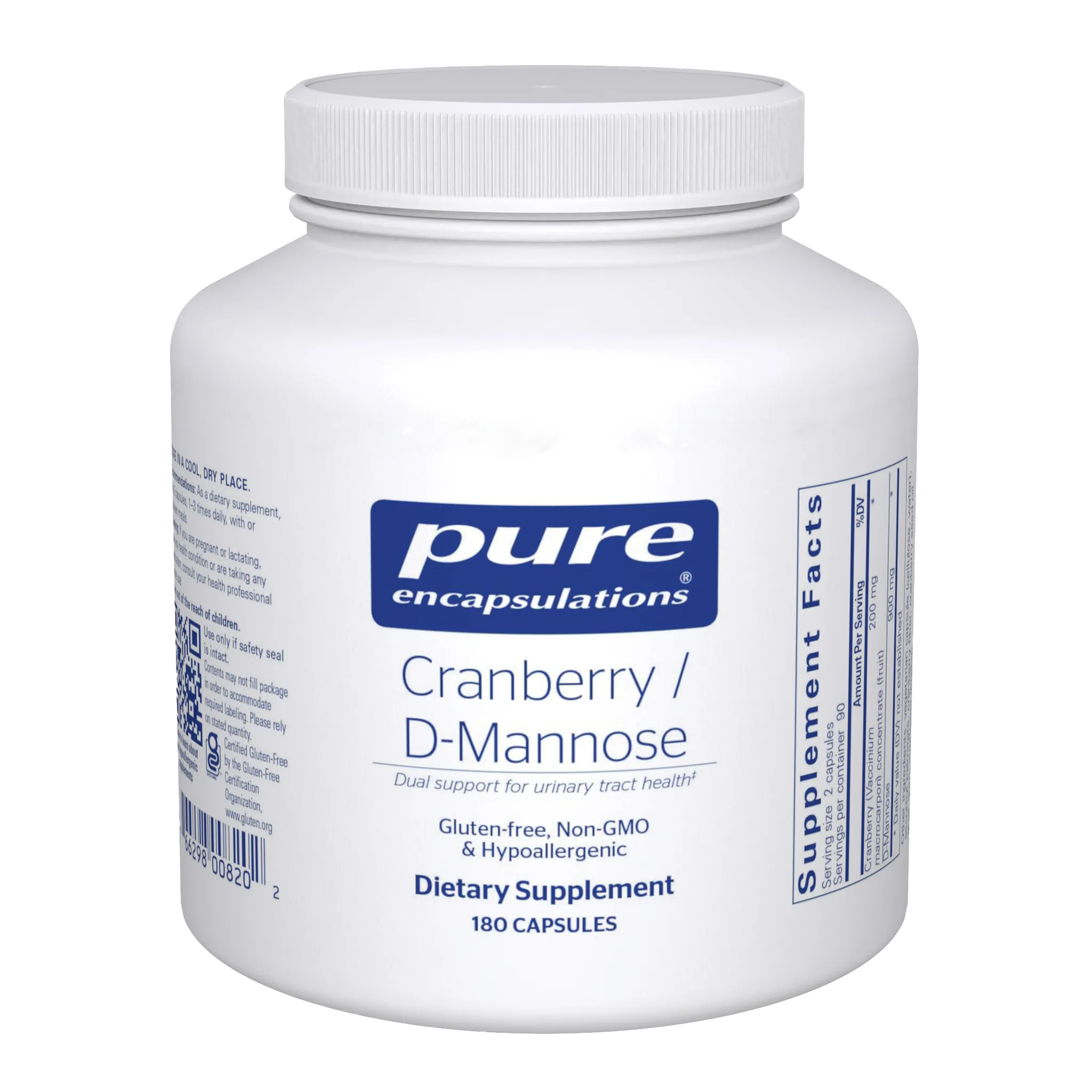
When incorporating a new supplement into a complex chronic illness protocol, understanding the nuances of formulation, dosage, and timing is critical for achieving optimal therapeutic results while minimizing potential side effects. The Pure Encapsulations Cranberry/d-Mannose formula is specifically designed to maximize bioavailability and clinical efficacy.
The Synergy of Combination Therapy
The Pure Encapsulations formula provides a highly concentrated dose of 900 mg of d-mannose alongside 200 mg of cranberry (Vaccinium macrocarpon) fruit concentrate per serving. This specific ratio is intentionally designed to leverage the synergistic effects of both compounds. As detailed earlier, relying solely on d-mannose leaves the bladder vulnerable to bacteria utilizing P-fimbriae, while relying solely on cranberry leaves it vulnerable to Type 1 fimbriae. By combining them, the formula provides comprehensive, broad-spectrum anti-adhesion support. Furthermore, utilizing a cranberry concentrate derived from 100% fruit solids ensures that patients receive the active proanthocyanidins (PACs) without the high amounts of refined sugar and artificial additives typically found in commercial cranberry juices, which can actively trigger systemic inflammation and worsen gut dysbiosis.
Dosage, Timing, and Blood Sugar Considerations
For general urinary tract support and mucosal maintenance, the suggested use is 2 capsules taken 1 to 3 times daily. Because d-mannose is rapidly absorbed and excreted, its concentration in the urine peaks relatively quickly and then declines. Therefore, for patients actively managing severe bladder urgency or recurrent UTI symptoms, dividing the dose throughout the day (e.g., morning, afternoon, and evening) is often more effective than taking a single massive dose, as it ensures a continuous, steady stream of mannose and PACs bathing the bladder lining. Taking the capsules with a large glass of water is essential, as adequate hydration physically facilitates the flushing mechanism that washes unbound bacteria out of the urinary tract.
A common concern regarding d-mannose is its status as a simple sugar. While it is an epimer of glucose, human metabolism of d-mannose is highly inefficient. It does not readily enter the glycolysis pathway, meaning it generally does not cause significant spikes in blood glucose or insulin levels in healthy individuals. However, because a very small amount may be converted to glucose, patients with poorly controlled Type 1 or Type 2 diabetes should monitor their blood sugar levels closely when initiating high-dose d-mannose therapy and consult with their endocrinologist or primary care provider.
Safety, Tolerability, and POTS Management
Cranberry and d-mannose are widely recognized as safe and are generally very well-tolerated, even for patients with highly sensitive systems like those with MCAS. Unlike broad-spectrum antibiotics, which indiscriminately eradicate beneficial gut flora and contribute to long-term microbiome dysbiosis, this supplement combination selectively targets pathogenic adhesion while actually nourishing the beneficial bacteria in the lower gut.
The most common side effect, particularly at very high doses, is mild gastrointestinal discomfort, such as bloating or loose stools. This occurs because unabsorbed d-mannose in the gut can exert a mild osmotic effect, drawing water into the bowel. If this occurs, simply reducing the dosage and gradually titrating up can help the digestive system adjust. For patients with POTS and dysautonomia, this supplement integrates seamlessly into their management protocols. Because POTS patients must consume large volumes of water daily, adding Cranberry/d-Mannose ensures that this high fluid intake is actively working to protect and soothe the bladder lining, rather than just exacerbating urinary frequency.

Follow the Science
The clinical efficacy of cranberry and d-mannose is supported by a robust and rapidly growing body of peer-reviewed scientific literature. Recent large-scale meta-analyses and immunological studies have provided definitive evidence for their mechanisms of action, moving these compounds from the realm of traditional remedies into evidence-based clinical practice for genitourinary and systemic health.
Clinical Trials on Cranberry and Urinary Tract Support
The scientific consensus regarding cranberry's efficacy was significantly solidified by a landmark 2023 Cochrane Database Systematic Review. This exhaustive meta-analysis evaluated 50 randomized controlled trials (RCTs) involving a total of 8,857 participants. The researchers concluded that cranberry products may help reduce the risk of symptomatic, culture-verified UTIs, particularly in women with a history of recurrent infections (showing a 26% risk reduction) and in susceptible children (showing a 54% risk reduction).
Building upon this, a highly specific 2024 meta-analysis published in Frontiers solved a long-standing debate regarding why some older cranberry studies showed mixed results. The researchers determined that efficacy is entirely dependent on the concentration of active proanthocyanidins (PACs). The study concluded that cranberry consumption may help reduce the risk of bacterial adhesion and infection only when the daily intake of soluble PACs reaches a critical threshold of at least 36 mg. This underscores the absolute necessity of using highly concentrated, standardized fruit extracts rather than diluted commercial juices to achieve therapeutic outcomes.
Emerging Research on D-Mannose and the Microbiome
While d-mannose has long been studied for its anti-adhesive properties in the bladder, the most exciting recent scientific breakthroughs involve its profound impact on the gut microbiome and systemic immune tolerance. A pivotal study published in the journal Cell demonstrated that d-mannose acts as a powerful prebiotic, fundamentally altering the gut microbiome by significantly increasing the ratio of beneficial Bacteroidetes to Firmicutes. This microbial shift is associated with a leaner phenotype, improved metabolic function, and a reduction in systemic inflammation.
Furthermore, advanced immunological research published in Therapeutic Advances in Chronic Disease revealed that d-mannose supplementation actively induces the proliferation of Regulatory T cells (Tregs). By expanding these critical immune-calming cells, d-mannose was shown to generate microbiota-dependent anti-inflammatory effects, successfully downregulating aggressive pro-inflammatory cytokines like IL-6 and TNF-α. This mechanism is particularly relevant for patients with post-viral syndromes, as it provides a clear biological pathway through which a targeted sugar molecule can help calm the systemic immune overactivation that drives symptoms across multiple organ systems, including the highly sensitized bladder.
The Path Forward
Validating Your Bladder Symptoms
Living with a complex chronic illness often means enduring a constellation of symptoms that are difficult to explain and even harder for others to understand. If you are struggling with relentless urinary urgency, pelvic pressure, or the constant fear of the next bladder flare-up, it is crucial to know that your symptoms are valid, physiological, and intimately connected to your broader systemic condition. Whether driven by the autonomic misfiring of POTS, the viral inflammation of COVID-Associated Cystitis, or the mucosal erosion of MCAS, these genitourinary challenges are a recognized and deeply frustrating reality of the post-viral landscape. You are not imagining the pain, and you are not alone in the search for relief.
A Comprehensive Approach to Care
While managing these interconnected conditions requires immense patience, there is a clear path forward. Healing the mucosal lining and calming the autonomic nervous system is a gradual process that requires a comprehensive, multi-disciplinary approach. Targeted nutritional support with Cranberry/d-Mannose can be a powerful tool in your management arsenal, working synergistically to block bacterial adhesion, rebuild the protective bladder barrier, and modulate systemic inflammation via the gut microbiome. However, supplements are most effective when integrated into a broader strategy that includes careful symptom tracking, nervous system regulation, pelvic floor physical therapy, and personalized medical guidance. Always consult with your healthcare provider or a specialist familiar with complex chronic conditions before starting any new supplement regimen to ensure it aligns safely with your unique physiological needs and current medications.