Can Copper Glycinate Support Energy and Connective Tissue in Long COVID and ME/CFS?
March 5, 2026
Copper GlycinateLong COVIDME/CFS
Share:
Disclaimer: The information provided here is for educational purposes only and is not intended as medical advice. It should not be used to diagnose, treat, cure, or prevent any medical condition. Instead, use it as a starting point for discussion with your healthcare provider. Always consult with a qualified healthcare provider before starting any new medication, supplement, device, or making changes to your health regimen.
Months or even years after an initial viral infection, many individuals find themselves battling a complex web of debilitating symptoms—profound fatigue, racing heart rates, joint pain, and brain fog. If you are living with Long COVID, myalgic encephalomyelitis/chronic fatigue syndrome (ME/CFS), or dysautonomia, you are likely intimately familiar with the frustration of seeking answers for these invisible, systemic issues. Often, patients are told their blood work is "normal," yet their bodies feel fundamentally unable to produce energy or maintain structural integrity. In the search for root causes, researchers and clinicians are increasingly looking at the microscopic level, specifically at trace minerals that serve as the functional spark plugs for our cells.
One such critical, yet frequently overlooked, mineral is copper. While it might bring to mind pennies or plumbing, inside the human body, copper is a non-negotiable biological catalyst. It is the key that unlocks mitochondrial energy production, weaves together the connective tissue in our joints and blood vessels, and allows iron to be utilized for red blood cell creation. In the context of chronic complex illness, emerging research suggests that copper metabolism can become profoundly dysregulated—sometimes as a direct result of the infection, and other times as an unintended consequence of popular supplement protocols. Understanding how bioavailable forms like copper glycinate interact with your cellular machinery may offer a vital piece of the recovery puzzle.
What is Copper Glycinate?
Copper is an essential trace mineral, meaning the human body cannot synthesize it and must obtain it entirely through diet or supplementation. In a healthy body, copper does not float freely in the bloodstream; free copper is highly reactive and can generate dangerous free radicals. Instead, it is tightly bound to specific transport proteins and chaperones that escort it directly into the cells where it is needed. Once inside the cell, copper acts as a vital structural and catalytic cofactor for a group of specialized enzymes known as cuproenzymes. These enzymes are responsible for some of the most fundamental processes of human life, including cellular respiration, antioxidant defense, and the synthesis of neurotransmitters.
At the molecular level, copper's unique value lies in its ability to easily accept and donate electrons, shifting between its cuprous (Cu1+) and cupric (Cu2+) states. This chemical flexibility makes it the perfect biological wire for transferring energy and facilitating complex biochemical reactions. For instance, without copper's electron-shuttling capabilities, the mitochondria—the powerhouses of our cells—would be entirely unable to complete the final step of energy production. Similarly, the enzymes that build the structural framework of our skin, blood vessels, and joints rely on copper to create strong, resilient bonds. When copper is deficient, these foundational systems begin to falter, leading to systemic fatigue and tissue weakness.
However, the body's ability to utilize copper depends entirely on its bioavailability—how well it can be absorbed through the digestive tract and delivered to the tissues. Inorganic forms of copper found in cheap supplements or fortified foods are notoriously difficult for the body to absorb. They often ionize prematurely in the harsh acidic environment of the stomach, leading to severe gastrointestinal distress, nausea, and poor cellular uptake. This is where the specific chemical structure of the supplement becomes paramount for patients with sensitive digestive systems or chronic illness.
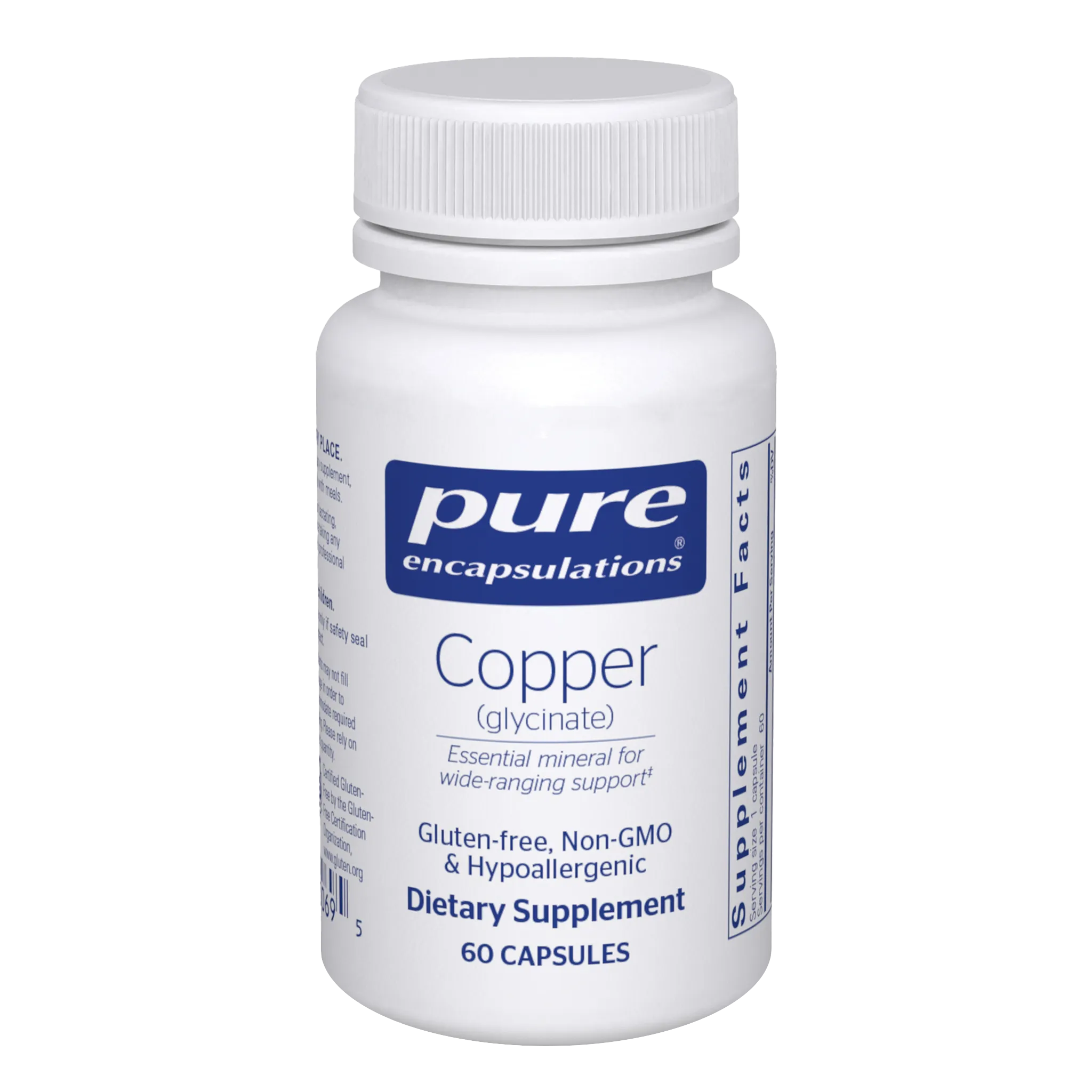
Copper glycinate (often referred to interchangeably with copper bisglycinate) is a highly engineered, chelated form of the mineral designed to bypass the traditional hurdles of digestion. In this form, a single copper ion is molecularly bound—or chelated—to molecules of glycine, which is the smallest and most abundant amino acid in the human body. In true bisglycinate forms, the copper is "hugged" by two glycine molecules, creating a highly stable, electrically neutral ring structure. This structural stability protects the copper ion as it travels through the stomach acid, preventing it from interacting with dietary antagonists or causing gastric irritation.
Because the copper is hidden within an amino acid wrapper, the digestive system recognizes the compound as a peptide (a small protein) rather than a raw mineral. This allows the copper glycinate to be absorbed directly through specialized amino acid transport channels in the small intestine, entirely bypassing the competitive mineral absorption pathways where copper typically fights with zinc, iron, and calcium for entry into the bloodstream. Clinical comparisons have demonstrated that chelated forms like copper bisglycinate offer significantly higher absorption rates—often estimated at 40% to 50%—compared to the mere 10% to 15% absorption seen with inorganic copper sulfate.
For patients dealing with the gastrointestinal manifestations of Long COVID or dysautonomia, this enhanced bioavailability is crucial. Many individuals with complex chronic conditions suffer from compromised gut linings, altered microbiome environments, or rapid gastric transit times that make nutrient absorption incredibly difficult. By utilizing the amino acid transport system, copper glycinate ensures that the mineral actually reaches the bloodstream and tissues where it can be utilized by struggling cuproenzymes, all while minimizing the nausea that frequently causes patients to abandon copper supplementation.
How Long COVID and Chronic Illness Impact Copper Levels
One of the most clinically significant and frequently overlooked causes of copper deficiency in the Long COVID community stems from well-intentioned supplementation. During the height of the COVID-19 pandemic, and continuing into Long COVID management, millions of people began taking high daily doses of zinc to support their immune systems. While zinc is undeniably critical for immune function, high doses (often exceeding 40-50 mg per day for extended periods) trigger a dangerous biological cascade. High zinc intake stimulates the intestinal cells to produce large amounts of a binding protein called metallothionein.
Metallothionein's primary job is to bind heavy metals, but it has a significantly higher binding affinity for copper than it does for zinc. When metallothionein levels spike in the gut, it aggressively binds to any dietary copper present in the digestive tract, trapping it inside the intestinal cells (enterocytes). Because these intestinal cells naturally slough off and are excreted in stool every few days, the trapped copper is flushed from the body before it can ever reach the bloodstream. This phenomenon, known as zinc-induced copper deficiency, can rapidly deplete the body's copper stores, leading to profound neurological and hematological issues that closely mimic or severely exacerbate Long COVID symptoms.
Patients caught in this trap often present with debilitating fatigue, brain fog, neuropathy, and an inability to stand without dizziness—symptoms that are frequently written off as just another mysterious aspect of their post-viral syndrome. In reality, their cellular machinery is starving for copper because the zinc has completely blocked its entry. Understanding this delicate copper-zinc balance is essential for anyone who has utilized heavy zinc protocols in their attempt to recover from viral infections.
In the context of myalgic encephalomyelitis/chronic fatigue syndrome (ME/CFS), the impact of dysregulated copper metabolism is deeply tied to oxidative stress and post-exertional malaise (PEM). A hallmark of ME/CFS is the body's inability to recover from physical or cognitive exertion, leading to severe "crashes." Recent molecular mapping, including a landmark 2025 study from Columbia University, has identified profound disturbances in copper-dependent antioxidant pathways within the metabolome of ME/CFS patients following exercise.
Copper is a mandatory cofactor for Cu/Zn Superoxide Dismutase (SOD), one of the body's most powerful primary antioxidant enzymes. SOD is responsible for neutralizing superoxide radicals—highly damaging metabolic byproducts created during cellular energy production. In a healthy body, SOD instantly converts these dangerous radicals into less harmful molecules. However, in ME/CFS patients, disruptions in copper utilization mean this critical antioxidant defense system falters. When exertion increases the metabolic demand, the un-neutralized free radicals cause massive oxidative stress, damaging cellular membranes and triggering widespread systemic inflammation. This unchecked cellular injury is a primary driver of the debilitating fatigue and inflammatory cascades experienced during a PEM crash.
Dysautonomia, particularly Postural Orthostatic Tachycardia Syndrome (POTS), involves the malfunction of the autonomic nervous system, resulting in erratic heart rates, blood pressure drops, and extreme exhaustion upon standing. Copper is intimately tied to the biological systems that fail in these conditions, specifically regarding the synthesis of crucial neurotransmitters. The autonomic nervous system relies heavily on the precise balance of dopamine, norepinephrine, and epinephrine to regulate blood vessel constriction and heart rate.
Copper is the essential catalytic cofactor for the enzyme dopamine beta-hydroxylase, which is responsible for converting dopamine into norepinephrine. Because POTS and dysautonomia are largely characterized by norepinephrine dysregulation—frequently resulting in hyperadrenergic states or poor blood vessel constriction upon standing—inadequate bioavailable copper can directly impair the body's ability to regulate these vital autonomic functions. Without sufficient copper, the conversion process stalls, leading to an imbalance that leaves the nervous system unable to properly adapt to changes in posture or stress. This is why top dysautonomia specialists increasingly include comprehensive mineral panels, including serum copper and ceruloplasmin, in their diagnostic workups.
Copper Glycinate: Supporting Energy, Tissue, and Iron
To understand how copper glycinate supports energy levels, we must look deep inside the mitochondria at the electron transport chain (ETC). The ETC is a series of protein complexes that transfer electrons to generate the electrochemical gradient needed to produce ATP (adenosine triphosphate), the cellular currency of energy. Copper is the non-negotiable catalytic core of Cytochrome c Oxidase (CcO), also known as Complex IV, which is the final and most critical enzyme in this chain. Without copper, the entire energy production line comes to a sudden and complete halt.
Within Complex IV, copper is integrated into two highly specific active sites: the CuA site and the CuB site. The CuA site acts as the initial receptor, catching electrons from the carrier protein cytochrome c. It then funnels these electrons deep into the enzyme to the CuB site, which is physically paired with an iron atom. It is at this highly reactive copper-iron junction that molecular oxygen binds and is safely reduced into water. The energy released during this precise electron transfer is used to pump protons across the mitochondrial membrane, creating the pressure needed to spin ATP synthase and generate cellular energy.
When a patient with Long COVID or ME/CFS supplements with bioavailable copper glycinate, they are directly supplying the raw materials needed by the mitochondrial metallochaperones (like COX17 and SCO1) to assemble and activate Complex IV. By restoring the structural integrity of Cytochrome c Oxidase, copper supplementation helps clear the metabolic bottleneck, allowing the mitochondria to resume efficient oxygen utilization and ATP production. This mechanistic restoration is vital for alleviating the profound, cellular-level exhaustion that characterizes these complex chronic conditions.
Beyond energy production, copper plays a foundational role in maintaining the structural integrity of the body through its activation of lysyl oxidase (LOX). Many patients with ME/CFS and dysautonomia also suffer from joint hypermobility, vascular fragility, or hypermobile Ehlers-Danlos Syndrome (hEDS). These conditions are characterized by weak, disorganized connective tissue. Lysyl oxidase is the extracellular copper-dependent enzyme responsible for weaving together collagen and elastin, the primary proteins that give skin, blood vessels, ligaments, and tendons their tensile strength.
When collagen and elastin are initially secreted by cells, they exist as loose, individual strands. Lysyl oxidase catalyzes a chemical reaction (oxidative deamination) on the lysine residues of these proteins, creating strong covalent cross-links between the fibers. Without adequate bioavailable copper, lysyl oxidase cannot function, and these cross-links never form. The resulting connective tissue is weak and overly stretchy, leading to joint instability, chronic pain, and blood pooling in the lower extremities—a major trigger for POTS symptoms. By providing the necessary cofactor for LOX, copper glycinate supports the maturation and strengthening of collagen, helping to stabilize hypermobile joints and improve vascular tone.
A frequently misunderstood aspect of chronic fatigue is the relationship between copper and iron. Many patients with chronic illness are diagnosed with anemia and prescribed iron supplements, only to find their fatigue worsens while their iron levels barely budge. This occurs because iron metabolism is entirely dependent on a copper-binding protein called ceruloplasmin. Produced in the liver, ceruloplasmin transports copper through the blood but also acts as a highly active ferroxidase enzyme, which is essential for iron utilization.
When iron is absorbed from food or released from cellular storage, it exists in a ferrous state (Fe2+). However, to be transported to the bone marrow to create oxygen-carrying red blood cells, iron must bind to a transport protein called transferrin. Transferrin can only accept iron in its oxidized, ferric state (Fe3+). Ceruloplasmin is the enzyme that catalyzes this oxidation step. If copper is deficient, ceruloplasmin activity plummets, and iron becomes trapped inside the cells, unable to be used. This creates an "iron-resistant" anemia that mimics iron deficiency but can only be resolved by restoring copper levels. Supplementing with copper glycinate reactivates ceruloplasmin, unlocking trapped iron stores and supporting healthy red blood cell formation and oxygen delivery throughout the body.
Symptoms Copper Glycinate May Help Manage
Because copper is a foundational cofactor for multiple systemic pathways, restoring optimal levels with copper glycinate can have a wide-reaching impact on the complex symptoms of Long COVID, ME/CFS, and dysautonomia. Here are the specific symptoms that copper supplementation may help manage:
Profound Fatigue and PEM: By supplying the essential catalytic core for Cytochrome c Oxidase (Complex IV), copper directly supports the mitochondrial electron transport chain, increasing ATP production and helping to alleviate the deep, cellular exhaustion and post-exertional crashes seen in ME/CFS and Long COVID.
Orthostatic Intolerance and Dizziness: Copper is required for the enzyme dopamine beta-hydroxylase, which synthesizes norepinephrine. Supporting this pathway helps improve autonomic nervous system signaling and blood vessel constriction, reducing the dizziness, blood pooling, and racing heart rates associated with POTS and dysautonomia.
Joint Hypermobility and Chronic Pain: As the mandatory cofactor for lysyl oxidase, copper enables the cross-linking of collagen and elastin. This strengthens lax connective tissues, potentially reducing joint subluxations, chronic musculoskeletal pain, and vascular fragility in patients with hypermobility spectrum disorders.
"Iron-Resistant" Anemia and Shortness of Breath: By activating ceruloplasmin, copper allows trapped cellular iron to be oxidized and transported to the bone marrow. This resolves secondary anemias, improving red blood cell formation and enhancing oxygen delivery to oxygen-starved tissues.
Brain Fog and Neurological Deficits: Copper is crucial for the synthesis of phospholipids used to form the myelin sheath, the protective coating around nerves. Adequate copper levels support healthy nerve conduction and neurotransmitter balance, helping to clear cognitive dysfunction and reduce neuropathic tingling.
Histamine Intolerance and MCAS Symptoms: Copper is a required cofactor for Diamine Oxidase (DAO), the primary enzyme responsible for breaking down dietary histamine in the gut. Supporting DAO function with copper can help manage the histamine overflow often seen in Mast Cell Activation Syndrome (MCAS).
Practical Considerations: Forms, Dosing, and Absorption
When considering copper supplementation, the chemical form dictates both efficacy and tolerability. As discussed, inorganic forms like copper sulfate or copper oxide are poorly absorbed (often yielding only 10-15% bioavailability) and are notorious for causing severe nausea, stomach cramping, and oxidative stress in the gut. In contrast, chelated forms like copper glycinate or bisglycinate bind the mineral to amino acids, shielding it during digestion. This allows the supplement to be absorbed via amino acid transport channels, increasing bioavailability to roughly 40-50% while virtually eliminating gastric distress.
For optimal absorption, it is generally recommended to take copper glycinate away from high doses of competing minerals, particularly zinc, iron, and high-dose vitamin C, which can interfere with copper uptake. Taking the capsule with a small, balanced meal can further improve tolerability. Because copper is a trace mineral, it does not take large quantities to see a clinical effect; however, it can take several weeks to months of consistent supplementation to rebuild intracellular enzyme levels and notice significant improvements in fatigue or connective tissue integrity.
One of the most critical practical considerations when using copper is maintaining the delicate balance between copper and zinc. These two minerals operate on a biological see-saw; pushing one too high will inevitably crash the other. If you have been taking high doses of zinc for Long COVID recovery, you may have inadvertently induced a copper deficiency. Conversely, supplementing with copper without adequate zinc can also cause imbalances. The ideal physiological ratio of serum copper to zinc is roughly 1:1 to 1:1.2.
Because of this intricate balance, medical professionals strongly advise against "blind" copper supplementation. Excess free copper is highly toxic, pro-inflammatory, and can lead to severe liver and neurological damage (a pathology seen in genetic conditions like Wilson's disease). Before starting copper glycinate, it is crucial to undergo comprehensive laboratory testing. A proper workup should include Serum Copper, Serum Zinc, and Ceruloplasmin. Evaluating ceruloplasmin is vital because it reveals how much of your copper is actually bound and functional, rather than just floating freely and causing oxidative stress.
Standard supplemental doses of copper glycinate typically range from 1 mg to 2 mg per day, which aligns with the Recommended Dietary Allowance (RDA) for adults (0.9 mg/day) while providing enough excess to correct mild deficits. Doses exceeding 3-4 mg per day should only be undertaken under strict medical supervision due to the risk of toxicity. Patients with a history of liver disease, Wilson's disease, or those who already have elevated serum copper levels must strictly avoid copper supplementation.
Furthermore, it is important to be aware of the "masking effect" of inflammation. Ceruloplasmin is an acute-phase reactant, meaning the liver produces more of it during times of systemic inflammation, active infection, or high estrogen states (like pregnancy or oral contraceptive use). This can artificially inflate your serum copper and ceruloplasmin lab results, potentially hiding an underlying functional deficiency. Always interpret these lab panels in conjunction with an experienced healthcare provider who understands the nuances of diagnosing Long COVID and complex chronic illness.
Follow the Science
The scientific understanding of copper's role in chronic fatigue conditions has advanced significantly in recent years. A 2025 study published in npj Metabolic Health and Disease by researchers at Columbia University's Center for Infection and Immunity provided groundbreaking insights into the metabolome of ME/CFS patients. By analyzing 56 ME/CFS patients and 52 healthy controls before and after exercise, researchers identified profound disturbances in copper-dependent antioxidant pathways. The study highlighted how the failure of Cu/Zn Superoxide Dismutase to neutralize oxidative stress during exertion directly correlates with the severe cellular inflammation and post-exertional malaise (PEM) that define the condition.
This research validates what many patients experience: their fatigue is not a lack of willpower, but a measurable, biochemical failure of energy and antioxidant systems at the cellular level. When the required cofactors, like copper, are unavailable or dysregulated, the mitochondria simply cannot meet the energy demands of daily life without sustaining damage.
The phenomenon of zinc-induced copper deficiency has been well-documented in clinical literature, particularly in the wake of the pandemic. A comprehensive review published in PMC (2022) detailed how the widespread prophylactic use of high-dose zinc for COVID-19 led to a surge in acquired copper deficiency. The clinical case reports described patients presenting with profound fatigue, macrocytic anemia, and severe neutropenia—symptoms that were initially misdiagnosed as post-viral sequelae. Bone marrow biopsies and trace mineral panels revealed undetectable copper levels caused by zinc-induced metallothionein upregulation. Upon supervised copper supplementation, these patients experienced a near-total resolution of their hematological and neurological symptoms, underscoring the critical importance of mineral balance in viral recovery.
The superiority of chelated copper forms is supported by robust pharmacokinetic data. A foundational 2015 study in Biological Trace Element Research compared the retention rates of different copper compounds. The researchers found that copper bisglycinate resulted in significantly better retention in body tissues compared to standard inorganic forms. Furthermore, human trials have demonstrated that participants taking copper bisglycinate experience a 15% greater increase in plasma copper levels compared to those taking copper sulfate, with a drastically reduced incidence of gastrointestinal side effects. These findings confirm that for patients with compromised digestion, chelated amino acid forms are the most reliable method for restoring intracellular copper levels.
The Path Forward
Living with the unpredictable and debilitating symptoms of Long COVID, ME/CFS, dysautonomia, or MCAS can feel like an endless battle against your own body. It is deeply validating to understand that your profound fatigue, dizziness, and joint pain are rooted in tangible, biochemical mechanisms—like the failure of mitochondrial energy chains or the weakening of collagen cross-links. You are not imagining your symptoms; your cells are simply missing the critical spark plugs they need to function.
While no single supplement is a cure-all for complex chronic illness, addressing foundational nutritional deficits is a crucial step in living with long-term COVID. Copper glycinate offers a highly bioavailable, gentle way to support your body's energy metabolism, connective tissue integrity, and autonomic nervous system. When combined with comprehensive management strategies like aggressive resting, pacing, symptom tracking, and targeted medical care, restoring trace mineral balance can help you slowly rebuild your cellular resilience and improve your daily quality of life.
If you suspect a copper imbalance or have a history of high zinc usage, we encourage you to discuss comprehensive mineral testing with your healthcare provider. Together, you can determine if targeted supplementation is the right next step for your unique biochemical needs.
Sources
The COVID-19 Pandemic and Zinc-Induced Copper Deficiency: An Important Link (PMC8972888)
Clinical Testing for Nutrient Imbalances in Dysautonomia (Standing Up to POTS)
Cytochrome c oxidase: structure, mechanism, and pathophysiology (PMC4336287)
Bioavailability of Copper Bisglycinate vs. Copper Sulfate (Biological Trace Element Research)