Can Collagen Peptides Support Connective Tissue Healing in Long COVID and ME/CFS?
March 6, 2026
CollagenJoint HealthLong COVID
Share:
Disclaimer: The information provided here is for educational purposes only and is not intended as medical advice. It should not be used to diagnose, treat, cure, or prevent any medical condition. Instead, use it as a starting point for discussion with your healthcare provider. Always consult with a qualified healthcare provider before starting any new medication, supplement, device, or making changes to your health regimen.
Months or even years after recovering from an initial viral infection, many individuals find themselves fighting a complex web of debilitating symptoms. For patients living with Long COVID, myalgic encephalomyelitis/chronic fatigue syndrome (ME/CFS), and comorbidities like Mast Cell Activation Syndrome (MCAS) or Postural Orthostatic Tachycardia Syndrome (POTS), the struggle is not just about profound fatigue or brain fog. Often, there is a deep, structural component to their suffering: widespread joint pain, new or worsening tissue laxity, tendon stiffness, and a feeling that their very physical foundation is weakening. Maintaining your independence with chronic illness becomes significantly harder when your joints and connective tissues are compromised. Researchers are increasingly discovering that the health of our connective tissue plays a massive, previously underappreciated role in post-viral syndromes.
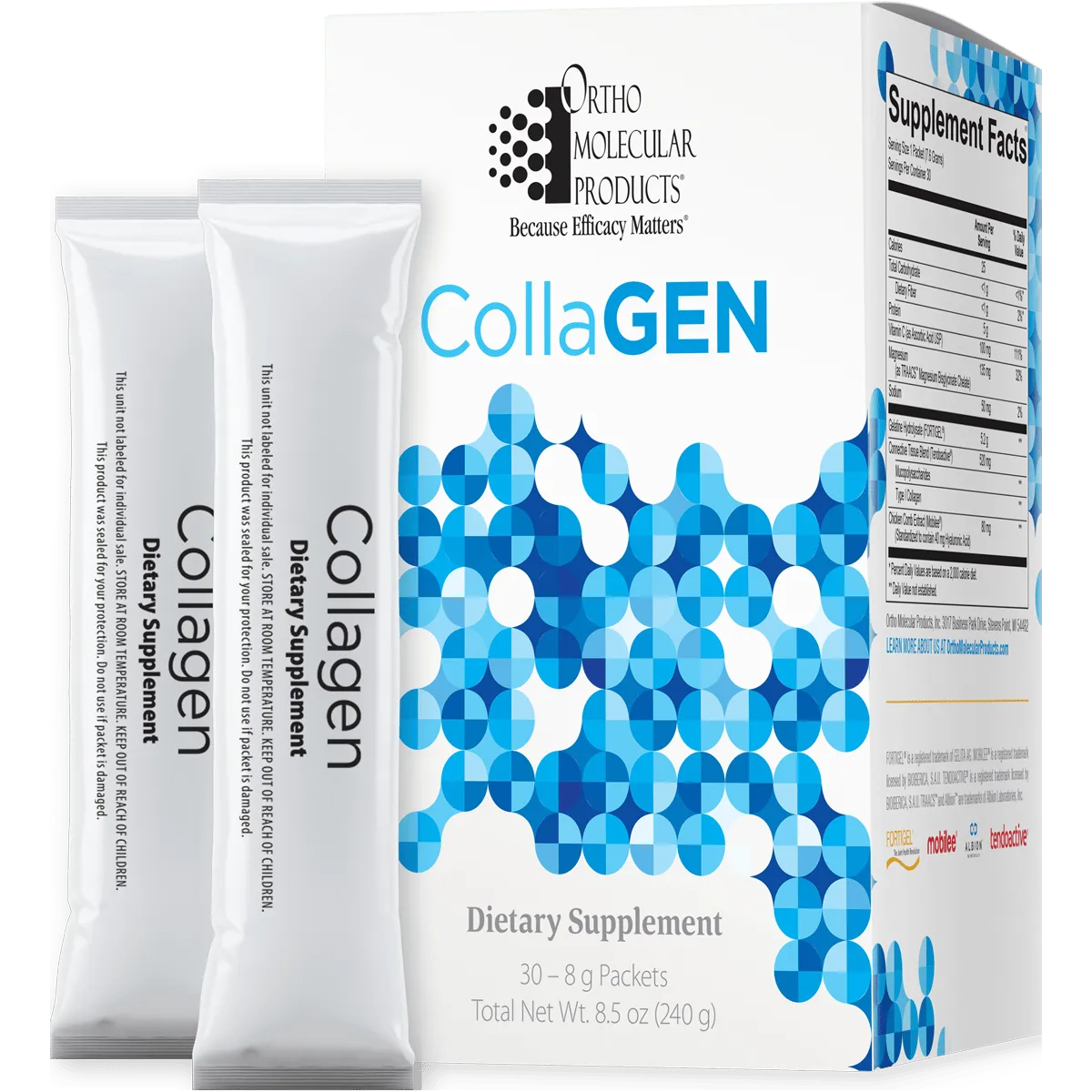
When we think of connective tissue, we often think of athletes recovering from sports injuries. However, for those with complex chronic illnesses, connective tissue health is a daily battle against chronic inflammation and cellular exhaustion. The body's extracellular matrix—the biological scaffolding that holds our joints, blood vessels, and organs together—can become a casualty of an overactive immune system. This is where targeted nutritional support becomes vital. CollaGEN Stick Packs by Ortho Molecular Products offer a highly specialized, clinically studied approach to preserving and rebuilding this essential structural network. By combining bioactive collagen peptides, mucopolysaccharides, and crucial enzymatic cofactors, this formulation aims to go beyond simply masking discomfort, instead providing the cellular building blocks necessary for true structural repair.
TL;DR
Chronic illnesses like Long COVID and ME/CFS can cause severe connective tissue and joint degradation.
CollaGEN provides targeted bioactive peptides to support cartilage, tendon, and ligament repair.
Key ingredients like FORTIGEL and MOBILEE may help manage joint pain and tissue laxity.
Consult your healthcare provider before starting new supplements for complex chronic conditions.
What is CollaGEN?
The Extracellular Matrix and Structural Proteins
To understand how a supplement like CollaGEN works, we must first look at the biological environment it is designed to support: the extracellular matrix (ECM). The ECM is a complex, three-dimensional network of macromolecules that provides structural and biochemical support to surrounding cells. It is the "glue" that holds the human body together, comprising cartilage, tendons, ligaments, fascia, and the structural walls of our blood vessels. The most abundant protein within this matrix—and indeed, the most abundant protein in the entire human body—is collagen. Accounting for over 30% of our total body protein, collagen provides the tensile strength that allows our tissues to stretch, bend, and bear weight without tearing.
In a healthy body, the production and maintenance of collagen is a continuous, dynamic process. Specialized cells called fibroblasts (in connective tissues) and chondrocytes (in cartilage) are constantly synthesizing new collagen fibers while enzymes clear away old, damaged tissue. This delicate balance ensures that our joints remain lubricated, our tendons stay resilient, and our blood vessels maintain their elasticity. However, when the body is subjected to chronic stress, aging, or systemic inflammation, this balance tips toward degradation. The body begins breaking down collagen faster than it can rebuild it, leading to joint discomfort, structural instability, and delayed healing.
Beyond Basic Amino Acids: A Targeted Approach
Not all collagen supplements are created equal. Many standard commercial products provide large, intact collagen proteins that the digestive system simply breaks down into generic amino acids, which the body may or may not use to rebuild connective tissue. CollaGEN takes a fundamentally different, highly targeted approach. It utilizes three patented, clinically studied ingredients: FORTIGEL®, TENDAXION™, and MOBILEE®. These ingredients are not just raw materials; they are bioactive signaling molecules. Through highly controlled enzymatic hydrolysis, the collagen in this formulation is broken down into specific, low-molecular-weight peptides.
When these specific peptides enter the bloodstream, they act like a "lock and key" on the receptor sites of target cells. Instead of just passively floating through the body, these bioactive peptides actively stimulate chondrocytes and fibroblasts, commanding them to upregulate their natural production of new Type II collagen and proteoglycans. This means the supplement is not just providing the bricks to build a house; it is actively hiring the construction workers to do the building.
The Essential Role of Enzymatic Cofactors
Building resilient connective tissue requires more than just collagen peptides; it requires metabolic energy and precise chemical bonding. This is why CollaGEN includes highly specific doses of Vitamin C and Magnesium bisglycinate. Collagen synthesis is a highly complex biochemical process. For a loose strand of amino acids to transform into a strong, tightly wound triple helix (known as tropocollagen), it must undergo a process called enzymatic hydroxylation.
This cross-linking process relies entirely on enzymes called prolyl-4-hydroxylase and lysyl hydroxylase. These enzymes require Vitamin C as a non-negotiable electron donor to remain active. Without Vitamin C, the body produces weak, under-hydroxylated collagen that rapidly falls apart. Simultaneously, the actual synthesis of the protein chain requires cellular energy (ATP). Magnesium acts as the essential catalyst, binding to ATP to provide the energy required for fibroblasts to assemble the connective tissue matrix. Together, these cofactors ensure that the bioactive peptides are successfully integrated into strong, lasting tissue.
How Chronic Illness Impacts Connective Tissue
The Viral Trigger and Matrix Metalloproteinases (MMPs)
For individuals living with Long COVID and ME/CFS, the breakdown of connective tissue is often a direct consequence of immune dysregulation. When the body fights a severe viral infection like SARS-CoV-2, the immune system releases a flood of pro-inflammatory cytokines to neutralize the threat. As part of this inflammatory response, the body upregulates the production of enzymes known as Matrix Metalloproteinases (MMPs). In a healthy, acute immune response, MMPs act like molecular pruning shears. They temporarily break down the extracellular matrix to allow white blood cells to travel through tissues and reach the site of infection.
However, in post-viral syndromes, this inflammatory response fails to shut off. The immune system remains locked in a state of chronic activation. As a result, virus-induced endothelial senescence and a dysfunctional immune system lead to impaired regulation of tissue repair and dysregulated inflammatory processes. The body is literally chewing up its own structural scaffolding. This acquired tissue degradation explains why many Long COVID and ME/CFS patients suddenly develop widespread joint pain, tendonitis, and a feeling of physical fragility that they never experienced prior to their illness.
The Ehlers-Danlos Syndrome (EDS) and Hypermobility Connection
This post-viral tissue degradation is particularly devastating for individuals who already have underlying connective tissue variants. Clinical data reveals a striking overlap between Long COVID, ME/CFS, and hypermobility spectrum disorders, including hypermobile Ehlers-Danlos Syndrome (hEDS). Research shows that joint hypermobility is present in 30% to 57% of patients with these post-viral conditions, significantly higher than the general population. EDS is a genetic disorder characterized by flawed collagen blueprints, resulting in highly elastic, fragile tissues.
Because their blood vessels and connective tissues are already structurally vulnerable, individuals with EDS suffer more severe vascular and tissue injuries during the massive inflammatory events of a viral infection. It is crucial to note that oral collagen supplements cannot cure the genetic mutations of EDS—the body will still use its flawed genetic blueprint to assemble new proteins. However, because post-viral inflammation causes massive acquired damage to the extracellular matrix, these patients require significantly higher amounts of amino acids to repair the inflammation-induced damage. Supplementation provides the necessary raw materials to help stabilize the tissue that is actively under immune attack.
Mast Cell Activation and Tissue Degradation
The destruction of connective tissue in chronic illness is further accelerated by mast cell activation syndrome (MCAS), a highly common comorbidity in this patient population. Mast cells are immune cells stationed throughout our connective tissues, particularly near blood vessels and nerves. When they become hyper-reactive, they continuously degranulate, releasing histamine, tryptase, and other inflammatory mediators directly into the surrounding tissue.
Tryptase, in particular, is a potent protease that directly breaks down collagen and activates even more MMP enzymes. This creates a vicious cycle: mast cells trigger tissue breakdown, and the resulting tissue damage triggers further mast cell activation. This ongoing degradation of the vascular walls contributes heavily to the blood pooling and autonomic nervous system dysfunction seen in dysautonomia and POTS. By providing targeted structural support, we can help the body attempt to outpace this ongoing cellular destruction.
CollaGEN: Supporting Structural Integrity and Repair
FORTIGEL®: Stimulating Chondrocytes for Cartilage Repair
To combat the systemic breakdown of connective tissue, CollaGEN utilizes three distinct, synergistic ingredients, each targeting a specific component of the musculoskeletal system. The first is FORTIGEL®, a highly specialized formulation of Bioactive Collagen Peptides (BCPs) developed by GELITA. Unlike generic collagen, FORTIGEL is engineered with a specific, optimized mean molecular weight of approximately 3 kilodaltons (kDa). This precise sizing allows the peptides to resist complete digestion in the gut, enabling them to cross the intestinal barrier and enter the bloodstream intact.
Once in circulation, these peptides accumulate directly within the articular cartilage of the joints. Here, they exert their primary mechanism of action: cellular signaling. FORTIGEL peptides bind to the receptors of chondrocytes, the specialized cells responsible for maintaining cartilage. This binding event triggers an anabolic (tissue-building) response, stimulating the chondrocytes to significantly increase their synthesis of Type II collagen and proteoglycans. By actively promoting the regeneration of the cartilage matrix, FORTIGEL helps counteract progressive tissue degeneration, increase cartilage density, and restore the natural cushioning of the joints, addressing the root cause of discomfort rather than just masking the pain.
TENDAXION™: The "Glue" for Tendons and Ligaments
While FORTIGEL targets cartilage, TENDAXION™ is specifically formulated to promote the health, recovery, and structural integrity of tendons, ligaments, and fascia. Tendons are fibrous tissues that connect muscle to bone, and their dry weight is composed of up to 80% Type I collagen. TENDAXION provides a synergistic blend of hydrolyzed Type I collagen and mucopolysaccharides (MPS).
Mucopolysaccharides are often described as the "glue" of the extracellular matrix. They are crucial for maintaining the structural integrity, elasticity, spacing, and lubrication of collagen fibers, allowing tendons to stretch and flex without tearing. In vitro studies demonstrate that the MPS in TENDAXION stimulate tenocytes (tendon cells) to increase the endogenous synthesis of both collagenous and non-collagenous proteins. By providing both the Type I collagen building blocks and the MPS "glue," this ingredient helps organize collagen fibers, promoting self-repair and restoring mechanical tensile strength to connective tissues weakened by post-viral inflammation or chronic stress.
MOBILEE®: Endogenous Hyaluronic Acid and Muscle Homeostasis
The third pillar of this formulation is MOBILEE®, a patented, natural ingredient extracted from rooster combs. Unlike standard synthetic or fermented hyaluronic acid (HA), Mobilee provides a complex, naturally occurring biological matrix consisting of hyaluronic acid, polysaccharides, and collagen. This unique composition allows it to deliver profound "dual-action" support, targeting both joint lubrication and the surrounding muscle tissue at a remarkably low daily dose of just 80 mg.
Mobilee's mechanism of action is highly dynamic. It does not merely supply the body with exogenous hyaluronic acid; it actively stimulates the body’s synoviocytes (the cells in the synovial membrane of the joint). Clinical data indicates that Mobilee can multiply the body's natural endogenous production of hyaluronic acid by up to 200-fold. Furthermore, transcriptomic analyses show that Mobilee actively downregulates the expression of specific cartilage-degrading enzymes, such as Matrix Metallopeptidase 23B (MMP23B). By simultaneously boosting lubrication and halting enzymatic degradation, Mobilee protects the joints while also promoting myocyte (muscle cell) proliferation, helping to defend against the muscle atrophy often experienced by patients dealing with severe post-exertional malaise (PEM) and prolonged bed rest.

Symptoms CollaGEN May Help Manage
Targeting Musculoskeletal Discomfort
Because the ingredients in CollaGEN work at the cellular level to rebuild the extracellular matrix and downregulate destructive enzymes, supplementation may help manage a variety of symptoms associated with chronic illness, dysautonomia, and post-viral syndromes. While individual results vary, targeted connective tissue support can address several key areas of discomfort:
Widespread Joint Pain: By stimulating chondrocytes to produce new Type II collagen and proteoglycans (via FORTIGEL), the supplement helps restore cartilage density and joint cushioning, reducing the bone-on-bone friction that causes chronic aching.
Tendon and Ligament Stiffness: The mucopolysaccharides and Type I collagen in TENDAXION provide the necessary "glue" and structural fibers to help tendons heal from micro-tears, improving elasticity and reducing the sharp pains associated with tendinopathy.
Post-Viral Tissue Laxity: For patients experiencing acquired hypermobility or a feeling of physical instability after a viral infection, providing high doses of bioavailable amino acids helps the body repair the extracellular matrix degraded by inflammatory MMP enzymes.
Muscle Weakness and Atrophy: The MOBILEE extract has been shown to promote myocyte proliferation and downregulate muscle-degrading genes, offering crucial support for patients struggling with muscle wasting due to severe fatigue, post-exertional malaise (PEM), or prolonged periods of inactivity.
Synovial Swelling and Effusion: By multiplying the body's endogenous production of hyaluronic acid and inhibiting inflammatory prostaglandins, the formulation helps reduce the fluid buildup and swelling inside the joint capsules.
Practical Considerations: Forms, Dosing, and Absorption
Molecular Weight and Intestinal Absorption
When evaluating a collagen supplement, bioavailability is the most critical factor. The human digestive tract is designed to break down large proteins into their constituent amino acids before they can be absorbed. If a collagen supplement consists of large, unhydrolyzed molecules, the body simply digests it like a piece of meat, and the specific therapeutic benefits of the collagen structure are lost. CollaGEN overcomes this hurdle through advanced enzymatic hydrolysis.
The FORTIGEL peptides in this formulation are cleaved to a highly specific mean molecular weight of 3 kilodaltons (kDa). This precise sizing allows the peptides to survive the harsh acidic environment of the stomach and resist complete breakdown by intestinal enzymes. Instead of being dismantled, these optimized peptides can cross the intestinal epithelial barrier intact, entering the systemic circulation where they can directly reach the target connective tissues and initiate their cellular signaling functions.
The Magnesium Bisglycinate Advantage
The inclusion of Magnesium bisglycinate in this formulation is a masterstroke of biochemical engineering. Magnesium bisglycinate is a chelated compound where one magnesium ion is covalently bonded to two molecules of the amino acid glycine. This specific form offers a massive dual advantage for connective tissue repair. First, glycine is the primary building block of collagen, making up roughly 33% of its entire amino acid structure. By using the bisglycinate form, the supplement directly delivers the exact raw material needed for the collagen triple helix.
Second, this chelated structure drastically improves magnesium absorption. Standard magnesium supplements (like magnesium oxide) rely on passive ion channels in the gut, which are easily saturated and often cause gastrointestinal distress or laxative effects. Magnesium bisglycinate, however, is recognized by the body as a dipeptide (a small protein). It bypasses the standard mineral channels entirely and is actively transported across the intestinal wall via specialized PEPT1 amino acid highways. This results in an extraordinary absorption rate of 80% to 90%, ensuring that the magnesium reaches the cells to activate the ATP required for protein synthesis without causing stomach upset.
Dosing, Timing, and Safety
The suggested use for CollaGEN is 1 scoop (8 grams) mixed into 8 ounces of water or a beverage of choice per day. Because the bioactive peptides and chelated minerals are highly stable, the powder can also be added to food or baking products without losing its efficacy. For optimal absorption, many practitioners recommend taking collagen supplements away from heavy, high-protein meals to prevent competition for amino acid transporters in the gut, though the specific hydrolysis of these patented ingredients makes them highly bioavailable regardless of timing.
From a safety perspective, the ingredients in this formulation are exceptionally well-tolerated. MOBILEE has achieved GRAS (Generally Recognized as Safe) status in the United States and Novel Food authorization in Europe. The inclusion of 100 mg of Vitamin C (as Ascorbic Acid USP) ensures that the body has the necessary electron donors to keep the prolyl-4-hydroxylase enzymes active for collagen cross-linking. As with any targeted nutritional therapy, patients with complex chronic illnesses, particularly those with severe MCAS or histamine intolerances, should introduce new supplements slowly and consult with their healthcare provider to ensure it aligns with their comprehensive management plan.

Follow the Science
Clinical Evidence for Cartilage Regeneration
The efficacy of the ingredients in CollaGEN is supported by a robust body of clinical literature, moving far beyond anecdotal claims. FORTIGEL® is one of the most scientifically validated collagen peptides on the market, backed by over 30 years of research and more than 20 clinical studies involving over 2,500 participants. A pivotal 2021 randomized, double-blind, placebo-controlled trial published in Nutrients investigated the effects of FORTIGEL on 180 physically active adults experiencing exercise-induced knee pain.
Participants were given either 5 grams of FORTIGEL or a placebo daily for 12 weeks. The researchers found that the FORTIGEL group experienced a statistically significant reduction in activity-related knee pain, amounting to a roughly 42% overall reduction in pain from baseline compared to the placebo group. Furthermore, advanced Magnetic Resonance Imaging (MRI) studies conducted by Harvard Medical School and Tufts Medical Center have provided objective, visual confirmation of these benefits. The imaging demonstrated a statistically significant increase in proteoglycan density in the joint cartilage of participants taking FORTIGEL, proving that the peptides actively stimulate structural cartilage regeneration rather than just providing symptomatic relief.
Tendon Healing and Functional Mobility
The clinical data supporting TENDAXION™ is equally compelling, particularly for individuals suffering from chronic tendinopathies. A 90-day multicenter clinical trial evaluated patients taking the specific mucopolysaccharide and Type I collagen formulation found in TENDAXION. The results were dramatic.
Patients experienced a notable reduction in pain during the first 30 days of supplementation. By the 90-day mark, patients reported up to an 81% reduction in discomfort on the Visual Analogue Scale (VAS). Additional studies investigating the supplement's effects when combined with physical rehabilitation showed a statistically significant reduction in functional disability compared to control groups undergoing rehabilitation alone. Ultrasound-guided imaging in these clinical settings suggests that these pain improvements are accompanied by actual structural healing, indicating a reduction in the pathological thickness of affected tendons.
Transcriptomic Data on Synovial Health
The research behind MOBILEE® provides fascinating insights into how nutritional interventions can alter gene expression to protect connective tissue. In a randomized, double-blind, placebo-controlled intervention, healthy individuals with mild joint discomfort consumed Mobilee daily for 90 days. Researchers then performed whole-genome microarray analysis on peripheral blood samples to track changes at the genetic level.
The transcriptomic analysis revealed that daily supplementation successfully reduced pain intensity and synovial effusion (joint swelling). More importantly, the blood RNA analysis established a direct inverse relationship between the downregulation of matrix-degrading genes (like MMP23B) and improved knee muscular strength. In separate isokinetic dynamometer evaluations, subjects taking Mobilee exhibited a significant increase in the maximum peak torque of their knee extensors, reflecting enhanced strength in the muscles that support the joint. This data confirms that Mobilee works on a profound biological level to halt tissue degradation and promote muscular homeostasis.
The Path Forward
A Foundation for Healing
Living with the physical toll of Long COVID, ME/CFS, dysautonomia, or MCAS can feel like a constant battle against your own body. When your joints ache, your tendons feel stiff, and your physical foundation feels fragile, it is completely valid to feel frustrated and exhausted, especially when trying to navigate stressful events like surviving the holidays with a chronic illness. The systemic inflammation and immune dysregulation associated with these conditions take a very real, measurable toll on the extracellular matrix. Acknowledging this structural damage is a crucial step in validating your experience and finding effective management strategies.
While there are no overnight cures for complex chronic illnesses, providing your body with the precise, clinically studied building blocks it needs to repair connective tissue can be a powerful component of your healing journey. Supplements like CollaGEN are designed to work synergistically with a comprehensive care plan that includes pacing, symptom tracking, mast cell stabilization, and nervous system regulation. By targeting the cellular mechanisms of cartilage regeneration and tendon repair, you can help support your body's natural resilience. As always, please consult with your healthcare provider before beginning any new supplement regimen to ensure it is the right fit for your unique medical needs.
Sources
Post-exertional malaise among people with long COVID compared to ME/CFS (Work Journal)
Branded collagen peptides, Fortigel, may support exercise-induced knee pain (Nutritional Outlook)
Tendaxion / Tendoactive Product Data and Clinical Efficacy (Stauber USA)
Molecular Properties of the Bisglycinate Chelate and PEPT1 Transport (WBCIL)