Can Collagen JS Support Joint Pain and Connective Tissue Health in Long COVID and Dysautonomia?
March 5, 2026
Collagen JSBioCell CollagenLong COVID
Share:
Disclaimer: The information provided here is for educational purposes only and is not intended as medical advice. It should not be used to diagnose, treat, cure, or prevent any medical condition. Instead, use it as a starting point for discussion with your healthcare provider. Always consult with a qualified healthcare provider before starting any new medication, supplement, device, or making changes to your health regimen.
Months or even years after an initial viral infection, many individuals living with Long COVID, myalgic encephalomyelitis/chronic fatigue syndrome (ME/CFS), and dysautonomia find themselves battling a surprising and debilitating symptom: severe, unrelenting joint pain. While much of the conversation around these complex chronic conditions focuses on autonomic dysfunction and extreme fatigue, the physical deterioration of connective tissue is a profound piece of the puzzle. Patients often describe feeling as though their bodies are aging at an accelerated rate, with stiff joints, aching cartilage, and changes in skin elasticity becoming daily hurdles.
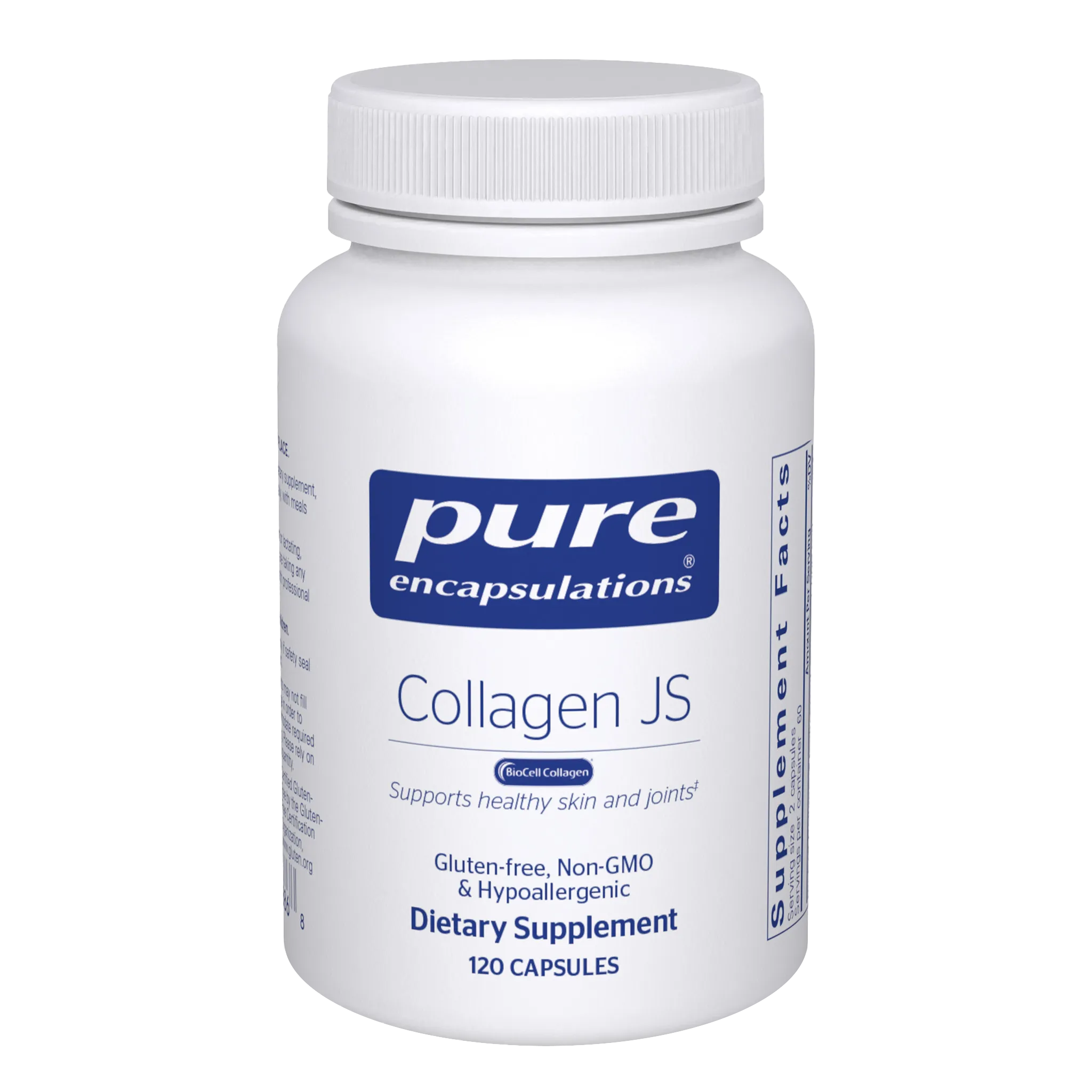
In the search for relief, many patients turn to standard collagen powders, only to find them ineffective or, in some cases, a trigger for symptom flares. This is because the connective tissue dysfunction seen in conditions like Long COVID and mast cell activation syndrome (MCAS) is not a simple cosmetic issue; it is a complex biochemical breakdown of the body's structural scaffolding. To address this, we must look beyond basic protein powders and examine clinically studied, bioavailable compounds. Collagen JS, featuring the patented BioCell Collagen®, offers a unique matrix of hydrolyzed type II collagen, hyaluronic acid, and chondroitin sulfate designed to support the exact structural pathways compromised by chronic systemic inflammation.
TL;DR
Collagen JS offers a bioavailable matrix of type II collagen, hyaluronic acid, and chondroitin sulfate.
It supports joint health, skin hydration, and connective tissue repair for chronic illness patients.
Clinical studies suggest it may help reduce severe joint pain, friction, and morning stiffness.
MCAS patients should consult a doctor before use, as collagen can trigger histamine release.
What is Collagen JS and BioCell Collagen®?
The Extracellular Matrix and Structural Scaffolding
To understand how Collagen JS works, we must first look at the natural function of connective tissue in a healthy body. Human cells do not simply float in empty space; they are suspended within a complex, three-dimensional web known as the extracellular matrix (ECM). The ECM is the foundational scaffolding of the entire body, providing structural integrity to our joints, skin, blood vessels, and organs. It dictates how cells communicate, how tissues stretch, and how our joints absorb the mechanical shock of daily movement. When the ECM is healthy, our joints glide smoothly, our blood vessels maintain proper tone, and our skin remains firm and hydrated.
The primary building block of this matrix is collagen, the most abundant protein in the human body. Specifically, Type II collagen is the major structural component of hyaline cartilage, the smooth, pearly tissue that caps the ends of our bones and allows them to move without friction. However, collagen does not work alone. It is deeply intertwined with glycosaminoglycans (GAGs)—long, unbranched carbohydrate chains that attract and bind massive amounts of water. The two most critical GAGs in this system are hyaluronic acid (HA) and chondroitin sulfate (CS). Together, collagen provides the tensile strength (the "steel rebar"), while HA and CS provide the compressive resistance and hydration (the "concrete" and "water").
The Unique Composition of BioCell Collagen®
Collagen JS by Pure Encapsulations is built around a patented ingredient called BioCell Collagen®. Unlike standard collagen supplements, which are often derived from heavily processed bovine hides or fish scales and contain a random assortment of collagen types, BioCell Collagen is sourced exclusively from hormone- and antibiotic-free chicken sternal cartilage. This specific source is chosen because its natural biochemical composition closely mirrors the human articular cartilage found in our joints. It is not just an isolated protein; it is a naturally occurring, synergistic matrix.
A standard dose of this complex naturally yields approximately 60% hydrolyzed Type II collagen, 20% depolymerized chondroitin sulfate, and 10% low molecular weight hyaluronic acid. This specific ratio is crucial because it provides the body with the exact raw materials it needs to synthesize new cartilage and synovial fluid. Synovial fluid is the thick, viscous liquid that lubricates the joints, and it relies heavily on high concentrations of hyaluronic acid to maintain its shock-absorbing properties. By providing these components together, the supplement supports the entire ecosystem of the joint rather than just supplying a single isolated nutrient.
Furthermore, the natural inclusion of chondroitin sulfate plays a vital regulatory role at the cellular level. Chondroitin is not just a structural building block; it actively interacts with the cells that build cartilage, known as chondrocytes. It helps to stimulate these cells to produce more native collagen and proteoglycans, while simultaneously helping to downregulate the activity of destructive enzymes that break down cartilage tissue. This dual action—providing the building blocks while protecting the existing structure—is what sets a comprehensive matrix like BioCell Collagen apart from standard, single-ingredient supplements.
How Chronic Illness Impacts Connective Tissue and Joints
Long COVID and the Endothelial Glycocalyx
In chronic illnesses like Long COVID, the body's connective tissue and structural matrices undergo profound, systemic assaults. One of the most critical areas of damage occurs within the blood vessels. The luminal (inner) surface of every blood vessel is lined with a microscopic, gel-like protective layer called the endothelial glycocalyx (EG). This layer is primarily composed of the exact same glycosaminoglycans found in joint cartilage: hyaluronic acid and chondroitin sulfate. The glycocalyx acts as a Teflon-like coating, regulating blood flow, preventing inappropriate clotting, and stopping immune cells from attacking the blood vessel walls.
Research indicates that the SARS-CoV-2 spike protein, combined with the resulting systemic cytokine storm, directly assaults this vascular lining. The inflammatory response upregulates enzymes like hyaluronidase and heparanase, which effectively "chew up" the glycocalyx. As this protective layer is stripped away, the hyaluronic acid and chondroitin sulfate chains are severed and shed into the bloodstream. This degradation exposes the sub-endothelial collagen matrix beneath. When circulating platelets and clotting proteins encounter this bare collagen, they bind to it instantly, creating a highly prothrombotic (clot-promoting) environment that is heavily implicated in the formation of fibrin amyloid microclots. These microclots block tiny capillaries, causing the severe tissue hypoxia (oxygen starvation) that drives Long COVID fatigue and muscle pain.
MCAS, Proteases, and Matrix Destruction
The destruction of connective tissue is also a hallmark of mast cell activation syndrome (MCAS), a condition frequently comorbid with Long COVID and dysautonomia. Mast cells are immune sentinels that reside exclusively within the connective tissue (the extracellular matrix). In a healthy body, there is a continuous, bidirectional communication between mast cells and the surrounding matrix. High-molecular-weight hyaluronic acid actually binds to CD44 receptors on the surface of mast cells, sending a calming signal that prevents them from inappropriately releasing inflammatory chemicals.
However, in MCAS, these mast cells become highly unstable and chronically degranulate. When they degranulate, they release not only histamine but also powerful tissue-destroying enzymes called proteases (such as tryptase and chymase) and matrix metalloproteinases (MMPs). These enzymes rapidly degrade the surrounding hyaluronic acid and collagen. This localized destruction of connective tissue leads to systemic inflammation, poor wound healing, and severe joint pain. Furthermore, as the ECM is destroyed, the calming signal from healthy hyaluronic acid is lost, resulting in a vicious cycle of runaway mast cell activation and further connective tissue breakdown.
POTS and Vascular Laxity
This widespread degradation of collagen and hyaluronic acid has direct consequences for the autonomic nervous system, particularly in patients with postural orthostatic tachycardia syndrome (POTS). Blood vessels rely on the connective tissue matrix to maintain their tone, strength, and elasticity. If the extracellular matrix is inherently faulty—as seen in genetic hypermobility spectrum disorders like Ehlers-Danlos Syndrome (EDS)—or if it is being actively degraded by viral endothelial damage and mast cell proteases, the blood vessels become overly lax and lose their ability to constrict properly.
When a patient with POTS stands up, gravity pulls their blood downward. Normally, healthy vascular connective tissue triggers the blood vessels in the legs to constrict, pushing blood back up to the brain. However, in patients with degraded vascular ECM, the blood vessels act like overstretched rubber bands. Blood pools in the lower extremities, starving the brain of oxygen and forcing the heart into a compensatory, rapid tachycardia. This is why supporting the structural integrity of the body's collagen and glycosaminoglycan networks is not just about joint pain; it is fundamentally tied to vascular health and autonomic stability.
Collagen JS: Supporting Joint Function and Tissue Health
Stimulating Chondrocytes and Fibroblasts
Supplementing with a highly specialized matrix like Collagen JS offers a targeted approach to supporting the body's degraded connective tissues. The primary mechanism of action lies in how the low-molecular-weight collagen peptides interact with the body's native cells. When these specific dipeptides and tripeptides (particularly those containing the amino acids hydroxyproline and proline) enter the bloodstream, they do not merely act as passive building blocks. Instead, they act as active signaling molecules. They bind to receptors on the surface of chondrocytes (the cells responsible for building joint cartilage) and fibroblasts (the cells responsible for building skin and connective tissue).
Once bound, these peptides stimulate the chondrocytes and fibroblasts to upregulate their own natural production of new Type II collagen and extracellular matrix components. This is a crucial distinction: the supplement is not just temporarily filling in gaps; it is actively signaling the body's cellular machinery to repair and rebuild the structural scaffolding that has been damaged by chronic inflammation, viral infection, or mast cell overactivity. This stimulation helps to restore the tensile strength of the cartilage, improving its ability to absorb the mechanical stress of daily movement and reducing the friction that causes severe joint pain.
Replenishing Hyaluronic Acid and Synovial Fluid
In addition to stimulating collagen production, the naturally occurring hyaluronic acid (HA) in BioCell Collagen plays a vital role in restoring joint mechanics and tissue hydration. As we established, chronic illness and systemic inflammation rapidly deplete the body's HA reserves, leading to "dry," aching joints and degraded vascular linings. The HA provided in Collagen JS helps to directly replenish the synovial fluid within the joint capsule. Because hyaluronic acid can hold up to 1,000 times its weight in water, it dramatically increases the viscosity and lubricating power of the synovial fluid.
This enhanced lubrication is essential for patients experiencing the deep, grinding joint pain often associated with Long COVID and ME/CFS. By restoring the fluid cushion between the bones, the mechanical irritation that triggers localized pain receptors is significantly reduced. Furthermore, within the dermal matrix of the skin, this replenished HA attracts and retains massive amounts of moisture. This promotes skin hydration from the inside out, supporting elasticity and firmness, and helping to counteract the accelerated aging and skin thinning that many chronic illness patients report.
Chondroitin Sulfate and Enzyme Regulation
The third pillar of this synergistic matrix is chondroitin sulfate. While collagen provides structure and HA provides lubrication, chondroitin acts as a powerful protector of the newly formed tissue. In the highly inflammatory environment of a chronic illness flare, the body overproduces matrix metalloproteinases (MMPs)—the enzymes responsible for breaking down cartilage and connective tissue. Chondroitin sulfate has been shown to help inhibit the activity of these destructive MMPs, effectively slowing down the rate of tissue degradation.
By simultaneously stimulating new tissue synthesis (via collagen peptides) and inhibiting tissue destruction (via chondroitin sulfate), Collagen JS helps to shift the balance within the joints from a state of chronic breakdown to a state of maintenance and repair. This dual-action mechanism is why a comprehensive matrix is often more effective than supplementing with isolated collagen or isolated hyaluronic acid alone. It addresses the complex, multi-faceted nature of connective tissue dysfunction at the cellular level.
Symptoms Collagen JS May Help Manage
While Collagen JS is not a cure for complex chronic conditions, its targeted support of the extracellular matrix may help manage several debilitating secondary symptoms associated with Long COVID, ME/CFS, dysautonomia, and MCAS. By providing the essential building blocks for cartilage and synovial fluid, patients may experience relief in the following areas:
Severe Joint Pain and Aching: By stimulating new cartilage synthesis and replenishing the shock-absorbing synovial fluid, the supplement helps reduce the bone-on-bone friction and mechanical irritation that causes deep, persistent joint pain.
Morning Stiffness and Immobility: The enhanced lubrication provided by the hyaluronic acid matrix helps joints move more freely, potentially reducing the severe stiffness and lack of mobility that many patients experience upon waking.
Skin Thinning and Loss of Elasticity: Chronic inflammation can rapidly age the skin. The highly bioavailable hyaluronic acid and collagen peptides support the dermal matrix, attracting moisture to improve skin hydration, firmness, and elasticity.
Exercise Recovery and PEM-Related Aches: While it does not prevent post-exertional malaise (PEM), supporting the structural integrity of the joints and connective tissue may help reduce the localized physical aches and pains that follow minor physical exertion.
General Connective Tissue Support: By providing the raw materials (HA and chondroitin) that make up the endothelial glycocalyx and vascular scaffolding, the supplement indirectly supports the structural environment necessary for healthy blood vessel function.
Practical Considerations: Forms, Dosing, and Absorption
The Importance of Low Molecular Weight
When considering a collagen supplement, the most critical factor is bioavailability—the proportion of the substance that actually enters the circulation and has an active effect. In its native state, collagen is a massive, complex protein molecule that the human digestive system struggles to break down. If you consume unhydrolyzed or poorly processed collagen, it simply passes through the digestive tract without being absorbed. BioCell Collagen® overcomes this biological barrier through a highly controlled, patented hydrolysis process that breaks the massive protein down into extremely small fragments.
Specifically, the hydrolyzed Type II collagen in Collagen JS operates in a very low molecular weight range of 1 to 2.5 kDa (1,000 to 2,500 Daltons). This extremely small Dalton size is what allows the dipeptides and tripeptides to be rapidly and efficiently absorbed through the intestinal wall and into the bloodstream. Because of this superior bioavailability, clinical efficacy can be achieved at much lower daily doses compared to standard collagen supplements. While standard powders often require 10 to 20 grams per day to show any effect, BioCell Collagen is clinically dosed at just 1 to 2 grams per day.
Dosing and Clinical Timelines
The suggested use for Collagen JS is 2 capsules, 1-2 times daily, taken with meals and 8-10 ounces of water. Taking the supplement with a meal can help stimulate the digestive enzymes necessary for optimal breakdown and absorption. It is important to have realistic expectations regarding the timeline for clinical benefits. Rebuilding cartilage, replenishing synovial fluid, and altering the dermal matrix are slow, biological processes. In clinical trials, statistically significant improvements in joint comfort and skin hydration were typically observed after 8 to 12 weeks of consistent, daily supplementation. Patience and consistency are key.
A Crucial Note for MCAS Patients (Histamine)
While collagen can be highly beneficial for connective tissue, patients with mast cell activation syndrome (MCAS) must approach it with caution. All collagen, regardless of the source, is naturally rich in the amino acid histidine. Once ingested, the body readily converts histidine into histamine. For a patient with highly unstable mast cells, this sudden influx of histamine can trigger a systemic inflammatory cascade, resulting in symptom flares, gastrointestinal distress, or increased tachycardia. If you have MCAS or severe histamine intolerance, it is highly recommended to consult with your healthcare provider before starting any collagen supplement. They may advise starting with a very low dose to test your individual tolerance or focusing on mast cell stabilization therapies first.

Follow the Science
Clinical Trials on Joint Function
The efficacy of BioCell Collagen is supported by several robust, peer-reviewed clinical trials, distinguishing it from many generic joint supplements on the market. The most frequently cited study, published in the Journal of Agricultural and Food Chemistry in 2012, was an 80-subject randomized, double-blind, placebo-controlled trial. Participants suffering from progressive joint pain and osteoarthritis were given 2 grams of BioCell Collagen daily for 70 days. The results were highly significant: the treatment group experienced a dramatic reduction in joint pain, stiffness, and physical disability compared to the placebo group. Remarkably, 40% of the subjects taking the supplement experienced at least a 30% overall improvement in their symptoms, compared to only 3% in the placebo group.
An earlier pilot intervention trial involving 16 subjects with restricted joint mobility further established these findings. Over an 8-week period, participants taking 2 grams of BioCell Collagen daily demonstrated significant improvements across all measured parameters of joint health, including pain reduction and the ability to perform activities of daily living. The researchers noted that the supplement provided a safe, effective alternative for managing joint discomfort without the severe gastrointestinal side effects often associated with long-term NSAID (non-steroidal anti-inflammatory drug) use.
Dermatological and Anti-Aging Studies
Beyond joint health, the low-molecular-weight hyaluronic acid and collagen peptides in BioCell Collagen have been extensively studied for their impact on the dermal matrix. A 2012 open-label pilot study evaluated healthy females with visible signs of natural and photoaging. After taking just 1 gram of BioCell Collagen daily for 12 weeks, participants saw a significant reduction in global lines and wrinkles. More importantly for chronic illness patients suffering from systemic dryness, skin dryness and scaling plummeted by a remarkable 76%. The study also observed a significant increase in dermal microcirculation and a 6.3% increase in actual dermal collagen content, proving that the supplement actively alters the physical structure of the skin from within.
Emerging Research on the Glycocalyx
While direct clinical trials on BioCell Collagen for Long COVID are still needed, the broader scientific community is intensely focused on the structural components it provides. Recent research on the immunopathogenesis of Long COVID highlights the profound degradation of the endothelial glycocalyx and the resulting hypercoagulability and microclot formation. Because the glycocalyx is primarily composed of hyaluronic acid and chondroitin sulfate, therapies aimed at replenishing these specific glycosaminoglycans are currently at the forefront of vascular research. Providing the body with highly bioavailable forms of HA and CS is a logical, science-backed strategy for supporting the foundational rebuilding of these critical vascular barriers.
The Path Forward
A Comprehensive Approach to Tissue Health
Living with the severe joint pain, stiffness, and accelerated physical aging associated with complex chronic illnesses can be incredibly disheartening. When your body's structural scaffolding feels like it is failing, it impacts every aspect of your daily life, from your mobility to your independence. It is important to validate that these symptoms are not just "in your head" or a simple byproduct of being tired; they are the result of profound, measurable biochemical changes within your connective tissue and vascular linings. Acknowledging the physiological reality of this matrix degradation is the first step toward finding effective management strategies.
Next Steps
While no single supplement can cure conditions like Long COVID, ME/CFS, or dysautonomia, targeted nutritional support can play a vital role in improving your quality of life. Collagen JS offers a clinically studied, highly bioavailable matrix of the exact compounds your body needs to support cartilage synthesis, replenish synovial fluid, and maintain skin hydration. When combined with comprehensive medical care, pacing strategies, and tips for surviving the holidays with a chronic illness, supporting your extracellular matrix can be a powerful tool in your management toolkit. Always consult with your healthcare provider before starting any new supplement, especially if you have MCAS or histamine sensitivities, to ensure it aligns with your specific medical needs.