Can CitraNOX Support Endothelial Function and Blood Pressure in Long COVID and Dysautonomia?
March 6, 2026
CitraNOXLong COVIDDysautonomia
Share:
Disclaimer: The information provided here is for educational purposes only and is not intended as medical advice. It should not be used to diagnose, treat, cure, or prevent any medical condition. Instead, use it as a starting point for discussion with your healthcare provider. Always consult with a qualified healthcare provider before starting any new medication, supplement, device, or making changes to your health regimen.
Months or even years after an acute viral infection, many patients find themselves battling a complex web of debilitating symptoms that fall under the umbrella of Long COVID, myalgic encephalomyelitis/chronic fatigue syndrome (ME/CFS), or dysautonomia. While the initial trigger may have been a virus, the lingering aftermath often involves profound dysfunction within the body's vascular system. Patients frequently experience unpredictable blood pressure fluctuations, severe brain fog, crushing fatigue, and blood pooling in their extremities. These symptoms are not merely the result of being "deconditioned" or anxious; they are deeply rooted in physiological changes at the cellular level, specifically within the delicate lining of the blood vessels.
For individuals navigating these complex chronic conditions, understanding the underlying mechanisms of their symptoms is a crucial step toward finding effective management strategies. One of the most significant areas of emerging research focuses on endothelial dysfunction and the depletion of a vital signaling molecule called nitric oxide (NO). When the vascular system loses its ability to properly regulate blood flow and maintain healthy inflammatory balance, the entire body suffers. This is where targeted nutritional support comes into play. CitraNOX®, a specialized formulation by Ortho Molecular, is designed to support cardiometabolic health by enhancing nitric oxide synthesis, maintaining smooth muscle integrity, and optimizing vasodilation. In this comprehensive guide, we will explore the intricate science behind CitraNOX and how its key ingredients may support vascular health for those living with chronic, post-viral illness.
TL;DR
Endothelial dysfunction and nitric oxide depletion are key drivers of Long COVID and dysautonomia symptoms.
CitraNOX uses L-Citrulline, Grape Seed Extract, and Quercetin to support vascular health and microcirculation.
This formula may help manage blood pressure fluctuations, brain fog, and post-exertional fatigue.
Consult your doctor before starting CitraNOX, especially if taking blood pressure or blood-thinning medications.
What is CitraNOX?
To fully grasp how CitraNOX functions within the body, we must first understand the critical role of the endothelium. The endothelium is a microscopically thin layer of simple squamous cells that lines the entire interior surface of blood vessels, from the largest arteries to the smallest capillaries. Far from being a simple passive barrier, the endothelium is a highly active, dynamic endocrine organ. It is responsible for regulating vascular tone (how constricted or relaxed a blood vessel is), controlling cellular adhesion, managing blood clotting cascades, and directing immune cells to sites of injury or infection. In a healthy body, the endothelium acts as the master conductor of cardiovascular homeostasis, ensuring that oxygen and vital nutrients are efficiently delivered to tissues while metabolic waste products are carried away.
When the endothelium is functioning optimally, it maintains a delicate balance between vasodilation (widening of the blood vessels) and vasoconstriction (narrowing of the blood vessels). This balance is essential for maintaining healthy blood pressure levels already within the normal range and ensuring that organs, particularly the brain and the heart, receive adequate perfusion. However, when this delicate cellular lining is subjected to chronic stress—whether from normal aging, metabolic syndrome, or post-viral inflammation—it can become dysfunctional. Endothelial dysfunction is characterized by a shift toward a pro-inflammatory, pro-thrombotic (clot-promoting), and vasoconstrictive state, which lies at the heart of many cardiometabolic and autonomic challenges.
The primary weapon the endothelium uses to maintain vascular health is a short-lived, highly reactive gas called nitric oxide (NO). Discovered as a crucial cardiovascular signaling molecule in the late 20th century, nitric oxide is synthesized directly within the endothelial cells. The production of NO is a complex biochemical process facilitated by an enzyme known as endothelial nitric oxide synthase (eNOS). This enzyme utilizes the amino acid L-arginine, along with oxygen and several vital cofactors like tetrahydrobiopterin (BH4), to catalyze the production of nitric oxide and L-citrulline. Once produced, NO rapidly diffuses into the underlying vascular smooth muscle cells.
Inside the smooth muscle cells, nitric oxide binds to and activates an enzyme called soluble guanylyl cyclase (sGC). This activation triggers a cascade that converts guanosine triphosphate (GTP) into cyclic guanosine monophosphate (cGMP). The rise in cGMP levels leads to the relaxation of the smooth muscle fibers, causing the blood vessel to widen—a process known as vasodilation. Beyond simply lowering blood pressure, nitric oxide is a potent anti-inflammatory and anti-thrombotic agent. It helps prevent blood platelets from clumping together and adhering to the vessel walls, thereby reducing the risk of abnormal clot formation. It also inhibits the proliferation of vascular smooth muscle cells, which helps prevent the thickening and stiffening of arteries over time.
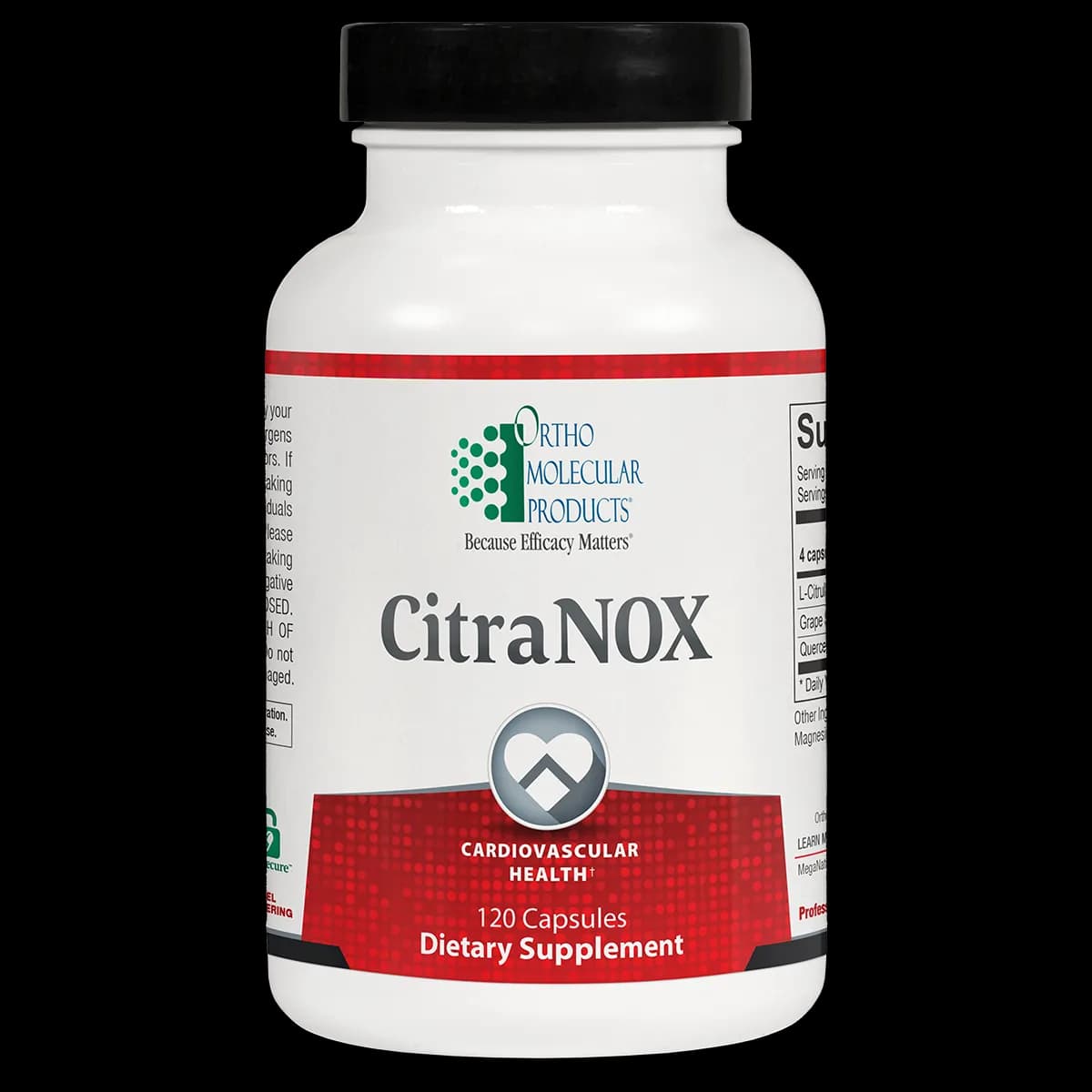
CitraNOX is meticulously formulated to target these exact endothelial pathways, providing a synergistic blend of nutrients designed to dampen stress on coronary arteries and support overall cardiometabolic health. The formula is built around three primary, clinically studied ingredients: L-Citrulline (3 grams), Grape Seed Extract (specifically the patented MegaNatural®-BP, 200 mg), and Quercetin Dihydrate (200 mg). Rather than relying on a single mechanism of action, this triad of ingredients works in concert to address the multiple facets of vascular health.
L-Citrulline serves as the foundational building block, providing the raw substrate necessary for the body to manufacture its own nitric oxide efficiently. Meanwhile, the Grape Seed Extract and Quercetin Dihydrate act as powerful modulators and protectors. They help to stimulate the eNOS enzyme to utilize that substrate, while simultaneously providing robust antioxidant defense to protect the newly formed nitric oxide from being prematurely destroyed by free radicals. Together, these ingredients help maintain normal inflammatory balance, balance NO levels, maintain smooth muscle integrity, and optimize the vasodilation of key coronary arteries, offering comprehensive support for individuals looking to proactively manage their cardiovascular wellness.
How Long COVID and Dysautonomia Impact Endothelial Function
To understand why supplements like CitraNOX are frequently discussed in the context of complex chronic illnesses, we must examine how conditions like Long COVID and ME/CFS fundamentally alter the vascular system. Emerging research has increasingly classified COVID-19 not merely as a respiratory illness, but as a profound vascular disease. The SARS-CoV-2 virus gains entry into human cells by binding to the ACE2 (Angiotensin-Converting Enzyme 2) receptor. These receptors are densely populated on the surface of endothelial cells lining the blood vessels. When the virus binds to and downregulates ACE2, it disrupts a critical protective pathway known as the Ang-(1-7)/Mas receptor axis, which normally promotes vasodilation and reduces inflammation.
This viral invasion and subsequent receptor downregulation trigger a state of severe microvascular endothelial dysfunction, often referred to as endotheliopathy. The endothelial cells become activated and inflamed, losing their ability to properly regulate blood flow. In patients who develop Long COVID, this acute vascular injury fails to heal, transitioning into a chronic state of low-grade vascular inflammation. This persistent endotheliopathy is a primary driver of the systemic hypoxia (low tissue oxygenation) that patients experience, as the damaged microcirculation struggles to deliver adequate oxygen to the brain, muscles, and vital organs. This mechanism is crucial when exploring What Causes Long COVID? and why symptoms persist for months or years.
A hallmark of post-viral endothelial dysfunction is massive, unchecked oxidative stress. Chronic viral persistence or immune dysregulation leads to the overproduction of reactive oxygen species (ROS), commonly known as free radicals. In a healthy system, antioxidants neutralize these free radicals. However, in Long COVID and ME/CFS, the sheer volume of ROS overwhelms the body's natural antioxidant defenses. This has a catastrophic effect on nitric oxide levels. Superoxide, a highly reactive free radical, rapidly scavenges whatever nitric oxide the struggling endothelium manages to produce, binding with it to form a highly toxic and damaging molecule called peroxynitrite.
The formation of peroxynitrite not only robs the body of its vital vasodilating NO, but it also physically damages the eNOS enzyme itself. This phenomenon, known as "eNOS uncoupling," causes the enzyme to malfunction. Instead of producing more nitric oxide, the uncoupled eNOS begins to produce even more superoxide radicals, creating a vicious, self-perpetuating cycle of vascular damage and nitric oxide depletion. This severe lack of bioavailable NO leads to stiff, constricted blood vessels, impaired nutrient delivery, and the systemic fatigue that characterizes post-exertional malaise (PEM). Furthermore, this inflammatory environment triggers the RAGE (Receptor for Advanced Glycation End Products) pathway, which promotes abnormal platelet aggregation and the formation of the amyloid-like microclots frequently observed in these patient populations.
The depletion of nitric oxide and the resulting endothelial dysfunction have profound implications for the autonomic nervous system, frequently leading to secondary conditions like dysautonomia and Postural Orthostatic Tachycardia Syndrome (POTS). The autonomic nervous system relies on the healthy, responsive constriction and dilation of blood vessels to manage blood pressure when a person changes posture (such as standing up). In POTS, patients often suffer from an abnormal alpha-adrenergic response, where the blood vessels in the lower extremities fail to constrict properly, causing blood to pool in the legs and abdomen.
While it might seem counterintuitive that a condition involving poor vasoconstriction would benefit from a vasodilator like nitric oxide, the reality is more complex. Nitric oxide is essential for maintaining overall vascular compliance and health. A lack of NO contributes to the degradation of the small autonomic nerve fibers (C-fibers) that control the blood vessels, a condition known as autonomic neuropathy. By restoring healthy endothelial function and NO levels, the blood vessels regain their elasticity and responsiveness. This improves cerebral blood flow—combating the severe orthostatic brain fog seen in POTS—and helps balance the hyperactive sympathetic nervous system spikes that cause the rapid, pounding heart rate characteristic of the syndrome. Understanding this vascular-neurological connection is vital when exploring Can Long COVID Trigger ME/CFS? Unraveling the Connection.
CitraNOX: Supporting Vascular Health and Nitric Oxide Production
To combat the severe nitric oxide depletion seen in chronic cardiometabolic and post-viral conditions, CitraNOX utilizes a substantial 3-gram dose of L-Citrulline. L-Citrulline is a naturally occurring, non-essential amino acid that plays a pivotal role in the urea cycle and nitric oxide metabolism. While the eNOS enzyme directly uses L-arginine to produce nitric oxide, oral supplementation with L-arginine is notoriously inefficient. This is due to the "arginine paradox." When L-arginine is ingested, it is subjected to heavy first-pass metabolism in the intestines and liver by an enzyme called arginase, which breaks down the majority of the amino acid before it can ever reach the systemic circulation.
L-Citrulline elegantly bypasses this metabolic roadblock. It is not metabolized by the liver; instead, it passes freely into the bloodstream where it is transported to the kidneys. In the kidneys, L-Citrulline is rapidly and continuously converted into L-arginine. Clinical studies have consistently demonstrated that oral L-Citrulline supplementation is significantly more effective at raising steady-state plasma L-arginine levels—and consequently, nitric oxide levels—than taking L-arginine directly. By providing this highly bioavailable precursor, CitraNOX ensures that the eNOS enzyme has an abundant, sustained supply of the substrate it needs to restore healthy vasodilation, improve microcirculation, and enhance oxygen delivery to fatigued tissues.
While L-Citrulline provides the building blocks for nitric oxide, the eNOS enzyme must be actively stimulated to utilize them. This is where Grape Seed Extract (GSE) plays a crucial role. CitraNOX features 200 mg of MegaNatural®-BP, a patented, clinically studied form of GSE known for its high concentration of low-molecular-weight proanthocyanidins. These specific polyphenols have a profound affinity for the cardiovascular system. Research indicates that the proanthocyanidins in MegaNatural-BP directly interact with the endothelial cells, activating the Akt/PI3K signaling pathway, which in turn phosphorylates and stimulates the eNOS enzyme.
Beyond stimulating NO production, Grape Seed Extract is a formidable antioxidant that protects the structural integrity of the microcirculation. In the context of chronic inflammation and post-viral syndromes, GSE has been shown to inhibit the RAGE pathway. By downregulating RAGE activation, GSE helps to suppress the expression of tissue factor, a primary initiator of the coagulation cascade. This antithrombotic property is particularly relevant for patients dealing with the micro-clotting abnormalities associated with Long COVID and ME/CFS. By maintaining smooth muscle integrity and helping to prevent abnormal platelet aggregation, MegaNatural-BP helps to keep the micro-capillaries open and flowing, reducing the stress placed on coronary arteries and peripheral vessels alike.
The third pillar of the CitraNOX formulation is 200 mg of Quercetin Dihydrate. Quercetin is a potent flavonol found abundantly in nature, renowned for its broad-spectrum anti-inflammatory and immune-modulating properties. In the vascular system, quercetin acts as a powerful scavenger of reactive oxygen species (ROS). By neutralizing superoxide radicals, quercetin may help prevent the destruction of newly synthesized nitric oxide and may help halt the formation of tissue-damaging peroxynitrite. Furthermore, quercetin has been shown to decrease the production of endothelin-1 (ET-1), a potent vasoconstrictor that restricts blood flow, thereby promoting a more relaxed, dilated vascular state.
Crucially for patients with complex chronic illnesses, quercetin is widely recognized in clinical practice as a natural mast cell stabilizer. Mast Cell Activation Syndrome (MCAS) is a frequent comorbidity in Long COVID and dysautonomia, characterized by the erratic release of inflammatory mediators like histamine and tryptase. Quercetin physically blocks the cellular pathways that lead to mast cell degranulation, helping to calm systemic allergic-like reactions and reduce the overall inflammatory burden on the endothelium. Additionally, quercetin has demonstrated the ability to inhibit protein disulfide isomerase (PDI), an enzyme involved in platelet-mediated thrombin formation, further supporting healthy blood flow and mitigating hypercoagulability. This multi-targeted approach makes quercetin an invaluable component in supporting both vascular and immunological health.

Symptoms CitraNOX May Help Manage
Blood Pressure Fluctuations: By providing the precursors and enzymatic stimulation for nitric oxide production, CitraNOX may help restore vascular elasticity and tone, supporting the maintenance of healthy blood pressure levels already within the normal range.
Blood Pooling and Acrocyanosis: In dysautonomia and POTS, poor vascular constriction leads to blood pooling in the extremities (often visible as a purple/blue discoloration called acrocyanosis). Improved endothelial health and NO balance may help restore proper microvascular function and venous return.
Palpitations and Tachycardia: When blood pools in the lower body, the heart must beat rapidly to compensate and push blood to the brain. By improving overall vascular compliance and reducing the stress on coronary arteries, CitraNOX may help indirectly soothe compensatory tachycardia.
Cold Hands and Feet: A hallmark of poor microcirculation and endothelial dysfunction is poor peripheral perfusion. Enhancing vasodilation allows warm, oxygen-rich blood to reach the furthest capillaries in the extremities.
Brain Fog and Cognitive Dysfunction: The brain requires a massive amount of oxygen and blood flow to function. By supporting cerebral vasodilation and reducing microvascular inflammation, CitraNOX may help improve the delivery of oxygen to neural tissues, combating cognitive fatigue.
Post-Exertional Malaise (PEM) and Severe Fatigue: PEM is heavily driven by cellular hypoxia and the inability of the microcirculation to deliver oxygen during physical or cognitive exertion. Restoring NO levels may help optimize oxygen delivery to the mitochondria, supporting cellular energy production.
Histamine Intolerance and Allergic-Like Reactions: Through the inclusion of Quercetin Dihydrate, CitraNOX provides natural mast cell stabilization, which may help reduce the erratic release of histamine that drives systemic inflammation, flushing, and gastrointestinal distress in MCAS patients.
Exercise Intolerance: By maintaining smooth muscle integrity and optimizing the vasodilation of key coronary arteries, the heart and skeletal muscles receive better blood flow during movement, potentially raising the threshold for exertion before symptoms flare.
Practical Considerations: Forms, Dosing, and Absorption
When selecting a supplement to support complex vascular issues, bioavailability—the amount of the substance that actually enters the systemic circulation to have an active effect—is paramount. CitraNOX utilizes specific, highly bioavailable forms of its core ingredients to maximize clinical efficacy. The Grape Seed Extract used in the formula is MegaNatural®-BP. Unlike standard commodity grape seed extracts, which often contain large, poorly absorbed tannin molecules, MegaNatural-BP is manufactured using a patented hot-water extraction process. This process isolates the lower-molecular-weight polyphenols, which are significantly easier for the gastrointestinal tract to absorb and utilize at the cellular level.
Similarly, the formula utilizes Quercetin Dihydrate, one of the most stable and common forms of quercetin used in clinical settings. The "dihydrate" designation refers to its crystalline chemical structure containing two water molecules, which enhances its shelf stability. However, because quercetin is naturally fat-soluble, its absorption can be variable depending on the individual's digestive health. To maximize the absorption of the quercetin component in CitraNOX, clinical practitioners often recommend taking the supplement alongside a meal that contains healthy fats, such as avocado, olive oil, or nuts.
The suggested use for CitraNOX is 4 capsules per day, or as recommended by your healthcare professional. Because the half-life of nitric oxide in the body is incredibly short, and the amino acid precursors are metabolized over several hours, dividing the dose throughout the day is often the most effective strategy for maintaining consistent vascular support. For example, a patient might take two capsules in the morning and two capsules in the early afternoon. This divided dosing helps ensure a steady supply of L-Citrulline to the kidneys for continuous L-arginine and NO conversion.
For patients dealing with dysautonomia or POTS, timing the dose around periods of known orthostatic stress can be beneficial. Some patients find that taking their morning dose 30 minutes before getting out of bed helps prime their vascular system for the postural changes of the day. However, because individuals with Long COVID and ME/CFS often have highly sensitive nervous and digestive systems, it is always advisable to start with a lower dose (e.g., 1 or 2 capsules daily) and gradually titrate up to the full recommended dose while monitoring for any changes in symptoms or blood pressure.
While the ingredients in CitraNOX are generally well-tolerated and recognized as safe, their specific mechanisms of action require careful consideration, particularly for patients on prescription medications. Because CitraNOX is designed to optimize vasodilation and maintain healthy blood pressure levels, it can have an additive effect when taken alongside prescription antihypertensive medications (blood pressure-lowering drugs). Patients with naturally low blood pressure, which is common in some presentations of dysautonomia, should monitor their blood pressure closely when initiating the supplement to ensure it does not drop too low.
Furthermore, both Grape Seed Extract and Quercetin have mild natural antithrombotic (blood-thinning) properties, as they help inhibit abnormal platelet aggregation. While this is beneficial for microcirculation, it means CitraNOX may interact with prescription blood thinners, anticoagulants (like warfarin or Eliquis), or antiplatelet drugs (like Plavix or high-dose aspirin). Patients taking these medications, or those with known bleeding disorders, must consult their prescribing physician before adding CitraNOX to their regimen. This level of medical oversight is a critical component of understanding How Does a Doctor Diagnose Long COVID? and safely managing its systemic complications.
Follow the Science
The scientific foundation supporting the use of nitric oxide precursors for post-viral vascular recovery has grown exponentially in recent years. A pivotal 2022 single-blind, randomized controlled trial investigated the effects of the L-arginine/nitric oxide pathway in adults suffering from Long COVID. Over 28 days, patients receiving NO precursor therapy alongside liposomal Vitamin C demonstrated remarkable functional improvements. The active group increased their 6-minute walk distance by an average of 30 meters, compared to zero improvement in the placebo group. More importantly, flow-mediated dilation (FMD)—a direct ultrasound measurement of endothelial health—improved significantly to 14.3% in the active group versus 9.4% in the placebo group. Astoundingly, only 8.7% of the supplemented group reported persistent fatigue at the end of the trial, compared to 80.1% of the placebo group.
These findings align with observational data showing that severe COVID-19 infection heavily depletes the body's natural amino acid reservoirs. Studies have documented that patients with severe post-viral complications exhibit remarkably decreased serum levels of L-Citrulline, which correlates directly with elevated inflammatory markers like C-reactive protein (CRP) and worse clinical outcomes. By supplementing with L-Citrulline, which bypasses the liver's arginase enzyme to efficiently raise systemic NO levels, practitioners are directly addressing this documented biochemical deficit.
The specific Grape Seed Extract utilized in CitraNOX, MegaNatural-BP, has been the subject of rigorous, placebo-controlled human clinical trials, particularly by researchers at the University of California, Davis (Department of Preventive Cardiology). In a landmark 2009 study on metabolic syndrome, subjects were given either a placebo, 150 mg, or 300 mg of MegaNatural-BP daily for four weeks. The results demonstrated that both the 150 mg and 300 mg doses successfully lowered and maintained systolic and diastolic blood pressure within normal ranges, with blood samples showing a steep rise in protective polyphenols just 90 minutes after ingestion.
A subsequent double-blind trial in 2012 further cemented these findings. Participants with pre-hypertension who consumed 300 mg of MegaNatural-BP daily for 8 weeks experienced significant decreases in both systolic and diastolic blood pressure compared to the placebo group. Notably, in a later beverage intervention study, researchers found that four weeks after discontinuing the MegaNatural-BP supplement, participants' blood pressure returned to their baseline pre-hypertensive levels, proving the direct, active efficacy of the extract in maintaining vascular tone and endothelial responsiveness. This research is particularly relevant when considering the intersection of metabolic health and post-viral illness, a topic explored in depth in Diabetes and Long COVID: A Pandemic Within a Pandemic.
Quercetin has been extensively researched for its dual role as a vascular protectant and an immune modulator. In the context of Long COVID, researchers have focused on quercetin's ability to mitigate the damage caused by viral spike proteins. Recent literature highlights that quercetin helps reverse the uncoupling of eNOS caused by oxidative stress, thereby restoring healthy nitric oxide production. Furthermore, cellular studies have demonstrated that quercetin can act as a potent inhibitor of protein disulfide isomerase (PDI), the exact enzyme involved in platelet-mediated thrombin formation. This provides a direct mechanistic rationale for its use in addressing the micro-clotting abnormalities frequently observed in Long COVID subjects.
Additionally, quercetin's efficacy as a mast cell stabilizer has been validated in numerous in vitro studies. Research suggests that quercetin can block the release of histamine, leukotrienes, and prostaglandins from mast cells, often performing comparably to, or even better than, pharmaceutical mast cell stabilizers like cromolyn sodium in laboratory settings. By halting this inflammatory cascade at the cellular level, quercetin helps protect the fragile endothelium from the constant barrage of cytokines that drive chronic post-viral symptoms.
The Path Forward
Living with the unpredictable and often debilitating symptoms of Long COVID, ME/CFS, and dysautonomia can be an incredibly isolating and frustrating experience. The profound fatigue, cognitive dysfunction, and orthostatic intolerance you experience are not in your head; they are the result of complex, measurable physiological changes, particularly within your vascular system and endothelium. Validating this biological reality is the first step toward reclaiming your quality of life. While the medical community continues to unravel the intricacies of post-viral syndromes, targeting the foundational mechanisms of blood flow, nitric oxide production, and inflammatory balance offers a scientifically grounded pathway forward.
It is important to remember that while targeted nutraceuticals like CitraNOX can provide powerful biochemical support, they are most effective when integrated into a comprehensive, holistic management plan. Healing the endothelium requires time, patience, and a multifaceted approach. Supplementation should be paired with rigorous symptom tracking, aggressive pacing to avoid post-exertional malaise, nervous system regulation techniques, and ongoing medical supervision. There is no single "magic pill" for complex chronic illness, but by providing your body with the specific tools it needs to repair cellular damage and restore vascular homeostasis, you can begin to shift the momentum toward recovery.
If you are struggling with symptoms of poor microcirculation, blood pressure fluctuations, or post-viral vascular dysfunction, supporting your body's nitric oxide pathways may be a valuable addition to your protocol. Always consult with your primary care provider or a specialist familiar with complex chronic conditions before starting any new supplement, especially to ensure it aligns safely with your current medications and specific health needs.