Can Charcoal Plus Binder Support Detoxification and Gut Health in Long COVID and ME/CFS?
March 5, 2026
Charcoal Plus BinderLong COVIDME/CFS
Share:
Disclaimer: The information provided here is for educational purposes only and is not intended as medical advice. It should not be used to diagnose, treat, cure, or prevent any medical condition. Instead, use it as a starting point for discussion with your healthcare provider. Always consult with a qualified healthcare provider before starting any new medication, supplement, device, or making changes to your health regimen.
Living with complex chronic conditions like Long COVID, myalgic encephalomyelitis/chronic fatigue syndrome (ME/CFS), and dysautonomia often feels like navigating a labyrinth with no clear exit. Patients frequently describe a profound, heavy brain fog, debilitating fatigue, and unpredictable gastrointestinal distress that dictate their daily lives and severely diminish their quality of life. While the initial trigger for these conditions may have been a severe viral infection or a significant physiological stressor, the lingering, chronic symptoms are often sustained by a complex cascade of downstream biological effects. Among the most significant of these downstream effects are severe gut dysfunction, microbiome imbalances, and systemic inflammation. For many individuals battling these invisible illnesses, the body's natural detoxification pathways become overwhelmed, leading to a steady buildup of metabolic waste, bacterial endotoxins, and environmental irritants that continuously stoke the fires of the immune system and prevent true recovery.
In the ongoing search for validating, science-backed management strategies, targeting the gastrointestinal tract has emerged as a critical and highly promising frontier in functional medicine. Binders, a specialized class of supplements designed to act like molecular sponges and "mop up" unwanted substances in the gut lumen, offer a targeted approach to reducing this systemic toxic burden. Charcoal Plus Binder by Designs for Health is a comprehensive, multi-ingredient formula combining activated coconut charcoal, purified zeolite, and organic chlorella. By deeply understanding the intricate molecular mechanisms of these three distinct ingredients, we can explore how this specialized supplement supports the body's natural detoxification processes, promotes a healthier gut environment, and may help alleviate some of the most frustrating and persistent symptoms of chronic invisible illness.
TL;DR
Chronic conditions like Long COVID often involve severe gut dysfunction, microbiome imbalances, and systemic inflammation.
Binders like activated charcoal and zeolite may help remove toxins from the gut to support detoxification.
Reducing the gut's toxic burden may help alleviate persistent symptoms like brain fog, fatigue, and bloating.
Always take binders at least two hours away from medications and consult your healthcare provider first.
What is Charcoal Plus Binder?
To understand how Charcoal Plus Binder functions within the human body, it is essential to first recognize that detoxification is not a single event, but rather a highly complex, multi-organ process. In a healthy individual, the liver, kidneys, lymphatic system, and gastrointestinal (GI) tract work in perfect harmony to identify, neutralize, and excrete metabolic byproducts, environmental toxins, and microbial waste. However, when these pathways become sluggish or compromised due to chronic illness, toxins can accumulate and recirculate throughout the bloodstream. This is where broad-spectrum binding agents become highly valuable clinical tools.
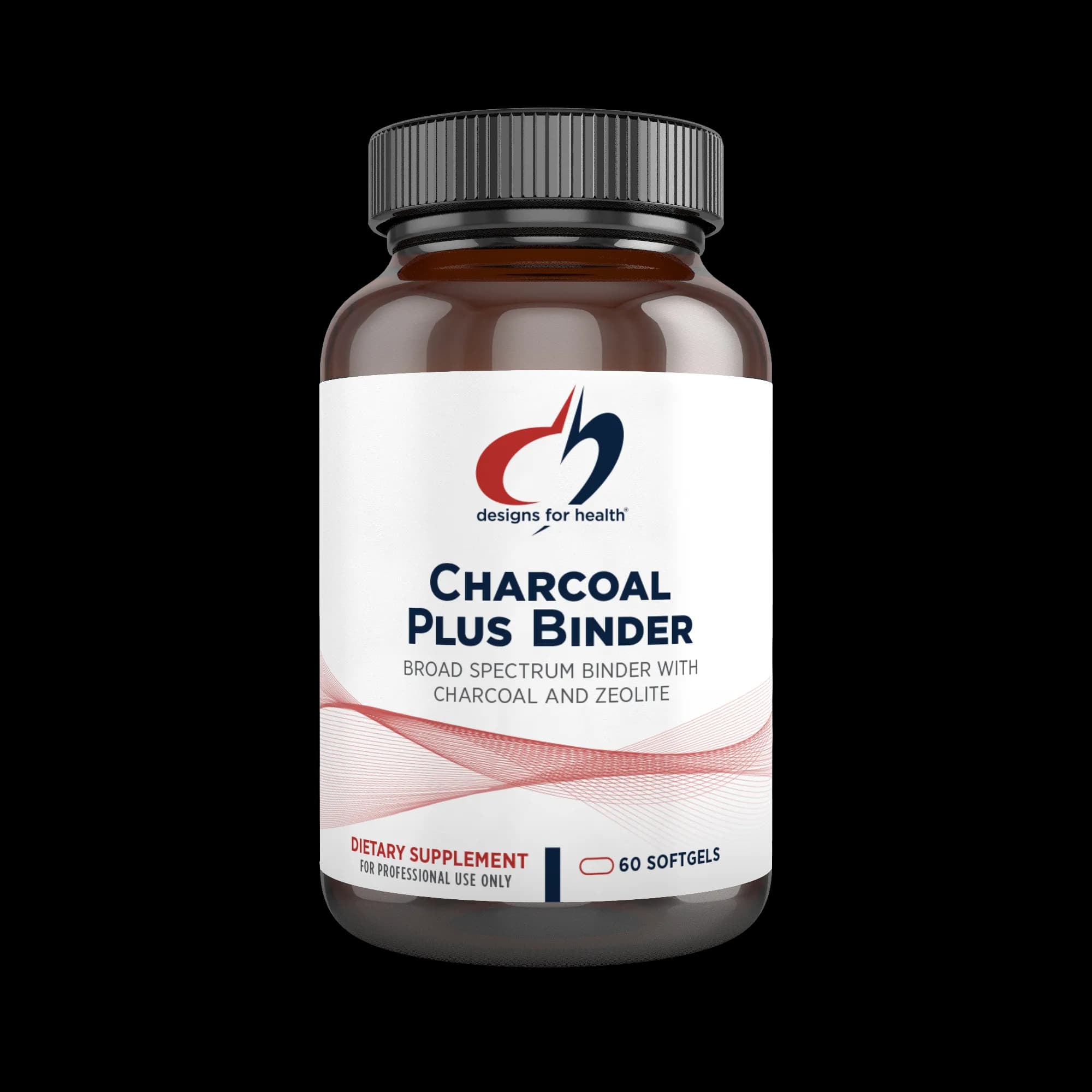
Charcoal Plus Binder is meticulously formulated to provide a synergistic, multi-pronged approach to gastrointestinal detoxification. Rather than relying on a single mechanism of action, this supplement combines three distinct binding agents: 400 mg of activated coconut charcoal, 400 mg of purified zeolite (standardized to contain 70% clinoptilolite), and 250 mg of organic broken-cell-wall chlorella. Each of these ingredients possesses unique physical and chemical properties that allow them to target different classes of unwanted substances within the digestive tract.
By combining these three elements, the formula creates a comprehensive "catch-all" net within the GI lumen. While one ingredient excels at trapping large, non-polar organic molecules, another specializes in binding heavy metals, and the third provides intracellular antioxidant support to mitigate the oxidative stress caused by the toxins themselves. This multi-layered approach ensures that a wider variety of harmful compounds are safely escorted out of the body before they can be absorbed or reabsorbed into systemic circulation.
The first primary ingredient in this formula is activated charcoal, a substance that has served as a cornerstone of clinical toxicology and emergency medicine for decades. Activated charcoal is created by taking carbon-rich materials—in this case, high-quality coconut shells—and heating them to extreme temperatures ranging from 600 to 900 degrees Celsius. Following this intense carbonization, the material is "activated" through exposure to high-pressure steam or specific gases. This activation process strips away internal molecules and creates a vast, highly porous, sponge-like internal structure.
At the molecular level, this incredible porosity gives activated charcoal a massive internal surface area. According to toxicological research, standard activated charcoal boasts an internal surface area of 800 to 1,200 square meters per gram. To put this into perspective, just a few grams of activated charcoal possess the total surface area of an entire football field. This vast network of microscopic pores, crevices, and channels provides an enormous number of binding sites for toxins to attach to as the charcoal travels through the digestive tract.
The primary mechanism by which activated charcoal works is known as adsorption (distinct from absorption). Adsorption is a surface phenomenon where molecules of a gas, liquid, or dissolved solid adhere to the surface of the charcoal. This binding is driven by weak intermolecular forces known as Van der Waals forces, as well as the chemical affinity of carbonyl and hydroxyl groups present on the charcoal's surface. Activated charcoal is particularly highly effective at adsorbing non-polar, poorly water-soluble organic toxins, trapping them securely within its pores and preventing their systemic absorption into the bloodstream.
The second key ingredient is Zeolite, specifically a highly purified form known as G-PUR®, which is standardized to contain 70% clinoptilolite. Clinoptilolite is a naturally occurring volcanic mineral characterized by a unique, three-dimensional honeycomb or cage-like crystalline structure. Unlike charcoal, which relies primarily on physical porosity and Van der Waals forces, clinoptilolite functions as a highly selective "molecular sieve" and operates through a mechanism known as cation exchange.
The crystalline lattice of clinoptilolite carries a strong negative charge, which is relatively rare in nature. This negative charge acts like a powerful magnet for positively charged toxins, such as heavy metals (lead, mercury, cadmium) and toxic metabolic byproducts like ammonia. As the zeolite passes through the gastrointestinal tract, it attracts these positively charged cations, pulls them deep into its honeycomb cages, and exchanges them for harmless, naturally occurring minerals like calcium or magnesium. Because the human body cannot break down or absorb the zeolite crystal, the trapped toxins are safely excreted in the stool.
The final ingredient is Organic Chlorella (Chlorella vulgaris), a nutrient-dense, single-celled freshwater green microalga. Chlorella is renowned in functional medicine for its potent bioremediation properties. The specific form used in this supplement features a "broken cell wall." In its natural state, chlorella possesses a tough, indigestible outer wall made of cellulose and complex polysaccharides. By mechanically breaking this wall, the internal binding sites and phytonutrients become highly bioavailable to the human digestive system.
Chlorella utilizes a mechanism called biosorption to neutralize threats. Its cell wall contains functional groups—such as hydroxyl, carboxyl, and amine groups—that act similarly to an ion-exchange resin, attracting and structurally binding heavy metals and environmental mold toxins (mycotoxins). Furthermore, research demonstrates that chlorella synthesizes specialized metal-binding proteins called metallothioneins and phytochelatins, which actively sequester and neutralize toxic elements, providing a profound level of cellular defense and detoxification support.
How Chronic Illness Impacts Detoxification
To fully appreciate the clinical relevance of binding agents, we must first examine how complex chronic illnesses fundamentally disrupt the body's natural detoxification systems. A growing consensus among researchers investigating what causes Long COVID and ME/CFS points to the gut-immune axis as a central driver of chronic symptomatology. The gastrointestinal tract is not merely a digestive organ; it houses approximately 70% of the body's immune system and is home to trillions of microorganisms that dictate systemic health.
In the context of Long COVID, the initial SARS-CoV-2 infection directly impacts the gastrointestinal tract. The virus utilizes the ACE2 receptor to enter and infect intestinal epithelial cells. This viral infiltration downregulates ACE2, an enzyme that is absolutely essential for maintaining gut homeostasis and regulating local inflammation. This initial insult often triggers a profound and long-lasting disruption of the gut microbiome, known as dysbiosis.
Metagenomic studies of Long COVID patients consistently reveal a severe depletion of beneficial, keystone bacterial species, particularly those that produce anti-inflammatory short-chain fatty acids (SCFAs) like butyrate. Simultaneously, there is an overgrowth of opportunistic, pro-inflammatory pathogens. This dysbiotic state creates a highly toxic environment within the gut lumen, generating excessive metabolic waste and inflammatory byproducts that the body's natural clearance mechanisms struggle to manage.
The consequences of this persistent gut dysbiosis extend far beyond simple digestive discomfort. Beneficial SCFAs like butyrate are required to nourish the intestinal lining and maintain the integrity of "tight junction" proteins (such as occludin and claudin) that glue the cells of the gut wall together. When these beneficial bacteria are lost, and the gut is subjected to chronic viral or inflammatory stress, these tight junctions begin to loosen and break apart. This condition is clinically referred to as increased intestinal permeability, or "leaky gut."
Once the intestinal barrier is compromised, the body faces a severe crisis known as metabolic endotoxemia. Gram-negative bacteria in the gut naturally shed highly toxic components of their cell walls, most notably Lipopolysaccharides (LPS). In a healthy gut, these massive endotoxin molecules are safely contained within the intestines and excreted. However, in a leaky gut scenario, LPS and other bacterial debris escape through the broken tight junctions and translocate directly into the systemic bloodstream.
The immune system recognizes circulating LPS as a highly dangerous foreign invader. It binds to Toll-like receptor 4 (TLR4) on immune cells, triggering a massive, systemic release of pro-inflammatory cytokines, including Interleukin-6 (IL-6) and Tumor Necrosis Factor-alpha (TNF-alpha). Research indicates that this endotoxemia-driven inflammation can cross the blood-brain barrier, activating microglial cells in the brain and driving the severe neuroinflammation, brain fog, and profound fatigue seen in both Long COVID and ME/CFS.
The detoxification crisis is further compounded by dysautonomia, a dysfunction of the autonomic nervous system that frequently co-occurs with Long COVID and ME/CFS. The autonomic nervous system controls involuntary bodily functions, including the rhythmic contractions of the digestive tract (peristalsis) that move food and waste through the system. When the vagus nerve—the primary neural highway connecting the brain and the gut—is impaired by neuroinflammation, gastrointestinal motility drastically slows down.
This slowing of motility, ranging from mild constipation to severe gastroparesis, results in gastrointestinal stasis. Waste products, toxins, and dead bacteria sit in the intestines for prolonged periods rather than being promptly eliminated. This stagnation provides ample time for harmful bacteria to ferment undigested food, producing excessive gas and toxic byproducts like ammonia and hydrogen sulfide, which further irritate the already compromised intestinal lining.
Crucially, this stasis exacerbates a process called enterohepatic recirculation. The liver works tirelessly to filter toxins from the blood, packaging them into bile and dumping them into the intestines for excretion. However, if bowel transit time is too slow, these toxins can be reabsorbed through the leaky gut wall and sent right back to the liver. This creates a vicious, self-perpetuating cycle of toxicity and inflammation that traps patients in a state of chronic illness, highlighting the desperate need for interventions that can physically bind and remove these substances.
Charcoal Plus Binder: Supporting Gut Health and Detox
By understanding the pathophysiology of leaky gut and endotoxemia, the clinical utility of Charcoal Plus Binder becomes clear. The primary goal of this supplement is to physically intercept toxins within the gastrointestinal tract before they can trigger systemic immune responses or cross the compromised intestinal barrier. This process is broadly referred to as enterosorption, and activated coconut charcoal is the frontline defender in this mechanism.
When taken orally, activated charcoal travels through the stomach and into the small intestine, acting as a highly porous, non-selective sponge. As it encounters the toxic soup of bacterial die-off, inflammatory cytokines, and metabolic waste, it utilizes its massive surface area and Van der Waals forces to draw these molecules into its microscopic crevices. Because the charcoal itself is not absorbed by the human body, any toxin that becomes firmly adsorbed to its surface is effectively trapped and destined for elimination in the stool.
Furthermore, activated charcoal plays a vital role in interrupting the vicious cycle of enterohepatic recirculation. By maintaining a strong presence in the intestinal lumen, charcoal acts as a sink for toxins excreted in the bile. It intercepts these compounds before they can be reabsorbed by the sluggish digestive tract, effectively performing a localized "gastrointestinal dialysis." This continuous clearance reduces the overall toxic burden on the liver and helps lower the systemic levels of circulating inflammatory triggers.
While charcoal provides broad-spectrum physical binding, the Zeolite (clinoptilolite) in Charcoal Plus Binder offers a highly targeted approach to repairing the fundamental structural damage of a leaky gut. One of the primary drivers of tight junction breakdown is the overproduction of a protein called zonulin. When the gut lining is exposed to severe irritants—such as bacterial endotoxins (LPS) or excessive ammonia produced by dysbiotic bacteria—the epithelial cells release zonulin, which signals the tight junctions to open, increasing intestinal permeability.
Clinoptilolite possesses a profound affinity for binding and neutralizing both ammonia and heavy metals due to its negative ionic charge. By acting as a molecular sieve, the zeolite traps these specific, highly irritating compounds within its honeycomb lattice. As the local concentration of ammonia and inflammatory toxins in the gut lumen decreases, the constant chemical assault on the intestinal epithelial cells subsides.
Clinical trials evaluating purified clinoptilolite have demonstrated that by removing these environmental triggers, zeolite supplementation significantly reduces the overexpression of zonulin. As zonulin levels drop back into a healthy, physiological range, the tight junction proteins are finally able to reassemble and close. This resealing of the gut barrier is a critical step in halting the continuous leakage of endotoxins into the bloodstream, thereby cutting off the primary fuel source for systemic neuroinflammation.
The addition of Organic Chlorella completes the formula's comprehensive detoxification profile by targeting specific classes of environmental toxins that frequently complicate chronic illness: heavy metals and mycotoxins. Patients with compromised immune systems and sluggish detoxification pathways are often highly susceptible to the accumulation of heavy metals (like mercury from dental amalgams or lead from environmental exposure) and mycotoxins (toxic metabolites produced by molds in water-damaged buildings).
Chlorella utilizes its broken cell wall to perform highly effective biosorption. The exposed functional groups—hydroxyl, carboxyl, and sulfate—act as chemical hooks that attract and bind tightly to heavy metal cations and complex mycotoxin structures. Recent in vivo studies have shown that chlorella can successfully bind significant percentages of dangerous mycotoxins like Deoxynivalenol (DON) and Ochratoxin A (OTA) directly within the gut, preventing their absorption into the blood plasma.
Beyond physical binding in the gut, chlorella provides vital systemic support. Mycotoxins and heavy metals inflict severe damage by inducing massive cellular oxidative stress and lipid peroxidation. Chlorella is rich in potent antioxidants and phytonutrients that help restore endogenous antioxidant enzymes, such as reduced glutathione (GSH) and superoxide dismutase (SOD). By upregulating these natural defense mechanisms and synthesizing metal-binding phytochelatins, chlorella helps mitigate the secondary cellular damage caused by these insidious environmental toxins.
Symptoms Charcoal Plus Binder May Help Manage
Because Charcoal Plus Binder operates primarily within the digestive tract, its most immediate and noticeable benefits are often related to gastrointestinal comfort. By physically adsorbing excess gas, neutralizing irritating metabolic byproducts like ammonia, and trapping bacterial toxins, this supplement can significantly alleviate the daily digestive burdens faced by patients with dysautonomia and chronic dysbiosis.
Severe Bloating and Distension: Activated charcoal is highly effective at adsorbing excess intestinal gases produced by the fermentation of undigested food by dysbiotic bacteria, reducing painful bloating and physical distension.
Irregular Bowel Movements: By binding and removing the inflammatory toxins that irritate the gut lining, the formula helps calm the localized immune response, which can contribute to more normalized and comfortable bowel habits.
Nausea and Discomfort: Zeolite's ability to trap positively charged toxins and ammonia helps soothe the intestinal epithelium, reducing the low-grade nausea often associated with a highly toxic gut environment.
The connection between the gut and the brain is undeniable, and addressing intestinal permeability is often a crucial step in managing cognitive symptoms. By utilizing zeolite to lower zonulin levels and reseal the tight junctions, and deploying charcoal to bind circulating endotoxins, Charcoal Plus Binder helps cut off the supply of inflammatory mediators reaching the central nervous system.
Profound Brain Fog: By preventing Lipopolysaccharides (LPS) from translocating into the bloodstream, the supplement reduces the activation of Toll-like receptor 4 (TLR4), thereby lowering the systemic cytokines that drive neuroinflammation and cognitive clouding.
Memory and Concentration Issues: Reducing the overall neuro-inflammatory burden allows microglial cells in the brain to return to a resting state, supporting better memory retrieval, focus, and mental clarity.
Neurological Sensitivity: Lowering the systemic toxic load can help calm a hyper-reactive nervous system, potentially reducing sensitivities to light, sound, and sensory input often seen in ME/CFS.
Post-exertional malaise (PEM), a hallmark symptom of ME/CFS and many cases of Long COVID, is heavily linked to severe mitochondrial dysfunction and oxidative stress. When the gut is constantly leaking endotoxins into the blood, the body is forced into a perpetual state of immune warfare, which consumes massive amounts of cellular energy (ATP) and generates damaging reactive oxygen species (ROS).
Debilitating Fatigue: By binding toxins before they trigger an immune response, the supplement helps conserve the body's precious energy reserves, preventing the immune system from constantly draining cellular ATP.
Crash Severity (PEM): Chlorella's ability to boost endogenous antioxidants (like glutathione) helps protect fragile mitochondria from the oxidative stress caused by endotoxemia, potentially raising the threshold for exertion before a crash occurs.
Cellular Energy Production: Removing heavy metals (which are known mitochondrial poisons) via zeolite and chlorella allows the electron transport chain within the mitochondria to function more efficiently, supporting better baseline energy levels.
Many patients with complex chronic illnesses also struggle with Mast Cell Activation Syndrome (MCAS) or severe histamine intolerance. Mast cells line the gastrointestinal tract and are highly sensitive to environmental toxins, bacterial debris, and localized inflammation. When the gut is highly toxic, these mast cells become hyper-reactive, constantly degranulating and releasing histamine into the body.
Histamine Overload: By physically removing the bacterial endotoxins and irritants that trigger mast cell degranulation, Charcoal Plus Binder helps calm the localized immune response in the gut, reducing the overall burden of circulating histamine.
Unpredictable Allergic Reactions: Resealing the leaky gut with zeolite prevents large, undigested food proteins from entering the bloodstream, where they would otherwise be flagged as allergens and trigger systemic MCAS flares.
Food Sensitivities: A calmer, less inflamed gut environment is generally more tolerant of a wider variety of foods, helping patients slowly expand their highly restricted diets over time.
Practical Considerations: Forms, Dosing, and Absorption
When incorporating a powerful binding agent like Charcoal Plus Binder into a chronic illness management protocol, timing is absolutely critical. Because activated charcoal and zeolite are highly effective, broad-spectrum adsorbents, they are not entirely selective in what they bind. If taken incorrectly, they can inadvertently bind to and neutralize the very medications and nutritional supplements you rely on for daily symptom management.
The golden rule for taking any binder containing activated charcoal is to administer it at least 2 hours away from any prescription medications, over-the-counter drugs, or other dietary supplements. Furthermore, it is highly recommended to take binders on an empty stomach, typically between meals. Taking binders alongside food can result in the charcoal binding to the essential vitamins, minerals, and macronutrients in your meal, preventing their absorption and potentially leading to nutritional deficiencies over time.
For many patients, finding the optimal window for dosing can be challenging, especially if they are on complex, multi-dose medication schedules. A common strategy is to take the suggested dose of 2 softgels mid-morning or mid-afternoon, ensuring a clear two-hour buffer on either side. Some practitioners may also recommend taking binders right before bed, provided it does not interfere with crucial nighttime medications like sleep aids or antihistamines.
One of the most common and significant side effects of taking binding agents is constipation. Activated charcoal, in particular, can be highly dehydrating to the gastrointestinal tract. As it moves through the intestines, it absorbs water alongside toxins, which can lead to dry, hard stools and slowed bowel motility. For patients with dysautonomia who already struggle with gastroparesis or sluggish digestion, this side effect must be carefully managed.
To counteract this dehydrating effect, it is imperative to significantly increase your daily water intake when using Charcoal Plus Binder. Adequate hydration ensures that the binder remains suspended in fluid and can move smoothly through the digestive tract. The ultimate goal of a binder is to escort toxins out of the body; if the binder causes severe constipation, those trapped toxins will simply sit in the colon, defeating the purpose of the therapy.
If constipation becomes an issue despite increased hydration, it is crucial to consult your healthcare provider. They may recommend incorporating a gentle osmotic laxative or a prokinetic agent, such as magnesium citrate or vitamin C, to help keep the bowels moving regularly. Ensuring at least one complete bowel movement per day is essential when undergoing any detoxification protocol to prevent the reabsorption of mobilized toxins.
While Charcoal Plus Binder is generally safe and well-tolerated when used correctly, there are specific contraindications and interactions to be aware of. In clinical toxicology, the limitations of activated charcoal are often remembered using the acronym PHAILS. Charcoal is largely ineffective at binding Pesticides, Hydrocarbons, Acids/alkalis, Iron, Lithium, and Solvents/alcohols. Therefore, patients taking prescription Lithium or iron supplements must be particularly cautious about spacing their doses to avoid interference.
Additionally, patients with a history of severe gastrointestinal blockages, bowel obstructions, or abnormally slow motility (severe gastroparesis) should approach binders with extreme caution and only under the direct supervision of a physician. In these cases, the risk of the binder causing an impaction outweighs the potential detoxification benefits.
Finally, it is important to remember that detoxification can sometimes provoke a temporary exacerbation of symptoms, often referred to as a "Herxheimer reaction" or "die-off." As toxins are mobilized and bound in the gut, the immune system may temporarily react. Starting with a lower dose—perhaps one softgel instead of two—and slowly titrating up can help mitigate these reactions and allow the body to adjust to the new detoxification support.
Follow the Science
The use of activated charcoal is supported by decades of rigorous clinical toxicology research, providing a strong foundation for its efficacy as an enterosorbent. Its ability to trap toxins and prevent systemic absorption is not merely theoretical; it has been proven repeatedly in both animal models and human volunteer studies. The critical factor determining its success is the physical ratio of charcoal to the target toxin, as well as the timing of administration.
An extensive analysis of 115 human volunteer studies involving 43 different drugs and toxic substances established the profound efficacy of activated charcoal in reducing bioavailability. The research demonstrated that when administered promptly, activated charcoal can reduce the absorption of ingested toxins by an average of nearly 70%. Furthermore, animal models have empirically proven that maintaining a high ratio of charcoal to toxin (ideally a 10:1 ratio) is necessary to push the chemical equilibrium toward the bound complex, ensuring that the toxins do not detach from the charcoal further down the digestive tract.
Beyond acute poisonings, systematic reviews evaluating multiple-dose activated charcoal (MDAC) have confirmed its ability to interrupt enterohepatic circulation. By continuously introducing charcoal into the gut lumen, researchers found that the clearance of systemically circulating drugs (like fexofenadine) increased by approximately 70%. This data strongly supports the functional medicine approach of using daily, spaced doses of charcoal to continuously "dialyze" the gastrointestinal tract and lower the overall systemic toxic burden in chronically ill patients.
The clinical evidence supporting the use of purified zeolite (clinoptilolite) for repairing intestinal permeability has grown significantly in recent years. A landmark randomized, double-blind, placebo-controlled trial published in the Journal of the International Society of Sports Nutrition (Lamprecht et al., 2015) provided compelling data on zeolite's ability to modulate zonulin and restore the tight junctions of the gut wall.
The study followed 52 participants who underwent intense aerobic exercise, a known trigger for elevated zonulin and exercise-induced leaky gut. The group supplementing with 1.85 grams of purified zeolite-clinoptilolite per day for 12 weeks saw their stool zonulin levels significantly decrease by approximately 30%, returning to a healthy, physiological normal range. In stark contrast, the placebo group showed no significant change. Furthermore, the zeolite group exhibited a tendential increase in Interleukin-10 (IL-10), an anti-inflammatory cytokine, confirming that repairing the gut barrier directly reduced systemic inflammation.
More recently, randomized controlled trials focusing on Irritable Bowel Syndrome (IBS) have further validated clinoptilolite's safety and efficacy. A 2021 study involving patients with diarrhea-predominant IBS found that 12 weeks of clinoptilolite supplementation significantly enhanced intestinal wall integrity and drastically reduced the patients' need for "rescue medications" to manage their severe gastrointestinal distress, underscoring its clinical utility in managing chronic gut dysfunction.
The inclusion of organic chlorella is backed by robust environmental and clinical research demonstrating its profound capacity for biosorption. Its unique cellular structure makes it a highly effective agent for neutralizing both heavy metals and complex environmental mold toxins, which are frequently implicated as underlying triggers in complex chronic illnesses.
A recent in vivo and in vitro study investigated the specific ability of Chlorella sorokiniana to detoxify dangerous mycotoxins. The researchers discovered that the microalga successfully bound more than 80% of Deoxynivalenol (DON) and over 40% of Ochratoxin A (OTA) in vitro. When tested in animal models, oral administration of chlorella alongside the mycotoxins resulted in substantially reduced concentrations of DON and OTA in both blood plasma and urine, proving that the chlorella successfully inhibited the systemic absorption of the toxins from the digestive tract.
Regarding heavy metals, clinical trials involving human patients have shown that daily supplementation with chlorella significantly decreases the systemic bodily load of toxic elements like mercury, tin, and cadmium. By acting as a physical binder in the gut and simultaneously upregulating the synthesis of intracellular metal-binding proteins (metallothioneins), chlorella provides a comprehensive, scientifically validated defense against the environmental toxins that frequently exacerbate the symptoms of Long COVID and ME/CFS.
The Path Forward
Living with the relentless symptoms of Long COVID, ME/CFS, and dysautonomia is an exhausting and often isolating experience. When your body is trapped in a perpetual state of inflammation and your natural detoxification pathways are overwhelmed, simple daily tasks can feel like insurmountable mountains. It is entirely valid to feel frustrated by the lack of straightforward answers and the profound impact that invisible symptoms like brain fog, severe fatigue, and gastrointestinal distress have on your life. Acknowledging the physiological reality of these symptoms—rooted in measurable phenomena like leaky gut, endotoxemia, and microbiome dysbiosis—is a crucial first step toward reclaiming your health.
You are not imagining the severity of your condition, and you are not alone in your search for effective management strategies. The emerging science surrounding the gut-immune axis provides a beacon of hope, demonstrating that by carefully and methodically addressing the toxic burden within the gastrointestinal tract, we can begin to calm the systemic fires of inflammation. While there are no overnight cures for complex chronic illnesses, targeted interventions like broad-spectrum binding agents offer a scientifically grounded pathway to supporting your body's innate ability to heal and restore balance.
It is important to remember that supplements like Charcoal Plus Binder are most effective when utilized as one piece of a much larger, comprehensive management puzzle. Detoxification is a marathon, not a sprint. To truly support your body's recovery, binding agents should be combined with foundational chronic illness strategies, such as strict energy pacing to avoid post-exertional malaise, meticulous symptom tracking to identify specific dietary or environmental triggers, and nervous system regulation techniques to support the vagus nerve and improve gastrointestinal motility.
Furthermore, if you suspect that Long COVID may have triggered ME/CFS or if you are dealing with severe dysautonomia, it is vital to work closely with a healthcare provider who understands the nuances of complex chronic conditions. They can help you safely integrate binders into your existing medication regimen, monitor your progress, and ensure that your detoxification protocols are tailored to your unique physiological needs and limitations.
If you are struggling with persistent gastrointestinal distress, profound brain fog, or suspect that a high toxic burden is exacerbating your chronic illness symptoms, exploring targeted detoxification support may be a valuable next step. By harnessing the synergistic power of activated coconut charcoal, purified zeolite, and organic chlorella, you can provide your body with the tools it needs to safely bind and eliminate unwanted substances, supporting a healthier gut environment and a calmer immune system.
Always consult with your treating physician or a qualified healthcare practitioner before starting any new supplement, especially powerful binding agents, to ensure they are appropriate for your specific health profile and will not interfere with your current medications.
Sources
The Use of Activated Charcoal for Acute Poisonings (International Journal of Medical Students)
Activated Charcoal Overview and Mechanisms (StatPearls - NCBI Bookshelf)
Microbiome and Long COVID-19: Current Evidence and Insights (PMC)
SARS-CoV-2 infection induces increased gut permeability and endotoxemia (ResearchGate)
The Emerging Role of Gut Microbiota in Myalgic Encephalomyelitis/Chronic Fatigue Syndrome (PMC)
Oral Exposure to Chlorella sorokiniana Detoxifies Deoxynivalenol, Ochratoxin A, and Fumonisin B1 In Vitro and In Vivo (PMC)
The Use of Activated Charcoal to Treat Intoxications: Analysis of 115 volunteer studies (PMC)
Recent developments in the use of activated charcoal in medicine (Journal of Medical Science)
Safety and efficacy of purified clinoptilolite-tuff treatment in patients with irritable bowel syndrome with diarrhea (PMC)
Scientific research on natural heavy metal chelators: testing what works (MedCrave)
The Efficiency of Chlorella vulgaris in Heavy Metal Removal (MDPI)