Can Cat's Claw Support Immune Balance and Joint Pain in Long COVID and ME/CFS?
March 5, 2026
Cat's ClawLong COVIDME/CFS
Share:
Disclaimer: The information provided here is for educational purposes only and is not intended as medical advice. It should not be used to diagnose, treat, cure, or prevent any medical condition. Instead, use it as a starting point for discussion with your healthcare provider. Always consult with a qualified healthcare provider before starting any new medication, supplement, device, or making changes to your health regimen.
Months or even years after an initial infection, many individuals find themselves trapped in a relentless cycle of debilitating symptoms, battling what we now recognize as Long COVID or Myalgic Encephalomyelitis/Chronic Fatigue Syndrome (ME/CFS). The profound exhaustion, migrating joint pain, and unpredictable immune flares can make every day feel like an uphill battle. When standard medical tests return 'normal' results despite the overwhelming reality of your symptoms, it is easy to feel dismissed and frustrated. However, emerging research into post-viral syndromes is finally validating what patients have known all along: these conditions are rooted in complex, ongoing physiological disruptions, particularly within the immune system and the vascular network.
As researchers and functional medicine practitioners look for ways to address these root causes, they are increasingly turning to botanical medicines with deep historical roots and robust pharmacological profiles. One such botanical is Cat's Claw (Uncaria tomentosa), a woody vine native to the Amazon rainforest. Revered for centuries in traditional indigenous medicine, modern science is now uncovering how the unique alkaloids within Cat's Claw can modulate the immune system, lower systemic inflammation, and protect cellular health. For patients navigating the hidden battles of complex chronic illness, understanding how this powerful botanical interacts with the body's biochemistry may open new doors for symptom management and improved quality of life.
TL;DR
Cat's Claw is a botanical that may support immune regulation and lower systemic inflammation.
Research suggests it may help manage joint pain and fatigue in complex chronic conditions.
Patients with POTS or those on blood thinners should consult a doctor due to potential interactions.
What is Cat's Claw?
The Amazonian Vine and Its Traditional Roots
Cat's Claw, scientifically known as Uncaria tomentosa, is a massive, woody vine that thrives in the dense canopies of the Amazon rainforest and other tropical regions of Central and South America. It derives its common name from the distinct, claw-like thorns that protrude from its stem, allowing the vine to aggressively climb and anchor itself to surrounding trees. For over 2,000 years, indigenous populations, particularly the Asháninka people of Peru, have utilized the inner bark and roots of this plant as a foundational element of their traditional medicine. They have historically brewed it into potent teas and decoctions to address a wide spectrum of ailments, ranging from severe gastric ulcers and deep-seated bone pain to wound healing and recovery from infectious fevers.
Modern pharmacognosy—the study of medicinal drugs derived from plants—has spent the last few decades validating these ancient practices. Researchers have meticulously deconstructed the plant's chemical profile, discovering a complex matrix of bioactive compounds that exert profound effects on human physiology. The therapeutic versatility of Uncaria tomentosa is not due to a single "magic" molecule, but rather the synergistic interplay of its diverse phytochemicals, which include powerful antioxidant polyphenols, sterols, and unique quinovic acid glycosides. Together, these compounds create a botanical matrix that supports the body's natural healing mechanisms on multiple cellular fronts.
The Biochemical Powerhouse: Oxindole Alkaloids
However, the true clinical power of Cat's Claw lies in its highly specialized nitrogen-containing compounds known as oxindole alkaloids. These alkaloids are the primary drivers of the herb's renowned immune-modulating and anti-inflammatory capabilities. At the cellular level, these alkaloids interact directly with the body's white blood cells and the endothelial cells that line our blood vessels. They do not simply suppress the immune system in the blunt, generalized way that pharmaceutical corticosteroids do; instead, they act as intelligent cellular modulators.
When the immune system is sluggish or failing to recognize an intracellular pathogen, these specific alkaloids can stimulate the production and targeted activity of defensive cells. Conversely, when the immune system is hyperactive and locked in a state of chronic, damaging inflammation—as is often the case in autoimmune conditions, mast cell disorders, or post-viral syndromes—these same alkaloids can downregulate the genetic production of inflammatory signaling molecules. This biphasic, balancing act makes Cat's Claw a uniquely valuable tool for patients dealing with the complex, fluctuating immune dysregulation characteristic of chronic illness.
The Crucial Dichotomy: POAs versus TOAs
To fully understand and utilize Cat's Claw in a clinical setting, one must understand the crucial dichotomy between its two primary chemotypes: Pentacyclic Oxindole Alkaloids (POAs) and Tetracyclic Oxindole Alkaloids (TOAs). POAs, which include specific compounds like isopteropodine and mitraphylline, are the highly desirable active ingredients responsible for the herb's immune-stimulating and immunomodulatory effects. While comprehensive reviews note that Cat's Claw contains over 60 biologically active compounds with positive preclinical data, clinical trials have shown mixed results, with one small trial suggesting improvements in quality of life and fatigue without significant changes in biochemical markers.
On the other hand, TOAs act primarily on the central nervous system and cardiovascular system, functioning as natural calcium channel blockers. Critically, pharmacological studies have shown that TOAs can actively antagonize or block the immunostimulating benefits of POAs. If a patient consumes a cheap, unstandardized Cat's Claw extract that is high in TOAs, the beneficial immune-modulating effects of the POAs may be completely neutralized. For this reason, high-quality, clinical-grade supplements—like the pure encapsulations formula—are meticulously standardized to contain high levels of POAs (often standardized to 3% oxindole alkaloids) while minimizing TOA content, ensuring a consistent and potent therapeutic response.
How Complex Chronic Illness Impacts Immune and Joint Health
Viral Persistence and the Cytokine Storm
To understand why Cat's Claw is so highly regarded in the chronic illness community, we must first examine the underlying pathophysiology of the conditions it aims to support. In What Causes Long COVID?, we explore how the initial SARS-CoV-2 infection can leave behind a devastating legacy of immune dysregulation. One of the primary theories driving Long COVID and ME/CFS research is the concept of viral persistence. Even after the acute infection has cleared, viral RNA or whole viral particles may remain sequestered in hidden tissue reservoirs, such as the gut lining, the central nervous system, or deep within cellular structures.
The immune system, constantly detecting these viral remnants, remains locked in a state of high alert, perpetually churning out pro-inflammatory cytokines like Tumor Necrosis Factor-alpha (TNF-α), Interleukin-1 beta (IL-1β), and Interleukin-6 (IL-6). This chronic "cytokine storm" creates a highly toxic systemic environment, leading to the profound, unyielding fatigue, brain fog, and systemic inflammation that characterizes these post-viral states. The body is effectively exhausting its own mitochondrial energy reserves in a never-ending, highly inflammatory battle against a ghost pathogen, leaving the patient completely drained.
Endothelial Dysfunction and Microvascular Inflammation
Furthermore, this chronic inflammation takes a severe toll on the vascular system. The delicate endothelial cells that line the interior of our blood vessels become damaged and inflamed, a condition known as endothelial dysfunction. As highlighted in recent research on virus-induced endothelial senescence, the acute viral infection can force these cells into a senescent, or "zombie," state. Senescent endothelial cells secrete a highly inflammatory and procoagulant cocktail of molecules, which contributes to the breakdown of the blood-brain barrier and severely reduces tissue perfusion.
This endothelial damage is a primary driver in the formation of microscopic blood clots (microclots), a phenomenon we explore deeply in Can A.I. Enzymes Help Manage Joint Pain and Microclots in Long COVID and ME/CFS?. These microclots trap inflammatory molecules and block the tiny capillaries that feed our muscles and joints with life-sustaining oxygen. When muscles and joints are starved of oxygen and bathed in inflammatory cytokines, the result is the severe, migrating joint pain, deep muscle aches, and debilitating post-exertional malaise (PEM) that patients experience after even minor physical or cognitive exertion.
Mast Cell Hyperactivation and Prostaglandin Release
Adding another layer of complexity is the frequent co-occurrence of mast cell activation syndrome (MCAS). Mast cells are the first responders of the immune system, stationed in tissues throughout the body. In a healthy state, they release histamine and other mediators to protect against injury or infection. However, in the chaotic immune environment of Long COVID and ME/CFS, mast cells can become hyper-reactive, degranulating inappropriately in response to minor triggers like temperature changes, specific foods, or even emotional stress.
When mast cells degranulate, they do not just release histamine; they also synthesize and release massive amounts of lipid mediators called prostaglandins. Prostaglandins, specifically PGE2, are potent drivers of pain. They sensitize the body's nociceptors (pain receptors), lowering the threshold for pain signaling. This prostaglandin-driven inflammation is a primary reason why MCAS patients often suffer from severe, unexplained bone and joint pain, and why standard antihistamines—which only block histamine receptors—often fail to provide complete relief. You can learn more about this complex dynamic in our guide to Autoimmunity and Immune Dysregulation in Long COVID.
Cat's Claw: Supporting Immune Regulation and Joint Comfort
Inhibiting the NF-κB Pathway at the Molecular Level
When introduced into this chaotic physiological environment, the bioactive compounds in Cat's Claw work to systematically dismantle the vicious cycles of inflammation and immune dysfunction. The most profound mechanism of action exhibited by Uncaria tomentosa is its ability to inhibit the NF-κB (nuclear factor-kappa B) signaling pathway. NF-κB is a master transcription factor—a protein complex that controls the transcription of DNA, cytokine production, and cell survival. In a healthy cell, NF-κB is kept inactive in the cytoplasm, bound to an inhibitory protein called IκB.
However, in patients with chronic infections or high oxidative stress, inflammatory signals activate an enzyme that degrades IκB, freeing NF-κB to travel to the nucleus and turn on the genes that produce inflammatory cytokines like TNF-α, IL-1β, and IL-6. Studies have demonstrated that the oxindole alkaloids in Cat's Claw prevent the degradation of IκB, keeping NF-κB trapped in the cytoplasm and effectively cutting off the inflammatory cascade at its genetic source. By silencing this master switch, Cat's Claw helps cool the systemic cytokine storm that drives the debilitating fatigue and brain fog of Long COVID and ME/CFS.
Modulating Macrophages and Boosting NK Cells
Beyond suppressing inflammation, Cat's Claw actively supports the body's ability to clear persistent pathogens. It exhibits a unique, biphasic immune action: while it dampens overactive inflammatory responses, it simultaneously boosts the targeted, defensive capabilities of the innate immune system. Research indicates that the POAs in Cat's Claw significantly enhance the phagocytic activity of macrophages—the specialized white blood cells responsible for engulfing and destroying viral debris, bacteria, and dead cellular matter. This enhanced cellular cleanup is vital for reducing the toxic load on the body.
Furthermore, clinical observations in functional medicine suggest that Cat's Claw can help increase the count and activity of CD57+ Natural Killer (NK) cells. As noted in recent immunological research, severe T-cell and NK cell dysfunction is a hallmark of both ME/CFS and Long COVID. CD57+ cells are highly mature NK cells crucial for controlling chronic, intracellular infections. By supporting the proliferation of these specific immune defenders, Cat's Claw helps the body slowly clear the hidden viral reservoirs that perpetuate chronic illness, a dynamic explored further in Can Long COVID Trigger ME/CFS? Unraveling the Connection.
Gastrointestinal Defense and Microbiome Balance
Finally, Cat's Claw provides critical protection for the gastrointestinal tract and the vascular endothelium, both of which are heavily compromised in complex chronic conditions. The herb is rich in potent antioxidant polyphenols and proanthocyanidins that neutralize the reactive oxygen species (ROS) generated during chronic inflammation. In the gut, these antioxidants help protect the delicate mucosal lining from oxidative damage, supporting the integrity of the tight junctions and preventing the "leaky gut" phenomenon that often exacerbates MCAS and systemic autoimmunity.
Furthermore, Cat's Claw specifically inhibits the production of inducible nitric oxide synthase (iNOS) and prostaglandin E2 (PGE2). Because PGE2 is a primary mediator of swelling and pain sensitization, its inhibition by Cat's Claw provides targeted, mechanistic relief for the severe joint discomfort and muscle aches that plague patients with post-viral syndromes. By addressing inflammation, immune exhaustion, and tissue damage simultaneously, Cat's Claw offers a comprehensive, multi-target approach to cellular healing.
Symptoms Cat's Claw May Help Manage
Targeted Relief for Multisystem Dysfunction
Because Uncaria tomentosa operates at the foundational levels of immune signaling and cellular defense, its benefits can ripple outward to address a wide array of systemic symptoms. Patients dealing with the overlapping complexities of Long COVID, ME/CFS, and MCAS often present with a diverse and unpredictable symptom picture. While no single supplement is a cure-all, the specific biochemical actions of Cat's Claw—particularly its inhibition of NF-κB and prostaglandins—make it uniquely suited to target several of the most stubborn and debilitating complaints associated with these conditions.
Migrating Joint and Muscle Pain: By inhibiting the production of prostaglandin E2 (PGE2) and reducing the expression of inducible nitric oxide synthase (iNOS), Cat's Claw directly targets the localized inflammatory mediators that cause joints to swell and ache. This mechanism provides vital comfort for patients experiencing the deep, migrating bone and joint pain common in MCAS and post-viral autoimmunity.
Post-Exertional Malaise (PEM) and Fatigue: The profound exhaustion of PEM is driven largely by systemic cytokine storms and mitochondrial stress. By silencing the NF-κB pathway, Cat's Claw reduces the continuous cellular production of energy-draining inflammatory cytokines like TNF-α, helping to preserve cellular energy reserves and potentially raising the threshold for exertion-induced crashes.
Brain Fog and Cognitive Dysfunction: Neuroinflammation is a primary driver of the cognitive difficulties seen in Long COVID. The antioxidant polyphenols in Cat's Claw help neutralize oxidative stress in the vascular network, supporting the integrity of the blood-brain barrier and reducing the microvascular inflammation that impairs cerebral blood flow and cognitive processing.
Gastrointestinal Distress: Chronic illness often involves severe gut dysbiosis and inflammation of the intestinal lining. Cat's Claw provides potent antioxidant protection for the gut mucosa, helping to soothe inflamed tissues, support healthy barrier function, and modulate the local immune responses that trigger food reactivities and abdominal discomfort.
Frequent Infections and Immune Vulnerability: Patients with ME/CFS and Long COVID often suffer from depleted Natural Killer (NK) cells, leaving them vulnerable to secondary infections and viral reactivations. The pentacyclic oxindole alkaloids (POAs) in Cat's Claw stimulate the proliferation and phagocytic activity of these crucial immune defenders, bolstering the body's resilience against opportunistic pathogens.
Practical Considerations: Forms, Dosing, and Absorption
Bioavailability and Extract Standardization
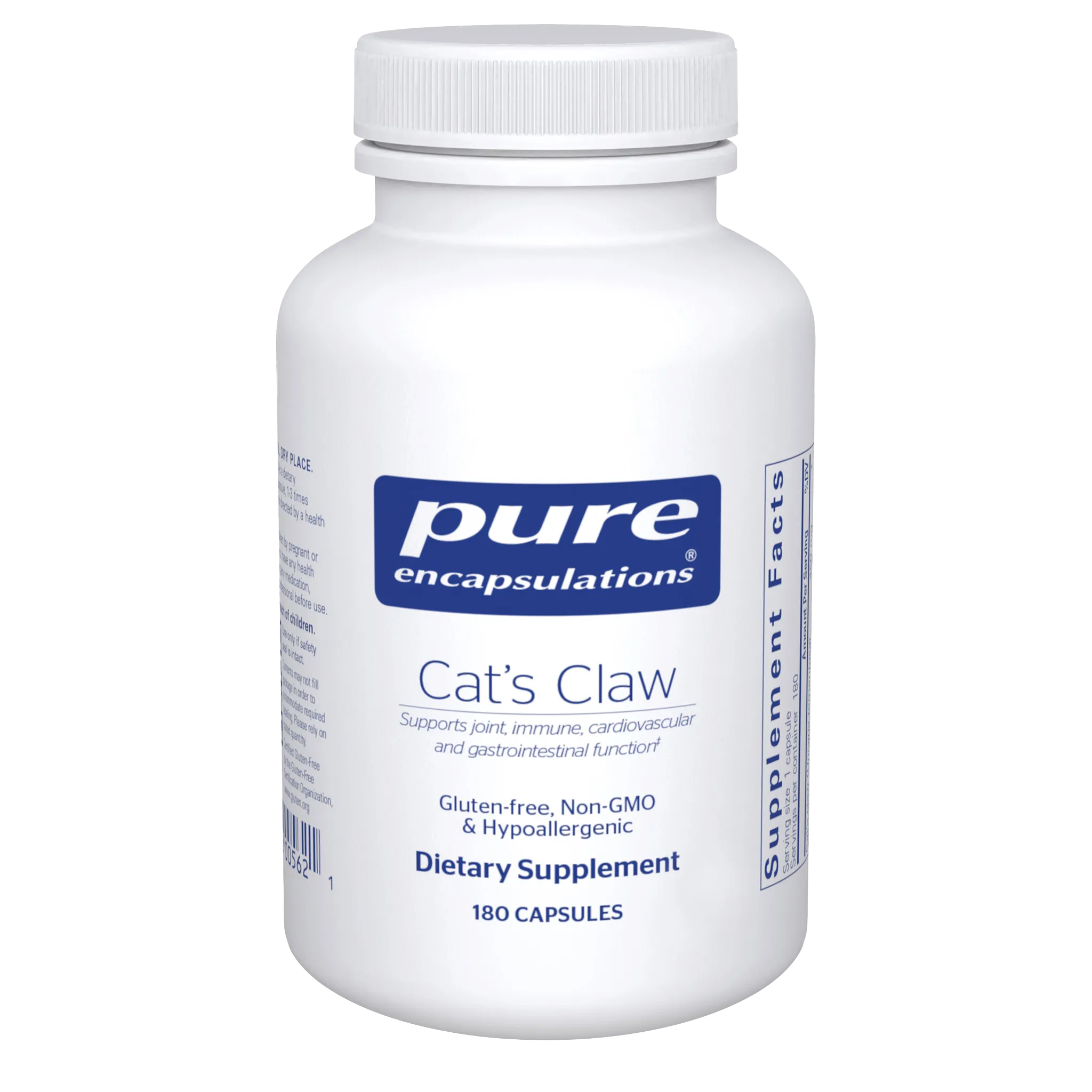
When incorporating Cat's Claw into a clinical management plan, understanding the nuances of bioavailability, extract standardization, and proper dosing is critical for achieving therapeutic results. The oral absorption of the plant's active alkaloids and polyphenols can be highly variable, influenced heavily by the molecular weight of the compounds and the individual's gut microbiota. For this reason, utilizing a high-quality, standardized extract is paramount. The Pure Encapsulations Cat's Claw formula provides 450 mg of Uncaria tomentosa inner vine bark extract per capsule, meticulously standardized to contain 3% oxindole alkaloids.
This standardization ensures that patients receive a consistent, potent dose of the specific pentacyclic oxindole alkaloids (POAs) required for immune modulation, without the unpredictable variability found in raw, unstandardized herbal powders. Because the active compounds are best absorbed when the digestive system is active, it is generally recommended to take the capsules with meals. The typical suggested use is 1 capsule, taken 1 to 3 times daily, or as specifically directed by a healthcare professional who understands your unique medical history.
Crucial Safety Warnings for POTS and Dysautonomia
While Cat's Claw is celebrated for its safety profile in general populations, it carries crucial, non-negotiable warnings for patients with dysautonomia, particularly Postural Orthostatic Tachycardia Syndrome (POTS). As discussed in Ketotifen: Unveiling Relief for the Hidden Battles of MCAS, Long COVID, ME/CFS, and Dysautonomia, managing autonomic nervous system dysfunction requires careful attention to vascular dynamics. Certain alkaloids in Cat's Claw, specifically rhynchophylline, act as natural calcium channel blockers. They prevent calcium from entering the cells of the blood vessel walls, causing the vessels to relax and widen (vasodilation).
While this vasodilation is highly beneficial for individuals with high blood pressure or microvascular constriction, it inherently lowers blood pressure. For POTS patients who already struggle with severe hypotension (low blood pressure), blood pooling, and dizziness upon standing, taking Cat's Claw could dangerously exacerbate these symptoms by further dropping their blood pressure. Patients with hypotensive POTS must approach this herb with extreme caution and strict medical oversight, as it may trigger severe dizzy spells or fainting.
Drug Interactions: Blood Thinners and Antihypertensives
Furthermore, the potent biochemical actions of Cat's Claw create significant interactions with several classes of pharmaceutical medications. Because the herb affects platelet aggregation and possesses mild blood-thinning properties, it can dramatically amplify the effects of prescription anticoagulants and antiplatelet drugs. Patients taking medications such as warfarin, Eliquis (apixaban), Xarelto (rivaroxaban), Plavix (clopidogrel), or even daily high-dose NSAIDs and aspirin must avoid Cat's Claw, as the combination can lead to an elevated risk of severe bruising and internal bleeding.
Beyond blood thinners and antihypertensives, in vitro studies have shown that Cat's Claw can inhibit the CYP3A4 enzyme in the liver. This is one of the most important enzymes in the human body, responsible for metabolizing a vast array of prescription medications, including certain benzodiazepines, statins, and immunosuppressants. By inhibiting this enzyme, Cat's Claw can cause the serum levels of these drugs to rise unexpectedly, increasing the risk of toxicity and adverse side effects. This complex web of pharmacokinetic interactions underscores the absolute necessity of working with a knowledgeable functional medicine practitioner or pharmacist who can carefully review your current medication list before you begin supplementation.
Follow the Science
Clinical Trials in Rheumatoid and Osteoarthritis
The traditional use of Uncaria tomentosa has been increasingly validated by rigorous, peer-reviewed scientific research, particularly in the realms of rheumatology and infectious disease. Some of the most compelling clinical data surrounding Cat's Claw focuses on its ability to manage severe joint pain and inflammation. In a widely cited 52-week, randomized, double-blind, placebo-controlled trial published in the Journal of Rheumatology, researchers evaluated the efficacy of a highly purified Uncaria tomentosa extract in 40 patients with active rheumatoid arthritis (RA) who were already taking conventional disease-modifying medications.
During the first 24 weeks, the patients receiving just 60 mg per day of the Cat's Claw extract experienced a remarkable 53.2% reduction in the number of painful joints, compared to only a 24.1% reduction in the placebo group. By the end of the 52-week study, the researchers noted significant, sustained reductions in both painful and swollen joints, concluding that the botanical extract provided highly effective, safe adjunctive support for autoimmune joint destruction. Similar clinical trials evaluating osteoarthritis have demonstrated that a related species of Cat's Claw (Uncaria guianensis) significantly reduces activity-induced joint pain within the very first week of treatment, highlighting its rapid anti-inflammatory action.
Emerging Antiviral and Post-Infectious Research
Beyond its applications for degenerative joint disease, emerging research is highlighting the profound antiviral and immune-regulating potential of Cat's Claw, making it a subject of intense interest for post-viral syndromes like Long COVID. In a notable 2021 peer-reviewed in vitro study, researchers investigated the direct effects of Uncaria tomentosa on the SARS-CoV-2 virus. Using a hydroalcoholic extract of the plant on infected Vero E6 cells, the researchers observed staggering results: just 48 hours following treatment, the Cat's Claw extract inhibited the number of infectious SARS-CoV-2 particles by 92.7% and reduced virus-induced cellular damage by 98.6%.
While in vitro (petri dish) studies do not automatically translate to human clinical outcomes, these findings provide a powerful mechanistic explanation for why functional medicine practitioners frequently utilize Cat's Claw to help clear suspected viral reservoirs in Long COVID patients. The study further confirmed that the plant's alkaloids successfully downregulated the massive overproduction of inflammatory cytokines triggered by the virus, directly addressing the "cytokine storm" pathology. This aligns with earlier research showing that POAs from U. tomentosa can significantly reduce viral expression and cytokine overproduction in human monocytes infected with the Dengue virus, demonstrating broad-spectrum antiviral support.
Gastrointestinal and Neurological Models
The scientific literature also provides robust support for the gastrointestinal and neurological benefits of Cat's Claw, utilizing advanced in vivo models. Preclinical studies have consistently demonstrated that U. tomentosa extracts protect the stomach lining and significantly inhibit acute and chronic gastritis caused by high doses of NSAID pain relievers. By halting the transcription of NF-κB in the gut mucosa, the herb helps resolve the chronic intestinal inflammation characteristic of inflammatory bowel diseases, providing a scientific basis for its traditional use in treating severe gastric distress.
Furthermore, neurological models have explored the plant's impact on brain health. While some functional medicine practitioners explore its neurological potential, comprehensive reviews emphasize that while Cat's Claw has a long history of traditional use as an immunostimulant, robust clinical evidence for many specific outcomes remains limited, highlighting the need for further research. These neuroprotective theories offer a compelling basis for its potential use in combating the severe neuroinflammation and cognitive dysfunction that plague patients with ME/CFS and Long COVID, suggesting that Cat's Claw may help protect the delicate neural networks from ongoing oxidative damage.
The Path Forward
Integrating Herbal Support Safely
Navigating the daily realities of Long COVID, ME/CFS, MCAS, and dysautonomia is an exhausting and deeply personal journey. When your body feels like a battleground of unpredictable symptoms, finding therapies that validate your experience and address the root causes of your illness is paramount. The integration of well-researched botanical medicines like Cat's Claw represents a shift away from merely suppressing superficial symptoms, moving toward a model of deep, cellular rehabilitation. By intelligently modulating the immune system, silencing the genetic pathways of inflammation, and providing potent antioxidant protection to the vascular and gastrointestinal networks, Cat's Claw offers a sophisticated, multi-targeted approach to healing. It acknowledges the complexity of post-viral syndromes, working in harmony with the body's innate defense mechanisms rather than overriding them.
A Collaborative Approach to Healing
However, it is vital to remember that true healing from complex chronic illness is never found in a single pill or capsule. Supplements like Cat's Claw are most effective when utilized as one strategic component of a comprehensive, medically supervised management plan. This plan must also include aggressive radical rest, meticulous symptom tracking, nervous system regulation, and targeted dietary support to manage mast cell triggers. Because of the profound biochemical shifts that botanicals can initiate—and the critical safety warnings regarding blood pressure and medication interactions—we strongly urge you to consult with a healthcare provider who understands the nuances of dysautonomia and post-viral illness before introducing any new supplement into your regimen. If you are interested in learning more about the diagnostic process for these complex conditions, we encourage you to read How Does a Doctor Diagnose Long COVID?.