Can Calcium MCHA and Magnesium Support Bone Health in Long COVID and ME/CFS?
March 5, 2026
Calcium MCHAMagnesium CitrateLong COVID
Share:
Disclaimer: The information provided here is for educational purposes only and is not intended as medical advice. It should not be used to diagnose, treat, cure, or prevent any medical condition. Instead, use it as a starting point for discussion with your healthcare provider. Always consult with a qualified healthcare provider before starting any new medication, supplement, device, or making changes to your health regimen.
Months or even years after an initial SARS-CoV-2 infection, many individuals find themselves battling a complex web of invisible symptoms. While debilitating fatigue, brain fog, and autonomic dysfunction often dominate the conversation around Long COVID and myalgic encephalomyelitis/chronic fatigue syndrome (ME/CFS), another silent crisis is frequently unfolding beneath the surface: the accelerated deterioration of bone health. Patients often report deep, aching bone pain, severe muscle cramps, and a surprising loss of bone density, leaving them to wonder how a viral infection or metabolic crash could so profoundly impact their skeletal system.
The reality is that chronic inflammation, prolonged periods of inactivity due to post-exertional malaise (PEM), and the metabolic chaos of dysautonomia place immense stress on the body's calcium and magnesium reserves. When the body is constantly fighting systemic inflammation, it can begin to leech crucial alkalizing minerals directly from the bones, setting the stage for osteopenia and osteoporosis. In this comprehensive guide, we will explore the intricate pathophysiology of bone loss in complex chronic illnesses and examine how the synergistic combination of Calcium (from microcrystalline hydroxyapatite) and Magnesium Citrate can help support skeletal integrity, promote proper mineralization, and protect your long-term bone health.
TL;DR
Chronic inflammation and immobility in Long COVID and ME/CFS can accelerate bone loss and mineral depletion.
Calcium MCHA provides a natural bone matrix that supports skeletal integrity without causing dangerous calcium spikes.
Magnesium citrate acts as a crucial cofactor, directing calcium into bones and helping regulate muscle function.
A 2:1 ratio of Calcium to Magnesium may help manage bone pain, cramping, and autonomic symptoms.
What is Calcium MCHA with Magnesium?
The Complex Matrix of Microcrystalline Hydroxyapatite
To understand the power of Calcium MCHA, we must first look at the natural composition of human bone. Standard calcium supplements on the market, such as calcium carbonate or calcium citrate, consist of isolated calcium salts. While these can increase blood calcium levels, they do not accurately reflect the complex biological matrix of living bone tissue. In contrast, microcrystalline hydroxyapatite (MCHA)—often referred to as ossein-hydroxyapatite complex—is derived from whole, raw bone (typically bovine). This means it provides calcium in its natural, unadulterated state, embedded within a rich physiological matrix that the body recognizes and can readily utilize for structural repair.
At a molecular level, MCHA is not just calcium; it is a highly organized crystalline structure that includes phosphorus, trace minerals, and crucial non-collagenous bone proteins like osteocalcin. Osteocalcin is a bone-specific protein secreted by osteoblasts (bone-building cells) that plays a vital role in binding calcium and integrating it into the bone matrix. Furthermore, MCHA contains intact glycosaminoglycans and naturally occurring growth factors that actively stimulate bone remodeling. By providing the exact biochemical building blocks that bones require, MCHA supports bone mineral density and reduces bone resorption far more effectively than isolated calcium salts, which often lack the necessary cofactors for proper skeletal integration.
The Essential Role of Magnesium Citrate
While calcium is the primary structural component of bone, it cannot function correctly without its master regulator: magnesium. Magnesium is an essential macromineral involved in over 300 enzymatic reactions in the human body, and its role in skeletal health is absolutely critical. In this specific formulation, magnesium is provided as magnesium citrate, an organic salt known for its exceptional solubility and bioavailability. Unlike inorganic forms like magnesium oxide, which are poorly absorbed and often cause gastrointestinal distress, magnesium citrate is easily transported across the intestinal epithelium and delivered directly to the systemic circulation where it can exert its physiological effects.
Biochemically, magnesium acts as a mandatory cofactor for the proper assimilation and utilization of both calcium and vitamin D. It is required for the activation of the enzymes CYP2R1 and CYP27B1, which convert inactive vitamin D into its active hormonal form, calcitriol. Without adequate magnesium, high doses of vitamin D cannot effectively increase intestinal calcium absorption, leading to a functional deficiency. Furthermore, magnesium plays a crucial role in calcium metabolism by stimulating the production of calcitonin, a hormone that draws calcium out of the blood and soft tissues and safely deposits it into the skeletal structure. This may help reduce the risk of dangerous calcification of arteries and ensures that calcium is utilized exactly where it is needed most.
The Synergistic 2:1 Ratio
The interplay between calcium and magnesium is a delicate physiological dance. When individuals consume high amounts of calcium without proportional magnesium, it creates a metabolic bottleneck. The unabsorbed calcium can precipitate in the bloodstream, leading to arterial stiffness, kidney stones, and cardiovascular complications—a phenomenon often referred to as the "calcium paradox." To help manage this, clinical consensus strongly advocates for a specific balance between these two minerals to ensure safe and effective bone mineralization.
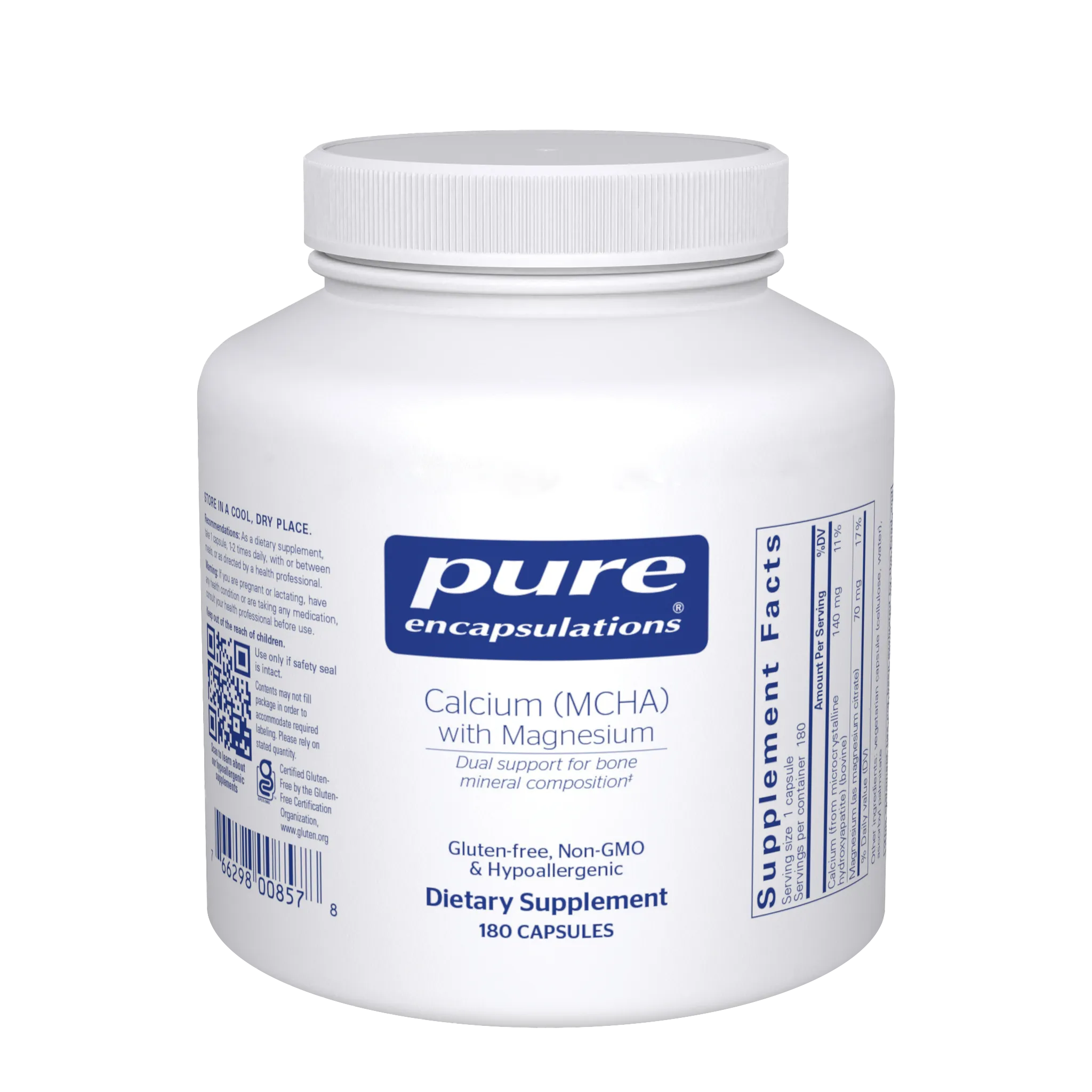
This formula specifically provides a 2:1 ratio of calcium to magnesium (140 mg of calcium from MCHA and 70 mg of magnesium from citrate per capsule). This ratio mimics the natural physiological balance required for optimal bone turnover. The magnesium acts as a biochemical safeguard, ensuring that the calcium provided by the MCHA matrix is directed away from the vascular smooth muscle and actively transported into the osteoid (the unmineralized, organic portion of the bone matrix). By maintaining this precise 2:1 ratio, the supplement maximizes the structural benefits of calcium while mitigating the risks associated with unopposed calcium supplementation, offering a comprehensive and synergistic approach to skeletal health.