Can Calcium Malate Support Energy and Bone Health in Long COVID and ME/CFS?
March 5, 2026
Calcium MalateLong COVIDME/CFS
Share:
Disclaimer: The information provided here is for educational purposes only and is not intended as medical advice. It should not be used to diagnose, treat, cure, or prevent any medical condition. Instead, use it as a starting point for discussion with your healthcare provider. Always consult with a qualified healthcare provider before starting any new medication, supplement, device, or making changes to your health regimen.
Living with complex chronic conditions like Long COVID, myalgic encephalomyelitis/chronic fatigue syndrome (ME/CFS), and dysautonomia often feels like navigating a maze without a map. You might find yourself dealing with profound, unrefreshing sleep, muscle heaviness that makes climbing stairs feel like running a marathon, and the frustrating reality of post-exertional malaise (PEM). When your body’s fundamental systems—from cellular energy production to autonomic nerve signaling—are disrupted, finding targeted, science-backed nutritional support becomes a critical part of reclaiming your quality of life. As researchers continue to explore What Causes Long COVID?, the medical community is increasingly recognizing the profound metabolic and skeletal impacts of these invisible illnesses.
One area of emerging focus in chronic illness management is the intersection of metabolic function and skeletal health. While calcium is widely known for its role in maintaining strong bones, its physiological duties extend far beyond the skeleton. When bound to malic acid in the form of Calcium Malate, this essential mineral becomes a dual-action compound. It not only provides highly bioavailable calcium to support bone density and nerve signaling but also delivers malic acid, a crucial component in the body's cellular energy cycle. Understanding how these elements work at a molecular level can shed light on why they are so vital for individuals battling severe fatigue and systemic inflammation.
TL;DR
Calcium Malate combines bioavailable calcium and malic acid to support cellular energy and bone density.
Malic acid helps fuel the Krebs cycle, which may reduce post-exertional malaise (PEM) and fatigue.
Calcium supports autonomic nervous system stability, potentially easing dysautonomia symptoms like blood pooling and tremors.
Co-supplementing with Vitamin D is crucial for optimal calcium absorption and protecting skeletal health.
What is Calcium Malate?
The Foundation of Skeletal and Cellular Health
Calcium is the most abundant mineral in the human body, and its biological importance cannot be overstated. While approximately 99% of the body's calcium is stored in the bones and teeth, providing structural integrity and a mineral reservoir, the remaining 1% circulates in the blood and soft tissues. This circulating calcium is tightly regulated because it is absolutely essential for life-sustaining physiological processes. At a cellular level, calcium ions act as vital secondary messengers in signal transduction pathways, dictating how cells respond to external stimuli and coordinating complex biological responses across multiple organ systems.
In the nervous system, calcium is the trigger for neurotransmitter release. When an electrical signal, or action potential, reaches the end of a nerve fiber, voltage-gated calcium channels open. The sudden influx of calcium ions into the neuron prompts synaptic vesicles to fuse with the cell membrane, releasing neurotransmitters like acetylcholine and norepinephrine into the synaptic cleft. This mechanism is how your brain communicates with your muscles, organs, and blood vessels. Furthermore, calcium is the central catalyst in excitation-contraction coupling, the biochemical process that allows both skeletal muscles to move your limbs and smooth muscles to constrict your blood vessels.
In a healthy body, blood calcium levels are maintained within a very narrow range through a delicate dance between the intestines, kidneys, and skeleton. If dietary calcium intake is insufficient, the parathyroid glands release parathyroid hormone (PTH), which signals the body to break down bone tissue to release calcium into the bloodstream. This is why a highly bioavailable source of calcium, such as Calcium Malate, is critical not just for supporting bone density, but for ensuring that the nervous and cardiovascular systems have the steady supply of mineral ions they need to function optimally without cannibalizing the skeleton.
The Power of Malic Acid in the Krebs Cycle
To understand the true value of Calcium Malate, we must look closely at its malic acid component. Malic acid, or malate, is a naturally occurring dicarboxylic acid that plays an irreplaceable role in cellular respiration. Deep within the mitochondria—the powerhouses of our cells—lies the Krebs cycle, also known as the citric acid cycle. This complex series of chemical reactions is responsible for releasing stored energy through the oxidation of acetyl-CoA derived from carbohydrates, fats, and proteins. Malate is a critical intermediate in this cycle. The enzyme malate dehydrogenase catalyzes the oxidation of malate into oxaloacetate, a reaction that produces NADH, a high-energy electron carrier.
Once NADH is produced, it shuttles electrons into the electron transport chain (ETC) located on the inner mitochondrial membrane. The flow of these electrons through the ETC creates a proton gradient that ultimately drives the synthesis of adenosine triphosphate (ATP), the primary energy currency of the human body. Without sufficient malate, the Krebs cycle slows down, leading to a bottleneck in NADH production and a subsequent drop in ATP generation. This metabolic stalling forces the cell to rely on less efficient energy pathways, which can quickly lead to cellular exhaustion and profound physical fatigue.
Furthermore, malate is essential for the malate-aspartate shuttle, a highly specialized biochemical mechanism. Because the inner mitochondrial membrane is impermeable to the NADH produced during glycolysis in the cell's cytosol, the malate-aspartate shuttle acts as a transport system. It moves the electrons from cytosolic NADH into the mitochondria, ensuring that the electron transport chain has a continuous, uninterrupted supply of fuel. By providing exogenous malic acid, Calcium Malate directly supports these intricate bioenergetic pathways, helping to maintain the steady production of ATP required for daily functioning.
The Synergy of Vitamin D
The absorption and utilization of calcium are heavily dependent on the presence of Vitamin D, specifically in its active form, calcitriol. When you consume a calcium supplement, it travels to the small intestine, where it must cross the intestinal lining to enter the bloodstream. Vitamin D acts as the key that unlocks this gateway. It binds to intracellular receptors in the intestinal cells, stimulating the synthesis of calcium-binding proteins known as calbindins. These proteins actively transport calcium ions across the intestinal cells and into circulation, preventing the mineral from simply passing through the digestive tract unabsorbed.
Without adequate Vitamin D, the body can only absorb a fraction of the calcium consumed, regardless of how bioavailable the supplement form might be. Research consistently demonstrates that vitamin D plays a crucial role in enhancing calcium absorption in the gut, which is essential for maintaining healthy bones. When Vitamin D levels are low, the resulting drop in blood calcium triggers the release of parathyroid hormone (PTH), which aggressively leaches calcium from the skeleton to maintain serum levels, leading to a dangerous cycle of bone degradation.
By combining DimaCal® Di-Calcium Malate with Vitamin D (as cholecalciferol), this formulation ensures that the calcium is not only easily dissolved in the digestive tract but is also actively chaperoned into the bloodstream. This synergistic relationship is vital for individuals with chronic illnesses, who often struggle with nutrient malabsorption, gut inflammation, and systemic deficiencies that make standalone mineral supplements significantly less effective. The inclusion of Vitamin D transforms a simple mineral supplement into a comprehensive metabolic support tool.
How Chronic Illness Impacts Bone Health and Energy
Viral Inflammation and Bone Resorption
In the wake of a SARS-CoV-2 infection, many patients develop a prolonged state of immune dysregulation and systemic inflammation, a hallmark of what we now recognize as Long COVID. This chronic inflammatory state, often referred to as a "cytokine storm," involves the continuous release of pro-inflammatory signaling molecules like interleukin-6 (IL-6) and tumor necrosis factor-alpha (TNF-α). While these cytokines are designed to fight off acute infections, their persistent presence wreaks havoc on the body's delicate internal balances, particularly within the skeletal system. As patients wonder How Long Does Long COVID Last?, the ongoing inflammation silently accelerates bone degradation.
Bone remodeling is a continuous, lifelong process governed by two primary types of cells: osteoclasts, which break down old bone tissue (resorption), and osteoblasts, which build new bone tissue (ossification). In a healthy body, this process is tightly coupled to maintain bone density. The virus disrupts the RANKL/OPG ratio, a critical biomarker system that controls bone turnover. When RANKL (which stimulates bone breakdown) overwhelms OPG (which protects bone), the body enters a state of rapid, unchecked bone resorption.
Furthermore, the medical treatments used during the acute phase of COVID-19 can have lasting skeletal consequences. Many patients treated for severe infections received high doses of corticosteroids, such as dexamethasone, to suppress life-threatening lung inflammation. While life-saving, corticosteroids are notoriously toxic to bone tissue. They directly impair intestinal calcium absorption, increase renal calcium excretion, and suppress osteoblast activity. This combination of viral-induced osteoclast hyperactivation and steroid-induced osteoblast suppression leaves many Long COVID patients at a significantly increased risk for osteopenia, osteoporosis, and musculoskeletal pain.
Immobility and Mechanical Unloading
For individuals living with severe ME/CFS, dysautonomia, or Long COVID, profound fatigue and exercise intolerance often lead to prolonged periods of bed rest or a housebound existence. This drastic reduction in physical activity introduces a secondary, yet equally devastating, threat to skeletal health: mechanical unloading. According to Wolff's Law, bone tissue adapts to the loads under which it is placed. When you walk, run, or lift weights, the mechanical stress signals osteoblasts to build stronger, denser bones. Conversely, when the skeleton is deprived of weight-bearing mechanical stress, the body quickly perceives bone mass as metabolically unnecessary and begins to dismantle it.
This phenomenon, known as disuse osteopenia, can occur rapidly in bedbound or highly inactive patients. Without the daily micro-stresses of gravity and movement, osteoclast activity outpaces osteoblast activity, leading to a steady decline in bone mineral density. For patients who are already struggling to understand What Are the Symptoms of Long COVID?, the addition of deep, aching bone pain and increased fracture risk can be overwhelming. The loss of structural integrity further complicates any attempts at physical rehabilitation or graded movement protocols.
Compounding the issue of immobility is the severe lack of sunlight exposure experienced by housebound patients. Ultraviolet B (UVB) radiation from the sun is the primary catalyst for the skin's synthesis of Vitamin D. When patients are unable to spend time outdoors, they rapidly develop Vitamin D deficiency, a pattern frequently reported among adults with chronic fatigue syndrome. This deficiency cripples the gut's ability to absorb dietary calcium, forcing the body to mine the skeleton for the calcium it needs to maintain basic nerve and heart function, thereby accelerating bone loss even further.
Metabolic Dysfunction and Energy Starvation
Beyond the skeletal system, chronic fatiguing illnesses are fundamentally characterized by a breakdown in cellular energy production. Researchers investigating Can Long COVID Trigger ME/CFS? Unraveling the Connection have discovered that both patient populations share nearly identical metabolic phenotypes. Advanced metabolomic blood tests reveal that patients with ME/CFS and Long COVID suffer from significant depletions in key intermediates of the Krebs cycle, including malate, citrate, and succinate. This depletion indicates a fundamental block in how the body converts food into usable cellular energy.
Because malate is essential for the malate-aspartate shuttle and the generation of NADH, its absence acts as a metabolic bottleneck. The mitochondria are starved of the electrons they need to drive the electron transport chain, resulting in a catastrophic drop in ATP production. The cells are essentially suffocating, unable to generate the energy required for even basic physiological maintenance, let alone physical or cognitive exertion.
To survive this energy deficit, the cells are forced to abandon the highly efficient Krebs cycle and rely on anaerobic glycolysis—an oxygen-independent pathway that produces only a fraction of the ATP and generates toxic lactic acid as a byproduct. This shift to anaerobic metabolism is the biological driver behind post-exertional malaise (PEM). When a patient attempts to exert themselves, their cells quickly flood with lactic acid, causing the crushing muscle heaviness, burning sensations, and profound exhaustion that can last for days or weeks. The body simply cannot clear the metabolic waste or regenerate ATP fast enough to recover.
Calcium Malate: Supporting Energy, Autonomic Function, and Bones
Fueling the Krebs Cycle and Combating PEM
Supplementing with Calcium Malate provides a direct, bioavailable source of exogenous malic acid, which can be profoundly beneficial for patients trapped in the cycle of energy starvation. By delivering malate directly to the cells, this supplement helps to replenish the depleted intermediates of the Krebs cycle. This influx of malic acid acts like a jumpstart for stalled mitochondria, allowing the malate dehydrogenase enzyme to resume the conversion of malate to oxaloacetate, thereby restoring the production of NADH.
Furthermore, the added malic acid helps to reboot the malate-aspartate shuttle. Research published in JCI Insight demonstrated that the failure of this specific shuttle during exercise recovery is a primary driver of post-exertional malaise (PEM) in ME/CFS patients. By supporting this shuttle, exogenous malate ensures that electrons produced in the cytosol can successfully enter the mitochondria to fuel the electron transport chain. This restores the highly efficient process of oxidative phosphorylation, allowing the body to generate robust amounts of ATP rather than relying on toxic anaerobic glycolysis.
For patients learning How Can You Live with Long-Term COVID, reducing the frequency and severity of PEM crashes is paramount. By providing the biochemical substrates necessary for efficient ATP synthesis, Calcium Malate may help mitigate the rapid buildup of lactic acid during minor exertion. While it is not a cure for mitochondrial dysfunction, supporting these foundational energy pathways can significantly improve a patient's baseline energy envelope, reducing the sensation of muscle heaviness and improving overall stamina.
Stabilizing the Autonomic Nervous System
Dysautonomia, including Postural Orthostatic Tachycardia Syndrome (POTS), is a frequent and debilitating complication of Long COVID and ME/CFS. The autonomic nervous system (ANS) relies heavily on precise calcium signaling to regulate involuntary functions like heart rate and blood pressure. When an action potential fires in an autonomic nerve, calcium must flood the nerve terminal to trigger the release of neurotransmitters like norepinephrine. If systemic calcium levels are unstable or depleted due to chronic illness, this signaling becomes erratic, exacerbating dysautonomic symptoms.
Calcium Malate provides a steady, highly absorbable stream of calcium ions to support these critical neurological pathways. In POTS, patients often struggle with impaired sympathetically mediated vasoconstriction—the inability of blood vessels to tighten and push blood back up to the brain against gravity. Because calcium is the central catalyst for smooth muscle contraction in the vascular walls, maintaining adequate cellular calcium levels is essential for supporting healthy vascular tone and reducing the severe blood pooling that causes orthostatic intolerance and dizziness.
Additionally, maintaining optimal electrolyte balance is a cornerstone of dysautonomia management. POTS patients frequently experience adrenaline surges that cause severe muscle twitching, trembling, and shaking. These symptoms can be triggered or worsened by minor drops in essential minerals like calcium and magnesium. By ensuring the body has a readily available supply of bioavailable calcium, patients can help stabilize their neuromuscular junctions, potentially reducing the severity of these distressing hyperadrenergic symptoms.
Defending Bone Density and Structural Integrity
The combination of highly bioavailable calcium and Vitamin D in this specific formulation provides a powerful defense against the bone degradation commonly seen in chronic illness. When you supplement with Calcium Malate, the Vitamin D ensures that the calcium is actively transported across the intestinal lining and into the bloodstream. This rapid elevation in serum calcium sends a crucial signal to the parathyroid glands to halt the production of parathyroid hormone (PTH).
By suppressing PTH, the body stops leaching calcium from the skeleton. This effectively hits the brakes on osteoclast-mediated bone resorption. For bedbound or housebound patients who are unable to engage in weight-bearing exercise, this biochemical intervention is absolutely critical. It forces the bone remodeling cycle to shift away from destruction and back toward homeostasis, protecting the structural integrity of the skeleton even in the absence of mechanical loading.
Furthermore, by addressing the systemic Vitamin D deficiency that plagues up to 68% of ME/CFS patients, this supplement helps to cool the broader inflammatory environment. Vitamin D possesses potent immunomodulatory properties that can help regulate the overactive cytokine responses seen in Long COVID. By lowering systemic inflammation, the supplement indirectly protects osteoblast function, allowing these bone-building cells to slowly repair and maintain bone mineral density over time, reducing the long-term risk of fractures and deep musculoskeletal pain.

Symptoms Calcium Malate May Help Manage
Targeting Cellular Energy and Muscle Function
Because Calcium Malate operates at the intersection of mitochondrial energy production and neuromuscular signaling, it can help address some of the most stubborn and debilitating symptoms associated with chronic fatiguing illnesses. By replenishing the Krebs cycle and supporting ATP synthesis, patients may experience relief in several key areas:
Profound Fatigue: By providing malic acid to fuel the malate-aspartate shuttle, the supplement supports the continuous production of ATP, helping to lift the heavy, paralyzing exhaustion that characterizes ME/CFS and Long COVID.
Post-Exertional Malaise (PEM): Supporting efficient oxidative phosphorylation helps prevent the body from prematurely shifting into anaerobic glycolysis, thereby reducing the toxic lactic acid buildup that triggers severe PEM crashes after minor physical or cognitive exertion.
Muscle Pain and Heaviness: Malic acid has been clinically studied for its ability to reduce the deep, aching muscle pain and "lead balloon" sensation in the limbs by improving local cellular respiration and clearing metabolic waste products from muscle tissue.
Supporting Skeletal and Autonomic Stability
The highly bioavailable calcium and Vitamin D components of this formulation work synergistically to protect the physical structure of the body while stabilizing the erratic nerve signaling seen in dysautonomia. This dual action targets a distinct set of structural and neurological symptoms:
Bone Fragility and Osteopenia: By suppressing parathyroid hormone (PTH) and halting osteoclast overactivation, the supplement helps mitigate the rapid bone density loss caused by prolonged bed rest, viral inflammation, and corticosteroid use.
Orthostatic Intolerance: Calcium is essential for the smooth muscle contractions required to tighten blood vessels. Maintaining adequate calcium levels supports vascular tone, helping to reduce the blood pooling in the lower extremities that causes dizziness and fainting upon standing.
Muscle Twitching and Tremors: Stabilizing systemic calcium levels ensures that the neuromuscular junctions fire smoothly, helping to reduce the erratic muscle twitching, spasms, and shaking often experienced during POTS adrenaline surges.
Practical Considerations: Forms, Dosing, and Absorption
DimaCal® Di-Calcium Malate vs. Calcium Carbonate
When selecting a calcium supplement, the chemical form dictates how effectively your body can actually use the mineral. The most common and inexpensive form found on pharmacy shelves is calcium carbonate. However, calcium carbonate is an alkaline salt that strictly requires a highly acidic environment to break down. This means it must be taken with heavy meals to trigger stomach acid production. For patients with chronic illness, who often suffer from gastrointestinal dysfunction, nausea, or naturally low stomach acid (hypochlorhydria), calcium carbonate is notoriously difficult to absorb and frequently causes severe gas, bloating, and constipation.
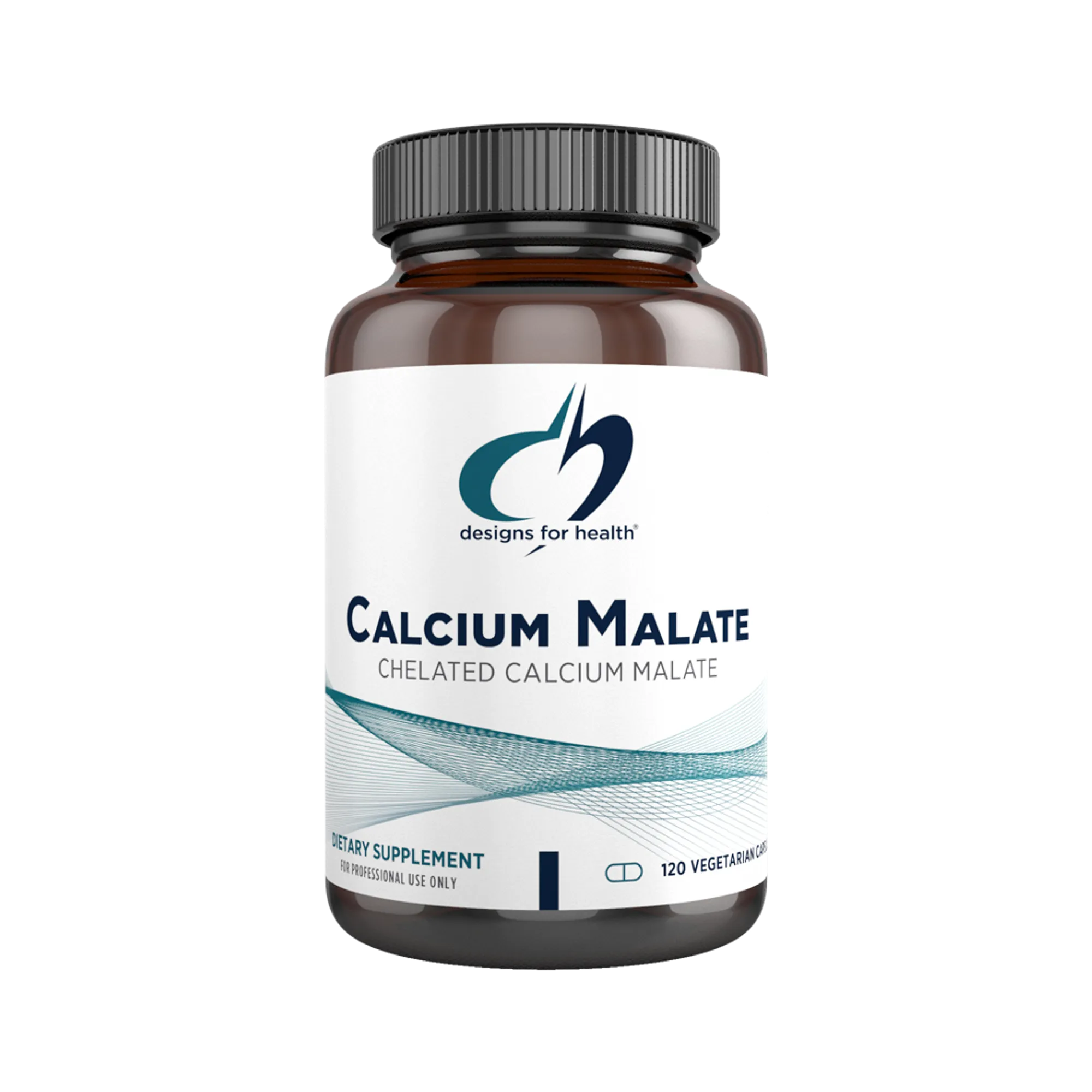
In stark contrast, DimaCal® Di-Calcium Malate—the specific form used in this Designs for Health formulation—consists of two calcium molecules bound to one malic acid molecule. This unique chelated structure does not require stomach acid for optimal absorption. It can be taken with or without food and is exceptionally gentle on the digestive tract. In vitro laboratory tests simulating human digestion have shown that while calcium carbonate immediately foams and produces gas bubbles when exposed to acid, DimaCal® produces zero gas, completely eliminating the bloating associated with traditional supplements.
Furthermore, clinical pharmacokinetic studies demonstrate that di-calcium malate has a significantly superior absorption profile. A randomized trial evaluated by FASEB found that di-calcium malate has a much longer half-life of elimination compared to calcium carbonate. This means that the malate form keeps calcium circulating in the bloodstream in a usable, bioavailable state for a significantly longer period, allowing the bones and nervous system ample time to uptake the mineral for repair and signaling.
The Importance of Vitamin D Co-Supplementation
Taking a calcium supplement without adequate Vitamin D is akin to pouring water into a leaky bucket. As established, Vitamin D is the biological key that synthesizes calbindin proteins in the gut, which actively transport calcium into the bloodstream. Because housebound chronic illness patients are at such a high risk for severe Vitamin D deficiency, a standalone calcium pill will largely pass through the digestive tract unabsorbed, providing little to no clinical benefit.
The inclusion of 2.5 mcg (100 IU) of Vitamin D (as cholecalciferol) in this Calcium Malate formulation is a critical design feature. Cholecalciferol, or Vitamin D3, is the naturally occurring form of the vitamin synthesized by the skin when exposed to sunlight, and it is vastly superior to Vitamin D2 in raising and maintaining serum 25(OH)D levels. By pairing the highly bioavailable di-calcium malate with its necessary absorption cofactor, the supplement ensures maximum cellular delivery.
It is important to note that while the included Vitamin D aids in the immediate absorption of the calcium dose, patients with profound, clinically diagnosed Vitamin D deficiencies may still require additional, higher-dose Vitamin D3 supplementation under the guidance of their healthcare provider to fully restore their systemic levels and cool systemic inflammation.
Timing, Dosage, and Potential Interactions
The suggested use for Calcium Malate is two capsules per day, which provides 500 mg of elemental calcium. Because the body's calcium absorption pathways can become saturated, it is generally recommended not to consume more than 500 mg of calcium in a single dose. Therefore, taking the two capsules together is perfectly optimized for maximum intestinal uptake. While the malate form does not strictly require food for digestion, taking it with a light meal can further slow transit time in the gut, potentially enhancing absorption even more.
When integrating Calcium Malate into your daily routine, timing is crucial regarding other medications. Calcium is a highly reactive mineral that can bind to certain prescription drugs in the digestive tract, preventing their absorption. You must separate calcium supplementation by at least four hours from thyroid hormone replacement medications (like levothyroxine), as calcium can severely blunt their efficacy. Similarly, calcium should be separated from certain classes of antibiotics, specifically tetracyclines and fluoroquinolones.
Finally, because malic acid directly stimulates the Krebs cycle and ATP production, some patients report a mild, natural boost in physical and cognitive energy. For this reason, it is often best to take Calcium Malate in the morning or early afternoon. Taking it late in the evening could potentially interfere with sleep architecture in highly sensitive individuals who struggle with the wired-but-tired insomnia frequently seen in ME/CFS and Long COVID.
Follow the Science
Evidence for Malic Acid in Energy Production
The clinical relevance of malic acid in supporting patients with fatigue-based illnesses is heavily supported by modern metabolomic research.
Building on this, a pivotal 2022 study published in JCI Insight by the Hanson Lab at Cornell University utilized plasma metabolomics to observe ME/CFS patients over two consecutive maximal exercise tests. They discovered that 24 hours after exercise, the pathways most heavily impacted and disrupted were the "citric acid cycle" and the "malate-aspartate shuttle."
These findings align with decades of clinical observations in fibromyalgia and CFS cohorts, where high-dose malic acid supplementation (often paired with magnesium) has been shown to significantly reduce muscle pain and improve subjective energy scores over a 4 to 8 week period by directly bypassing these metabolic bottlenecks and restoring ATP generation.
Bone Health Disruption in Long COVID
The impact of SARS-CoV-2 on skeletal health is an area of intense, ongoing research.
Calcium Bioavailability Studies
The superiority of malate-bound calcium forms over traditional calcium carbonate is well-documented in pharmacokinetic literature. Comparative absorption studies have consistently shown that malate forms of calcium are absorbed at significantly higher rates. While calcium carbonate absorption can be as low as 22%, calcium malate complexes can achieve absorption rates upwards of 36% to 42%, ensuring that more of the mineral actually reaches the bloodstream.
A highly specific pharmacokinetic study on Dicalcium Malate, evaluated by FASEB in 2006, tested subjects taking high doses of elemental calcium. The researchers found that Dicalcium Malate had the longest half-life of elimination compared to other forms, proving its ability to sustain therapeutic calcium levels in the body over an extended period.
Finally, in vitro gastrointestinal tolerance tests have shown that Dicalcium Malate does not react with stomach acid to produce gas, unlike calcium carbonate. This makes it a favorable choice for patients with compromised digestion, helping them receive vital skeletal and metabolic support without the burden of severe bloating and GI distress.
The Path Forward
A Comprehensive Approach to Healing
Living with invisible, complex chronic illnesses like Long COVID, ME/CFS, and dysautonomia is an exhausting daily battle. It is incredibly validating to understand that your profound fatigue, muscle heaviness, and bone pain are not in your head—they are the direct result of measurable biological disruptions in your cellular energy pathways and skeletal remodeling systems. Acknowledging the physiological reality of these conditions is the first step toward reclaiming your agency and your health.
While Calcium Malate offers a highly targeted, science-backed mechanism to support ATP production, stabilize autonomic nerve signaling, and defend your bone density, it is important to remember that no single supplement is a miracle cure. Healing from systemic metabolic and immune dysfunction requires a multifaceted, comprehensive approach. Supplements act as vital tools that provide your body with the raw materials it needs to repair itself, but they work best when integrated into a broader management strategy.
Pacing and Symptom Management
As you work to restore your mitochondrial function and skeletal health, radical rest and strict pacing remain your most powerful daily interventions. Even with the metabolic support of malic acid, pushing through fatigue will only trigger the anaerobic pathways that cause post-exertional malaise (PEM). Utilizing symptom tracking and heart rate monitoring can help you stay within your energy envelope, allowing the Calcium Malate the time and metabolic space it needs to help rebuild your cellular reserves.
Furthermore, managing dysautonomia symptoms requires a holistic view of your electrolyte balance. While Calcium Malate provides the necessary calcium for vascular tone and nerve signaling, ensuring adequate hydration, sodium intake, and magnesium levels are equally critical for stabilizing your autonomic nervous system. Always listen to your body and adjust your daily activities to accommodate your current physical capacity.
Next Steps
If you are struggling with crushing fatigue, muscle pain, or concerns about your bone health due to prolonged inactivity, Calcium Malate may be a valuable addition to your protocol. Always consult with your healthcare provider before starting any new supplement, especially to ensure it does not interact with your current medications and is appropriate for your specific clinical presentation.