Can Calcium Citrate Support Energy and Immune Function in Long COVID and ME/CFS?
March 5, 2026
Calcium CitrateLong COVIDME/CFS
Share:
Disclaimer: The information provided here is for educational purposes only and is not intended as medical advice. It should not be used to diagnose, treat, cure, or prevent any medical condition. Instead, use it as a starting point for discussion with your healthcare provider. Always consult with a qualified healthcare provider before starting any new medication, supplement, device, or making changes to your health regimen.
Months or even years after a mild SARS-CoV-2 infection, many individuals find themselves battling a complex web of debilitating symptoms—profound exhaustion, muscle weakness, erratic heart rates, and severe brain fog. For those living with Long COVID, myalgic encephalomyelitis/chronic fatigue syndrome (ME/CFS), and dysautonomia, the search for answers often leads to the microscopic world of cellular function. While we often think of calcium merely as the building block of strong bones and teeth, its role in the human body is far more dynamic and critical. At the cellular level, calcium is the ultimate biological messenger, dictating everything from how our immune cells fight off threats to how our muscles contract and our nerves fire.
Recent breakthroughs in post-viral illness research have illuminated a startling connection: the way our bodies process and utilize calcium is often fundamentally disrupted in conditions like Long COVID and ME/CFS. Whether it manifests as systemic calcium depletion in the blood or broken calcium ion channels on the surface of our immune cells, this dysregulation creates a cascade of systemic failures. In this comprehensive guide, we will explore the science behind calcium citrate—a highly bioavailable form of this essential mineral—and examine how supporting intracellular calcium pathways may offer a vital piece of the puzzle for patients navigating the complexities of chronic post-infectious illness.
TL;DR
Calcium citrate is a highly bioavailable supplement supporting cellular signaling, muscle function, and bone health.
Post-viral conditions like Long COVID and ME/CFS may involve systemic calcium dysregulation and impaired ion channels.
Supporting calcium pathways may help manage muscle weakness, cognitive fatigue, and orthostatic intolerance.
Consult a healthcare provider before supplementing to ensure proper dosing and avoid medication interactions.
What is Calcium Citrate?
The Foundation of Cellular Communication and Signaling
To understand the true value of calcium citrate, we must first look beyond the skeleton. In a healthy body, calcium exists in two primary states: bound within the structural matrix of our bones, and floating freely as ionized calcium (Ca²⁺) in our blood and intracellular fluid. This ionized calcium is the biologically active form of the mineral, acting as a ubiquitous intracellular messenger. When a cell needs to perform a specific action—whether it is a neuron firing a signal, a gland secreting a hormone, or a white blood cell attacking a pathogen—it relies on a sudden influx of calcium ions to trigger that response. This process is tightly regulated by complex protein structures called ion channels, which act as gated doors on the cell membrane, opening and closing to allow calcium to rush in and initiate these vital biochemical cascades.
Calcium citrate itself is a highly bioavailable calcium salt, created by binding calcium cations to citric acid anions. Unlike other forms of supplemental calcium, this unique chemical structure allows it to dissolve easily in water and be absorbed into the bloodstream without the need for high levels of stomach acid. Once absorbed, the compound dissociates, releasing free calcium ions that immediately go to work supporting the body's electrical and signaling systems. These ions bind to specific cellular proteins, such as calmodulin, to regulate action potential excitation thresholds in the nervous system. Without a constant, tightly controlled gradient of ionized calcium, the electrical signaling that keeps our hearts beating and our brains functioning would simply cease to exist.
The Sliding Filament Theory of Muscle Contraction
One of calcium's most critical roles is facilitating the contraction and relaxation of both skeletal and cardiac muscles. This process is explained by the sliding filament theory of muscle contraction. When a motor nerve sends an electrical impulse to a muscle fiber, it triggers voltage-dependent calcium channels in the muscle cell membrane (the sarcolemma) to open wide. Calcium ions flood into the cell from the extracellular fluid and the sarcoplasmic reticulum, rushing toward the muscle's structural proteins.
Inside the muscle fiber, these free calcium ions bind to a regulatory protein called troponin. This binding causes a structural shift in another protein, tropomyosin, which effectively uncovers the active binding sites on the muscle's actin filaments. Once these sites are exposed, myosin heads attach to the actin, pulling the filaments together and causing the muscle to physically contract. Simultaneously, calcium activates the enzymes responsible for breaking down muscle glycogen, providing the adenosine triphosphate (ATP) energy required to sustain the contraction. When the nerve signal ends, the calcium is actively pumped back out of the cell, allowing the muscle to finally relax. This intricate, calcium-dependent dance happens millions of times a day, powering everything from a heartbeat to a brisk walk.
Structural Integrity and Bone Remodeling
While its signaling roles are paramount, we cannot ignore calcium's role as the primary structural component of the human body. Approximately 99% of the body's calcium is stored in the skeleton and teeth in the form of hydroxyapatite crystals—a dense, rigid matrix of calcium and phosphate that provides our bones with their remarkable density and tensile strength. However, bone is not a static, dead tissue; it is a living, highly active organ that undergoes constant remodeling.
Throughout our lives, specialized cells called osteoclasts continuously break down old bone tissue (a process called bone resorption), while cells called osteoblasts build new bone to replace it. The body treats the skeleton as a massive calcium reservoir. If dietary calcium intake is too low, or if a chronic illness depletes circulating calcium levels, the parathyroid glands release hormones that stimulate the osteoclasts to mine the bones for calcium, leaching the mineral into the bloodstream to keep the heart and nerves functioning. Over time, this constant leaching leads to osteopenia and osteoporosis. Supplementing with a bioavailable form like calcium citrate provides the bloodstream with the necessary calcium, halting this destructive mining process and allowing the osteoblasts to maintain skeletal density and strength.
How Long COVID and ME/CFS Impact Calcium Pathways
Systemic Hypocalcemia in Post-Viral Illness
The onset of Long COVID and other post-viral syndromes is often accompanied by profound metabolic and electrolyte disruptions. When asking what causes Long COVID?, researchers frequently point to these initial metabolic shocks. One of the most consistent findings in acute COVID-19 infections is systemic hypocalcemia—abnormally low levels of calcium in the blood serum—and this depletion frequently persists long after the initial infection has cleared. A prospective cohort study in Senegal tracking survivors of severe COVID-19 found that at the 6-month mark, hypocalcemia still persisted in a staggering 71% of patients.
This chronic state of low blood calcium creates a vicious cycle for Long COVID patients. The SARS-CoV-2 virus is known to disrupt the endocrine system, specifically affecting parathyroid function and vitamin D metabolism, which are both essential for calcium absorption. This systemic depletion alters microvascular permeability and directly contributes to the profound muscle weakness, cramping, and severe fatigue that characterize the Long COVID experience. When the blood lacks sufficient calcium, the body is forced to steal it from the bones, rapidly accelerating bone density loss in patients who are already struggling with the physical deconditioning caused by their illness.
TRPM3 Ion Channel Dysfunction in ME/CFS
While Long COVID often features systemic calcium depletion, myalgic encephalomyelitis/chronic fatigue syndrome (ME/CFS) presents a different, deeply complex problem: intracellular calcium dysregulation. Even if a patient has normal levels of calcium in their blood, their cells may be entirely unable to use it. Groundbreaking research from Griffith University’s National Centre for Neuroimmunology and Emerging Diseases (NCNED) has definitively identified that the Transient Receptor Potential Melastatin 3 (TRPM3) ion channel is impaired in the Natural Killer (NK) immune cells of patients with ME/CFS and Long COVID. Can Long COVID trigger ME/CFS? This shared cellular defect provides a compelling biological link between the two conditions.
The TRPM3 channel acts as a crucial gateway, allowing calcium ions to flow from the bloodstream into the interior of the cell. In ME/CFS, this gateway is effectively jammed shut. This faulty TRPM3 channel restricts calcium influx, which cripples the immune cell's ability to function, communicate, or undergo programmed cell death (apoptosis). This acquired ion channel defect starves the neurological and immune systems of the calcium signaling they desperately need, driving the profound immune exhaustion, cognitive dysfunction, and temperature intolerance that leave so many patients bedbound.
Autonomic Nervous System Failure and POTS
Dysautonomia, and specifically Postural Orthostatic Tachycardia Syndrome (POTS), shares a massive clinical overlap with both Long COVID and ME/CFS. The autonomic nervous system—which controls involuntary functions like heart rate, blood pressure, and digestion—relies entirely on rapid, precise calcium signaling to release neurotransmitters and regulate vascular tone (the constriction and dilation of blood vessels). When calcium pathways are disrupted, autonomic failure is virtually inevitable.
The dysfunction of TRPM3 calcium channels plays a direct role in the hypervigilance and elevated sympathetic nervous system activity (the constant "fight or flight" state) typical of dysautonomia. Furthermore, systemic calcium dysregulation alters the permeability of our micro-vessels. This vascular leakiness promotes the formation of fibrinaloid microclots, which damage the vascular endothelium and drive the cardiovascular instability and extreme orthostatic intolerance seen in POTS. Without adequate, properly functioning calcium dynamics, the autonomic nervous system simply cannot maintain equilibrium when a patient attempts to stand up or exert themselves.
Calcium Citrate: Supporting Cellular and Systemic Recovery
Restoring Intracellular Calcium Gradients
For patients battling the complex pathophysiology of Long COVID and ME/CFS, supplementing with a highly bioavailable form of calcium like calcium citrate may offer a targeted way to support failing cellular systems. When the body is trapped in a state of post-viral hypocalcemia, providing a steady, easily absorbed source of elemental calcium helps to restore the vital concentration gradient between the outside and the inside of the cells. By flooding the extracellular fluid with bioavailable calcium ions, supplementation may help compensate for sluggish or impaired ion channels, ensuring that at least some calcium can penetrate the cell membrane to initiate critical signaling cascades.
This restoration of the calcium gradient is particularly vital for muscle function and the management of post-exertional malaise (PEM). As we explored in the sliding filament theory, muscles cannot contract or produce ATP energy without a massive influx of calcium. By ensuring that the sarcoplasmic reticulum is fully stocked with calcium reserves, calcium citrate supplementation may help mitigate the profound muscle weakness, heavy limbs, and painful cramping that patients experience during a crash. While it cannot "cure" the underlying mitochondrial dysfunction, it provides the raw materials necessary to support whatever energy production pathways are still functioning.
Protecting Bone Density During Prolonged Inactivity
One of the most devastating, yet rarely discussed, secondary effects of severe ME/CFS and Long COVID is the rapid loss of bone density. Because PEM forces many patients into a sedentary, housebound, or bedbound lifestyle, they lose the protective benefits of weight-bearing exercise, which normally stimulates osteoblasts to build new bone. When this profound physical inactivity is combined with post-viral hypocalcemia, the skeletal system degrades at an alarming rate, putting relatively young patients at high risk for early-onset osteopenia and osteoporosis.
Calcium citrate acts as a crucial defensive shield for the skeleton during these prolonged periods of inactivity. By providing a highly absorbable daily dose of calcium, the supplement signals the parathyroid glands to stand down, halting the release of hormones that trigger bone resorption. This helps stop the osteoclasts from mining the skeleton for minerals, effectively freezing bone density loss in its tracks. For a bedbound patient, this structural protection is an absolutely vital component of long-term health maintenance, ensuring that their skeleton remains strong enough to support them when they are eventually able to increase their physical activity.
Dual-Action Support for Colon Health and Inflammation
Beyond its systemic signaling and structural roles, calcium citrate offers profound, localized benefits for the gastrointestinal tract—an area often plagued by severe dysbiosis and inflammation in chronic illness patients. Research has identified two primary mechanisms through which calcium protects the colon: a luminal (extracellular) mechanism and a cellular (intracellular) mechanism. In the gut lumen, extracellular calcium binds to toxic secondary bile acids and free fatty acids, forming insoluble, harmless complexes known as "calcium soaps." These complexes are safely excreted in feces, significantly reducing mucosal irritation and inflammation in the colon lining.
At the cellular level, the human colonic epithelium expresses the Calcium-Sensing Receptor (CaSR). When bioavailable calcium from calcium citrate binds to this receptor, it triggers an intracellular cascade that downregulates uncontrolled cell growth, promotes normal cell maturation, and drastically reduces the secretion of inflammatory cytokines like Interleukin-8 and TNF-α. For patients dealing with the systemic inflammation and gut permeability issues common in Long COVID and mast cell activation syndrome (MCAS), this localized calming effect on the colonic epithelium provides a crucial layer of gastrointestinal support.

Symptoms Calcium Citrate May Help Manage
Targeted Symptom Relief
Muscle Weakness and Heavy Limbs: By supplying the ionized calcium required for the sliding filament mechanism, calcium citrate supports the physical contraction of skeletal muscles, potentially reducing the sensation of profound heaviness and weakness during exertion.
Painful Muscle Cramps and Spasms: Calcium is the primary mineral responsible for muscle relaxation after a contraction. Adequate intracellular calcium levels help avoid the sustained, involuntary muscle firing that causes painful cramps, a frequent complaint in dysautonomia and Long COVID. Do Long COVID symptoms come and go? Ensuring steady calcium levels may help stabilize these fluctuating muscle symptoms.
Orthostatic Intolerance and Dizziness: The autonomic nervous system relies on calcium signaling to constrict blood vessels when you stand up. Supporting this calcium gradient may help improve vascular tone and reduce the dizziness and blood pooling associated with POTS.
Brain Fog and Cognitive Fatigue: Neurons require a precise influx of calcium to release the neurotransmitters that form thoughts and memories. Restoring systemic calcium levels supports this vital electrical signaling in the brain, potentially easing cognitive dysfunction.
Gastrointestinal Inflammation and Irritation: By binding to toxic bile acids in the gut to form harmless "calcium soaps," and by activating the anti-inflammatory Calcium-Sensing Receptor (CaSR) in the colon, calcium citrate helps soothe the irritated mucosal lining of the digestive tract.
Bone Aches and Skeletal Pain: By halting the parathyroid-driven process of bone resorption (where the body mines the skeleton for minerals), calcium citrate helps avoid the micro-structural degradation that can cause deep, aching bone pain during prolonged periods of bedrest.
Practical Considerations: Forms, Dosing, and Absorption
The Bioavailability Advantage of Citrate vs. Carbonate
When navigating the world of calcium supplements, understanding the profound differences in bioavailability between forms is crucial. The two most common forms on the market are calcium carbonate and calcium citrate. Calcium carbonate is an insoluble salt; in order for the body to absorb it, the compound requires a highly acidic stomach environment (a pH close to 1) to break the chemical bond and release the calcium ion. Because of this, it must be taken with heavy meals. If a patient has low stomach acid (achlorhydria)—which is common in older adults and those with chronic illness—or if they are taking acid-reducing medications like H2 blockers or Proton Pump Inhibitors (PPIs) for MCAS, calcium carbonate will pass through their system almost entirely unabsorbed.
Calcium citrate, on the other hand, is a soluble salt. Its unique chemical structure does not require gastric acid to break down and release its bio-active calcium ions. Furthermore, because it is acid-independent, calcium citrate can be taken at any time of day, on an empty stomach or with food, offering immense flexibility for patients struggling with nausea, gastroparesis, or strict dietary pacing. For patients with complex chronic illnesses, especially those on acid-reducing antihistamines, calcium citrate is universally recognized as the superior, highly bioavailable choice.
Optimal Dosing and the 300mg Threshold
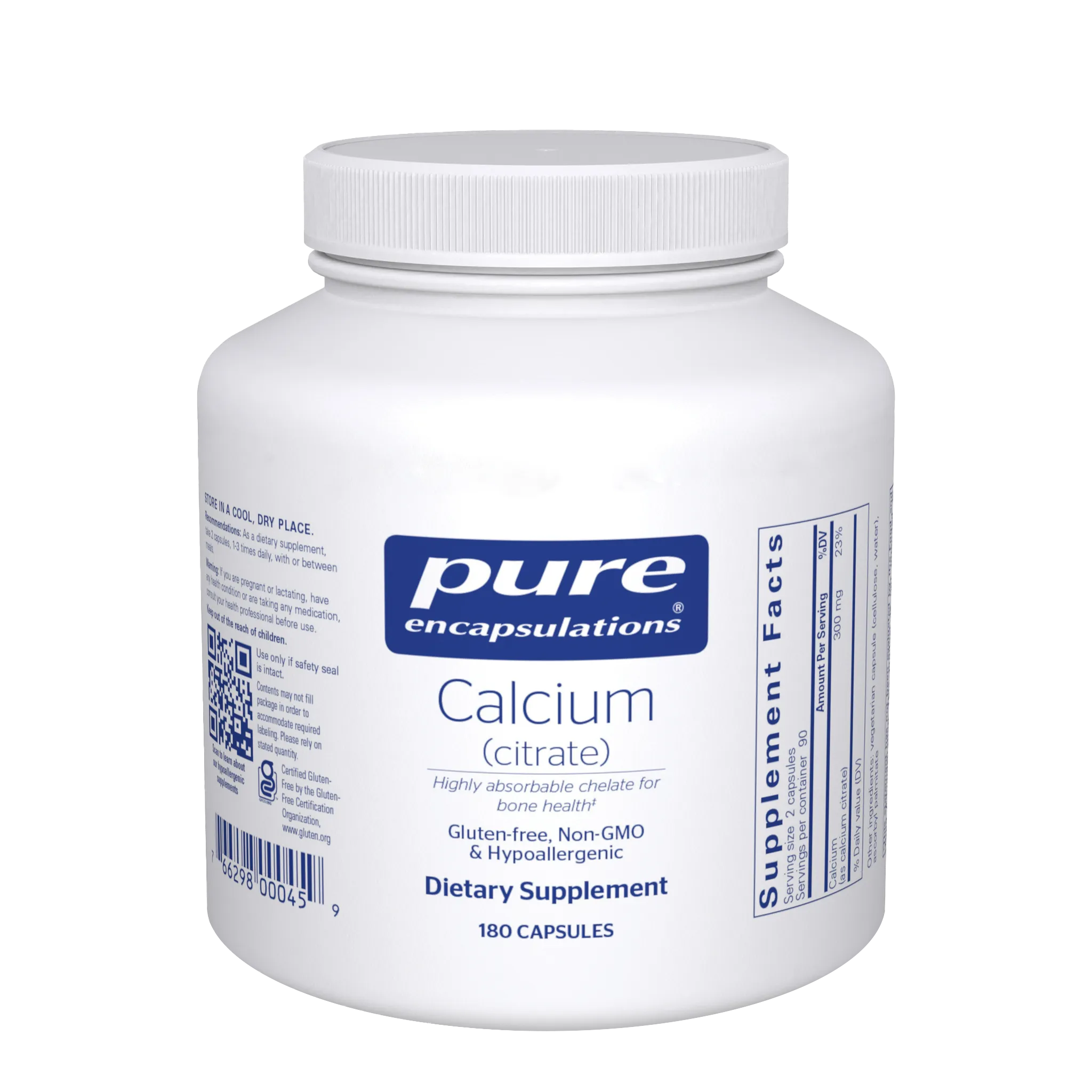
More is not always better when it comes to calcium supplementation. The human intestinal tract has a strict limit on how much elemental calcium it can absorb at one single time. The absorption mechanism becomes fully saturated at around 500 mg; any calcium consumed beyond that in a single dose is simply excreted, or worse, left to cause gastrointestinal distress. This is why integrative medicine practitioners frequently recommend a precise, lower-dose approach, utilizing products like the Pure Encapsulations 300 mg formulation.
A 300 mg capsule allows patients to perfectly titrate their dosage to achieve maximum absorption without overwhelming their system. For example, a patient might take one 300 mg capsule in the morning and another in the evening, ensuring that nearly 100% of the mineral is successfully transported into the bloodstream. This split-dosing strategy helps avoid dangerous spikes in blood calcium levels (hypercalcemia) while providing a steady, continuous supply of the mineral to support nervous system signaling and muscle function throughout the entire day and night.
Safety, Interactions, and The Calcium Paradox
While calcium citrate is generally safe and well-tolerated, it requires careful management, particularly regarding drug interactions. Calcium is a highly reactive mineral that acts as a powerful binder in the digestive tract. If taken simultaneously with certain medications, it will bind to them and render them completely ineffective. Calcium citrate severely reduces the absorption of thyroid hormones (like levothyroxine), specific antibiotics (fluoroquinolones and tetracyclines), and iron supplements. As a strict clinical rule, calcium citrate should be taken at least 2 hours before or 4 to 6 hours after any prescription medications to avoid these interactions.
Patients must also be aware of the "Calcium Paradox" and the risks of over-supplementation. While dietary calcium is highly cardioprotective, taking massive doses of supplemental calcium (exceeding the 2,000 mg/day upper limit) can cause a rapid spike in blood calcium levels. Some studies suggest this excess circulating calcium may deposit into the walls of blood vessels, potentially increasing the risk of arterial stiffness and cardiovascular events. Furthermore, taking calcium citrate alongside thiazide diuretics or lithium can trigger dangerous hypercalcemia. It is imperative to work with a healthcare provider to determine your exact dietary calcium intake, and only use supplements to bridge the gap to reach the recommended 1,000 to 1,200 mg daily total. Always pair calcium with Vitamin D3 (for absorption) and Vitamin K2 (to direct the calcium into the bones and away from the arteries).

Follow the Science
Clinical Trials on Bone and Colon Health
The efficacy of calcium citrate in preserving bone density and supporting colon health is often discussed in clinical data. Broader research suggests calcium citrate may help slow the bone resorption process, providing structural protection for vulnerable populations such as postmenopausal women.
In the realm of gastrointestinal health, calcium plays a supportive role in the colon through multiple mechanisms, including activation of the Calcium-Sensing Receptor (CaSR), which helps manage cellular proliferation and inflammation in the gut.
Breakthroughs in Post-Viral Calcium Research
The scientific understanding of calcium's role in chronic post-viral illness is rapidly expanding, shifting the focus from structural bone health to microscopic cellular signaling. The discovery of impaired TRPM3-dependent calcium influx in the Natural Killer cells of ME/CFS and Long COVID patients by Griffith University researchers has fundamentally changed how we view these diseases. Their whole-cell patch-clamp experiments demonstrated a statistically significant, reproducible reduction in calcium influx in patients compared to healthy controls, proving that the immune exhaustion seen in these conditions is driven by a physical inability to transport calcium across the cell membrane.
Furthermore, the persistent nature of systemic hypocalcemia in Long COVID patients highlights a profound metabolic failure. The Senegal cohort study, which revealed that 71% of severe COVID-19 survivors still suffered from hypocalcemia six months post-infection, underscores the long-term endocrine disruption caused by the virus. How long does Long COVID last? These clinical findings validate the lived experiences of millions of patients, proving that their profound muscle weakness, autonomic failure, and fatigue are rooted in measurable, physiological calcium dysregulation, rather than being purely psychological.
The Path Forward
A Piece of the Complex Chronic Illness Puzzle
Living with Long COVID, ME/CFS, dysautonomia, or MCAS often feels like navigating a labyrinth in the dark. The sheer unpredictability of the symptoms—from crushing post-exertional malaise to terrifying spikes in heart rate—can leave you feeling betrayed by your own body. It is vital to remember that these symptoms are not in your head; they are the result of profound, measurable physiological disruptions at the most microscopic levels of your cellular biology. The discovery of broken calcium ion channels and persistent post-viral hypocalcemia offers profound validation for the exhaustion and weakness you experience every single day.
While there is no single miracle cure for these complex conditions, understanding the mechanisms of your illness empowers you to take targeted action. Supplementing with a highly bioavailable, hypoallergenic formula like calcium citrate is not about fixing everything at once; it is about providing your struggling cells with the fundamental mineral gradients they need to communicate, generate energy, and maintain your structural integrity. It is one carefully chosen piece of a comprehensive management strategy that should also include aggressive resting, symptom tracking, and nervous system regulation.
Next Steps for Your Care
As you continue to build your personalized recovery toolkit, it is crucial to work closely with a healthcare provider who understands the nuances of complex chronic illness. Because calcium interacts with many common medications and requires specific co-factors like Vitamin D3 and K2 to function optimally, your doctor can help you determine the exact dosage and timing that is safe for your unique physiological landscape. Learn more about managing fatigue with Long COVID and explore how targeted nutritional support can improve your baseline.
If you and your medical team decide that supporting your intracellular calcium pathways and protecting your bone density is the right next step, prioritize a pure, acid-independent formulation that won't trigger mast cell reactions or gastrointestinal distress. Explore Calcium Citrate to learn more about how this highly absorbable supplement can support your cellular signaling, muscle function, and long-term structural health.
Sources
Evening primrose oil and borage oil in rheumatologic conditions
Persistent Hypocalcemia in Long COVID: A 6-Month Follow-Up Study
Determinants of parental authorization for involvement of newborn infants in clinical trials
Current status of sentinel lymph node surgery for breast cancer
Delay in retinal photoreceptor development in very preterm compared to term infants