Can Buffered Vitamin C Support Immune Function and Manage Fatigue in Long COVID and MCAS?
March 5, 2026
Buffered Ascorbic AcidVitamin CLong COVID
Share:
Disclaimer: The information provided here is for educational purposes only and is not intended as medical advice. It should not be used to diagnose, treat, cure, or prevent any medical condition. Instead, use it as a starting point for discussion with your healthcare provider. Always consult with a qualified healthcare provider before starting any new medication, supplement, device, or making changes to your health regimen.
Months or even years after a viral infection, many people find themselves trapped in a relentless cycle of debilitating fatigue, brain fog, and unpredictable immune reactions. For those living with Long COVID, myalgic encephalomyelitis/chronic fatigue syndrome (ME/CFS), and mast cell activation syndrome (MCAS), the search for answers can be incredibly frustrating. You might be eating a healthy diet and resting as much as possible, yet your body still feels like it is running on empty, constantly fighting an invisible battle. This profound exhaustion is not just "tiredness"—it is a complex physiological state driven by cellular dysfunction, oxidative stress, and immune dysregulation.
One of the foundational nutrients that the body relies on to fight this oxidative storm is vitamin C. While most of us know vitamin C as a simple immune booster for the common cold, its role in complex chronic illness is far more profound. It is a critical antioxidant, a structural component for blood vessels, and a natural stabilizer for hyperactive immune cells. However, for patients with sensitive digestive systems or MCAS, standard vitamin C supplements can cause severe gastric irritation or trigger symptom flares. This is where buffered ascorbic acid—a gentle, mineral-bound form of vitamin C—comes into play, offering a vital lifeline for cellular repair without the harsh side effects.
TL;DR
Buffered vitamin C provides essential antioxidant support without irritating sensitive digestive systems.
It may help manage fatigue, brain fog, and mast cell flares in chronic conditions.
Mineral ascorbates offer better absorption and are gentler on the stomach than standard ascorbic acid.
What is Buffered Ascorbic Acid?
Vitamin C, scientifically known as ascorbic acid, is a water-soluble essential micronutrient. Unlike most animals, humans lack a functional L-gulono-1,4-lactone oxidase (GULO) enzyme, meaning we cannot synthesize vitamin C internally and must obtain it entirely through our diet or supplementation. At a molecular level, the fundamental mechanism of ascorbic acid is its ability to easily donate electrons. This simple chemical property allows it to act as a potent reducing agent, a premier intracellular antioxidant, and a mandatory enzymatic cofactor for numerous biochemical pathways throughout the body. According to research published in Nutrients, this electron-donating capacity is what enables vitamin C to neutralize highly reactive free radicals before they can damage cellular lipids, proteins, and DNA.
Because it is water-soluble, vitamin C does not passively diffuse into our cells. It requires active transport mechanisms. It enters cells primarily via Sodium-dependent Vitamin C Transporters (SVCT1 and SVCT2), which pull ascorbic acid against a concentration gradient. Through these specialized transporters, vitamin C is highly concentrated in specific areas of the body that experience high levels of metabolic stress, particularly the brain, adrenal glands, and white blood cells. In fact, immunology studies show that leukocytes (white blood cells) actively accumulate vitamin C, reaching intracellular concentrations 50 to 100 times higher than those found in blood plasma. This massive stockpile is essential for immune cells to survive the toxic byproducts of their own pathogen-fighting activities.
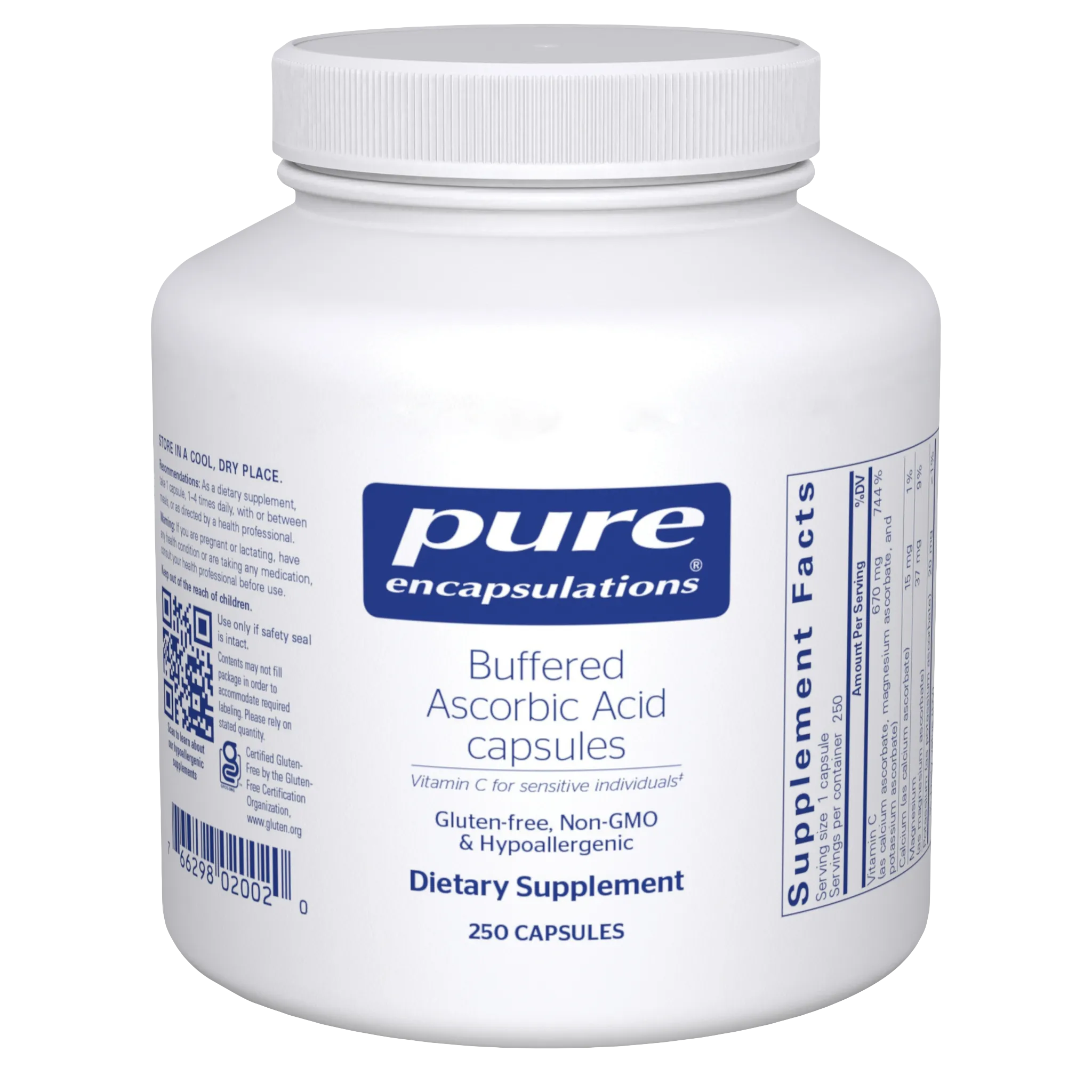
Standard vitamin C is formulated as pure ascorbic acid, which has a very low, highly acidic pH. While healthy individuals can often tolerate this acidity, taking moderate to high doses of standard ascorbic acid can cause significant gastrointestinal distress, including abdominal pain, heartburn, and diarrhea. This is especially problematic for patients with chronic illnesses who often suffer from concurrent gastrointestinal issues, dysautonomia-related gut motility problems, or acid reflux. Buffered ascorbic acid solves this problem by chemically binding the ascorbic acid molecule to mineral salts, such as calcium, magnesium, and potassium. This process creates "mineral ascorbates," which have a neutralized pH that is vastly gentler on the stomach lining.
When you consume a buffered vitamin C supplement, your body absorbs both the active ascorbate and the attached macro-minerals. For example, calcium ascorbate provides the antioxidant benefits of vitamin C while simultaneously delivering a small, highly bioavailable dose of elemental calcium. This makes buffered vitamin C an ideal choice for sensitive individuals who need high-dose antioxidant support without compromising their digestive comfort.