Can Boswellia Support Joint Health and Calm Mast Cell Activation in Long COVID and ME/CFS?
March 5, 2026
BoswelliaLong COVIDME/CFS
Share:
Disclaimer: The information provided here is for educational purposes only and is not intended as medical advice. It should not be used to diagnose, treat, cure, or prevent any medical condition. Instead, use it as a starting point for discussion with your healthcare provider. Always consult with a qualified healthcare provider before starting any new medication, supplement, device, or making changes to your health regimen.
Living with complex chronic conditions like Long COVID, myalgic encephalomyelitis/chronic fatigue syndrome (ME/CFS), and mast cell activation syndrome (MCAS) often feels like navigating a relentless storm of systemic inflammation. Patients frequently experience a debilitating combination of widespread joint pain, unpredictable gastrointestinal distress, and profound neuroimmune exhaustion, commonly referred to as brain fog. When traditional anti-inflammatory medications fall short or cause intolerable side effects, finding targeted, scientifically backed support becomes a critical priority for improving daily quality of life and regaining a sense of physical stability.
One botanical compound that has garnered significant attention in both traditional medicine and modern clinical research is Boswellia serrata, commonly known as Indian frankincense. Known for its unique ability to inhibit specific inflammatory enzymes without disrupting the stomach lining, Boswellia offers a multi-targeted approach to managing the hyperactive immune responses seen in post-viral syndromes. In this comprehensive guide, we will explore the deep biochemical mechanisms of Boswellia, its role in stabilizing mast cells, and how its active constituents may support musculoskeletal, gastrointestinal, and cellular health for those battling complex chronic illnesses.
TL;DR
Boswellia serrata supports immune health by targeting 5-LOX and HLE inflammatory pathways.
It may help manage joint pain, gut barrier integrity, and mast cell activation.
Taking Boswellia with healthy fats significantly improves its absorption and effectiveness.
Always consult a healthcare provider, as it can interact with certain medications.
What is Boswellia?
The Origins and Botanical Profile of Indian Frankincense
Boswellia serrata, widely recognized in historical texts as Indian frankincense, is a moderate-to-large branching tree native to the dry, mountainous regions of India, Northern Africa, and the Middle East. For centuries, traditional Ayurvedic medicine has revered the oleo-gum-resin extracted from the bark of this tree for its profound healing properties. When the tree's bark is incised, it secretes a sticky, aromatic resin designed to protect the plant from pathogens and environmental stressors. This resin is carefully harvested, dried, and purified to create the botanical extracts used in modern therapeutic supplements.
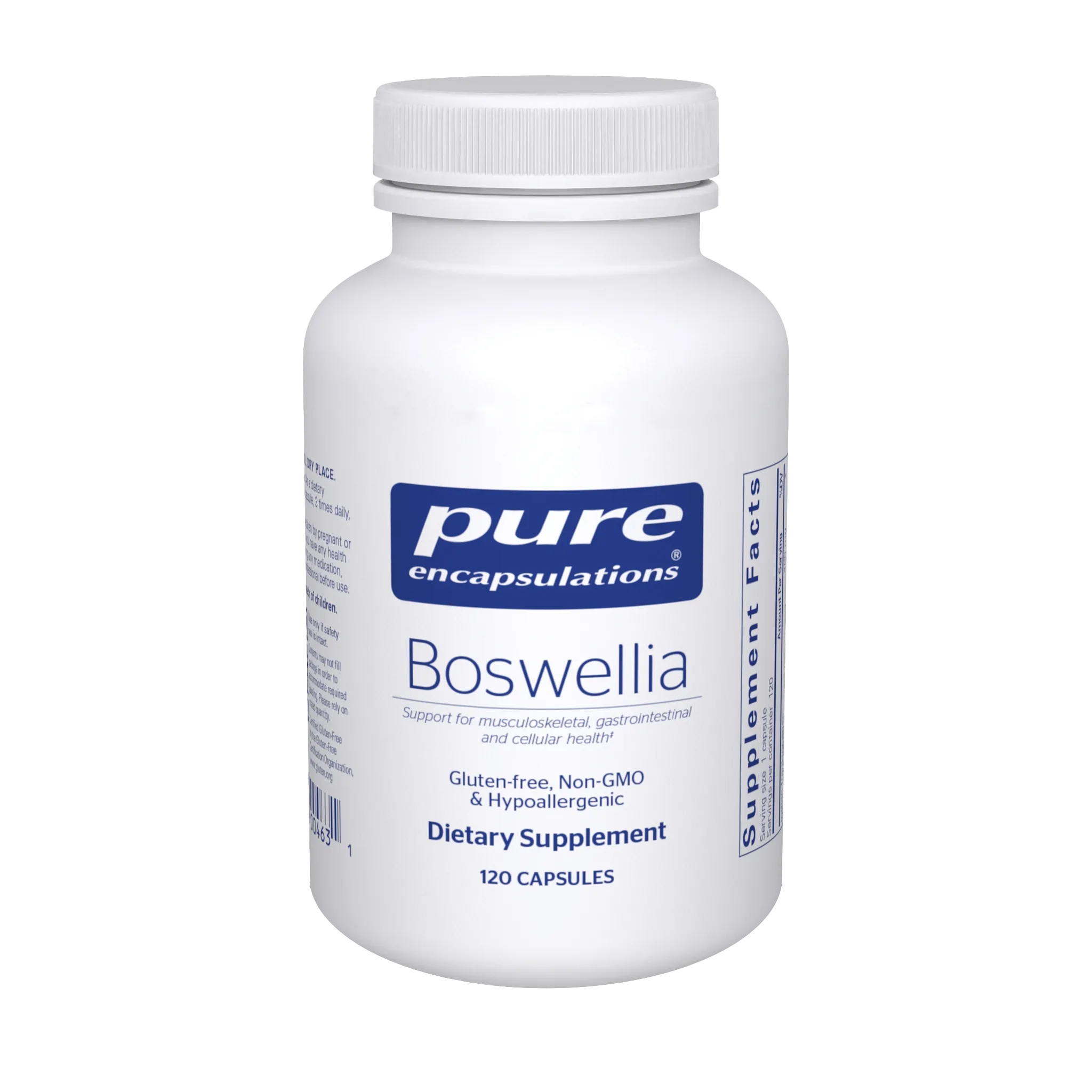
In the context of modern pharmacology, researchers have isolated the specific bioactive molecules within this ancient resin that are responsible for its therapeutic effects. The raw resin is a complex matrix of essential oils, polysaccharides, and higher terpenoids. However, the true clinical power of Boswellia lies in a specific group of lipophilic (fat-soluble) molecules known as boswellic acids. High-quality supplements, such as the one offered by Pure Encapsulations, are meticulously standardized to contain a high percentage—often 60%—of these active boswellic acids to ensure consistent clinical efficacy.
The Active Compounds: Boswellic Acids and AKBA
At the molecular level, boswellic acids are classified as pentacyclic triterpenes. Among the various boswellic acids identified in the resin, four major compounds stand out: β-boswellic acid, acetyl-β-boswellic acid, 11-keto-β-boswellic acid (KBA), and 3-O-acetyl-11-keto-β-boswellic acid (AKBA). Extensive pharmacological research has demonstrated that AKBA is the most biologically active and potent anti-inflammatory compound within the Boswellia extract.
AKBA's unique molecular structure allows it to interact directly with specific enzymatic pathways in the human immune system. Unlike many synthetic drugs that act as broad-spectrum immunosuppressants, AKBA functions as a highly targeted, non-redox inhibitor. This means it does not simply act as a general antioxidant to reduce inflammation; rather, it physically binds to and blocks the specific enzymes responsible for synthesizing inflammatory signaling molecules. This targeted action is what makes standardized Boswellia extracts so valuable for patients dealing with chronic, systemic inflammation.
The Unique Dual-Inhibition Mechanism: 5-LOX and HLE
The primary mechanism of action that sets Boswellia apart from almost all other botanical and pharmaceutical anti-inflammatories is its ability to perform "dual inhibition." First, boswellic acids are the most potent natural inhibitors of 5-lipoxygenase (5-LOX). In a healthy immune response, the 5-LOX enzyme converts arachidonic acid (a fatty acid found in cell membranes) into leukotrienes. Leukotrienes are highly potent lipid mediators that drive bronchoconstriction, increase vascular permeability, and attract white blood cells to tissues, sustaining chronic inflammation. By directly inhibiting 5-LOX, Boswellia effectively shuts down the leukotriene assembly line.
Second, Boswellia simultaneously inhibits an enzyme called Human Leukocyte Elastase (HLE). HLE is a destructive serine protease released by neutrophils (a type of white blood cell) during aggressive immune responses. When overactive, HLE degrades structural proteins in the body, breaking down joint cartilage, lung tissue elasticity, and the intestinal lining. Other literature suggests AKBA significantly decreases HLE activity.
This dual inhibition of both 5-LOX and HLE is believed to be entirely unique to Boswellia serrata. Traditional non-steroidal anti-inflammatory drugs (NSAIDs) like ibuprofen target the cyclooxygenase (COX) pathway, which can inadvertently shunt more arachidonic acid toward the 5-LOX pathway, sometimes worsening leukotriene-driven conditions like asthma or mast cell issues. Furthermore, COX inhibition often damages the protective mucosal lining of the stomach. Boswellia bypasses the COX pathway entirely, providing profound anti-inflammatory and tissue-protective benefits without the gastrointestinal toxicity associated with conventional NSAIDs.
How Chronic Illness Impacts the Immune System and Tissues
The Vicious Cycle of Mast Cell Activation Syndrome (MCAS)
To understand how Boswellia supports patients with complex chronic illnesses, we must first examine how conditions like Long COVID, ME/CFS, and dysautonomia disrupt the immune system. A central feature of these overlapping conditions is the inappropriate activation of mast cells. Mast cells are frontline immune sentinels located in tissues throughout the body, particularly at boundaries like the skin, gut lining, and respiratory tract. In a healthy body, they release chemical mediators (like histamine and leukotrienes) to orchestrate a defense against pathogens or toxins.
However, in mast cell activation syndrome (MCAS), these cells become hyper-sensitized and structurally unstable. Triggers such as the SARS-CoV-2 virus, latent viral reactivations (like Epstein-Barr Virus), or even environmental stressors cause mast cells to degranulate continuously. When mast cells degranulate, they flood the surrounding tissues with pro-inflammatory cytokines and leukotrienes. This massive release of leukotrienes—synthesized via the 5-LOX pathway—creates a vicious cycle of systemic inflammation, driving symptoms like tachycardia, flushing, severe allergic responses, and profound fatigue.
Neuroinflammation and Microglial Activation
The systemic inflammation driven by hyperactive mast cells does not remain confined to the body; it profoundly impacts the central nervous system. When peripheral inflammation is high, it compromises the integrity of the blood-brain barrier. This allows inflammatory cytokines and immune cells to infiltrate the brain, triggering the activation of microglia, the brain's resident immune cells. Once activated, microglia shift from their protective, homeostatic role into an aggressive, inflammatory state, releasing neurotoxic chemicals.
This state of chronic neuroinflammation is a primary driver of the debilitating cognitive dysfunction, memory loss, and neuroimmune exhaustion—often described as "brain fog"—experienced by patients with Long COVID and ME/CFS. The constant microglial activation traps the brain in a state of high oxidative stress, depleting cellular energy reserves and making even minor cognitive tasks feel overwhelmingly exhausting. Understanding what causes Long COVID often points back to this persistent, low-grade neuroinflammation that refuses to resolve long after the initial infection has cleared.
Gastrointestinal Dysfunction and the Breakdown of the Gut Barrier
The gastrointestinal tract is another major casualty of the immune dysregulation seen in these chronic conditions. The gut lining is a delicate, single-cell-thick barrier held together by tight junction proteins. Its job is to absorb nutrients while keeping bacteria and toxins safely contained within the digestive tract. However, chronic inflammation, driven by elevated leukotrienes and the destructive HLE enzyme, directly attacks this barrier.
As the tight junctions degrade, patients develop increased intestinal permeability, commonly known as "leaky gut." This allows lipopolysaccharides (LPS) and undigested food particles to leak into the bloodstream, triggering further immune panic and exacerbating autoimmunity and immune dysregulation in Long COVID. This gut-derived inflammation feeds back into the systemic loop, worsening joint pain, triggering dysautonomia flares, and amplifying neuroinflammation through the gut-brain axis. Breaking this cycle requires interventions that can simultaneously soothe the gut lining and halt the production of destructive inflammatory mediators.
Boswellia: Supporting Immune, Joint, and Cellular Health
Stabilizing Mast Cells and Halting Leukotriene Production
For patients caught in the relentless cycle of MCAS and post-viral inflammation, Boswellia serrata offers a highly targeted mechanism of intervention. By acting as a potent, direct inhibitor of the 5-LOX enzyme, the boswellic acids in the extract effectively cut off the supply chain of leukotrienes. Without the continuous production of these highly inflammatory lipid mediators, the immune system's aggressive signaling begins to quiet down.
Recent pharmacological studies have demonstrated that Boswellia formulations can inhibit mast cell histamine release by up to 71%, a rate of efficacy that is closely comparable to pharmaceutical mast-cell stabilizers like ketotifen. By stabilizing the mast cell membrane and preventing the synthesis of downstream inflammatory chemicals, Boswellia helps reduce the systemic hypersensitivity that drives unpredictable symptom flares in MCAS and dysautonomia patients.
Calming Neuroinflammation and Protecting the Brain
Addressing the neuroimmune exhaustion and brain fog of ME/CFS requires compounds that can successfully navigate the body's defenses to reach the brain. AKBA, the most potent boswellic acid, is highly lipophilic (fat-soluble), which allows it to cross the blood-brain barrier. Once inside the central nervous system, AKBA exerts powerful neuroprotective effects by inhibiting the NF-κB signaling pathway, a master regulator of inflammation inside cells.
By suppressing NF-κB, Boswellia directly calms activated microglia. Other models suggest Boswellia extract can reverse the morphology of reactive microglia. This reduction in neurotoxic signaling helps protect mitochondrial function within brain cells, potentially alleviating the severe cognitive fatigue and sensory overload that define the post-exertional malaise (PEM) seen when Long COVID triggers ME/CFS.
Preserving the Intestinal Barrier and Gut Health
Boswellia's impact on gastrointestinal health is one of its most well-documented clinical benefits. By inhibiting both 5-LOX and the tissue-destroying HLE enzyme, boswellic acids protect the delicate epithelial lining of the colon from inflammatory degradation. In vitro studies using human colonic epithelial cells have demonstrated that Boswellia extracts help maintain transepithelial electrical resistance (TEER), a key measure of gut barrier integrity.
Furthermore, Boswellia prevents the disassembly of crucial tight junction proteins like ZO-1 and occludin. By reinforcing the gut barrier, Boswellia helps halt the leakage of endotoxins into the bloodstream, thereby reducing the systemic inflammatory burden. This mechanism is particularly beneficial for managing the unpredictable gastrointestinal distress, cramping, and motility issues frequently experienced by patients with dysautonomia and Long COVID.
Rebuilding Cartilage and Joint Integrity
Widespread, migrating joint pain is a hallmark symptom for many individuals with complex chronic illnesses. While traditional painkillers only mask this discomfort, Boswellia works to protect the physical structure of the joint. The HLE enzyme, when overactive due to chronic inflammation, actively degrades Type II collagen and the glycosaminoglycans that make up joint cartilage.
By suppressing HLE activity, Boswellia acts as a tissue-protective agent. It halts the enzymatic breakdown of the cartilage matrix while simultaneously reducing the leukotriene-driven swelling within the synovial fluid. This dual action not only alleviates the sensation of pain but also preserves the mechanical function and flexibility of the joints, offering a disease-modifying approach rather than mere symptom management. Patients exploring A.I. enzymes for joint pain often find that combining systemic enzymes with Boswellia provides comprehensive musculoskeletal support.

Symptoms Boswellia May Help Manage
Neurological and Cognitive Symptoms
Brain Fog and Cognitive Fatigue: By crossing the blood-brain barrier and inhibiting microglial activation via the NF-κB pathway, Boswellia reduces the neuroinflammation that impairs memory, focus, and cognitive processing.
Sensory Overload: Stabilizing mast cells in the central nervous system helps reduce the neurological hypersensitivity that makes bright lights and loud noises intolerable during a crash.
Post-Exertional Neuroimmune Exhaustion: By protecting mitochondrial enzymes from oxidative stress and reducing systemic cytokine loads, Boswellia supports cellular energy production, helping to mitigate the severity of post-exertional malaise (PEM).
Musculoskeletal and Systemic Symptoms
Widespread Joint Pain: By inhibiting the 5-LOX enzyme and halting leukotriene production, Boswellia significantly reduces the inflammatory signaling that causes deep, aching joint pain.
Cartilage Degradation and Stiffness: Boswellia suppresses the HLE enzyme, preventing the breakdown of Type II collagen in the joints and improving morning stiffness and overall physical mobility.
Systemic Mast Cell Flares: Acting as a natural mast cell stabilizer, Boswellia helps reduce the frequency and severity of systemic inflammatory flares, flushing, and unexplained allergic-type reactions.
Gastrointestinal and Autonomic Symptoms
Intestinal Cramping and Pain: By downregulating inflammatory cytokines in the gut lining, Boswellia soothes the mucosal tissue and reduces the visceral hypersensitivity associated with chronic GI distress.
"Leaky Gut" and Food Sensitivities: Boswellia helps preserve tight junction proteins (like ZO-1), reinforcing the intestinal barrier and preventing the leakage of endotoxins that trigger systemic immune reactions to foods.
Dysautonomia-Related GI Motility Issues: By reducing localized inflammation in the enteric nervous system (the gut's brain), Boswellia may help support more normalized bowel motility and reduce unpredictable alternations between diarrhea and constipation.
Practical Considerations: Forms, Dosing, and Absorption
The Bioavailability Challenge: Why Fat is Crucial
While the biochemical potential of boswellic acids is immense, translating that potential into clinical results requires overcoming a significant pharmacokinetic hurdle: poor oral bioavailability. AKBA and other boswellic acids are highly lipophilic (fat-soluble) and have a high molecular weight. When taken on an empty stomach, they do not dissolve well in the watery environment of the digestive tract, leading to very little of the active compound actually reaching the bloodstream.
To maximize absorption, it is clinically imperative to take standard Boswellia supplements alongside a meal that contains healthy fats, such as olive oil, avocado, nuts, or eggs. When dietary fat is consumed, the gallbladder releases bile acids into the intestines. These bile acids act as natural emulsifiers, solubilizing the lipophilic Boswellia molecules into micelles that can easily pass through the intestinal wall. Other research demonstrates that taking Boswellia with a high-fat meal can increase the peak plasma concentration of AKBA by several-fold compared to a fasted state.
Optimal Dosing and Standardization
When selecting a Boswellia supplement, standardization is key. Raw Boswellia resin contains only a small fraction of active boswellic acids. High-quality clinical supplements, such as the Pure Encapsulations Boswellia, are standardized to contain 60% boswellic acids, ensuring a potent and reliable dose of the active therapeutic compounds.
The suggested use for this standardized extract is typically 400 mg (one capsule) taken three times daily with meals. Because the half-life of boswellic acids in the bloodstream is relatively short (roughly 3 to 6 hours), dividing the dose throughout the day helps maintain a steady suppression of the 5-LOX and HLE enzymes. Patients generally need to take Boswellia consistently for 2 to 4 weeks before noticing significant reductions in chronic joint pain or systemic inflammation, though some gastrointestinal benefits may be felt sooner.
Safety, Contraindications, and Drug Interactions
Boswellia is generally well-tolerated, with a safety profile that is vastly superior to traditional NSAIDs, as it does not cause gastric ulceration or cardiovascular stress. When side effects do occur, they are typically mild and limited to gastrointestinal upset, such as acid reflux or mild nausea. However, Boswellia is strictly contraindicated for pregnant or lactating women, as animal studies have suggested it may have abortive effects at high doses.
The most critical safety consideration involves drug interactions. Boswellic acids are known to inhibit several Cytochrome P450 (CYP450) liver enzymes, particularly CYP3A4 and CYP2C9. These enzymes are responsible for metabolizing a wide variety of prescription medications. Most notably, Boswellia can significantly amplify the effects of blood thinners like Warfarin (Coumadin), increasing the risk of severe bleeding. It may also interact with certain antidepressants, statins, and immunosuppressants. Always consult with a healthcare provider or pharmacist before adding Boswellia to a regimen that includes prescription medications.

Follow the Science
Clinical Trials on Joint Health and Osteoarthritis
The efficacy of Boswellia serrata for musculoskeletal health is supported by a robust and growing body of clinical evidence. A landmark 2024 randomized, double-blind, placebo-controlled trial utilized Magnetic Resonance Imaging (MRI) to physically measure the structural impact of a standardized Boswellia extract on human knee osteoarthritis over 180 days. The results were groundbreaking: not only did the Boswellia group experience a massive 70.78% reduction in WOMAC pain scores, but the post-trial MRIs revealed that cartilage volume, cartilage thickness, and joint space width actually increased compared to the placebo group.
Furthermore, Boswellia has demonstrated rapid onset of action. Another 2024 multi-center clinical trial evaluated 98 subjects taking a high-AKBA Boswellia extract over 90 days. The researchers noted statistically significant improvements in pain scores as early as 5 days after beginning supplementation. Blood tests from the participants also showed a notable decrease in systemic inflammatory markers, including TNF-α and hs-CRP, confirming that the localized joint relief was driven by a systemic reduction in inflammation.
Evidence for Gastrointestinal Health and IBD
In the realm of gastroenterology, Boswellia has been extensively studied for its role in managing Inflammatory Bowel Disease (IBD) and Ulcerative Colitis (UC). A classic clinical trial by Gupta et al. compared Boswellia serrata gum resin (350 mg three times daily) against the standard pharmaceutical drug sulfasalazine in patients with grade II and III ulcerative colitis. Remarkably, 70% of the patients treated with Boswellia went into disease remission, compared to a 40% remission rate in the sulfasalazine control group, with significant improvements in rectal biopsy histopathology.
More recently, other research has evaluated highly bioavailable forms of Boswellia in patients with minimally symptomatic UC in remission. Over a 4-week period, patients receiving the extract experienced significant attenuation of minor GI symptoms, including decreases in intestinal pain and cramping. Crucially, the studies noted a significant reduction in fecal calprotectin, a highly specific biomarker used by gastroenterologists to measure active bowel inflammation.
Emerging Research in Post-Viral Syndromes and MCAS
As the medical community deepens its understanding of post-viral illnesses, Boswellia is emerging as a valuable therapeutic tool. Other literature discusses nutraceutical blends containing Boswellia serrata extract for Long COVID patients. After 2 to 4 weeks of treatment, between 72% and 84% of participants experienced a significant attenuation in multiple Long COVID symptoms, highlighting the synergistic power of combining mast cell stabilizers like quercetin with 5-LOX inhibitors like Boswellia.
In vitro research further supports Boswellia's role in managing mast cell activation. Recent pharmacological studies utilizing human mast cell models demonstrated that Boswellia formulations effectively inhibited mast cell histamine release by up to 71%. This profound stabilization of the mast cell membrane underscores why integrative practitioners increasingly utilize Boswellia as a foundational component in protocols designed to calm the hyperactive immune responses seen in MCAS, ME/CFS, and Long COVID.
The Path Forward
Integrating Boswellia into Your Protocol
Navigating the daily realities of Long COVID, ME/CFS, dysautonomia, or MCAS is an incredibly complex journey. There is no single miracle pill that can instantly resolve the deeply entrenched neuroimmune dysfunction that characterizes these conditions. However, targeted supplements like Boswellia serrata offer a scientifically grounded way to intervene in the vicious cycles of inflammation. By simultaneously inhibiting the 5-LOX and HLE enzymes, Boswellia provides a unique, dual-action approach to stabilizing mast cells, protecting joint cartilage, and preserving the integrity of the gut barrier.
To maximize its benefits, Boswellia should be viewed as one vital piece of a comprehensive, multi-disciplinary management strategy. Its efficacy is often enhanced when used alongside other mast cell stabilizers, a low-histamine or anti-inflammatory diet, and rigorous symptom tracking. Most importantly, supplements must be paired with strict energy pacing to prevent the mitochondrial crashes associated with post-exertional malaise. By systematically reducing the body's inflammatory burden, Boswellia can help create the physiological breathing room necessary for deeper healing and cellular repair.
A Validating Approach to Chronic Illness
If you are struggling with debilitating brain fog, migrating joint pain, or unpredictable gastrointestinal flares, it is crucial to know that your symptoms are real, valid, and rooted in measurable physiological dysfunction. The hyperactive immune responses and neuroinflammation driving your illness are complex, but as clinical research continues to evolve, so do our tools for managing them. You do not have to accept a life defined entirely by symptom flares and exhaustion.
At RTHM, we are committed to providing you with the clinical insights, advanced diagnostics, and targeted therapeutic options needed to reclaim your quality of life. Because Boswellia can interact with certain liver enzymes and prescription medications, it is essential to work collaboratively with a knowledgeable healthcare provider who understands the nuances of complex chronic illness before starting any new supplement regimen.