Can Boswellia Phytosome Help Manage Inflammation in Long COVID and ME/CFS?
March 6, 2026
Boswellia PhytosomeLong COVIDME/CFS
Share:
Disclaimer: The information provided here is for educational purposes only and is not intended as medical advice. It should not be used to diagnose, treat, cure, or prevent any medical condition. Instead, use it as a starting point for discussion with your healthcare provider. Always consult with a qualified healthcare provider before starting any new medication, supplement, device, or making changes to your health regimen.
Months or even years after an initial viral infection, many individuals find themselves trapped in a relentless cycle of debilitating symptoms. Whether you have been diagnosed with Long COVID, myalgic encephalomyelitis/chronic fatigue syndrome (ME/CFS), mast cell activation syndrome (MCAS), or dysautonomia, the underlying thread connecting these complex conditions is often chronic, systemic inflammation. This persistent immune activation can leave you battling severe brain fog, unpredictable gastrointestinal distress, and profound post-exertional malaise (PEM), making daily life feel like an uphill climb.
In the search for validating, science-backed management strategies, natural compounds with potent anti-inflammatory properties have garnered significant attention. One such compound is Boswellia serrata, traditionally known as Indian frankincense. While its historical use spans centuries, modern clinical research has uncovered its profound ability to modulate the immune system at a cellular level. However, natural boswellia is notoriously difficult for the body to absorb. Enter Boswellia Phytosome, a specialized formulation that binds these active compounds to phospholipids, dramatically enhancing their bioavailability. In this article, we will explore the intricate mechanisms of Boswellia Phytosome, how it combats the neuroinflammation and gut dysbiosis seen in chronic illness, and why it might be a valuable addition to your comprehensive care plan.
TL;DR
Boswellia Phytosome targets chronic inflammation pathways like 5-LOX to support immune balance.
Enhanced bioavailability helps it cross the blood-brain barrier, potentially reducing neuroinflammation and brain fog.
It may soothe gastrointestinal inflammation, supporting gut barrier integrity and the gut-brain axis.
Consult your healthcare provider before starting, especially if pregnant or taking other medications.
What is Boswellia Phytosome?
The Ancient Roots of Indian Frankincense
Boswellia serrata, commonly referred to as Indian frankincense, is a resin extracted from the Boswellia tree, native to India, North Africa, and the Middle East. For centuries, it has been a cornerstone of traditional Ayurvedic medicine, utilized primarily for its profound ability to soothe inflamed tissues and support joint health. In a healthy body, the immune system triggers acute inflammation as a necessary response to injury or infection, deploying white blood cells and chemical messengers to heal the affected area. Once the threat is neutralized, the inflammatory response naturally resolves. However, the active compounds within the Boswellia resin, known as boswellic acids, have evolved to interact specifically with these inflammatory pathways, helping to modulate and calm the immune response when it becomes overactive.
Among the various boswellic acids, AKBA (acetyl-11-keto-β-boswellic acid) is the most potent and extensively researched. AKBA operates at the molecular level by directly interacting with specific enzymes that dictate the body's inflammatory cascade. Unlike many conventional anti-inflammatory agents that broadly suppress the immune system, boswellic acids offer a more targeted approach, modulating specific pathways without entirely blunting the body's natural defense mechanisms. This nuanced interaction makes Boswellia a fascinating subject of study for conditions characterized by chronic, unresolved inflammation, where the immune system remains locked in a hyperactive state.
The Arachidonic Acid Cascade and 5-LOX Inhibition
To truly understand how Boswellia works, we must dive into the biochemistry of inflammation, specifically the arachidonic acid cascade. When cells are stressed or damaged, an enzyme called phospholipase A2 releases arachidonic acid from the cellular membrane. This acid is then metabolized by two primary enzyme systems: cyclooxygenase (COX) and lipoxygenase (LOX). While many over-the-counter anti-inflammatory drugs (like ibuprofen) target the COX pathway to reduce prostaglandins, Boswellia specifically targets the 5-lipoxygenase (5-LOX) enzyme. Research indicates that AKBA is a direct, non-redox, and non-competitive inhibitor of 5-LOX, effectively shutting down this specific branch of the inflammatory cascade.
When the 5-LOX enzyme is active, it converts arachidonic acid into leukotrienes. Leukotrienes are highly potent inflammatory mediators that play a major role in sustaining systemic inflammation. They act as chemoattractants, drawing more white blood cells to the area, and they cause smooth muscle contraction, particularly in the respiratory and gastrointestinal tracts. By inhibiting 5-LOX, Boswellia halts the overproduction of these leukotrienes. Furthermore, boswellic acids have been shown to inhibit the NF-κB signaling pathway, a master regulator of inflammation that controls the expression of numerous pro-inflammatory cytokines, including TNF-α, IL-1β, and IL-6. By modulating these upstream genetic switches, Boswellia helps cool the inflammatory fire at its source.
The Power of Phytosome Delivery (Casperome®)
Despite its profound biochemical potential, raw Boswellia extract faces a significant physiological hurdle: poor bioavailability. Boswellic acids are highly lipophilic (fat-loving) and hydrophobic (water-repelling), meaning they do not dissolve well in the watery environment of the human digestive tract. Consequently, when standard Boswellia is consumed, a large percentage of the active compounds are excreted without ever entering the bloodstream or reaching the target tissues. This poor absorption has historically limited the clinical efficacy of natural Boswellia supplements, requiring patients to consume impractically large doses to achieve therapeutic blood levels.
To overcome this limitation, scientists developed phytosome technology, specifically a patented formulation known as Casperome®. A phytosome is created by chemically binding the botanical extract (in this case, a full spectrum of boswellic acids) to dietary phospholipids, typically derived from sunflower lecithin. Phospholipids are the exact same molecules that make up the outer membranes of all human cells, featuring a water-soluble head and a fat-soluble tail. By enveloping the boswellic acids in this phospholipid complex, the phytosome acts as a molecular Trojan horse. It seamlessly shuttles the active compounds across the intestinal barrier and into the bloodstream. Clinical studies demonstrate that this phytosome preparation increases the plasma and tissue levels of boswellic acids by 3- to 35-fold compared to non-complexed extracts, ensuring that the therapeutic compounds actually reach the brain, lungs, joints, and gut.
How Chronic Illness Impacts Systemic Inflammation
Viral Persistence and Immune Dysregulation
In complex chronic illnesses like Long COVID and ME/CFS, the immune system fails to return to a baseline state of rest following an initial trigger, such as a viral infection. Instead, patients experience a state of chronic immune dysregulation. One prevailing theory for this ongoing dysfunction is viral persistence—the idea that fragments of the virus, or even replication-competent viral reservoirs, remain hidden in tissues long after the acute infection has passed. This persistent antigen exposure keeps the immune system on high alert, continuously churning out pro-inflammatory cytokines like TNF-α and IL-6. This constant state of alarm drains cellular energy reserves and drives the debilitating fatigue and post-exertional malaise (PEM) that define these conditions.
Furthermore, this systemic inflammation often triggers or exacerbates mast cell activation syndrome (MCAS). Mast cells are immune cells that reside in tissues throughout the body, acting as sentinels. In MCAS, these cells become hyper-responsive, inappropriately degranulating and releasing a flood of chemical mediators, including histamine and the very leukotrienes that the 5-LOX pathway produces. This massive release of mediators causes widespread, unpredictable symptoms, ranging from flushing and tachycardia to severe gastrointestinal distress and respiratory issues. The overproduction of leukotrienes creates a vicious cycle, where inflammation triggers mast cells, and mast cells release more inflammatory mediators, keeping the patient locked in a state of chronic illness.
Neuroinflammation and Microglial Priming
Perhaps one of the most distressing symptoms of Long COVID and ME/CFS is cognitive dysfunction, commonly referred to as "brain fog." This is not merely psychological; it is a direct result of neuroinflammation. The brain possesses its own resident immune cells called microglia. In a healthy state, microglia act as housekeepers, clearing away cellular debris and supporting neuronal health. However, systemic inflammation and viral triggers can cause these microglia to become "primed" or overactivated. They shift from a protective M2 phenotype to a pro-inflammatory M1 phenotype, releasing toxic cytokines directly into the central nervous system.
Recent research highlights that this microglial activation disrupts neurotransmitter balance, impairs synaptic plasticity, and damages the blood-brain barrier. The resulting neuroinflammation manifests clinically as severe brain fog, memory deficits, difficulty concentrating, and sensory overload. Because the brain is highly sensitive to oxidative stress and inflammatory cytokines, this persistent neuroimmune activation heavily contributes to the "sickness behavior" seen in ME/CFS and Long COVID, making even minor cognitive tasks feel exhausting and triggering neurological crashes.
The Gut-Brain Axis and Enteral Dysbiosis
The impact of chronic illness extends deeply into the gastrointestinal tract, disrupting the delicate gut-brain axis. The SARS-CoV-2 virus, for example, has been shown to directly infect the enterocytes (intestinal cells), leading to profound mucosal inflammation and alterations in the gut microbiome—a state known as enteral dysbiosis. This dysbiosis compromises the integrity of the intestinal epithelial barrier, leading to increased intestinal permeability, commonly known as "leaky gut." When the tight junctions between intestinal cells break down, bacterial endotoxins like lipopolysaccharides (LPS) can translocate from the gut into the bloodstream, further fueling systemic inflammation.
This mucosal inflammation and dysbiosis frequently result in gastrointestinal symptoms seen with Long COVID, including post-acute COVID-19 irritable bowel syndrome (IBS). Patients experience severe bloating, abdominal pain, altered bowel motility, and food intolerances. The gut and the brain are in constant communication via the vagus nerve and systemic circulation; therefore, inflammation in the gut directly exacerbates neuroinflammation in the brain, and vice versa. Breaking this cycle requires interventions that can simultaneously soothe the intestinal lining, restore barrier integrity, and calm the systemic immune response.
Boswellia Phytosome: Supporting the Inflammatory Response
Downregulating Neuroinflammation for Cognitive Support
Boswellia Phytosome offers a multi-targeted approach to dismantling the vicious cycles of inflammation seen in chronic illness. One of its most significant therapeutic mechanisms is its ability to combat neuroinflammation. Because the phytosome delivery system utilizes phospholipids, the boswellic acids are highly lipophilic and can effectively cross the blood-brain barrier. Once inside the central nervous system, AKBA and other boswellic acids work to downregulate the overactive microglia. By inhibiting the 5-LOX enzyme and the NF-κB pathway, Boswellia prevents these immune cells from releasing the neurotoxic cytokines that drive brain fog and cognitive fatigue.
Clinical literature suggests that Boswellia may modestly protect against neuroinflammation and has shown small benefits for memory in pilot studies. Because traditional forms are poorly absorbed, utilizing highly bioavailable phytosome formulations may offer better support for patients dealing with cognitive dysfunction. For those navigating the neurological sequelae of Long COVID or ME/CFS, this targeted approach to modulating cerebral inflammation may potentially aid in the management of brain fog and support mental clarity.
Restoring the Intestinal Epithelial Barrier
In the gastrointestinal tract, Boswellia Phytosome acts as a powerful mucosal healer. The active boswellic acids directly target the inflammation that compromises the intestinal lining. In vitro studies using human intestinal epithelial cells have demonstrated that Boswellia extract protects the gut barrier against oxidative damage and prevents the breakdown of critical tight junction proteins, such as zonula occludens-1 and occludin. By preserving these tight junctions, Boswellia helps seal the "leaky gut," preventing the translocation of bacterial endotoxins into the bloodstream and thereby reducing the systemic inflammatory load.
Furthermore, by inhibiting the production of leukotrienes—which are known to cause smooth muscle spasms and hyper-reactivity in the gut—Boswellia significantly reduces the physical symptoms of post-infectious IBS. Recent clinical trials utilizing the Casperome® phytosome formulation have shown profound reductions in abdominal pain, cramping, and bloating. By soothing the mucosal lining and reducing localized immune hyperactivation, Boswellia Phytosome helps restore a healthier environment for the gut microbiome to flourish, ultimately supporting the critical gut-brain axis.
Modulating Respiratory and Musculoskeletal Inflammation
Beyond the brain and the gut, Boswellia Phytosome provides comprehensive support for the respiratory and musculoskeletal systems, which are frequently impacted by chronic illness. In the lungs, leukotrienes are potent bronchoconstrictors and promoters of airway inflammation. By blocking the 5-LOX pathway, Boswellia reduces leukotriene synthesis, promoting healthy respiratory function and easing the shortness of breath or chest tightness that many Long COVID patients experience. This mechanism is particularly beneficial for those whose symptoms are exacerbated by MCAS-driven histamine and leukotriene release.
In the joints and muscles, chronic systemic inflammation often manifests as deep, aching pain, stiffness, and prolonged recovery times after minimal physical exertion. Boswellia's ability to inhibit pro-inflammatory cytokines like TNF-α and IL-6 helps to cool the inflammation within the synovial fluid of the joints and the muscle tissues. This targeted anti-inflammatory action helps maintain joint flexibility and mobility, while supporting muscle recovery. By lowering the overall inflammatory burden in the musculoskeletal system, Boswellia may help raise the baseline of physical tolerance for patients navigating the delicate balance of pacing and energy conservation.

Symptoms Boswellia Phytosome May Help Manage
Targeted Symptom Relief
Because Boswellia Phytosome acts on fundamental inflammatory pathways that affect multiple organ systems, it can help manage a wide array of symptoms associated with complex chronic illnesses. Here are the specific symptoms it targets and the mechanisms behind its efficacy:
Brain Fog and Cognitive Dysfunction: By crossing the blood-brain barrier and downregulating overactive microglia, Boswellia reduces the neuroinflammation that impairs memory, focus, and mental clarity.
Abdominal Pain and Bloating: By protecting intestinal tight junctions and reducing leukotriene-induced smooth muscle spasms, it soothes the mucosal lining and alleviates symptoms of post-acute COVID-19 IBS and general enteral dysbiosis.
Joint Pain and Stiffness: By inhibiting the 5-LOX enzyme and reducing pro-inflammatory cytokines in the synovial fluid, it decreases localized joint inflammation, improving mobility and comfort.
Muscle Aches and Prolonged Recovery: By lowering systemic inflammatory markers like TNF-α and IL-6, it supports muscle tissue recovery and reduces the deep, aching pain often experienced after minimal exertion.
Respiratory Discomfort and Shortness of Breath: By blocking the production of leukotrienes, which are potent bronchoconstrictors, it promotes a healthy inflammatory response in the lungs and supports clearer airways.
Post-Exertional Malaise (PEM) Severity: While not a cure for PEM, by lowering the overall systemic inflammatory burden and reducing oxidative stress, Boswellia may help conserve cellular energy and potentially reduce the severity or duration of inflammatory crashes.
Practical Considerations: Forms, Dosing, and Absorption
Overcoming the Bioavailability Hurdle
When considering Boswellia supplementation, the form you choose is arguably the most critical factor. As previously discussed, standard non-complexed Boswellia extracts suffer from notoriously poor bioavailability. Because the active boswellic acids (like AKBA) are lipophilic, they tend to clump together in the aqueous environment of the digestive tract, resulting in minimal absorption into the bloodstream. You could take high doses of standard Boswellia powder and still not achieve therapeutic levels in your tissues.
This is where Boswellia Phytosome (Casperome®) fundamentally changes the landscape. By complexing the boswellic acids with sunflower-derived phospholipids, the phytosome mimics the structure of human cell membranes. This allows the compound to easily dissolve in both water and fat, facilitating rapid and efficient transport across the intestinal wall. Pharmacokinetic studies demonstrate that plasma levels of boswellic acids are 3 to 7 times higher with the phytosome preparation, while tissue levels can be up to 35 times higher compared to standard extracts. This superior absorption ensures that the active compounds actually reach the brain, lungs, and joints where they are needed most.
Dosing and Timing Strategies
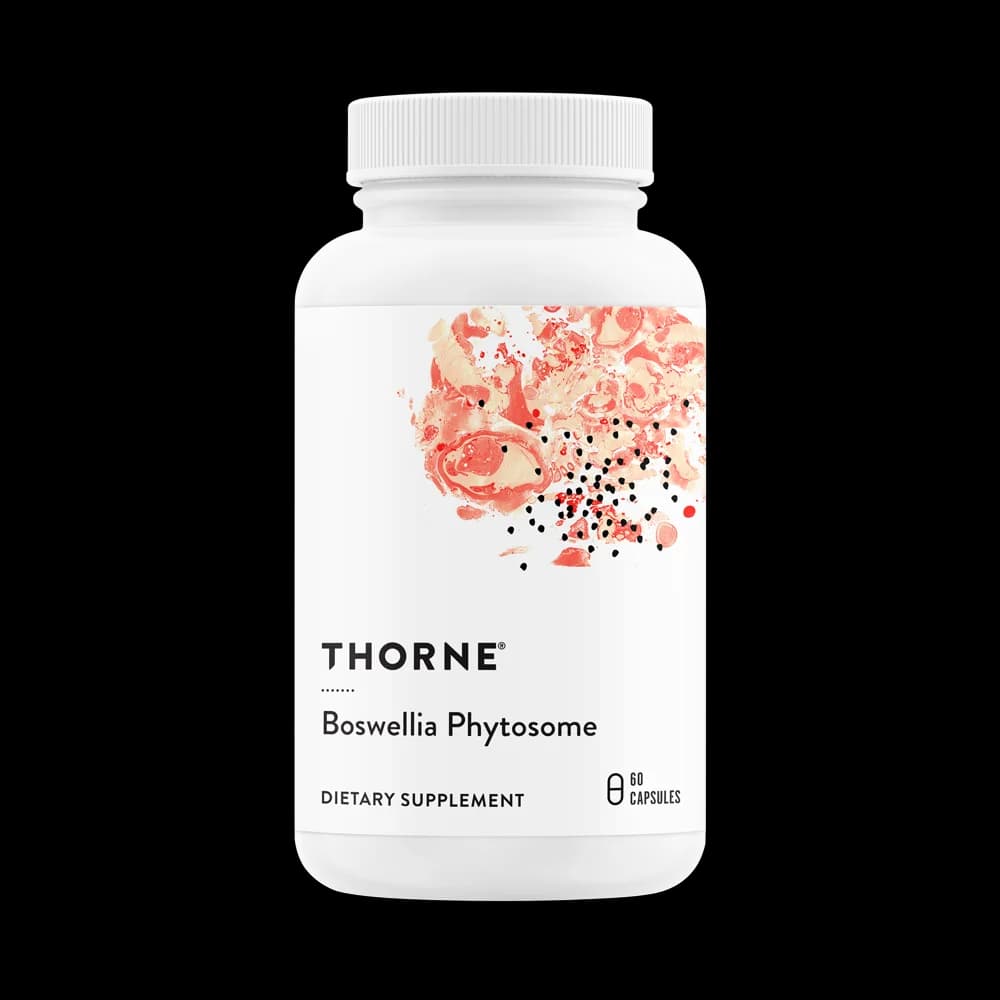
Thorne's Boswellia Phytosome provides 350 mg of the Indian Frankincense Phytosome complex per capsule. The generally suggested use is to take 1 capsule two times daily, or as recommended by your health-care practitioner. Because the phytosome technology already incorporates phospholipids (fats) to aid absorption, it is less strictly dependent on being taken with a high-fat meal compared to standard fat-soluble supplements. However, taking it with food can still help minimize any potential gastrointestinal upset and align with your body's natural digestive rhythms.
When starting a new supplement, especially in the context of sensitive conditions like ME/CFS or MCAS, it is often wise to "start low and go slow." You might begin with one capsule daily to monitor your body's response before increasing to the standard twice-daily dose. Because Boswellia works by modulating underlying inflammatory pathways rather than acting as an immediate symptom-masking drug, it typically takes consistent use over several weeks to notice significant improvements in chronic symptoms like joint pain, brain fog, or gut dysbiosis.
Safety, Tolerability, and Contraindications
Boswellia serrata has a long history of safe use and is generally very well-tolerated, even with long-term supplementation. In clinical trials, adverse effects are rare and typically mild, most commonly involving minor gastrointestinal upset, such as nausea or acid reflux, which can usually be mitigated by taking the supplement with food. Unlike NSAIDs (non-steroidal anti-inflammatory drugs), which can damage the stomach lining and cause ulcers over time, Boswellia actually protects the gastric mucosa, making it a safer long-term option for managing inflammation.
However, there are important contraindications to consider. This product is contraindicated in individuals with a history of hypersensitivity to any of its ingredients, including sunflower (as the phospholipid complex is derived from sunflower lecithin). Additionally, Boswellia Phytosome carries a strict warning regarding pregnancy; if you are pregnant or trying to conceive, you must consult your health-care practitioner before using this product, as it may stimulate blood flow in the uterus and pelvis. As always, discuss any new supplement with your medical team to ensure it does not interact with your current medications, particularly if you are on immunomodulators or anticoagulants.

Follow the Science
Clinical Trials in Long COVID and Neuroinflammation
The scientific community has increasingly turned its attention to Boswellia serrata as a potential therapeutic agent for the complex inflammatory cascades seen in post-viral syndromes. A pivotal 2022 open-label clinical study investigated a nutraceutical formulation containing Boswellia extract (standardized for AKBA) alongside other anti-inflammatory compounds in 51 patients suffering from Long COVID. After 4 weeks of treatment, the researchers observed statistically significant improvements in overall symptoms. Most notably, between 72% and 84% of participants reported that their "fatigue and brain fog" were significantly attenuated. The study highlighted Boswellia's ability to cross the blood-brain barrier and downregulate the microglial activation responsible for post-viral cognitive dysfunction.
Further supporting its role in immune modulation, the VITAMIC BIOSEN trial investigated a highly bioavailable combination of Curcumin, Vitamin C, and Boswellia in 60 Long COVID patients. The findings demonstrated that the treatment effectively suppressed the uncontrolled activation of the innate immune response. By inhibiting the release of interleukins and modulating viral replication pathways, the treatment reduced multi-organ persistent symptoms, including neurological deficits. These studies underscore the necessity of using highly bioavailable forms—like phytosomes or micellized extracts—to achieve these clinical outcomes, as standard Boswellia powders fail to reach therapeutic concentrations in the tissues.
Evidence for Gastrointestinal Healing
Boswellia's efficacy in treating gastrointestinal inflammation is robustly supported by clinical data. A 2024 clinical trial (NCT06423586) specifically investigated the impact of the Casperome® phytosome formulation on post-acute COVID-19 irritable bowel syndrome (IBS). In this study, patients suffering from Long COVID-induced enteral dysbiosis were given a combination of Boswellia phytosome and Curcumin phytosome for 30 days. The protocol resulted in a statistically significant reduction in abdominal pain, cramping, and bloating compared to the control group. The researchers concluded that the phytosome formulation successfully healed the mucosal inflammation and restored the integrity of the gut-brain axis disrupted by the viral infection.
This builds upon earlier foundational research, such as a 2019 prospective, randomized, controlled trial involving 69 subjects with mild IBS. Patients taking 250 mg/day of Casperome® experienced significantly lower scores for self-assessed IBS symptoms, including altered bowel movements and meteorism (gas). Remarkably, ultrasound evaluations revealed that signs of bowel obstruction (loops dilation and excessive air) were present in only 17.14% of the Boswellia group, compared to nearly 59% in the control group. These findings validate Boswellia Phytosome as a potent, targeted intervention for the gastrointestinal symptoms seen with Long COVID and other chronic inflammatory conditions.
The Path Forward
Integrating Boswellia into Your Management Plan
Living with a complex chronic illness like Long COVID, ME/CFS, or dysautonomia often feels like navigating a maze without a map. The persistent symptoms—the heavy brain fog, the unpredictable gut distress, the deep joint aches—are not just "in your head"; they are the tangible results of a physiological system locked in a state of chronic inflammation. Validating this biological reality is the first step toward reclaiming your quality of life. While there is no single magic pill that can instantly resolve these intricate conditions, targeted, science-backed interventions can help dismantle the vicious cycles of immune dysregulation.
Boswellia Phytosome represents a powerful tool in this comprehensive management strategy. By specifically inhibiting the 5-LOX pathway, downregulating neuroinflammation, and repairing the intestinal barrier, it addresses the root inflammatory drivers of many debilitating symptoms. However, it is most effective when used as part of a broader, holistic toolkit. Combining targeted supplementation with radical rest, careful symptom tracking, pacing to avoid post-exertional crashes, and ongoing medical guidance provides the best foundation for long-term improvement.
If you are struggling with persistent brain fog, gastrointestinal distress, or widespread inflammatory pain, Boswellia Phytosome may offer the targeted support your body needs to begin cooling the systemic fire. Always remember to consult with your healthcare provider before introducing any new supplement to ensure it aligns safely with your unique medical history and current treatments.