Can Black Cohosh Support Menopausal Symptoms in Long COVID and ME/CFS?
March 5, 2026
Black CohoshMenopauseLong COVID
Share:
Disclaimer: The information provided here is for educational purposes only and is not intended as medical advice. It should not be used to diagnose, treat, cure, or prevent any medical condition. Instead, use it as a starting point for discussion with your healthcare provider. Always consult with a qualified healthcare provider before starting any new medication, supplement, device, or making changes to your health regimen.
For women navigating the complex, unpredictable waters of chronic invisible illnesses, the onset of perimenopause and menopause can feel like a cruel compounding of an already heavy burden. Months or even years after a viral trigger, many people fight debilitating symptoms with what we call Long COVID, myalgic encephalomyelitis/chronic fatigue syndrome (ME/CFS), or dysautonomia. When the natural decline of ovarian function begins, the resulting hormonal shifts can act as gasoline on the fire of autonomic dysfunction and neuroinflammation. Hot flashes are no longer just uncomfortable moments of heat; they become profound autonomic events that trigger racing heart rates, severe dizziness, and days-long crashes. In the search for relief, many patients and providers look toward non-hormonal botanical therapies to help stabilize the body's erratic thermostat.
One of the most widely recognized and historically utilized botanicals for this purpose is black cohosh (Actaea racemosa). For decades, it has been a staple in the management of menopausal symptoms, offering a potential bridge to comfort for those who cannot or choose not to utilize traditional hormone replacement therapy (HRT). However, the science behind how black cohosh actually works has undergone a massive paradigm shift in recent years. It is not the simple plant-estrogen it was once thought to be. Instead, it is a complex neuroactive compound that interacts intimately with the brain's neurotransmitter systems. In this comprehensive guide, we will explore the intricate mechanisms of black cohosh, its active triterpene glycosides, its complex intersection with chronic post-viral conditions, and the critical safety considerations every patient must understand before adding it to their regimen.
TL;DR
Black cohosh is a non-hormonal botanical that may help manage menopausal hot flashes and night sweats.
Research suggests it supports central nervous system pathways rather than acting as a systemic estrogen.
It may help reduce autonomic flares and mood disturbances in patients with chronic conditions.
Always consult your provider before use, especially if you have liver concerns or take multiple medications.
What is Black Cohosh?
A Botanical with a Complex History
Black cohosh, scientifically known as Actaea racemosa (and formerly classified as Cimicifuga racemosa), is a perennial woodland plant native to the eastern regions of North America. Long before it became a staple of modern naturopathic and integrative medicine, it was utilized extensively by Native American populations to manage a variety of musculoskeletal and gynecological conditions. In contemporary clinical practice, the roots and rhizomes of the plant are harvested, extracted, and standardized to create dietary supplements aimed primarily at alleviating the vasomotor symptoms of menopause, such as hot flashes and night sweats. According to the National Institutes of Health (NIH) Office of Dietary Supplements, it remains one of the most popular non-hormonal alternatives for women transitioning through the climacteric phase of life.
For many years, the medical community operated under a fundamental misunderstanding of how black cohosh exerted its therapeutic effects. Because it successfully mitigated symptoms that were known to be caused by a lack of estrogen, early researchers logically hypothesized that the plant must contain phytoestrogens—plant-based compounds that mimic human estrogen. It was widely believed that these hypothetical plant estrogens bound directly to estrogen receptors throughout the body, artificially replacing the hormones that the failing ovaries were no longer producing. This theory was so pervasive that many oncologists historically warned breast cancer survivors against using black cohosh, fearing it might stimulate the growth of hormone-receptor-positive tumors.
However, modern molecular biology and highly controlled cellular assays have entirely rewritten this narrative. Rigorous scientific investigations, including comprehensive reviews published in Integrative Medicine Insights, have definitively shown that commercially available hydroalcoholic extracts of black cohosh do not contain significant levels of phytoestrogens like formononetin. Furthermore, these extracts do not bind to recombinant human estrogen receptors (ER-alpha or ER-beta) in a way that induces systemic estrogenic activity. The plant does not thicken the uterine lining, it does not alter the maturation index of vaginal epithelial cells, and it does not increase breast tissue density. Instead of acting as a systemic hormone replacement, black cohosh operates through highly complex, central nervous system pathways that are only now being fully mapped by neuroendocrinologists.
The Power of Triterpene Glycosides
To understand how black cohosh actually works, we must look at its unique phytochemical profile. The primary bioactive constituents responsible for the plant's therapeutic effects are a complex family of compounds known as triterpene glycosides. At a molecular level, these compounds consist of a hydrophobic (water-repelling) aglycone backbone that is chemically bonded to various hydrophilic (water-attracting) sugar molecules. This specific structural arrangement allows the compounds to interact with cellular membranes and receptor sites in highly specific ways. The most prominent and extensively studied triterpene glycosides found in black cohosh include actein, cimicifugoside, and, most notably, 23-epi-26-deoxyactein.
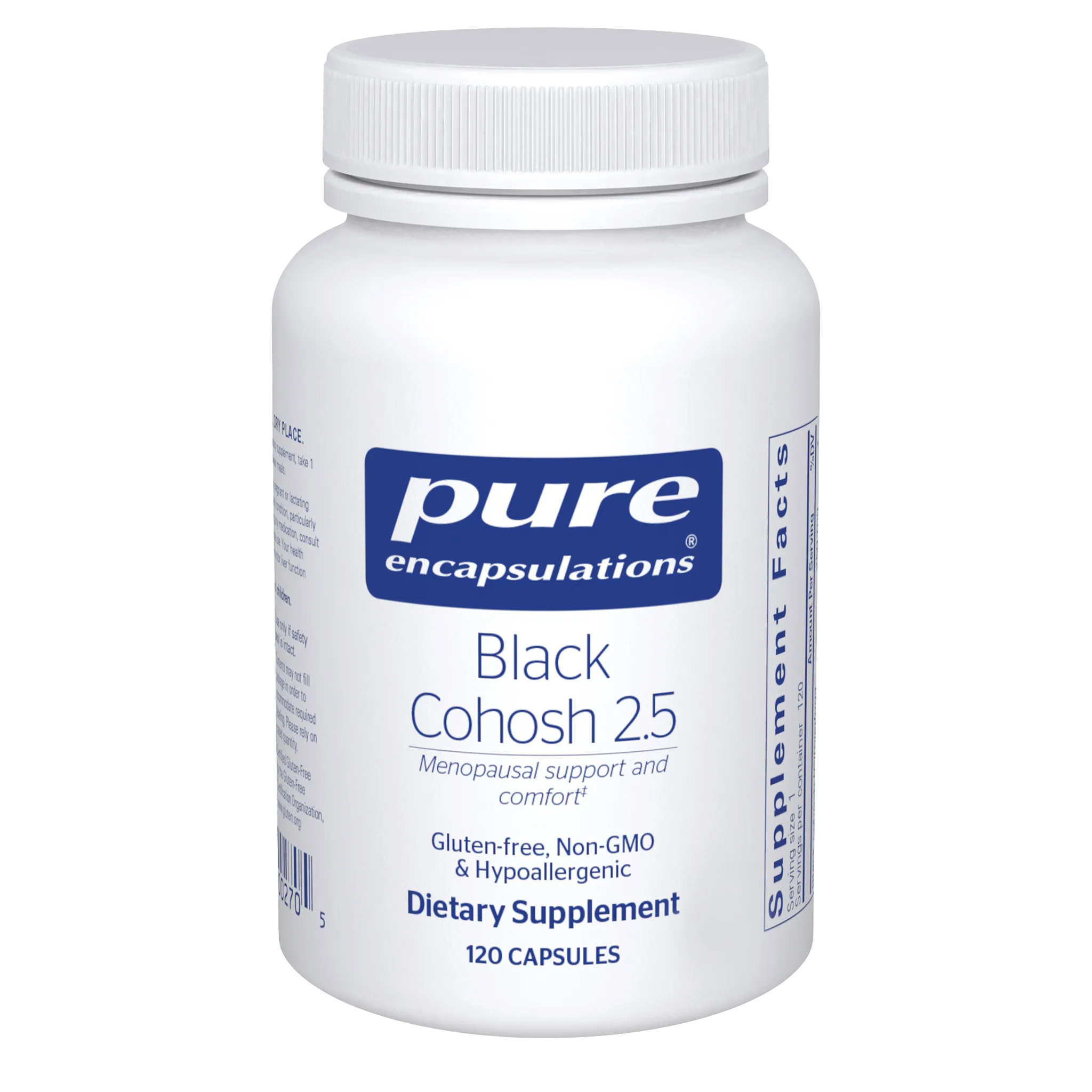
Among these constituents, 23-epi-26-deoxyactein is particularly crucial because it is entirely unique to the Actaea racemosa species. Because of its unique presence and relative abundance in the plant's root system, pharmacologists and supplement manufacturers utilize 23-epi-26-deoxyactein as the primary biomarker for product standardization and quality control. When a high-quality supplement like Black Cohosh 2.5 states that it is "standardized to contain 2.5% triterpene glycosides," it means the raw botanical material has been chemically processed and rigorously tested to ensure that every single capsule delivers a precise, clinically relevant dose of these specific bioactive molecules, rather than just a random assortment of ground-up root powder.
The biological activity of these triterpene glycosides extends far beyond simple symptom management; they are potent cellular modulators. In vitro studies isolating these specific compounds have revealed profound effects on cellular signaling pathways. For instance, research has demonstrated that 23-epi-26-deoxyactein can suppress the production of cytokine-induced nitric oxide in brain microglial cells. Microglia are the primary immune sentinels of the central nervous system, and their overactivation is a key driver of neuroinflammation. By dampening this inflammatory cascade, the triterpene glycosides in black cohosh exhibit strong neuroprotective and antioxidant properties, which may explain why the herb is often reported to help with the brain fog and mood lability associated with the menopausal transition.
Dispelling the Luteinizing Hormone (LH) Myth
Another major paradigm shift in the understanding of black cohosh involves its relationship with luteinizing hormone (LH). LH is a gonadotropin produced by the pituitary gland in the brain. In a healthy, premenopausal reproductive cycle, LH works in concert with follicle-stimulating hormone (FSH) to trigger ovulation. During menopause, as ovarian estrogen production plummets, the brain loses its negative feedback signal. In a desperate attempt to stimulate the unresponsive ovaries, the pituitary gland pumps out massive surges of LH and FSH. For decades, endocrinologists observed a strong temporal correlation between these dramatic LH surges and the onset of severe hot flashes, leading to the assumption that elevated LH was the direct cause of vasomotor instability.
Early pharmacological studies conducted in the 1980s and 1990s seemed to support this theory. Initial animal models showed that injecting specific alcoholic fractions of black cohosh into ovariectomized rats successfully suppressed these LH surges. Consequently, the medical literature of the time concluded that black cohosh resolved hot flashes by directly suppressing pituitary LH secretion. However, as clinical trial methodologies advanced, this theory was rigorously tested in human subjects and ultimately debunked. Modern, highly controlled, double-blind human trials have consistently shown that oral administration of standardized black cohosh extracts has absolutely no significant impact on circulating levels of LH, FSH, estradiol, or prolactin in postmenopausal women.
A landmark year-long study confirmed that women taking daily black cohosh experienced significant relief from hot flashes despite their LH levels remaining elevated and unchanged compared to baseline. This revelation forced researchers to look deeper into the brain. If black cohosh was not lowering LH, and it was not acting as a systemic estrogen, how was it stopping the hot flashes? The answer, as we will explore in subsequent sections, lies in the plant's remarkable ability to directly modulate the neurotransmitters in the hypothalamus that control the body's core temperature set-point, entirely bypassing the pituitary-ovarian hormone axis.