Can Biotin Support Mitochondrial Energy and Manage Long COVID Fatigue?
March 5, 2026
BiotinLong COVIDME/CFS
Share:
Disclaimer: The information provided here is for educational purposes only and is not intended as medical advice. It should not be used to diagnose, treat, cure, or prevent any medical condition. Instead, use it as a starting point for discussion with your healthcare provider. Always consult with a qualified healthcare provider before starting any new medication, supplement, device, or making changes to your health regimen.
Months or even years after recovering from an initial SARS-CoV-2 infection, many individuals find themselves trapped in a relentless cycle of debilitating symptoms, a condition we now recognize as Long COVID. For those living with complex chronic conditions like Long COVID, myalgic encephalomyelitis/chronic fatigue syndrome (ME/CFS), dysautonomia, and mast cell activation syndrome (MCAS), the search for answers can be incredibly frustrating. One of the most profound and universal symptoms across these conditions is a crushing, unyielding fatigue that does not improve with rest—a clear indicator that the body’s cellular energy engines are failing. When standard medical tests return "normal" results, patients are often left wondering what is happening at the microscopic level to cause such systemic dysfunction.
In the pursuit of restoring cellular energy and managing these complex symptoms, medical researchers are increasingly looking deep inside the cell, specifically at the mitochondria. The mitochondria are the powerhouses of our cells, responsible for generating the adenosine triphosphate (ATP) that fuels every physiological process in the human body. Recent metabolomic studies and clinical investigations have highlighted the critical role of specific micronutrients in maintaining this mitochondrial machinery. Among these essential nutrients, Biotin (Vitamin B7) has emerged not merely as a supplement for cosmetic hair and nail health, but as a fundamental biochemical linchpin required for cellular energy production, genetic expression, and metabolic recovery. In this comprehensive guide, we will explore the intricate science of biotin, how viral infections disrupt its pathways, and how targeted supplementation may support your journey toward reclaimed energy and improved quality of life.
TL;DR
Biotin is essential for cellular energy, helping mitochondria produce ATP and combat severe fatigue.
Viral infections like SARS-CoV-2 can deplete biotin, stalling metabolism and worsening Long COVID symptoms.
High-dose biotin supplementation may support energy recovery, cognitive function, and epigenetic stability.
Always pause high-dose biotin before blood tests, as it can cause dangerous lab inaccuracies.
What is Biotin?
Beyond Hair and Nails: The Coenzyme of Life
When most people hear the word "biotin," they immediately think of commercial beauty supplements marketed for hair growth and glowing skin. However, in the realm of biochemistry and complex chronic illness, biotin (Vitamin B7) plays a profoundly diverse and critical role that extends far beyond dermatology. Biotin is a water-soluble B-vitamin that the human body cannot synthesize on its own; it must be acquired through diet or synthesized by the microbiome in the large intestine. At a molecular level, biotin functions primarily as an essential coenzyme—a non-protein compound that is necessary for the functioning of specific enzymes. Without biotin, these enzymes remain entirely inactive, and the metabolic pathways they govern grind to a complete halt.
The mechanism by which biotin activates these enzymes is fascinating. Biotin does not simply float freely in the cell to do its job; it must be covalently attached to inactive "apo-enzymes" to create active "holo-enzymes." This precise attachment process is catalyzed by an enzyme called Holocarboxylase Synthetase (HLCS). HLCS utilizes cellular energy (ATP) to synthesize an intermediate compound, which it then binds directly to specific lysine residues on the target enzymes. Once this covalent bond is formed, the enzyme is "turned on" and can begin facilitating the transfer of carbon dioxide in a process known as carboxylation. This biochemical action is the absolute foundation of human macronutrient metabolism, dictating how our bodies break down fats, carbohydrates, and proteins to generate life-sustaining energy.
The Five Essential Carboxylases
In human biology, biotin is strictly required for the function of exactly five carboxylase enzymes, each of which governs a critical intersection of our metabolic pathways. The first two are Acetyl-CoA carboxylase 1 (ACC1) and Acetyl-CoA carboxylase 2 (ACC2). ACC1 is located in the cytosol of the cell and is crucial for the synthesis of new fatty acids, which are necessary for maintaining the structural integrity of cellular membranes. ACC2, on the other hand, is located on the outer membrane of the mitochondria and regulates fatty acid oxidation—the process by which the cell burns stored fat for energy. By controlling these two enzymes, biotin effectively acts as the master switch determining whether the body stores fat or burns it to generate ATP.
The third and perhaps most critical enzyme for patients with chronic fatigue is Pyruvate carboxylase (PC). Located exclusively inside the mitochondria, PC is a vital enzyme for a process called anaplerosis, which means "to fill up." The mitochondria generate energy through a spinning metabolic wheel known as the Tricarboxylic Acid (TCA) cycle, or Krebs cycle. PC uses biotin to convert pyruvate (derived from glucose) into oxaloacetate, a crucial molecule that keeps the TCA cycle spinning. Without biotin-activated PC, the TCA cycle stalls, and cellular energy production plummets. The final two enzymes are Propionyl-CoA carboxylase (PCC) and 3-Methylcrotonyl-CoA carboxylase (MCC), which are essential for the safe breakdown of specific amino acids (like isoleucine, valine, and leucine) and odd-chain fatty acids, preventing the toxic buildup of metabolic byproducts in the blood and tissues.
Epigenetics and Histone Biotinylation
Beyond its classical role in energy metabolism, modern medical research has uncovered a second, entirely distinct mechanism of action for biotin: epigenetics. Epigenetics refers to the biological mechanisms that turn our genes on or off without altering the underlying DNA sequence. Inside the nucleus of our cells, DNA is tightly wrapped around spool-like proteins called histones, forming a complex known as chromatin. Just as histones can be modified by methylation or acetylation, researchers have discovered that they can also be biotinylated. The same enzyme that activates metabolic carboxylases, HLCS, acts as a chromatin-binding protein, carrying biotin directly into the nucleus and attaching it to the tails of histone proteins.
Unlike other epigenetic marks that typically "open" DNA to activate gene expression, histone biotinylation is universally recognized as a gene repression, or silencing, mark. Studies utilizing single-molecule atomic force microscopy have revealed that when biotin is attached to a histone, it causes a 13% to 15% increase in the length of DNA wrapped around the histone core. This structural tightening physically prevents the DNA from unwrapping, effectively locking the genes in an "off" position. This biotin-driven silencing is uniquely enriched in transcriptionally silent areas of the genome, such as long-terminal repeats (LTRs). By repressing these areas, biotin prevents parasitic viral remnants and retrotransposons from jumping around the genome, thereby maintaining genomic stability and preventing chronic, inappropriate inflammatory responses.
How Long COVID and ME/CFS Impact Cellular Energy
Viral Hijacking and Metabolic Rewiring
To understand how a simple vitamin relates to complex chronic illness, we must examine how conditions like Long COVID fundamentally alter the body's metabolic landscape. When the SARS-CoV-2 virus infects a human host, it does not merely replicate passively; it aggressively hijacks the host cell's metabolic machinery to fuel its own reproduction. Recent metabolomic studies have revealed that during the acute infection phase, the virus forces a massive increase in glucose carbon entry into the host's TCA cycle. To accomplish this, the virus artificially upregulates the expression of pyruvate carboxylase (PC), the exact mitochondrial enzyme that relies entirely on biotin to function.
Because PC requires biotin to convert pyruvate into oxaloacetate, this viral hijacking places immense, unprecedented strain on the cell's available biotin reserves. The virus essentially burns through the host's biotin supply to keep the TCA cycle spinning for its own benefit. This severe, localized nutrient depletion, combined with the massive oxidative stress generated by the immune response, is believed to trigger what scientists call the Cell Danger Response (CDR). The CDR is a primitive cellular defense mechanism where the mitochondria intentionally dial down their energy production to prevent the virus from stealing more resources. Unfortunately, in patients with Long COVID, the mitochondria get "stuck" in this hypometabolic state long after the virus has been cleared, leading to the profound, unyielding fatigue that characterizes the condition. You can learn more about the origins of this dysfunction in our detailed exploration of What Causes Long COVID?.
Mitochondrial Structural Damage in ME/CFS
This metabolic hijacking and subsequent bioenergetic failure provide a clear biological link to myalgic encephalomyelitis/chronic fatigue syndrome (ME/CFS). In ME/CFS, the defining symptom is post-exertional malaise (PEM), a severe exacerbation of symptoms following even minor physical or cognitive exertion. This occurs because the mitochondria are fundamentally incapable of scaling up ATP production to meet the body's demands. Recent research utilizing transmission electron microscopy (TEM) on the peripheral immune cells of ME/CFS and Long COVID patients has revealed a significant increase in swollen, morphologically abnormal mitochondria with disrupted inner folds (cristae), alongside elevated levels of cellular necrosis.
Crucially, this structural swelling and bioenergetic impairment perfectly parallel the mitochondrial toxicity and structural degradation observed in clinical laboratory models of intracellular biotin deficiency. When a cell lacks sufficient biotin to run its carboxylase enzymes, toxic metabolic byproducts accumulate, oxidative stress skyrockets, and the mitochondrial membranes begin to degrade. This physical damage to the cellular powerhouses explains why patients cannot simply "push through" their fatigue; their cells literally lack the structural integrity and biochemical tools to generate energy. This profound intersection of viral infection and metabolic collapse is a key reason why many researchers are investigating Can Long COVID Trigger ME/CFS? Unraveling the Connection.
The Oxaloacetate Bottleneck
The most direct consequence of this biotin-depleted, virally hijacked state is the emergence of a severe metabolic bottleneck at the site of oxaloacetate production. As previously mentioned, biotin is the mandatory cofactor for pyruvate carboxylase to create oxaloacetate. Oxaloacetate is the critical starting material that binds with acetyl-CoA to initiate the TCA cycle. If a patient has a functional biotin deficiency—whether due to viral consumption, poor absorption, or genetic predispositions—oxaloacetate production halts entirely.
When oxaloacetate levels drop, the TCA cycle cannot spin, and the electron transport chain is starved of the electrons it needs to pump protons and generate ATP. The cell is effectively suffocating from an energy perspective, despite having adequate oxygen and glucose available. This biochemical starvation forces the body to rely on highly inefficient, alternative energy pathways like anaerobic glycolysis, which produces lactic acid. The buildup of lactic acid in the tissues contributes heavily to the heavy, burning muscle pain and physical exhaustion experienced by patients with Long COVID and ME/CFS, creating a vicious cycle of energy depletion and chronic pain.
Biotin: Supporting Mitochondrial Function and Recovery
Restarting the Tricarboxylic Acid (TCA) Cycle
Given the profound metabolic disruptions caused by viral infections and chronic illness, targeted supplementation with biotin aims to directly address these biochemical bottlenecks. By providing the body with an abundant supply of this essential coenzyme, we can support the reactivation of the stalled mitochondrial machinery. When high-potency biotin enters the mitochondria, it is rapidly utilized by Holocarboxylase Synthetase (HLCS) to re-activate the depleted pool of pyruvate carboxylase (PC) enzymes. This reactivation is the critical first step in restoring cellular bioenergetics.
Once PC is fully biotinylated and active, it resumes the vital anaplerotic reaction of converting pyruvate into oxaloacetate. This sudden influx of oxaloacetate relieves the metabolic bottleneck, allowing the TCA cycle to begin spinning efficiently once again. As the TCA cycle turns, it produces the electron carriers NADH and FADH2, which travel to the inner mitochondrial membrane to fuel the electron transport chain. The ultimate result of this restored biochemical flow is a significant increase in the production of adenosine triphosphate (ATP). By addressing the enzymatic block at the very beginning of the energy pathway, biotin supplementation provides the fundamental raw materials the body needs to pull itself out of the hypometabolic Cell Danger Response and begin repairing damaged tissues.
Restoring Epigenetic Balance and Gene Expression
Beyond restarting the cellular engines, replenishing systemic biotin levels has profound implications for the epigenetic regulation of the immune system. In patients with Long COVID and mast cell activation syndrome (MCAS), the immune system is often stuck in a state of chronic, hyper-reactive inflammation. This is partly due to the dysregulation of gene expression; pro-inflammatory genes are left "turned on," while regulatory genes are silenced. By restoring optimal biotin levels, the enzyme HLCS can resume its role as a chromatin-binding protein, carrying biotin back into the nucleus to perform histone biotinylation.
As HLCS docks onto the chromatin and attaches biotin to the histone tails, it physically tightens the wrapping of the DNA. This structural condensation is crucial for silencing dangerous repetitive DNA sequences and retrotransposons that may have been inappropriately activated by the chaos of a viral infection. By re-establishing these repressive epigenetic marks, biotin helps to stabilize the genome and quiet the chronic, systemic inflammatory signals that perpetuate symptoms like brain fog, joint pain, and immune hypersensitivity. This dual action—boosting mitochondrial energy while simultaneously calming epigenetic inflammation—makes biotin a highly versatile tool in the chronic illness management toolkit.
Synergistic Support for the Gut and Autonomic Nervous System
The benefits of restored ATP production extend far beyond skeletal muscle; they are particularly vital for the gastrointestinal tract and the autonomic nervous system. Patients with dysautonomia and Long COVID frequently suffer from severe gastrointestinal issues, often linked to increased intestinal permeability, or "leaky gut." The epithelial cells lining the intestinal mucosa have one of the highest ATP turnover rates in the human body, as they require massive amounts of energy to maintain the tight junctions that keep pathogens and undigested food particles out of the bloodstream. By supporting mitochondrial ATP production, biotin provides the energy required to regenerate this mucosal barrier, reducing systemic endotoxemia and the resulting immune cascade.
Furthermore, biotin functions synergistically with other crucial minerals, particularly magnesium. Magnesium is required for the synthesis and activation of almost all B-vitamins, and both magnesium and biotin are strictly required together inside the mitochondria to facilitate ATP production. A combined deficiency heavily limits the adrenal glands' ability to produce cortisol and aldosterone—hormones that are absolutely critical for regulating blood pressure, blood volume, and heart rate. By supporting this energetic pathway, biotin indirectly supports the stabilization of the autonomic nervous system, a crucial factor for patients navigating the complexities of dysautonomia and postural orthostatic tachycardia syndrome (POTS). For more insights on managing these interconnected systems, explore our guide on How Can You Live with Long-Term COVID.
Symptoms Biotin May Help Manage
Core Metabolic and Energy Symptoms
By directly addressing the biochemical bottlenecks in the mitochondria and supporting epigenetic stability, high-potency biotin supplementation may help manage a variety of debilitating symptoms associated with complex chronic illnesses:
Profound Fatigue and Post-Exertional Malaise (PEM): By providing the essential coenzyme required for pyruvate carboxylase, biotin restores the production of oxaloacetate. This relieves the metabolic bottleneck, allowing the TCA cycle to generate the ATP necessary to power cellular functions and reduce the severity of energy crashes.
Cognitive Impairment (Brain Fog): The brain is a highly energy-demanding organ that relies heavily on efficient mitochondrial function. By supporting ATP production in glial cells and neurons, and by stabilizing the blood-brain barrier through the SMVT transporter, biotin may help clear the cognitive sluggishness and memory issues associated with neuroinflammation.
Muscle Pain and Heaviness: When the mitochondria cannot produce ATP aerobically, the body resorts to anaerobic glycolysis, leading to lactic acid buildup. By restoring aerobic respiration via the TCA cycle, biotin helps reduce this toxic accumulation, potentially alleviating the heavy, burning muscle pain experienced after minor exertion.
Dermatological and Structural Symptoms
Biotin's most well-known benefits relate to its role in structural protein synthesis, which is often compromised when the body diverts all available energy to fighting chronic inflammation:
Brittle Nails and Onychoschizia (Splitting): Clinical studies have shown that biotin acts as a crucial cofactor for enzymes that organize the cellular arrangement of the nail bed. By reinforcing the keratin structure, biotin significantly promotes nail thickness, firmness, and reduces painful longitudinal splitting.
Hair Thinning and Loss: While biotin is not a miracle cure for all types of baldness, hair loss triggered by severe metabolic stress, viral infections (telogen effluvium), or functional nutrient deficiencies can be supported by restoring the metabolic pathways that fuel hair follicle proliferation.
Gastrointestinal and Autonomic Symptoms
The systemic energy restoration provided by biotin also supports the organs that require massive amounts of continuous ATP to function correctly:
Gastrointestinal Permeability (Leaky Gut): The intestinal lining requires immense cellular energy to maintain its tight junctions and regenerate damaged tissue. Biotin supports the mitochondrial ATP output necessary to support the mucosal barrier, which can help reduce food sensitivities and systemic immune triggers. You can learn more about managing diet and digestion in our blog on Learning to Eat Nutritionally with Changes to Your Sense of Smell and Taste.
Dysautonomia and Blood Pressure Instability: By working synergistically with magnesium to fuel the adrenal glands, biotin supports the energetic production of aldosterone and cortisol. These hormones are vital for maintaining blood volume and vascular tone, helping to manage the dizziness and rapid heart rates associated with autonomic dysfunction.
Practical Considerations: Forms, Dosing, and Crucial Safety Warnings
Bioavailability and the SMVT Transporter
When considering biotin supplementation, understanding how the body absorbs and distributes this nutrient is crucial. Unlike some supplements that struggle to survive the harsh environment of the digestive tract, oral biotin exhibits remarkable bioavailability. Once ingested, dietary or supplemental biotin is absorbed primarily in the small and large intestines via a highly specialized transport protein known as the Sodium-Dependent Multivitamin Transporter (SMVT). Encoded by the SLC5A6 gene, SMVT is expressed abundantly in highly absorptive tissues, including the intestines, liver, kidneys, and the blood-brain barrier.
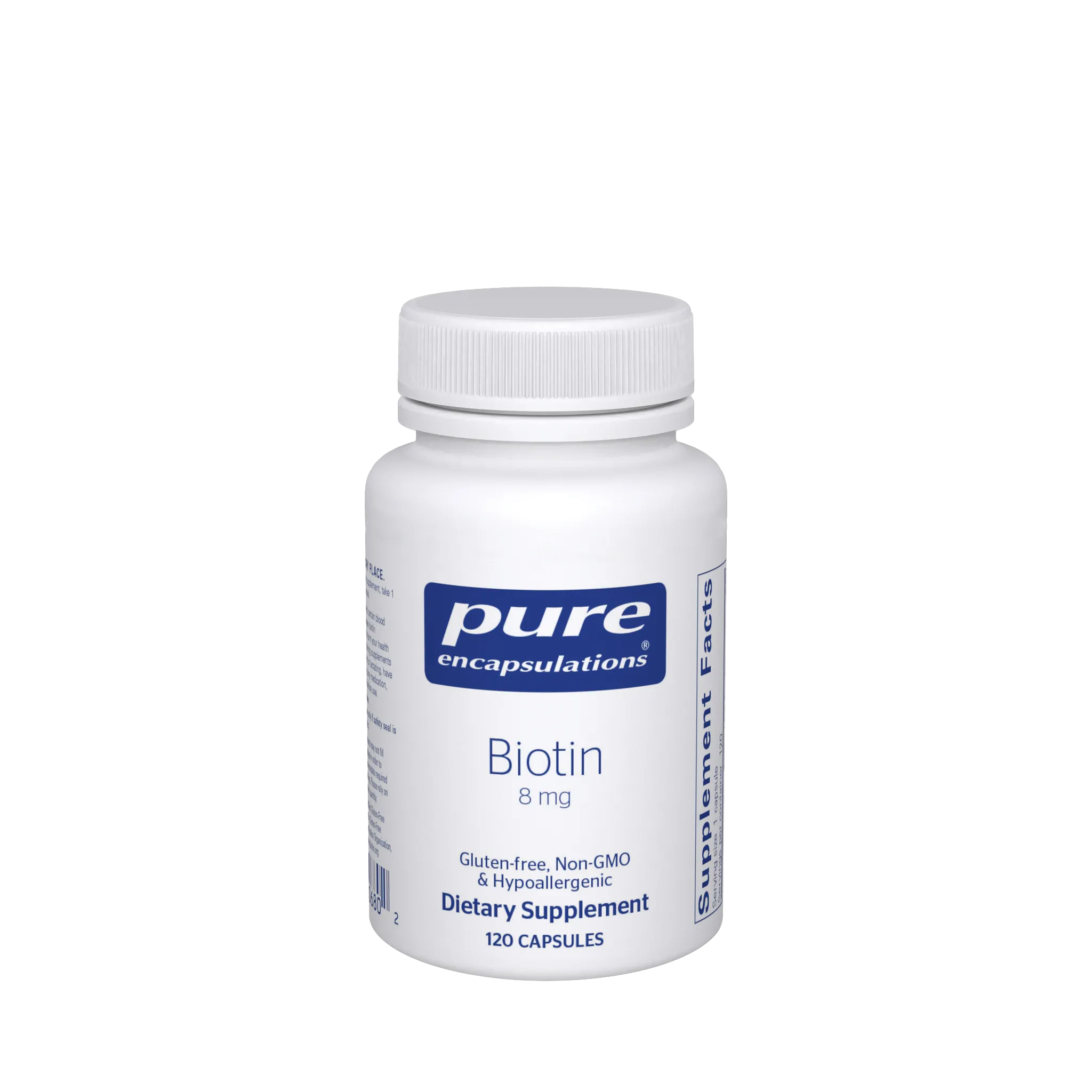
The mechanism of the SMVT transporter is a marvel of cellular engineering. It utilizes an inward sodium gradient to actively pump biotin into the cell. In a single transport cycle, the SMVT protein co-transports one molecule of biotin alongside two sodium ions. Because this process is actively driven by sodium, it is highly efficient. Clinical pharmacokinetic studies have demonstrated that oral biotin is essentially 100% bioavailable, even at massive pharmacologic doses. Following oral administration, biotin is rapidly absorbed into the bloodstream, typically reaching peak plasma concentrations within 1 to 1.5 hours. This rapid and complete absorption means that high-potency capsules, like the 8 mg dose provided by Pure Encapsulations, are highly effective at raising systemic and intracellular biotin levels without the need for intravenous administration.
Optimal Dosing and Synergistic Nutrients
The Pure Encapsulations Biotin supplement provides a high-potency dose of 8 mg (8,000 mcg) per capsule. This is significantly higher than the standard Recommended Daily Allowance (RDA) of 30 mcg, which is designed merely to prevent severe acute deficiency rather than to therapeutically address the profound metabolic deficits seen in chronic illness. For patients utilizing biotin to support mitochondrial recovery and overcome viral metabolic hijacking, this high-potency dose provides the necessary substrate to saturate the SMVT transporters and drive biotin into the mitochondria and nucleus.
To maximize the efficacy of biotin, it is highly recommended to take it alongside a meal, particularly one containing healthy fats and proteins, to stimulate natural digestive enzymes. Furthermore, because biotin and magnesium are intimately linked in the mitochondrial production of ATP, ensuring adequate intracellular magnesium levels can synergistically enhance the benefits of biotin supplementation. The suggested use is 1 capsule, 1 to 2 times daily, but this should always be tailored to your specific metabolic needs under the guidance of a knowledgeable healthcare provider.
CRITICAL WARNING: Lab Test Interference
While biotin is incredibly safe and has no known upper toxicity limit (excess is simply excreted in the urine), high-dose biotin supplementation carries a critical, potentially life-threatening risk regarding laboratory blood tests. The FDA has issued multiple severe safety warnings because high levels of biotin in the blood can drastically alter the results of many common immunoassays. Many modern laboratory machines utilize a technology called "biotin-streptavidin binding" to measure the concentration of specific molecules, such as hormones or cardiac markers, in your blood. Because the bond between biotin and streptavidin is one of the strongest in nature, it makes for a highly accurate test—unless you have excess supplement biotin floating in your serum.
When excess biotin is present, it competes with the test reagents, skewing the results in dangerous ways depending on the test format. For "sandwich assays," which are used to measure large molecules like Cardiac Troponin (the gold-standard marker for diagnosing a heart attack) and TSH (Thyroid Stimulating Hormone), the excess biotin blocks the signal, resulting in falsely low or false-negative results. Tragically, this has led to missed heart attack diagnoses in emergency rooms. Conversely, for "competitive assays" used to measure smaller molecules like Free T3 and Free T4, the excess biotin causes falsely high results. This specific combination—a falsely low TSH and falsely high T3/T4—perfectly mimics the lab profile of Graves' Disease (hyperthyroidism), leading to unnecessary anxiety, misdiagnoses, and inappropriate prescriptions for anti-thyroid medications.
To protect yourself, clinical guidelines mandate a strict "washout period." If you are taking high-dose biotin (anything over 5 mg/day), you must stop taking the supplement for at least 8 to 72 hours prior to having any blood drawn, depending on your kidney function and the specific tests being run. You must explicitly inform your phlebotomist, triage nurse, and physician that you are taking a high-dose biotin supplement. Understanding how to navigate the medical system and communicate these nuances is vital; you can read more about the complexities of medical testing in our guide on How Does a Doctor Diagnose Long COVID?.
Follow the Science
Clinical Trials on Nail Health and Keratin
The structural benefits of biotin have been rigorously evaluated in dermatological clinical trials, particularly concerning brittle nail syndrome (onychorrhexis and onychoschizia). A landmark scanning electron microscopy study published in the Journal of the American Academy of Dermatology evaluated patients given 2.5 mg of daily oral biotin. The researchers utilized electron microscopy to examine the distal ends of the fingernails and found that biotin supplementation resulted in a statistically significant 25% increase in nail plate thickness. Furthermore, the microscopy revealed that the irregular, damaged cellular arrangement of the brittle nails became notably more uniform and regular, drastically reducing instances of painful nail splitting.
These findings were corroborated by a clinical trial conducted by Floersheim in 1989, which evaluated 45 patients with severe brittle nails. After an average treatment duration of 5.5 months with 2.5 mg of daily biotin, an overwhelming 91% of the patients showed definite clinical improvement, reporting significantly firmer and harder fingernails. These studies provide robust, objective evidence that high-potency biotin directly influences the structural integrity of keratin matrices, offering tangible relief for patients dealing with the physical manifestations of chronic metabolic stress.
Metabolomics and the Oxaloacetate Connection
In the context of chronic fatigue and Long COVID, the most compelling clinical data centers around oxaloacetate—the direct downstream metabolic product created when biotin activates pyruvate carboxylase. Because viral infections and mitochondrial dysfunction create a bottleneck that starves the body of oxaloacetate, researchers hypothesized that bypassing this bottleneck could restore energy. A 2022 proof-of-concept clinical trial investigated this by supplementing high-dose oxaloacetate in 76 ME/CFS patients and 43 Long COVID patients. The results were striking: the trial demonstrated a highly significant 32% to 35% reduction in physical and mental fatigue scores across both patient groups. This data powerfully validates the critical nature of the biotin-dependent pyruvate carboxylase pathway in the pathology of these diseases.
Research on Viral Metabolic Hijacking
The foundational science explaining why this biotin pathway becomes depleted was illuminated by recent metabolomic studies on SARS-CoV-2. Researchers discovered that the virus aggressively upregulates host pyruvate carboxylase expression to force glucose carbon into the TCA cycle, effectively draining the cell's biotin reserves to fuel viral replication. Furthermore, a 2024 study by Pankotai and colleagues utilized advanced microscopy to identify significant mitochondrial structural abnormalities in Long COVID patients, including swollen mitochondria with disrupted cristae. This structural degradation mirrors the exact pathology seen in cellular models of biotin deficiency, reinforcing the theory that restoring systemic biotin and supporting the TCA cycle is a vital therapeutic target for resolving post-viral mitochondrial failure.
The Path Forward
Validating the Metabolic Struggle
Living with the invisible, crushing weight of Long COVID, ME/CFS, or dysautonomia is an incredibly isolating experience. When routine blood panels return normal, it is easy to feel dismissed by the medical system, as if the profound fatigue and cognitive fog are somehow your fault. But the science tells a different, deeply validating story. Your symptoms are not in your head; they are rooted in microscopic, biochemical realities. The viral hijacking of your cellular engines, the structural swelling of your mitochondria, and the depletion of crucial coenzymes like biotin are physical, measurable phenomena that demand targeted, scientifically grounded support.
A Comprehensive Management Strategy
While the biochemistry of biotin offers a powerful tool for supporting mitochondrial recovery and epigenetic stability, it is important to remember that there are no overnight miracle cures for complex chronic illness. High-potency biotin should be viewed as one vital piece of a comprehensive, multi-disciplinary management strategy. Restoring cellular energy takes time and must be paired with aggressive radical resting, strict pacing to avoid post-exertional malaise, and careful symptom tracking. Understanding the fluctuating nature of recovery is essential; you can find guidance on navigating these ups and downs in our article, Do Long COVID Symptoms Come and Go?.
Next Steps with Your Care Team
As you explore targeted nutritional support, always work collaboratively with a dysautonomia-literate or Long COVID-literate healthcare provider. Because of the critical lab test interference associated with high-dose biotin, your medical team must be aware of your supplementation regimen to ensure accurate diagnostic monitoring. By combining the precision of targeted orthomolecular therapies with compassionate, comprehensive medical care, you can begin to rebuild your cellular foundations and reclaim your quality of life.
Sources
Novel biomarkers of mitochondrial dysfunction in Long COVID patients
Sodium-Dependent Multivitamin Transporter (SMVT): A Comprehensive Review
Treatment of brittle fingernails and onychoschizia with biotin: scanning electron microscopy
Oxaloacetate reduces physical and mental fatigue in Long COVID and ME/CFS