Can BioSleep Peptides Support Restorative Sleep for Long COVID and ME/CFS Patients?
March 6, 2026
BioSleep PeptidesLong COVIDME/CFS
Share:
Disclaimer: The information provided here is for educational purposes only and is not intended as medical advice. It should not be used to diagnose, treat, cure, or prevent any medical condition. Instead, use it as a starting point for discussion with your healthcare provider. Always consult with a qualified healthcare provider before starting any new medication, supplement, device, or making changes to your health regimen.
Months after recovering from the initial SARS-CoV-2 infection, many people still fight debilitating symptoms with what we call Long COVID. Among the most frustrating and pervasive of these symptoms is the profound disruption of normal sleep architecture, which leaves patients trapped in a cycle of perpetual exhaustion. Patients frequently describe a cruel and confusing paradox: feeling utterly depleted by post-exertional malaise (PEM) during the day, yet finding themselves "tired but wired" and entirely unable to achieve restorative sleep at night. This autonomic tug-of-war leaves the body unable to perform the critical cellular repair processes, mitochondrial cleanup, and immune modulation necessary for recovery. When the nervous system cannot power down, the foundational healing required to manage complex chronic conditions simply cannot occur.
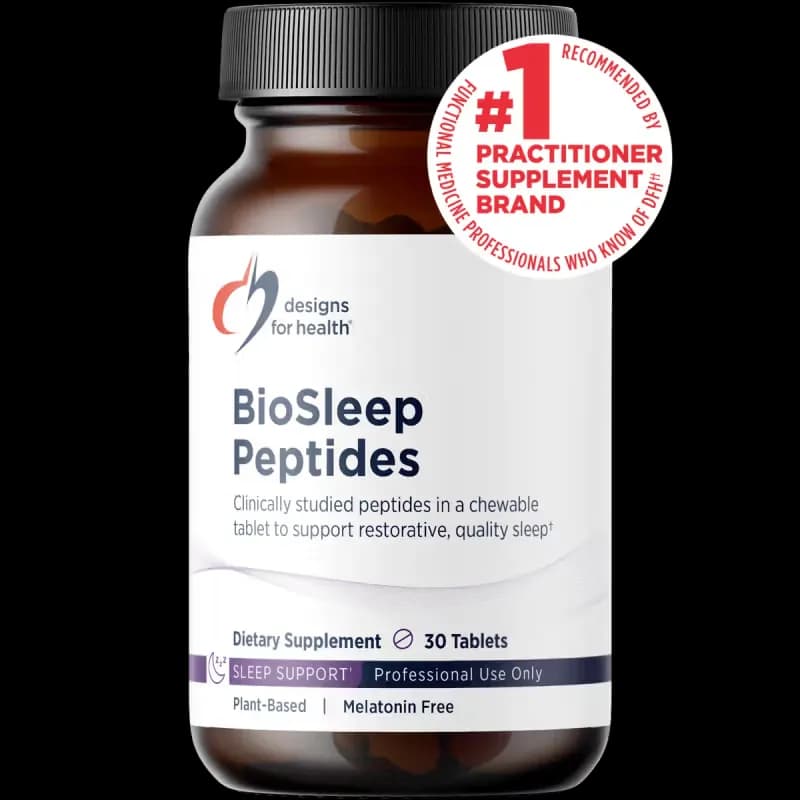
In the search for effective, non-habit-forming sleep support, a novel category of interventions has emerged at the intersection of biotechnology and nutritional science: bioactive plant peptides. BioSleep Peptides, featuring a proprietary and clinically studied ingredient called PeptiSleep™, represents a significant departure from traditional sedatives, antihistamines, and synthetic melatonin. By targeting the body's stress response at the molecular level, these specific brown rice-derived peptides aim to modulate the neuroendocrine pathways that keep chronic illness patients awake. In this comprehensive guide, we will explore the deep science behind BioSleep Peptides, how they interact with the hypothalamic-pituitary-adrenal (HPA) axis, and why they may offer a highly promising, drug-free tool for those navigating the complex sleep disturbances of Long COVID, myalgic encephalomyelitis/chronic fatigue syndrome (ME/CFS), and dysautonomia.
TL;DR
BioSleep Peptides use plant-based PeptiSleep™ to support restorative sleep without relying on heavy sedatives.
They may help manage the "tired but wired" feeling by targeting nighttime cortisol levels.
Research suggests these peptides can support heart rate variability and promote deep, restful sleep stages.
Always consult your healthcare provider before adding new supplements to your chronic illness management plan.
What are BioSleep Peptides?
The Evolution of Sleep Support and Plant-Based Peptides
Bioactive peptides are short chains of amino acids, typically consisting of two to twenty amino acids linked by peptide bonds, that exert specific physiological effects within the human body beyond basic nutritional value. Unlike whole dietary proteins, which must be extensively broken down by the digestive system into individual amino acids before absorption, these smaller, highly specific peptide sequences can often cross the intestinal barrier intact. Once in the bloodstream, they act as signaling molecules, interacting directly with cellular receptors to influence various biological pathways. In recent years, researchers and biochemists have increasingly turned to plant-based sources to identify novel peptides that can safely modulate the nervous and endocrine systems without causing dependency. BioSleep Peptides utilize this advanced nutritional science to provide a targeted, drug-free approach to sleep support. Rather than acting as a central nervous system depressant that forces the brain into unconsciousness, these peptides function as gentle biological messengers that guide the body's biochemistry back toward a state of natural homeostasis and relaxation.
Decoding PeptiSleep™ and Brown Rice Hydrolysate
The core active ingredient in BioSleep Peptides is PeptiSleep™, a highly specialized complex of bioactive peptides derived from brown rice (Oryza sativa) protein hydrolysate. The discovery of this specific, sleep-promoting peptide sequence was not accidental; it was painstakingly identified using an advanced artificial intelligence platform developed by the biotechnology company Nuritas. By utilizing machine learning to screen millions of plant-based molecular structures, researchers pinpointed the exact amino acid sequences in brown rice that interact favorably with human sleep and stress pathways. Through a precise manufacturing process called enzymatic hydrolysis, the long, complex protein chains found in the brown rice endosperm are cleaved into these exact, highly bioavailable peptide fragments. This rigorous standardization ensures that each 250 mg serving delivers the precise molecular signals needed to support restorative sleep patterns, offering a level of targeted efficacy that cannot be achieved by simply consuming whole brown rice.
Beyond Sedatives: A Neuromodulatory Approach
Traditional sleep aids, including high-dose synthetic melatonin, over-the-counter antihistamines, and pharmaceutical sedatives, often work by forcefully overriding the body's natural wakefulness signals or artificially inducing a state of sedation. While this approach can successfully induce unconsciousness, it frequently fails to produce architecturally sound, restorative sleep. Patients often miss out on critical deep sleep stages, leading to the common complaint of next-day grogginess, cognitive dampening, or a "sleep hangover." BioSleep Peptides take a fundamentally different, neuromodulatory approach to sleep architecture. Instead of sedating the brain globally, the bioactive peptides in PeptiSleep™ work peripherally to calm the body's physical stress response. By interacting with specific neuroendocrine receptors outside the central nervous system, they help to quiet the physiological noise and hormonal surges that keep the mind racing at night. This targeted modulation allows the body to seamlessly transition through the natural stages of light, deep, and rapid eye movement (REM) sleep without the use of exogenous hormones or heavy sedatives, preserving daytime alertness.
How Long COVID and ME/CFS Impact Sleep and the HPA Axis
The Hypothalamic-Pituitary-Adrenal (HPA) Axis Dysfunction
To understand why sleep is so profoundly and stubbornly disrupted in complex chronic illnesses, we must thoroughly examine the hypothalamic-pituitary-adrenal (HPA) axis, which serves as the body's central stress response system. In a healthy, resilient individual, the HPA axis operates on a predictable, finely tuned circadian rhythm, releasing stimulating hormones during the day to promote activity and tapering off smoothly at night to allow for rest. However, research on the neuropathology of ME/CFS and Long COVID suggests that severe viral infections, chronic neuroinflammation, and persistent oxidative stress can severely and chronically dysregulate this delicate system. The hypothalamus, acting as the brain's sensory relay station, becomes hypersensitive to even minimal physical, emotional, or cognitive stressors. This hypersensitivity triggers a continuous cascade of signaling molecules (like CRH and ACTH) that keep the adrenal glands locked in a state of hyper-vigilance. This constant, low-grade activation prevents the nervous system from shifting into the parasympathetic "rest and digest" mode required for cellular repair, leaving the patient in a perpetual state of physiological alarm.
Elevated Nighttime Cortisol and the "Tired but Wired" State
One of the most direct and debilitating consequences of HPA axis dysfunction is the abnormal secretion of cortisol, the body's primary glucocorticoid stress hormone. Normally, cortisol levels should peak sharply in the early morning (the cortisol awakening response) to promote wakefulness, and then gradually decline throughout the day, reaching their absolute lowest point around midnight. In many patients dealing with Long COVID and ME/CFS, this healthy diurnal curve becomes flattened or entirely inverted, resulting in inappropriately elevated cortisol levels late at night. This toxic biochemical environment creates the agonizing "tired but wired" sensation: the body is physically exhausted, often experiencing severe post-exertional malaise (PEM), yet the brain remains hyper-alert due to the continuous bath of stress hormones. High nighttime cortisol actively suppresses the pineal gland's natural release of endogenous melatonin, making sleep onset incredibly difficult, causing frequent nighttime awakenings, and preventing the brain from entering the deep sleep stages necessary for glymphatic clearance.
Autonomic Nervous System Imbalance and Low HRV
Beyond the endocrine system, conditions like dysautonomia and postural orthostatic tachycardia syndrome (POTS)—which frequently co-occur with post-viral syndromes—involve a fundamental, structural imbalance in the autonomic nervous system (ANS). The sympathetic branch (responsible for fight-or-flight responses) becomes chronically dominant, while the parasympathetic branch (responsible for rest, digestion, and cellular repair) is severely suppressed. This autonomic tug-of-war is clinically measurable through heart rate variability (HRV), which tracks the micro-variations in time between consecutive heartbeats. Patients with Long COVID and sleep disturbances almost universally exhibit chronically low HRV, indicating that their nervous system lacks the vagal tone and flexibility to relax. When the sympathetic nervous system remains engaged throughout the night, the body is physically unable to achieve the deep, slow-wave sleep stages necessary for physical recovery, mitochondrial repair, and immune system modulation, trapping the patient in a vicious, self-perpetuating cycle of fatigue and unrefreshing sleep.
BioSleep Peptides: Supporting Restorative Sleep Architecture
Antagonizing Peripheral Orexin Receptors
The primary mechanism by which BioSleep Peptides support restorative sleep involves a fascinating and highly specific interaction with the body's orexin system. Orexin, also known in the medical literature as hypocretin, is a crucial neuropeptide produced in the hypothalamus that regulates arousal, wakefulness, and appetite. In states of chronic stress, neuroinflammation, and complex illness, the orexin system can become chronically overactive, constantly signaling the body and the adrenal glands to remain on high alert. The bioactive peptides found in PeptiSleep™ have been noted to target cortisol to provide complete sleep cycle support and recovery. By binding to these specific receptors, particularly those located on the adrenal cortex above the kidneys, the peptides effectively block the wakefulness signals from overstimulating the adrenal glands. This targeted, peripheral blockade helps to quiet the physiological stress response at its source without crossing the blood-brain barrier to cause central nervous system depression, thereby preserving the delicate, natural balance of the sleep-wake cycle.
Modulating Cortisol for Natural Sleep Onset
By antagonizing peripheral orexin receptors, BioSleep Peptides directly and profoundly influence the localized production of cortisol. When the adrenal cortex is shielded from excessive, stress-induced orexin signaling, it significantly reduces the inappropriate nighttime release of cortisol into the bloodstream. This mechanism is profoundly beneficial for patients who struggle nightly with the "tired but wired" phenomenon. As nighttime cortisol levels are gently guided back toward a healthy, lower baseline, the body's endogenous melatonin production is finally allowed to rise naturally, unhindered by stress hormones. This biochemical shift facilitates a much smoother, faster, and more natural transition into sleep. Furthermore, because PeptiSleep™ only modulates the stress-induced spikes in nighttime cortisol rather than shutting down adrenal function entirely, it does not artificially suppress the essential morning cortisol surge needed to feel alert and balanced upon waking. This precise modulation avoids the heavy grogginess and cognitive fog associated with many traditional sleep aids.
Enhancing Heart Rate Variability (HRV) and Parasympathetic Tone
The downstream physiological effects of lowering nighttime cortisol and calming the HPA axis extend deeply into the autonomic nervous system. Clinical data on AI-discovered sleep peptides indicates that they can significantly enhance parasympathetic tone, which is objectively measured by substantial increases in heart rate variability (HRV). By reducing the sympathetic nervous system's dominance and stimulating vagal tone, BioSleep Peptides help the body enter a state of profound physical relaxation before bed. This autonomic shift is absolutely critical for optimizing sleep architecture. When HRV increases and the nervous system registers a state of safety, the brain can spend significantly more time in the restorative stages of deep sleep (slow-wave sleep) and REM sleep. For patients navigating the complexities of Long COVID and ME/CFS, maximizing these specific sleep stages is essential for muscle tissue repair, memory consolidation, emotional processing, and the clearance of metabolic waste from the brain via the glymphatic system.

Symptoms BioSleep Peptides May Help Manage
Targeting Specific Sleep and Autonomic Disruptions
BioSleep Peptides are specifically designed to address the downstream symptoms of HPA axis dysfunction and autonomic imbalance. By modulating the body's stress response at the cellular level, this supplement may help manage several specific challenges associated with chronic illness:
Prolonged Sleep Onset Latency: By lowering nighttime cortisol and blocking peripheral orexin signals, the peptides help quiet the racing mind and physical restlessness, making it significantly easier to fall asleep quickly rather than tossing and turning for hours in a state of hyperarousal.
Frequent Nighttime Awakenings: Spikes in stress hormones often pull patients out of deep sleep, causing them to wake up panicked or alert in the middle of the night. By stabilizing the HPA axis, BioSleep Peptides support continuous, uninterrupted sleep cycles throughout the night.
Unrefreshing Sleep: A hallmark of ME/CFS and Long COVID is waking up feeling completely unrecovered, regardless of hours spent in bed. By promoting an objective increase in deep and REM sleep stages, these peptides help ensure that the sleep achieved is actually restorative at a cellular and mitochondrial level.
Morning Grogginess and Brain Fog: Because this formula is entirely free of melatonin and heavy sedatives, it does not interfere with the natural morning cortisol awakening response, promoting a more balanced mood, clearer cognition, and better energy levels upon waking.
Low Heart Rate Variability (HRV): By encouraging a shift toward parasympathetic nervous system dominance, the bioactive peptides support improved HRV, a key clinical indicator of nervous system resilience, cardiovascular health, and overall recovery capacity.
Stress-Related Sleep Disruptions: For those whose sleep is easily derailed by the physical, emotional, and financial stress of living with a long-term chronic illness, the neuromodulatory effects of brown rice hydrolysate help buffer the body against these daily stressors.
Practical Considerations: Forms, Dosing, and Absorption
Optimal Dosing and Timing of PeptiSleep™
To achieve the profound neuromodulatory benefits observed in clinical settings, proper dosing and precise timing are essential. The clinically studied and validated dose of PeptiSleep™ is 250 mg per day, which is exactly the amount provided in one serving of BioSleep Peptides. Because the primary physiological goal is to gently guide the HPA axis and lower cortisol prior to sleep onset, the suggested use is to chew one tablet approximately 30 to 60 minutes before bedtime. This strategic window allows the bioactive peptides sufficient time to be absorbed through the digestive tract, enter systemic circulation, and begin interacting with peripheral orexin receptors on the adrenal cortex. Consistency is also a critical factor; while some users may notice immediate improvements in relaxation and sleep onset, the full, compounding benefits of modulating the stress response, increasing HRV, and optimizing sleep architecture often develop over several weeks of consistent nightly use.
Bioavailability of Brown Rice Protein Hydrolysate
The bioavailability of any supplement dictates how effectively the body can actually utilize its active ingredients at the cellular level. BioSleep Peptides feature brown rice (Oryza sativa) protein hydrolysate, a highly specialized form that has been enzymatically broken down into much smaller peptide chains. This pre-digested state significantly enhances absorption compared to intact dietary proteins, allowing the bioactive sequences to rapidly cross the intestinal lining and enter the bloodstream without requiring extensive digestive energy. Furthermore, because these peptides are derived from brown rice, they are naturally hypoallergenic, vegan, non-GMO, and generally exceptionally well-tolerated by individuals with sensitive digestive systems or conditions like mast cell activation syndrome (MCAS), which frequently co-occurs with dysautonomia and Long COVID. The chewable tablet format also initiates the digestive process immediately in the mouth via salivary enzymes, potentially aiding in faster, more efficient absorption.
Stacking with Other Sleep Aids and Safety Profile
One of the most significant clinical advantages of BioSleep Peptides is their remarkable versatility and clean safety profile. Because the formula is entirely drug-free and non-melatonin-based, it does not carry the risk of hormonal dependency, tolerance build-up, or the disruption of the pineal gland's endogenous melatonin production. For patients dealing with severe, intractable sleep disturbances, BioSleep Peptides can be safely and effectively stacked alongside other sleep-support formulas. For instance, it can be used in conjunction with magnesium glycinate for enhanced muscular relaxation, L-theanine for additional GABA support, or even alongside a low-dose melatonin supplement if circadian rhythm resetting is specifically required. As always, patients managing complex chronic conditions, experiencing severe autonomic dysfunction, or taking prescription medications should consult their healthcare provider before introducing new supplements to ensure there are no specific contraindications or interactions with their current, personalized treatment protocol.

Follow the Science: Clinical Trials on PeptiSleep™
Objective Wearable Data and Sleep Architecture
The clinical efficacy of the specific brown rice peptides found in BioSleep Peptides is supported by robust, modern, and highly objective clinical research. In a comprehensive 10-week clinical trial involving 60 healthy adults suffering from mild to moderate sleep impairment, researchers utilized advanced biometric wearables (specifically Oura rings) to gather continuous, objective data on sleep architecture and autonomic function. The findings on PeptiSleep™ were striking and statistically significant: participants taking the 250 mg dose experienced an average increase of 35 to 38 minutes in total sleep time per night. More importantly, the actual quality and depth of sleep improved dramatically, with an absolute increase of 13 additional minutes of restorative deep sleep (representing a 17% overall increase) and 12 additional minutes of REM sleep. Furthermore, the continuous wearable data revealed a remarkable 32% increase in heart rate variability (HRV), objectively demonstrating the peptides' potent ability to enhance parasympathetic nervous system activity and promote deep, systemic physical recovery.
Subjective Improvements in Mood and Recovery
Beyond the impressive objective biometric data, the clinical trials also meticulously measured subjective improvements using the clinically validated Leeds Sleep Evaluation Questionnaire (LSEQ). Participants reported highly significant enhancements across all major parameters of sleep quality and daytime functioning. Notably, 61% of users reported falling asleep faster, aligning perfectly with the proposed mechanism of lowering nighttime cortisol and calming the "tired but wired" state. Furthermore, the subjective data highlighted much easier awakenings and vastly improved next-day behavior, mood, and cognitive clarity. This is a particularly crucial finding for patients with Long COVID and ME/CFS, as it confirms that the orexin-antagonizing mechanism of the peptides does not cause the next-day grogginess, lethargy, or cognitive dampening frequently associated with traditional sedatives, antihistamines, or high-dose melatonin therapies.
The Broader Neurological Impact of Rice Peptides
The neuro-modulatory and systemic benefits of Oryza sativa peptides extend far beyond just sleep architecture. Historical and ongoing research has thoroughly documented the potent anti-hypertensive and vasodilating properties of rice bran peptides, showcasing their broader ability to relax the cardiovascular system, improve endothelial function, and soothe the autonomic nervous system. Together, these peer-reviewed studies paint a highly compelling picture of brown rice bioactive peptides as a multi-faceted, systemic tool for calming the nervous system, modulating the stress response, and supporting the foundational cellular recovery required for managing complex, multi-system chronic illnesses.
The Path Forward
Integrating Peptides into Your Pacing Strategy
Living with a complex, multi-system chronic illness like Long COVID, ME/CFS, or dysautonomia often feels like a grueling full-time job of managing unpredictable and debilitating symptoms. Sleep disturbances are particularly cruel in this context, as they rob you of the very recovery time your body desperately needs to heal from daily exertion. It is entirely valid to feel profoundly frustrated by the relentless cycle of daytime exhaustion and nighttime hyperarousal. Integrating a targeted, science-backed supplement like BioSleep Peptides can be a highly valuable component of a broader, comprehensive symptom management strategy. However, it is most effective when combined with strict energy pacing protocols, rigorous symptom tracking, and excellent sleep hygiene practices. By addressing the biochemical roots of elevated nighttime cortisol and autonomic dysfunction, you can create a much more favorable internal environment for restorative rest to occur naturally.
A Hopeful Approach to Chronic Illness Management
While there are certainly no quick fixes or magic cures for the profound sleep disruptions associated with post-viral syndromes, the emergence of AI-discovered, plant-based bioactive peptides offers a scientifically grounded and highly validating reason for hope. By gently modulating the HPA axis, antagonizing peripheral orexin, and supporting parasympathetic tone, these targeted interventions provide a safe, drug-free pathway to better sleep architecture. As you continue to navigate your complex healing journey, remember that optimizing your sleep is one of the most powerful and foundational steps you can take toward improving your overall quality of life and cellular resilience. Explore BioSleep Peptides to learn more about how this innovative, peptide-powered formula can support your nightly recovery. Always remember to consult your healthcare provider before starting any new supplement regimen to ensure it aligns safely with your comprehensive, individualized care plan.