Can Liquid Vitamin B12 and Folate Support Energy and Neurological Health in Long COVID and ME/CFS?
March 6, 2026
Vitamin B12Long COVIDME/CFS
Share:
Disclaimer: The information provided here is for educational purposes only and is not intended as medical advice. It should not be used to diagnose, treat, cure, or prevent any medical condition. Instead, use it as a starting point for discussion with your healthcare provider. Always consult with a qualified healthcare provider before starting any new medication, supplement, device, or making changes to your health regimen.
Months or even years after recovering from an initial viral infection, many individuals find themselves fighting a daily battle against debilitating symptoms. The profound exhaustion, unpredictable cognitive dysfunction, and erratic heart rates associated with complex chronic conditions can completely alter a person's quality of life. For patients navigating the realities of Long COVID, Myalgic Encephalomyelitis/Chronic Fatigue Syndrome (ME/CFS), and dysautonomia, the search for validating answers and effective management strategies is often a long and frustrating journey. While there is no single cure for these multi-systemic illnesses, emerging clinical research is shedding light on the critical role of foundational cellular nutrients in supporting recovery and symptom management.
Among these essential nutrients, Vitamin B12 and folate have garnered significant attention in the medical community. These vitamins are not merely simple energy boosters; they are complex biochemical cofactors that dictate the health of our nervous system, the efficiency of our cellular energy production, and the integrity of our vascular networks. When chronic illness depletes these vital reserves or genetic variations hinder their absorption, the resulting cellular starvation can trigger a cascade of neurological and autonomic symptoms. In this comprehensive guide, we will explore the intricate science behind B12 Liquid, examining how its highly bioavailable ingredients—methylcobalamin and Metafolin® L-5-MTHF—work at the molecular level to support nerve health, promote mitochondrial function, and help patients reclaim their vitality.
TL;DR
Vitamin B12 and active folate are essential nutrients that support cellular energy and nervous system health.
Liquid methylcobalamin bypasses digestion, offering highly bioavailable support for brain fog, fatigue, and neuropathy.
Supplementation may help manage symptoms of Long COVID, ME/CFS, and dysautonomia by supporting mitochondrial function.
Always consult your healthcare provider and consider functional lab testing to guide your supplementation strategy.
What is Vitamin B12 and Folate?
The Foundation of Cellular Energy and DNA Synthesis
Vitamin B12, scientifically known as cobalamin, is an essential water-soluble vitamin that the human body cannot synthesize on its own. In a healthy physiological state, this complex molecule acts as a fundamental building block for life, governing processes that range from the microscopic synthesis of DNA to the macroscopic generation of physical energy. One of its most critical roles is in the process of erythropoiesis, or the formation of red blood cells in the bone marrow. Vitamin B12 is absolutely required for the proper division and maturation of these cells, ensuring they develop into the correct shape and size to efficiently carry oxygen throughout the vascular system.
When the body lacks adequate Vitamin B12, red blood cells become abnormally large and structurally dysfunctional, a condition known clinically as megaloblastic anemia. Because these malformed cells cannot transport oxygen effectively to the body's tissues and organs, the cellular respiration process is severely bottlenecked. Without oxygen, the mitochondria—the powerhouses of our cells—cannot produce adenosine triphosphate (ATP), the primary currency of cellular energy. This oxygen deprivation at the microscopic level manifests as profound, debilitating physical fatigue and muscle weakness at the macroscopic level, highlighting why B12 is universally recognized as a cornerstone of energy metabolism.
The Methylation Cycle and One-Carbon Metabolism
To truly understand the power of Vitamin B12, we must look at its active coenzyme form, methylcobalamin, and its role in a biochemical pathway known as the methylation cycle. Methylation is a continuous biological process that occurs billions of times a second in every cell of the body. It involves the transfer of a single carbon atom and three hydrogen atoms (a methyl group) from one molecule to another. This seemingly simple transfer acts as a biological on/off switch, regulating gene expression, detoxifying harmful chemicals, and synthesizing vital neurotransmitters.
Within this cycle, methylcobalamin serves as an indispensable cofactor for an enzyme called methionine synthase (MTR). The process begins when active folate, known as L-5-methyltetrahydrofolate (L-5-MTHF), donates a methyl group to cobalamin, transforming it into methylcobalamin. Methylcobalamin then passes this methyl group onto homocysteine, a potentially toxic amino acid, converting it into the essential amino acid methionine. This conversion is a critical juncture in human biochemistry, as it simultaneously neutralizes a dangerous cellular byproduct while creating the raw material needed for the body's master methyl donor.
Once methionine is synthesized, it is rapidly converted into S-adenosylmethionine (SAM-e). SAM-e is the universal methyl donor utilized by the central nervous system to produce crucial neurotransmitters, including serotonin, dopamine, and norepinephrine. These chemical messengers dictate our mood, cognitive clarity, and autonomic nervous system stability. Without sufficient methylcobalamin to drive the methionine synthase enzyme, the entire methylation cycle grinds to a halt. Homocysteine accumulates to toxic levels, SAM-e production plummets, and the brain is starved of the neurotransmitters required for optimal cognitive and emotional function.
Myelin Production and Neurological Protection
Beyond energy and methylation, Vitamin B12 is the ultimate guardian of the nervous system. The human body contains miles of intricate nerve fibers that transmit electrical signals from the brain to the furthest extremities. To ensure these electrical impulses travel rapidly and accurately without short-circuiting, our nerves are wrapped in a protective, insulating layer of fats and proteins called the myelin sheath. You can think of the myelin sheath as the rubber insulation surrounding a copper electrical wire; without it, the electrical current dissipates, and the connection fails.
Methylcobalamin is biologically required for the synthesis of the specific phospholipids and sphingolipids that make up this myelin insulation. It ensures the structural integrity of both the central nervous system (the brain and spinal cord) and the peripheral nervous system (the nerves extending to the limbs and organs). When B12 levels drop, the body cannot maintain this protective coating, leading to a process called demyelination. As the myelin sheath degrades, nerve signals become delayed, misdirected, or completely lost. This structural nerve damage is the physiological root of neuropathy, causing symptoms like numbness, tingling, burning pain, and severe autonomic dysfunction.
How Complex Chronic Conditions Impact B12 and Methylation
The "Methyl-Group Assault" in Long COVID
The emergence of Long COVID has forced researchers to re-examine how severe viral infections impact our foundational nutrient stores. When the SARS-CoV-2 virus enters the body, it hijacks the host's cellular machinery to replicate. This viral replication process, alongside the host's massive immune response, places an unprecedented demand on the body's one-carbon metabolism and methylation pathways. Researchers hypothesize that this intense biological battle results in a "methyl-group assault," rapidly draining the body's reserves of active Vitamin B12 and folate to sustain the immune defense and repair damaged tissues. If you are interested in the broader mechanisms of this condition, you can learn more about What Causes Long COVID?.
As these crucial nutrient reserves are depleted, the methylation cycle begins to fail. Retrospective clinical evaluations have revealed profound nutritional deficits in post-viral patients. When the body lacks the methylcobalamin necessary to clear homocysteine and produce SAM-e, neuroinflammation goes unchecked. This systemic depletion helps explain the diverse and widespread symptoms of Long COVID, from the crushing physical fatigue caused by mitochondrial impairment to the severe cognitive dysfunction resulting from neurotransmitter starvation.
ME/CFS, the Blood-Brain Barrier, and Central Nervous System Starvation
In the context of Myalgic Encephalomyelitis/Chronic Fatigue Syndrome (ME/CFS), the relationship with Vitamin B12 is incredibly complex and often misunderstood by standard diagnostic models. Historically, medical guidelines advised against testing for B12 deficiency unless a patient's blood work showed macrocytosis (enlarged red blood cells). However, modern research indicates that macrocytosis is a very late-stage sign of deficiency. Many ME/CFS patients suffer from severe cellular-level B12 starvation long before their red blood cells change shape, causing their symptoms to be dismissed or misdiagnosed. This highlights the importance of comprehensive testing, a topic explored in our guide on How Does a Doctor Diagnose Long COVID?.
The pathophysiology of ME/CFS often involves a localized deficiency within the central nervous system, despite seemingly "normal" blood serum levels. A cited study actually investigated the effects of ultra-high dose methylcobalamin on nerve regeneration in rats with acrylamide neuropathy, finding significantly faster recovery of compound muscle action potentials. While animal models provide insight, human research continues to explore physiological blockages at the blood-brain barrier, where B12 circulating in the blood may be unable to cross into the brain, leading to localized central nervous system starvation, severe neuroinflammation, and the hallmark "brain fog" associated with ME/CFS.
Dysautonomia, POTS, and Small Fiber Neuropathy
Dysautonomia, particularly Postural Orthostatic Tachycardia Syndrome (POTS), is a frequent and debilitating companion to complex chronic illnesses. POTS is characterized by an abnormal increase in heart rate upon standing, accompanied by dizziness, blood pooling, and fainting. The pathophysiology of this autonomic dysfunction is deeply intertwined with Vitamin B12 depletion. As we established, B12 is required to maintain the myelin sheath. When chronic illness depletes B12, the resulting demyelination often manifests as Small Fiber Neuropathy (SFN), a condition where the tiny peripheral nerve endings are damaged.
When SFN affects the autonomic nerves responsible for regulating vascular tone, the blood vessels lose their ability to constrict properly against gravity. Upon standing, blood pools in the lower extremities instead of returning to the heart and brain. The heart then races in a desperate, compensatory attempt to pump blood upward, triggering a severe POTS episode. Furthermore, genetic bottlenecks like the MTHFR mutation can exacerbate autonomic issues by preventing the conversion of inactive B-vitamins into their usable forms, trapping patients in a vicious cycle of neuropathy and autonomic failure.
B12 Liquid: Supporting Energy and Neurological Health
Fueling Mitochondrial ATP Production
Supplementing with a highly bioavailable liquid form of Vitamin B12 provides multi-targeted support for the disrupted pathways seen in chronic illness. At the cellular level, methylcobalamin plays a vital, albeit indirect, role in restoring mitochondrial energy production. While another form of B12 (adenosylcobalamin) is the specific coenzyme that operates directly inside the mitochondria during the Krebs cycle, methylcobalamin acts as the crucial upstream facilitator. By driving the methylation cycle and ensuring the steady production of methionine, methylcobalamin provides the exact raw materials the body needs to synthesize adenosylcobalamin.
By supporting this upstream pathway, methylcobalamin supplementation helps restore the foundation of human cellular respiration. When the mitochondria have the necessary cofactors to process fatty acids and amino acids efficiently, they can resume the optimal production of ATP. For patients battling the profound exhaustion and post-exertional malaise (PEM) characteristic of ME/CFS and Long COVID, supporting this mitochondrial supply chain is essential. It may help shift the body out of a state of metabolic hibernation and back into active energy generation, slowly expanding the patient's energetic envelope.
Nerve Regeneration and Analgesic Properties
One of the most remarkable therapeutic angles of methylcobalamin is its ability to actively promote nerve regeneration and provide analgesic (pain-relieving) effects. In states of chronic neuroinflammation or physical nerve damage, the peripheral nerves become highly sensitized. Methylcobalamin interacts directly with cellular signaling pathways to reverse this damage. Research demonstrates that ultra-high doses of methylcobalamin may up-regulate gene transcription and protein synthesis, leading to significantly faster recovery of compound muscle action potentials and higher nerve fiber density in rats with acrylamide neuropathy. This accelerates axonal regeneration and helps repair the structural damage of neuropathy.
Furthermore, methylcobalamin offers targeted relief for neuropathic pain by modulating cellular ion channels. In damaged nerves, voltage-gated sodium channels (VGSCs) often become hyper-expressed, leading to rapid, spontaneous, and painful nerve misfires. Clinical studies have shown that methylcobalamin successfully downregulates and inactivates these hyperactive sodium channels. By quieting these erratic electrical discharges, methylcobalamin may act as a natural analgesic, helping to alleviate the burning, tingling, and "pins and needles" sensations that plague patients with Small Fiber Neuropathy and dysautonomia.
Regulating Homocysteine and Vascular Health
The therapeutic impact of methylcobalamin extends deeply into the cardiovascular system through its regulation of homocysteine. In patients with MTHFR mutations or post-viral metabolic dysfunction, homocysteine rapidly accumulates in the bloodstream. This amino acid is highly neurotoxic and acts as a severe abrasive to the endothelial cells lining the blood vessels. Chronic endothelial damage triggers systemic inflammation and promotes the formation of micro-clots (thrombosis), a pathology frequently observed in Long COVID patients. These micro-clots restrict capillary blood flow, preventing oxygen from reaching the brain and muscles.
By supplying the body with active methylcobalamin, the methionine synthase enzyme is reactivated, supporting the clearance of excess homocysteine from the blood and converting it back into safe, usable methionine. This biochemical clearance may help reduce ongoing damage to the vascular endothelium, reduce the inflammatory burden on the cardiovascular system, and help mitigate the conditions that promote micro-clotting. As vascular health improves and capillary blood flow is restored, patients often experience a significant reduction in cognitive brain fog and a stabilization of their autonomic blood pressure responses.
Synergistic Support with L-5-MTHF Folate
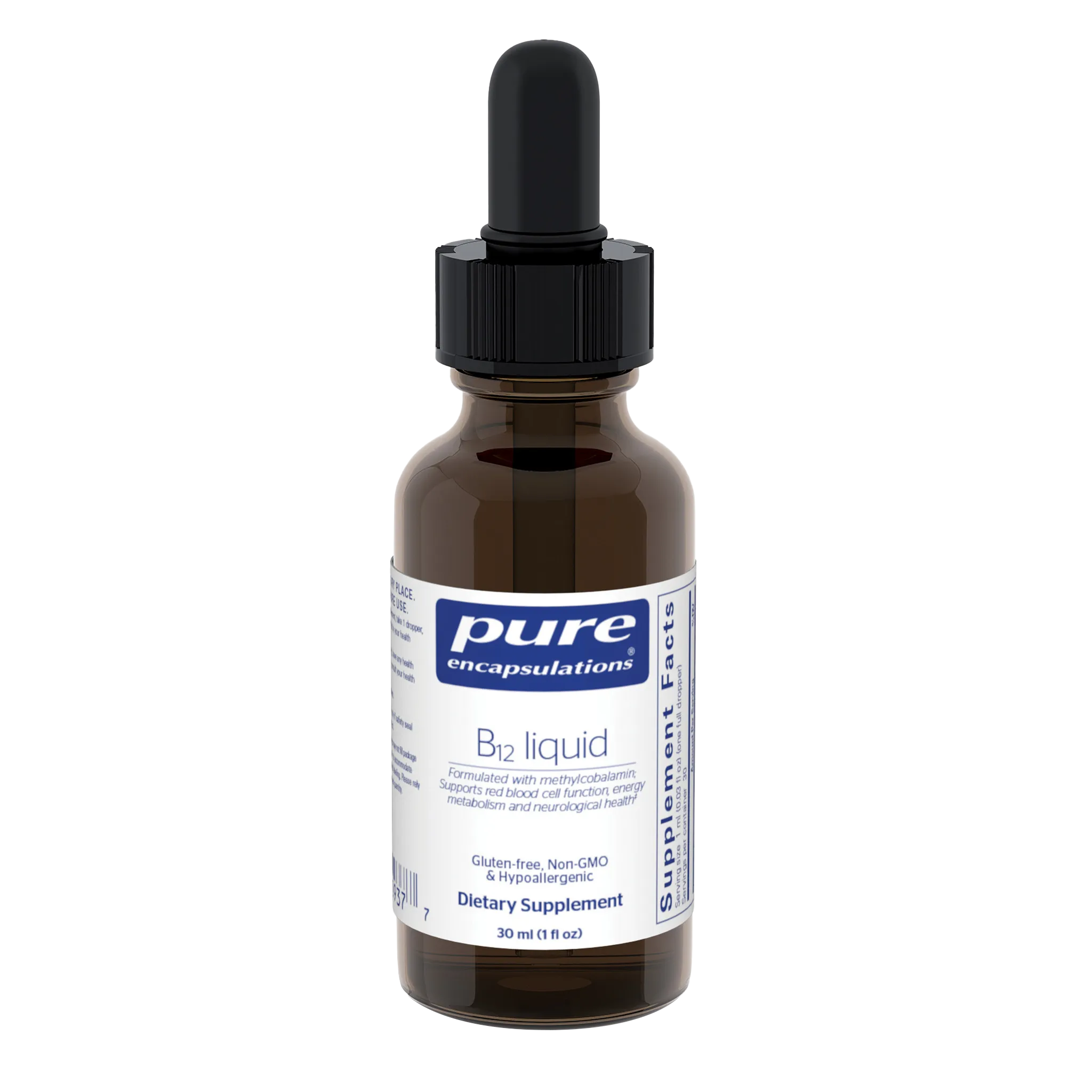
Vitamin B12 does not operate in a vacuum; its efficacy is intrinsically linked to the presence of active folate. The Pure Encapsulations B12 Liquid formula strategically includes Metafolin®, which is L-5-methyltetrahydrofolate (L-5-MTHF). This is the naturally occurring, universally metabolized, and biologically active form of folate. In the methylation cycle, L-5-MTHF is the molecule that actually hands the methyl group over to cobalamin. If a patient takes high doses of B12 but lacks active folate, the methylation cycle remains broken, and the B12 cannot be utilized effectively.
It is crucial to distinguish between active L-5-MTHF and synthetic folic acid. Many individuals with chronic illness possess genetic variations, such as the MTHFR polymorphism, which severely impairs their ability to convert synthetic folic acid into the active form. By providing folate directly in its active L-5-MTHF form, this liquid supplement bypasses genetic bottlenecks entirely, ensuring that both B12 and folate can immediately synergize to support DNA synthesis, immune function, and cellular repair.

Symptoms B12 and Folate May Help Manage
Cognitive and Neurological Symptoms
Because of its profound impact on the central nervous system, myelin synthesis, and neurotransmitter production, supplementation with active Vitamin B12 and folate targets several debilitating neurological symptoms:
Severe Brain Fog and Cognitive Impairment: By actively clearing neurotoxic homocysteine from the bloodstream and supporting healthy capillary blood flow to the brain, methylcobalamin may help restore mental clarity, focus, and memory recall.
Neuropathic Pain and Tingling: By downregulating hyperactive voltage-gated sodium channels (VGSCs) and promoting the regeneration of the myelin sheath via Schwann cell activation, B12 may help quiet the burning, numbness, and "pins and needles" sensations of peripheral neuropathy.
Mood Instability and Depression: By driving the methylation cycle to produce SAM-e, the universal methyl donor, B12 and folate support the brain in having the necessary biochemical precursors to synthesize critical mood-regulating neurotransmitters like serotonin and dopamine.
Energy and Exertional Symptoms
By addressing the root causes of cellular starvation and oxygen deprivation, these nutrients provide foundational support for the body's energy generation systems:
Profound Physical Fatigue: By ensuring the proper formation and maturation of red blood cells (erythropoiesis), B12 supports healthy red blood cell formation, which is essential to avoid megaloblastic anemia, supporting efficient oxygen transport to muscle tissues and organs for cellular respiration.
Post-Exertional Malaise (PEM): By supplying the upstream raw materials needed to synthesize mitochondrial coenzymes, methylcobalamin indirectly supports the Krebs cycle, which may help the mitochondria produce ATP more efficiently and expand the patient's energetic tolerance.
Muscle Weakness: By supporting the structural integrity of motor neurons and improving oxygen delivery to muscle fibers, B12 may help combat the heavy, leaden feeling in the limbs frequently reported by ME/CFS patients.
Autonomic and Cardiovascular Symptoms
Through the repair of autonomic nerve fibers and the improvement of vascular health, B12 and folate play a crucial role in managing dysautonomia:
Postural Orthostatic Tachycardia Syndrome (POTS): By supporting the small autonomic nerve fibers responsible for vascular constriction, B12 may help the blood vessels respond appropriately to gravity, reducing the severe blood pooling and reactive tachycardia that occurs upon standing.
Dizziness and Lightheadedness: By supporting the clearance of homocysteine and reducing endothelial inflammation, active folate and B12 may help improve overall vascular tone and cerebral blood flow, minimizing orthostatic intolerance and the sensation of impending syncope (fainting).
Gastrointestinal Dysmotility: Because the digestive tract is heavily regulated by the autonomic nervous system, supporting autonomic nerve health with B12 may help improve gut motility, reducing symptoms of nausea, bloating, and gastroparesis.
Practical Considerations: Forms, Dosing, and Absorption
The Superiority of Methylcobalamin over Cyanocobalamin
When considering Vitamin B12 supplementation, the specific molecular form is of paramount importance. The most common and inexpensive form found in standard multivitamins is cyanocobalamin. This is a synthetic compound created in a laboratory, where the cobalamin molecule is attached to a cyanide donor. While the amount of cyanide is physiologically small and generally considered safe for healthy individuals, the body cannot use cyanocobalamin in this state. It must expend vital cellular energy and utilize its master antioxidant reserves (glutathione) to cleave the cyanide molecule, detoxify it, and convert the remaining cobalamin into a usable active form.
For patients with complex chronic illnesses like Long COVID or ME/CFS, whose energy reserves are already depleted and whose antioxidant systems are overwhelmed by chronic inflammation, this conversion process is a massive metabolic burden. Methylcobalamin, on the other hand, is the naturally occurring, biologically active coenzyme form of B12. It requires no metabolic conversion or energy expenditure to be utilized. The moment it enters the bloodstream, it can cross the blood-brain barrier, enter the methylation cycle, and begin repairing nerves and clearing homocysteine. Choosing methylcobalamin preserves the body's precious glutathione stores for other critical detoxification processes.
Why Liquid Sublingual Delivery Matters
The delivery method of Vitamin B12 is just as critical as the form. Traditional oral pills and capsules must travel through the harsh environment of the gastrointestinal (GI) tract. To be absorbed, B12 must be detached from dietary proteins by stomach acid and then bind to a specific protein called "Intrinsic Factor" in the small intestine. However, many patients with chronic illness suffer from GI pathologies, reduced stomach acid, or take medications like proton pump inhibitors (PPIs) that severely disrupt this delicate digestive absorption process.
A liquid sublingual delivery system elegantly bypasses the entire digestive tract. By placing the liquid drops directly under the tongue, the active methylcobalamin and L-5-MTHF are absorbed through the highly vascularized mucous membranes of the mouth. This allows the nutrients to diffuse directly into the systemic bloodstream, ensuring rapid and complete delivery regardless of the patient's gut health. A massive 2025 systematic review and meta-analysis evaluating over 6,000 participants confirmed that sublingual B12 supplementation is highly effective, showing no statistically significant difference in efficacy compared to painful intramuscular (IM) injections for maintaining long-term B12 levels.
Dosing, Timing, and Co-Factors
The Pure Encapsulations B12 Liquid provides 1,000 mcg of methylcobalamin per 1 ml serving. Because the body only requires a few micrograms of B12 daily for basic survival, a 1,000 mcg dose is considered a high-potency therapeutic dose designed to rapidly correct cellular deficiencies and saturate the nervous system. The liquid form offers incredible flexibility; patients can easily titrate their dose drop-by-drop based on their individual tolerance and the guidance of their healthcare provider. It is generally recommended to take B12 in the morning or early afternoon, as its energy-promoting effects can occasionally interfere with sleep if taken too late in the evening.
When introducing high-dose B12 and folate, it is important to ensure adequate intake of supporting co-factors. The methylation cycle relies on a symphony of nutrients, including Vitamin B6, riboflavin (B2), and essential minerals like magnesium and potassium. As the body ramps up cell production and nerve repair, it may rapidly consume these co-factors. Maintaining a nutrient-dense diet is crucial during this process. For strategies on maintaining nutrition while managing chronic illness symptoms, consider reading our guide on Learning to Eat Nutritionally with Changes to Your Sense of Smell and Taste.
Biomarkers and Lab Testing
A major pitfall in managing B12 deficiency in chronic illness is the reliance on standard serum B12 blood tests. A serum B12 test measures the total amount of B12 floating in the blood, but it does not indicate whether that B12 is successfully entering the cells or crossing the blood-brain barrier. Consequently, patients can have "normal" or even "high" serum B12 levels while simultaneously suffering from severe cellular starvation. This phenomenon is frequently seen in patients with MTHFR mutations or transport protein defects.
To get an accurate picture of cellular B12 and folate status, functional medicine providers look at downstream metabolic markers. The two most critical tests are Methylmalonic Acid (MMA) and Homocysteine. MMA requires B12 to be processed; if cellular B12 is low, MMA levels will rise in the blood and urine. Similarly, if the methylation cycle is stalled due to a lack of active B12 or folate, homocysteine levels will elevate. Testing these specific biomarkers provides a definitive, functional assessment of whether your body is actively utilizing its B-vitamins, guiding more precise and effective supplementation strategies.

Follow the Science
Clinical Trials on Neuropathy and Nerve Repair
The scientific evidence supporting the use of ultra-high-dose methylcobalamin for severe neurological conditions is robust and growing. One of the most significant recent milestones in neurological research was the JETALS Trial, a multicenter, randomized, double-blind Phase II/III clinical trial conducted in Japan. This study investigated the efficacy of massive doses of intramuscular methylcobalamin (50 mg twice weekly) in patients with early-stage Amyotrophic Lateral Sclerosis (ALS), a devastating neurodegenerative disease. The trial provided Class II evidence that this high-dose methylcobalamin regimen significantly prolonged the time to death or the need for ventilation support, and markedly slowed the decline of functional rating scores compared to the placebo group.
Preclinical models further elucidate the exact mechanisms behind this nerve repair. In a controlled study evaluating rats with acrylamide-induced neuropathy, subjects were administered varying doses of methylcobalamin. The researchers observed that the ultra-high dose group demonstrated significantly faster recovery of compound muscle action potentials (CMAPs) and exhibited a much higher nerve fiber density than the low-dose and saline control groups. This research definitively proved that massive doses of methylcobalamin uniquely upregulate gene transcription and protein synthesis specifically required for structural nerve repair and axonal regeneration.
Real-World Data in Post-Viral Fatigue and ME/CFS
In the realm of post-viral syndromes, observational data is confirming what many clinicians have long suspected about B12's efficacy. Emerging patient-reported outcome data suggests that active B12 therapies may be helpful in supporting patients with Long COVID and ME/CFS manage core symptoms, including profound fatigue, cognitive brain fog, and post-exertional malaise (PEM).
Dysautonomia and POTS Research
The link between B12 deficiency and autonomic nervous system dysfunction is an area of ongoing interest.
Other studies have explored this connection in adults. Research published in Autonomic Neuroscience assessed adult patients with Vitamin B12 deficiency during a 60-degree head-up tilt test. The researchers observed that the B12-deficient patients exhibited a significant fall in systolic blood pressure, a blunted stroke index, and impaired modulation of baroreflex sensitivity. The study concluded that the autonomic dysfunction and hemodynamic consequences caused by B12 deficiency are virtually identical to the severe autonomic failure seen in diabetic autonomic neuropathy, solidifying B12's role as a critical nutrient for maintaining vascular tone and autonomic stability.
The Path Forward
Validating Your Experience with Chronic Illness
Living with a complex, invisible illness like Long COVID, ME/CFS, or dysautonomia is an incredibly challenging journey. The symptoms you experience—the crushing fatigue that doesn't improve with sleep, the cognitive fog that makes simple tasks feel impossible, and the unpredictable racing of your heart—are not in your head; they are rooted in profound physiological and biochemical disruptions. It is entirely valid to feel frustrated when standard blood tests return "normal" while your body feels anything but. Understanding the intricate science of cellular metabolism, methylation, and nerve health provides a validating framework for why you feel the way you do, and more importantly, it offers tangible avenues for targeted support. If you are struggling to navigate this new reality, you are not alone; explore our thoughts on How Can You Live with Long-Term COVID.
A Comprehensive Management Strategy
While the clinical science supporting methylcobalamin and active folate is incredibly promising, it is important to remember that no single supplement is a miracle cure for complex chronic conditions. Healing the nervous system and restoring mitochondrial function is a gradual process that requires patience and consistency. Supplementation should always be viewed as one vital piece of a much larger, comprehensive management strategy. This strategy must include aggressive pacing to prevent post-exertional crashes, meticulous symptom tracking to identify your unique triggers, prioritizing restorative sleep, and working collaboratively with a healthcare provider who understands the nuances of neuroimmune and autonomic disorders.
Exploring Liquid B12 for Your Toolkit
By providing the body with the highly bioavailable, active forms of Vitamin B12 and folate, you are directly supplying the cellular machinery with the exact cofactors it needs to clear neurotoxic homocysteine, repair damaged myelin sheaths, and fuel mitochondrial energy production. The liquid sublingual delivery ensures that these vital nutrients bypass compromised digestive systems, offering rapid and reliable absorption directly into the bloodstream. If you are looking to support your neurological health, improve your energy metabolism, and address the root biochemical disruptions of chronic illness, this targeted formula may be a powerful addition to your daily management toolkit.
Disclaimer: The information provided in this blog is for educational purposes only and is not intended as medical advice. Always consult with your healthcare provider before starting any new supplement regimen, especially if you have a complex chronic condition, are taking prescription medications, or are pregnant or nursing.