Can Essential Amino Acids Support Muscle Recovery and Energy in Long COVID and ME/CFS?
March 6, 2026
Essential Amino AcidsLong COVIDME/CFS
Share:
Disclaimer: The information provided here is for educational purposes only and is not intended as medical advice. It should not be used to diagnose, treat, cure, or prevent any medical condition. Instead, use it as a starting point for discussion with your healthcare provider. Always consult with a qualified healthcare provider before starting any new medication, supplement, device, or making changes to your health regimen.
Months or even years after recovering from an initial SARS-CoV-2 infection, many people continue to fight debilitating symptoms like profound muscle fatigue, neurocognitive exhaustion, and post-exertional malaise (PEM). For individuals living with Long COVID, myalgic encephalomyelitis/chronic fatigue syndrome (ME/CFS), and dysautonomia, the simple act of walking up a flight of stairs or taking a shower can feel like running a marathon. But what is happening at the cellular level that makes the muscles feel so incredibly heavy and starved for energy?
In the wake of the COVID-19 pandemic, a new and intense focus has been placed on mitochondrial health and cellular bioenergetics. Researchers are discovering that in many complex chronic illnesses, the body's ability to generate and utilize energy is fundamentally broken. When the primary cellular engines fail, the body begins to cannibalize its own resources, draining systemic pools of vital nutrients to keep the lights on. One of the most critical resources depleted during this metabolic crisis is a specific group of nutrients known as essential amino acids.
Amino acids are widely known as the building blocks of protein, heavily marketed to athletes for muscle recovery. However, their role in the human body extends far beyond building biceps. Essential amino acids, particularly branched-chain amino acids (BCAAs), are powerful signaling molecules and emergency fuel sources that dictate how our cells produce adenosine triphosphate (ATP), how our brain regulates neurotransmitters, and how our immune system responds to stress. In this article, we will explore the deep biochemical mechanisms of amino acids and examine how targeted supplementation with comprehensive formulas like Thorne's Amino Complex may help support muscle recovery, mitochondrial function, and overall energy levels in patients battling complex chronic conditions.
TL;DR
Essential amino acids (EAAs) bypass the liver to provide direct, easily absorbed energy for starving muscles.
EAA supplements may help manage profound fatigue, brain fog, and post-exertional malaise in complex chronic conditions.
Taking free-form amino acids on an empty stomach maximizes absorption without adding exhausting digestive strain.
Combine amino acid support with strict pacing, and consult your doctor before starting any new supplement.
What is Thorne's Amino Complex?
The Building Blocks of Cellular Function
To understand the profound impact of amino acid supplementation, we must first look at the foundational biology of the human body. Amino acids are organic compounds composed of nitrogen, carbon, hydrogen, and oxygen, along with a variable side chain group. They are the fundamental building blocks of all proteins in the body. Every tissue, enzyme, peptide hormone, and neurotransmitter relies on a specific sequence of amino acids to function properly. Without them, the intricate machinery of human biology would simply grind to a halt.
In nature, there are hundreds of amino acids, but the human genetic code only utilizes 20 specific amino acids to synthesize proteins. Of these 20, the body can manufacture 11 on its own, provided it has the right raw materials. However, nine of them are classified as essential amino acids (EAAs). The term "essential" in nutritional biochemistry means that the human body lacks the metabolic pathways to synthesize these compounds endogenously. Therefore, they must be acquired entirely through diet or targeted supplementation. The nine EAAs are histidine, isoleucine, leucine, lysine, methionine, phenylalanine, threonine, tryptophan, and valine.
When you consume a complete protein source, such as chicken, eggs, or whey, your digestive system uses stomach acid and proteolytic enzymes to break the complex, folded protein structures down into individual amino acids. These free amino acids are then absorbed through the intestinal wall into the bloodstream, where they are transported to the liver and subsequently distributed to tissues throughout the body. Once inside the cells, they are reassembled into new proteins, a continuous cycle of breakdown and synthesis that keeps our muscles, organs, and immune system functioning optimally.
The Unique Role of Branched-Chain Amino Acids (BCAAs)
Within the family of nine essential amino acids, there is a highly specialized sub-category known as branched-chain amino acids (BCAAs). This group consists of just three amino acids: L-Leucine, L-Isoleucine, and L-Valine. They earn their name from their unique, non-linear, branching aliphatic chemical structure. This distinct physical shape gives them entirely different metabolic properties compared to the other amino acids.
The most critical distinction of BCAAs is where they are metabolized. Unlike most amino acids, which are routed directly to the liver and broken down by hepatic enzymes, BCAAs largely bypass liver metabolism. The liver lacks the specific enzyme—branched-chain aminotransferase (BCAT)—required to initiate their breakdown. Instead, BCAAs travel directly through the systemic circulation to skeletal muscle tissue, the heart, and the brain. Because they are oxidized directly within the muscle, BCAAs serve as an incredibly rapid, localized source of cellular energy during periods of intense physical stress, fasting, or metabolic crisis.
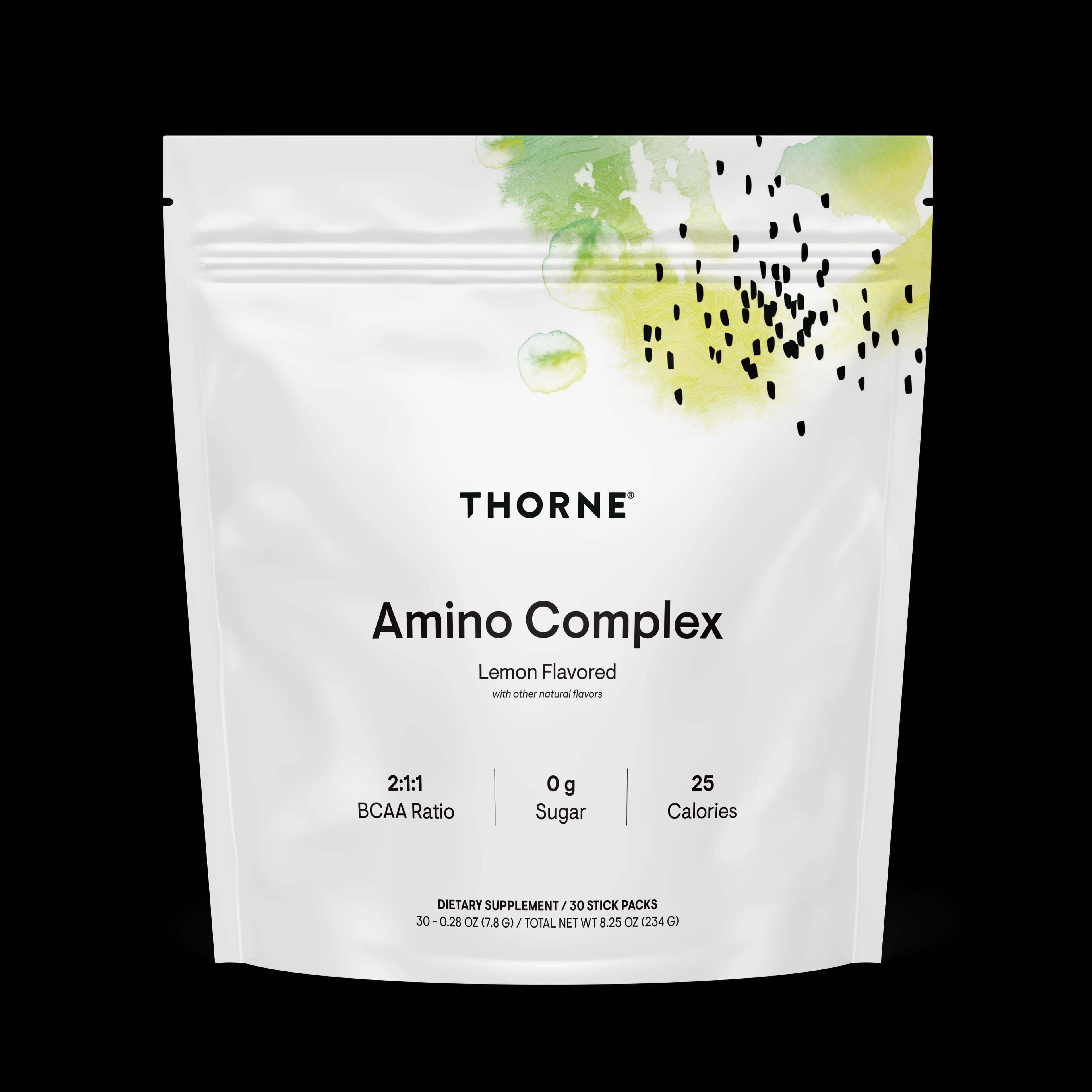
Thorne's Amino Complex provides a comprehensive blend of all the essential amino acids, but it is intentionally formulated with a high concentration of these three BCAAs. By providing 1.25 grams of L-Leucine, 625 mg of L-Isoleucine, and 625 mg of L-Valine per serving, the formula ensures that the skeletal muscles receive the immediate signaling molecules and metabolic substrates they need to initiate repair and generate local energy.
The mTORC1 Pathway and Muscle Protein Synthesis
The most famous and heavily researched mechanism of BCAAs—specifically L-Leucine—is their ability to act as a master biological switch for muscle protein synthesis (MPS). To build or repair muscle tissue, the cell must be signaled to start the construction process. This signaling is governed by a complex protein kinase known as the mechanistic Target of Rapamycin Complex 1 (mTORC1). Research published in the Journal of the International Society of Sports Nutrition discusses the theoretical role of BCAAs like leucine in muscle protein synthesis, though it notes that BCAAs alone cannot drive an anabolic response.
The biochemistry of this activation is fascinating. In a fasted or metabolically stressed state, a negative regulatory protein called Sestrin2 binds to and inhibits another protein complex called GATOR2, effectively keeping the mTORC1 pathway turned "off" to conserve energy. When leucine enters the muscle cell, it physically binds to Sestrin2. This binding causes Sestrin2 to release GATOR2, which removes the biochemical brakes on the system. Leucine also interacts with Rag GTPases, helping to move mTORC1 to the lysosomal membrane where it becomes fully activated.
Once mTORC1 is active, it phosphorylates downstream targets like S6K1 and 4E-BP1, signaling the cell's ribosomes to rapidly begin translating mRNA into new muscle proteins. However, as clinical consensus dictates, leucine is only the "foreman" that turns on the machinery. To actually build the muscle, the cell needs all nine essential amino acids to act as the "bricks." This is why a comprehensive EAA formula like Thorne's Amino Complex is vastly superior to isolated BCAA supplements; it provides both the ignition switch (leucine) and the raw materials (the other EAAs) required to successfully complete the muscle repair process.
How Chronic Illness Impacts Muscle and Energy
The Metabolic Shift in Long COVID and ME/CFS
In healthy individuals, the body seamlessly shifts between burning carbohydrates and fats to produce the ATP required for daily life. However, in patients with Long COVID and ME/CFS, this elegant metabolic flexibility is often severely compromised. Recent systems biology modeling and metabolomics studies have revealed that these conditions are characterized by profound mitochondrial dysfunction and a disruption of the Tricarboxylic Acid (TCA) cycle, also known as the Krebs cycle.
When the mitochondria cannot efficiently produce ATP from glucose, the body enters a state of perceived starvation and metabolic panic. To keep the vital organs functioning, the body begins to aggressively break down its own skeletal muscle tissue—a catabolic process—to harvest amino acids. These amino acids are then shuttled into alternative metabolic pathways to be burned as emergency fuel. This chronic, low-grade cannibalization of muscle tissue leads to the profound, heavy-limb muscle fatigue that patients experience even at rest.
Furthermore, research published in Nature Communications has demonstrated that patients with Long COVID exhibit significant skeletal muscle abnormalities, including impaired mitochondrial respiration, severe muscle tissue damage following exertion, and a shift toward fast-fatigable muscle fibers. This means the muscles are not only smaller and weaker, but the very engines inside them are damaged, leading to rapid lactic acid accumulation and the debilitating symptom known as post-exertional malaise (PEM).
The "Central Fatigue" Hypothesis and Brain Fog
The depletion of amino acids in chronic illness does not just affect the muscles; it has a profound impact on the brain. This is best explained by the "Central Fatigue Hypothesis." In a healthy state, BCAAs are abundant in the bloodstream. When they reach the blood-brain barrier, they compete for entry with another essential amino acid called tryptophan, using the same LAT1 transport protein. Because BCAAs are usually present in higher concentrations, they limit the amount of tryptophan that can enter the central nervous system.
However, in Long COVID and ME/CFS, the starving peripheral muscles rapidly consume the circulating BCAAs for emergency energy. As peripheral BCAA levels plummet, the ratio of BCAAs to tryptophan in the blood drastically changes. Without BCAAs blocking the gates, massive amounts of free tryptophan flood across the blood-brain barrier. Once inside the brain, this excess tryptophan is rapidly converted into serotonin. While serotonin is often thought of as a "happy" neurotransmitter, massive, unregulated spikes in the brain induce profound lethargy, sleepiness, and the neurocognitive exhaustion that patients describe as "brain fog."
This altered amino acid ratio is a key driver of the neurological symptoms seen in complex chronic illnesses. Studies investigating amino acid profiles have shown that restoring peripheral BCAA levels can help re-establish the competitive balance at the blood-brain barrier, potentially mitigating the influx of tryptophan and alleviating the crushing central nervous system fatigue that accompanies physical exertion.
Sarcopenia and the Cost of Prolonged Bed Rest
Managing conditions like ME/CFS, dysautonomia, and Long COVID often requires strict energy conservation techniques, commonly referred to as pacing. For many patients with severe phenotypes, this necessitates prolonged periods of bed rest to avoid triggering PEM crashes. While radical rest is crucial for preventing neuroimmune exacerbations, it comes with a severe physiological cost: disuse atrophy, or sarcopenia.
Skeletal muscle is highly metabolically active tissue, and the body operates on a strict "use it or lose it" policy. When muscles are not subjected to regular mechanical loading, the mTORC1 pathway remains dormant, and the balance of protein turnover shifts heavily toward degradation. Within just a few weeks of strict bed rest, patients can lose significant amounts of lean muscle mass, which further exacerbates their weakness and makes eventual rehabilitation incredibly difficult.
This creates a vicious cycle. The illness causes mitochondrial dysfunction and fatigue, leading to bed rest. The bed rest causes muscle wasting, which further reduces the body's overall mitochondrial density and metabolic capacity. When the patient finally attempts to increase their activity, their depleted, atrophied muscles are even less capable of handling the demand, triggering a faster and more severe PEM crash. Breaking this cycle requires interventions that can stimulate muscle protein synthesis and preserve lean mass even in the absence of vigorous exercise.
Amino Complex: Supporting Muscle and Mitochondrial Function
Bypassing the Liver for Immediate Muscle Energy
When a patient with Long COVID or ME/CFS consumes Thorne's Amino Complex, the essential amino acids—particularly the BCAAs—provide a unique metabolic advantage. Because BCAAs bypass hepatic (liver) metabolism, they are delivered directly to the skeletal muscle tissue. This is incredibly important for patients suffering from profound fatigue, as it provides an immediate, localized source of fuel that does not require the complex, energy-intensive processing that carbohydrates and fats demand.
Once inside the muscle cell's cytoplasm, the BCAAs undergo a process called transamination. The enzyme branched-chain aminotransferase (BCAT) strips the amino group from the BCAA, converting it into a branched-chain α-keto acid (BCKA). These BCKAs are then rapidly transported directly into the mitochondria, the powerhouses of the cell. This direct routing allows the muscle to bypass several early metabolic bottlenecks that are often impaired in chronic illness, providing a "shortcut" to cellular energy production.
By providing this localized fuel source, BCAA supplementation helps buffer the local energy deficits in the muscle. This is theorized to reduce the rapid accumulation of lactic acid and ammonia—toxic byproducts of anaerobic metabolism that build up when the mitochondria are failing. By keeping the muscle energetically stable for longer, amino acids may help raise the threshold before severe post-exertional malaise is triggered.
Fueling the TCA Cycle and ATP Production
The true magic of amino acids in the context of chronic fatigue lies in their ability to directly feed the mitochondrial engines. Once the BCKAs enter the mitochondrial matrix, they encounter the branched-chain α-keto acid dehydrogenase (BCKDH) complex. This enzyme complex catalyzes the oxidative decarboxylation of the BCKAs, a critical rate-limiting step in energy metabolism.
The breakdown of these amino acids yields two incredibly important metabolic intermediates: acetyl-CoA and succinyl-CoA. These molecules are the direct substrates for the Tricarboxylic Acid (TCA) cycle. As they enter the cycle, they drive the reduction of NAD+ and FAD into NADH and FADH2. These electron carriers then travel to the electron transport chain on the inner mitochondrial membrane, where they fuel the process of oxidative phosphorylation, ultimately generating high yields of ATP.
In vitro cellular studies have demonstrated the profound rescue effect of this pathway. When researchers chemically blocked the normal glucose metabolism of cells—simulating the metabolic blockades seen in Long COVID—the introduction of BCAAs successfully rescued intracellular ATP levels. The amino acids not only fed the TCA cycle directly but also promoted the translocation of glucose transporters (GLUTs) to the cell membrane, forcing the cell to take up more energy from its environment.
Driving Mitochondrial Biogenesis via PGC-1α
Beyond acting as raw fuel, the amino acids in Thorne's Amino Complex act as powerful signaling molecules that prompt the body to build new cellular engines—a process known as mitochondrial biogenesis. This is critical for patients with ME/CFS and Long COVID, whose existing mitochondria are often damaged, fragmented, or dysfunctional due to chronic inflammation and viral persistence.
The primary driver of this process is the BCAA L-Leucine. When leucine activates the mTORC1 pathway to stimulate muscle protein synthesis, it simultaneously triggers a downstream signaling cascade that upregulates a protein called PGC-1α (peroxisome proliferator-activated receptor gamma coactivator 1-alpha). PGC-1α is widely considered the "master regulator" of mitochondrial biogenesis in the human body.
Landmark animal studies have shown that enriching diets with BCAAs significantly increases the expression of PGC-1α in both cardiac and skeletal muscle. This upregulation increases the transcription of mitochondrial DNA, prompts the assembly of new respiratory chain enzymes, and ultimately increases the physical density and functional capacity of the mitochondrial network. By supporting the birth of new, healthy mitochondria, amino acid supplementation helps rebuild the patient's metabolic capacity from the ground up.
Supporting Connective Tissue and Blood Volume
For patients dealing with dysautonomia, particularly postural orthostatic tachycardia syndrome (POTS), amino acids offer additional systemic benefits. Thorne's Amino Complex includes essential amino acids like L-Lysine and L-Threonine, which are critical for the synthesis of collagen and elastin. These structural proteins are necessary for maintaining the integrity and elasticity of blood vessels. Stronger connective tissue in the vascular bed may help reduce the excessive blood pooling in the lower extremities that triggers the rapid heart rate and dizziness characteristic of POTS.
Furthermore, amino acids are osmotically active molecules. When absorbed into the bloodstream, they help draw water into the intravascular space, supporting blood volume expansion. Because chronic hypovolemia (low blood volume) is a primary driver of orthostatic intolerance in dysautonomia, ensuring adequate circulating amino acid levels can be a supportive strategy alongside high sodium and fluid intake to maintain hemodynamic stability.

Symptoms Amino Complex May Help Manage
Profound Muscle Fatigue: By bypassing the liver and entering the skeletal muscle directly, BCAAs provide an immediate source of localized ATP, buffering the energy deficits that make limbs feel heavy and exhausted.
Brain Fog and Neurocognitive Exhaustion: By restoring peripheral BCAA levels, supplementation helps re-establish the competitive balance at the blood-brain barrier, helping to limit excess tryptophan from entering the brain and converting into lethargy-inducing serotonin.
Post-Exertional Malaise (PEM) Severity: By feeding the TCA cycle with acetyl-CoA and succinyl-CoA, amino acids help maintain mitochondrial ATP production during physical stress, potentially reducing the accumulation of toxic metabolic byproducts like lactic acid and ammonia that exacerbate PEM crashes.
Muscle Wasting (Sarcopenia) from Bed Rest: The high concentration of L-Leucine acts as a master switch for the mTORC1 pathway, stimulating muscle protein synthesis and helping to preserve lean muscle mass even during periods of strict pacing and prolonged inactivity.
Delayed Onset Muscle Soreness (DOMS): Essential amino acids provide the raw structural building blocks needed to repair micro-tears in muscle fibers following exertion, significantly reducing recovery time and structural pain.
Orthostatic Intolerance (POTS/Dysautonomia): Amino acids like L-Lysine and L-Threonine support the synthesis of vascular collagen, improving blood vessel integrity and reducing venous pooling, while their osmotic properties help support overall blood volume.
Practical Considerations: Forms, Dosing, and Absorption
The "Free-Form" Advantage and Bioavailability
When considering amino acid supplementation, the form of the nutrient is just as important as the dose. Thorne's Amino Complex utilizes "free-form" essential amino acids. This is a crucial distinction from intact dietary proteins like whey, casein, or collagen powders. Intact proteins are large, complex molecules folded into intricate three-dimensional structures. When you consume them, your body must expend significant energy and time using stomach acid and proteases to cleave the peptide bonds and liberate the individual amino acids.
Free-form amino acids, on the other hand, are already completely broken down. They require virtually zero digestion. When dissolved in water and consumed, they pass rapidly through the stomach and are immediately absorbed across the intestinal epithelium into the bloodstream. This rapid absorption creates a massive, concentrated spike in plasma amino acid levels within 15 to 30 minutes. Sports nutrition research emphasizes that while amino acids trigger muscle protein synthesis, all essential amino acids must be present, as supplementing with isolated BCAAs alone actually decreases muscle protein synthesis.
The Importance of the Empty Stomach
To maximize the bioavailability and signaling power of Thorne's Amino Complex, it is highly recommended to take it on an empty stomach. If you consume free-form amino acids alongside a heavy meal, they will mix with the digesting food in your stomach. This delays gastric emptying and forces the free EAAs to compete with the dietary proteins and macronutrients for absorption pathways in the intestines, blunting the rapid plasma spike needed to activate mTORC1.
Furthermore, for patients with chronic illnesses like ME/CFS and dysautonomia, digestion itself is a massive energetic burden. Blood flow is heavily redirected to the splanchnic (gut) bed to process solid food, which can exacerbate fatigue and orthostatic symptoms. Taking EAAs on an empty stomach provides the body with potent, muscle-sparing, and energy-producing nutrients without requiring the energetic tax of digestion. It is an incredibly efficient way to nourish starving cells.
Dosing Protocols and the Leucine Threshold
When dosing essential amino acids, more is not infinitely better. The body has a biological limit on how much protein it can synthesize at one time. To successfully "turn on" the mTORC1 pathway, you must hit what is known as the "leucine threshold." Research suggests this requires approximately 2.5 to 3 grams of leucine per dose for optimal stimulation in healthy adults, though smaller amounts can still provide metabolic benefits. Thorne's formula provides 1.25g of leucine per scoop, meaning a two-scoop serving hits this threshold perfectly.
For patients with chronic illness, a general starting recommendation is 10 to 15 grams of total EAAs (1-2 scoops of Amino Complex) mixed in 8-10 ounces of water, taken once or twice daily. It is particularly beneficial to consume the mixture 30 minutes before any planned physical exertion (like physical therapy or a short walk) to flood the blood with protective amino acids, or immediately afterward to halt catabolic muscle breakdown and initiate the recovery process.
Safety, Allergens, and Contraindications
While essential amino acids are natural compounds required for life, high-dose supplementation requires some clinical consideration. Because amino acids are nitrogenous compounds, their metabolism produces urea and ammonia, which must be cleared by the liver and kidneys. Patients with pre-existing severe renal impairment or hepatic encephalopathy should consult their physician before initiating high-dose amino acid therapy.
Additionally, because BCAAs compete with tryptophan at the blood-brain barrier and influence serotonin synthesis, patients taking selective serotonin reuptake inhibitors (SSRIs) or other psychiatric medications should be monitored to ensure the shift in neurotransmitter precursors does not alter the efficacy of their medications. Thorne's Amino Complex is NSF Certified for Sport®, ensuring it is free of banned substances and rigorous in its purity, but it is contraindicated in individuals with a known hypersensitivity to any of its specific amino acid ingredients. Pregnant or nursing individuals are advised not to use the product without medical supervision.

Follow the Science
Multi-Targeted Amino Acid Therapy for Long COVID
The clinical application of amino acids for post-viral fatigue is rapidly moving from theoretical biochemistry to rigorous clinical trials. One of the most compelling recent developments is the investigation of specific amino acid blends for Long COVID. A Phase IIa, double-blind, randomized controlled trial (NCT05152849) investigated a novel multi-targeted composition known as AXA1125, which consists of five amino acids (leucine, isoleucine, valine, arginine, and glutamine) combined with N-acetylcysteine (NAC).
The researchers hypothesized that the profound exertional fatigue in Long COVID is driven by mitochondrial dysfunction and that a single-molecule approach is insufficient. By providing this specific amino acid composition, the trial aimed to target multiple metabolic pathways simultaneously. The results were highly promising; the composition safely targeted the multifactorial disease pathophysiology and demonstrated significant improvements in physical fatigue scores by supporting mitochondrial energetics and reducing inflammatory oxidative stress.
EAAs and Mitochondrial Intermediates
Further supporting the use of EAAs in post-viral syndromes is a 2023 pilot observational case-control study published in MDPI. This study evaluated 66 COVID-19 survivors who were suffering from severe, persistent chronic fatigue and muscle weakness. The researchers provided the active group with a daily supplement containing all nine essential amino acids, specifically paired with TCA cycle intermediates (citric, succinic, and malic acids) to maximize mitochondrial uptake.
The findings were striking. After the treatment period, the supplemented group demonstrated statistically significant, objective improvements in physical function compared to the control group. The researchers noted measurable improvements in handgrip strength, the skeletal muscle index, the one-minute chair-stand test, and the six-minute walking test. This objective data strongly supports the mechanism that providing the raw materials for both muscle protein synthesis and TCA cycle metabolism can directly improve physical capacity in post-viral fatigue states.
The Brain-Muscle Axis and Central Fatigue
Research into the "Central Fatigue Hypothesis" also provides strong backing for BCAA supplementation. Studies exploring the muscle-brain metabolic axis have detailed how intense physical stress depletes peripheral BCAAs, leading to the massive influx of tryptophan into the brain. By supplementing with BCAAs, researchers have observed a stabilization of the BCAA-to-tryptophan ratio.
This stabilization has been shown to prevent the overproduction of serotonin in the central nervous system during exertion, noticeably delaying perceived exertion and central nervous system fatigue. For patients with ME/CFS, whose central nervous systems are already hypersensitized and prone to neuroinflammation, maintaining this amino acid balance may be a critical piece of the puzzle in managing brain fog and cognitive crashes following physical or mental exertion.
The Path Forward
Integrating Amino Acids with Pacing
Living with a complex chronic illness like Long COVID, ME/CFS, or dysautonomia is an exhausting, daily battle of energy management. When your cells are fundamentally struggling to produce ATP, the resulting muscle fatigue, brain fog, and post-exertional malaise can feel insurmountable. It is incredibly validating to understand that these symptoms are not in your head; they are the direct result of measurable metabolic dysfunction, mitochondrial impairment, and the depletion of critical cellular resources like essential amino acids.
While Thorne's Amino Complex offers a powerful, science-backed tool to support muscle protein synthesis, bypass metabolic bottlenecks, and feed your mitochondria directly, it is important to remember that supplements are not a cure. They are one piece of a comprehensive management puzzle. Providing your body with the raw materials for energy production is vital, but it must be combined with strict pacing and energy conservation. You can learn more about managing your daily energy envelope in our guide on How to Maintain Your Independence with Chronic Illness and our 5 Tips for Surviving the Holidays with a Chronic Illness.
Consult Your Healthcare Provider
By combining targeted nutritional support with radical rest and symptom tracking, you can help rebuild your metabolic foundation and improve your quality of life. Always consult your healthcare provider before starting any new supplement regimen, especially if you are taking prescription medications or have underlying kidney or liver conditions.