Can Essential Amino Acids Support Muscle Preservation and Energy in Long COVID and ME/CFS?
March 6, 2026
Amino AcidsLong COVIDME/CFS
Share:
Disclaimer: The information provided here is for educational purposes only and is not intended as medical advice. It should not be used to diagnose, treat, cure, or prevent any medical condition. Instead, use it as a starting point for discussion with your healthcare provider. Always consult with a qualified healthcare provider before starting any new medication, supplement, device, or making changes to your health regimen.
Months or even years after a viral infection, many individuals find themselves battling a complex web of debilitating symptoms—profound fatigue, muscle weakness, brain fog, and autonomic dysfunction. For patients living with Long COVID, myalgic encephalomyelitis/chronic fatigue syndrome (ME/CFS), dysautonomia, and mast cell activation syndrome (MCAS), the struggle is not just about feeling "tired." It is a fundamental disruption of how the body produces energy, repairs tissue, and communicates at a cellular level. When the body is trapped in a state of chronic metabolic strain, it often begins to cannibalize its own resources just to survive, leading to a cascade of systemic failures.
In the search for validating, science-backed management strategies, researchers have increasingly turned their attention to metabolomics—the study of the tiny molecules that fuel our cells. Recent breakthroughs have revealed that patients with complex chronic illnesses often suffer from profound dysregulation in their amino acid profiles. These essential building blocks of life are being depleted faster than they can be replaced, driving muscle wasting, cognitive exhaustion, and connective tissue fragility. Understanding how essential amino acids (EAAs) and branched-chain amino acids (BCAAs) function in the body offers a crucial window into why these symptoms occur and how targeted supplementation, such as Thorne Amino Complex, may help support cellular recovery and improve quality of life.
TL;DR
Chronic illnesses like Long COVID and ME/CFS disrupt amino acid metabolism, causing fatigue and muscle weakness.
Essential amino acids (EAAs) and BCAAs support cellular energy, muscle preservation, and neurotransmitter balance.
Targeted supplementation may help manage brain fog, post-exertional malaise (PEM), and autonomic dysfunction.
Free-form amino acids offer rapid absorption without digestive strain, ideal for patients with GI issues.
What is an Amino Acid Complex?
The Building Blocks of Life and Cellular Signaling
Amino acids are organic compounds composed of nitrogen, carbon, hydrogen, and oxygen. They are universally recognized as the fundamental building blocks of protein, but their role extends far beyond simple structural support. In a healthy body, amino acids act as critical signaling molecules, neurotransmitter precursors, and metabolic intermediates that fuel the Krebs cycle (also known as the citric acid cycle) for cellular energy production. Of the 20 amino acids required for human life, nine are classified as "essential" amino acids (EAAs). This means the human body lacks the enzymatic machinery to synthesize them internally; they must be acquired entirely through diet or supplementation.
Within this group of nine EAAs lies a specialized subcategory known as branched-chain amino acids (BCAAs), which includes L-Leucine, L-Isoleucine, and L-Valine. They are named for their unique, branch-like molecular structure. Unlike most other amino acids, which are metabolized in the liver, BCAAs bypass liver metabolism and are oxidized directly within skeletal muscle tissue. This direct pathway allows BCAAs to serve as an immediate, highly efficient source of cellular energy during times of physical stress or metabolic demand, making them uniquely critical for muscle health and systemic energy regulation.
The mTORC1 Pathway: The Master Switch for Muscle Synthesis
To understand how amino acids promote the growth of lean muscle mass and support recovery, we must look at a highly conserved biological pathway known as the mechanistic target of rapamycin complex 1 (mTORC1). Think of mTORC1 as the master control switch for cellular growth and protein translation. For muscle hypertrophy (growth) or repair to occur, the rate of muscle protein synthesis must exceed the rate of muscle protein breakdown. The mTORC1 pathway is the primary mechanism that dictates this balance. When activated, it signals the cell to begin assembling new proteins; when suppressed, it halts protein synthesis and allows muscle breakdown to occur.
According to research on amino acid sensing, L-Leucine acts as a direct nutrient sensor and the primary "ignition switch" for this pathway. When leucine enters a muscle cell, it binds to and inhibits a negative regulator protein called Sestrin-2. This inhibition allows a group of molecular switches, known as Rag GTPases, to physically recruit the mTORC1 complex to the surface of the cellular lysosome. Once positioned at the lysosome, mTORC1 encounters another protein called Rheb, which fully activates the complex. This intricate biochemical dance culminates in the phosphorylation of downstream targets like p70S6K1, officially initiating the translation of mRNA into new muscle proteins.
However, while leucine-enriched nutrients are required to start the process of muscle protein synthesis, they cannot finish it alone. Studies have consistently shown a hierarchy in anabolic signaling: a complete profile of all nine essential amino acids produces a significantly stronger and more sustained activation of the mTORC1 pathway compared to BCAAs or leucine in isolation. The body requires the full spectrum of EAAs to physically construct the newly synthesizing proteins, making a comprehensive amino acid complex vital for true tissue repair.
Beyond Muscle: Connective Tissue and Neurotransmitter Precursors
While BCAAs dominate the conversation around muscle health, other essential amino acids play equally vital roles in maintaining systemic homeostasis. L-Lysine and L-Threonine, for example, are indispensable for the structural integrity of connective tissue. Collagen, the most abundant protein in the human body, forms the structural matrix of our skin, tendons, ligaments, and blood vessels. For collagen to have mechanical strength, its individual strands must be covalently cross-linked together. As detailed in research on collagen modifications, L-Lysine is converted into hydroxylysine by the enzyme lysyl hydroxylase, a process that creates these vital cross-links. Without adequate lysine and threonine, connective tissue becomes fragile and overly elastic.
Furthermore, amino acids are the direct chemical precursors to our most important neurotransmitters. L-Tyrosine (a conditionally essential amino acid) crosses the blood-brain barrier and is converted by the enzyme tyrosine hydroxylase into L-DOPA, which is subsequently synthesized into dopamine, norepinephrine, and epinephrine. These catecholamines are the primary chemical messengers of the autonomic nervous system, regulating heart rate, blood pressure, and cognitive focus. Similarly, L-Tryptophan is the sole precursor to serotonin, the neurotransmitter that regulates mood, gastrointestinal motility, and sleep-wake cycles via its downstream conversion into melatonin.
How Chronic Illness Impacts Amino Acid Metabolism
The "Energy Strain" State and Muscle Catabolism
For individuals living with Long COVID and ME/CFS, the body's relationship with energy production is fundamentally altered. Viral infections, chronic inflammation, and oxidative stress can severely damage the mitochondria, the powerhouses of our cells responsible for generating adenosine triphosphate (ATP). When normal mitochondrial pathways fail, the body enters a desperate "energy strain" state. To survive, it begins searching for alternative fuel sources, leading to a destructive process where the body cannibalizes its own muscle tissue to harvest amino acids for emergency energy.
This phenomenon is clearly reflected in recent metabolomic profiling. A 2024 automated machine learning study analyzing ME/CFS patients found that the profound depletion of circulating leucine is one of the strongest discriminatory markers of the disease. Because BCAAs can be oxidized directly in the muscle, the chronically ill body rapidly burns through its BCAA reserves in a futile attempt to bypass damaged metabolic pathways. This chronic BCAA depletion drives the severe muscle weakness, deconditioning, and acquired metabolic inflexibility that patients experience, making even basic daily tasks feel like running a marathon.
The Central Fatigue Hypothesis and Brain Fog
The systemic depletion of amino acids does not just affect the muscles; it has profound, cascading effects on the central nervous system. One of the most debilitating symptoms of Long COVID and ME/CFS is "brain fog"—a severe form of cognitive dysfunction characterized by poor memory, inability to concentrate, and neurological exhaustion. The mechanism behind this may be explained by the "Central Fatigue Hypothesis," which hinges on the delicate balance between BCAAs and L-Tryptophan at the blood-brain barrier.
In a healthy state, BCAAs and L-Tryptophan compete for entry into the brain via the same transport protein, known as the LAT1 transporter. Because they share this doorway, high levels of BCAAs in the blood naturally limit the amount of tryptophan that can enter the brain. However, when a chronic illness heavily depletes peripheral BCAA levels, this competition is lost. Tryptophan floods across the blood-brain barrier unchecked. Once inside the central nervous system, this excess tryptophan is rapidly converted into massive, unregulated spikes of serotonin. While serotonin is often thought of as a "happy" chemical, excessive levels in the brain during the day act as a powerful sedative, driving the profound neurological exhaustion and cognitive slowing that patients describe as brain fog.
Metabolic Dysregulation and Post-Exertional Malaise (PEM)
This amino acid dysregulation is also intimately tied to post-exertional malaise (PEM), the hallmark symptom of ME/CFS where physical or cognitive exertion triggers a disproportionate exacerbation of symptoms. A 2024 systems modeling study revealed that patients with ME/CFS and Long COVID share a severe downregulation of specific amino acid pathways—particularly aspartate and alanine—following exertion. These amino acids are vital intermediates for the Krebs cycle. When their pathways are blocked, the body cannot generate the ATP required to recover from exertion, leading to a prolonged, devastating metabolic crash.
Furthermore, the chronic depletion of amino acids like glutamine and glycine cripples the body's ability to produce glutathione, the master antioxidant. Without adequate glutathione, the body cannot neutralize the massive amounts of oxidative stress generated during exertion. This unchecked oxidative damage perpetuates systemic inflammation, damages endothelial cells (contributing to microvascular clotting), and further impairs mitochondrial function, locking the patient in a vicious, self-perpetuating cycle of cellular dysfunction.
Thorne Amino Complex: Supporting Muscle, Energy, and Connective Tissue
Activating mTORC1 for Muscle Preservation During Pacing
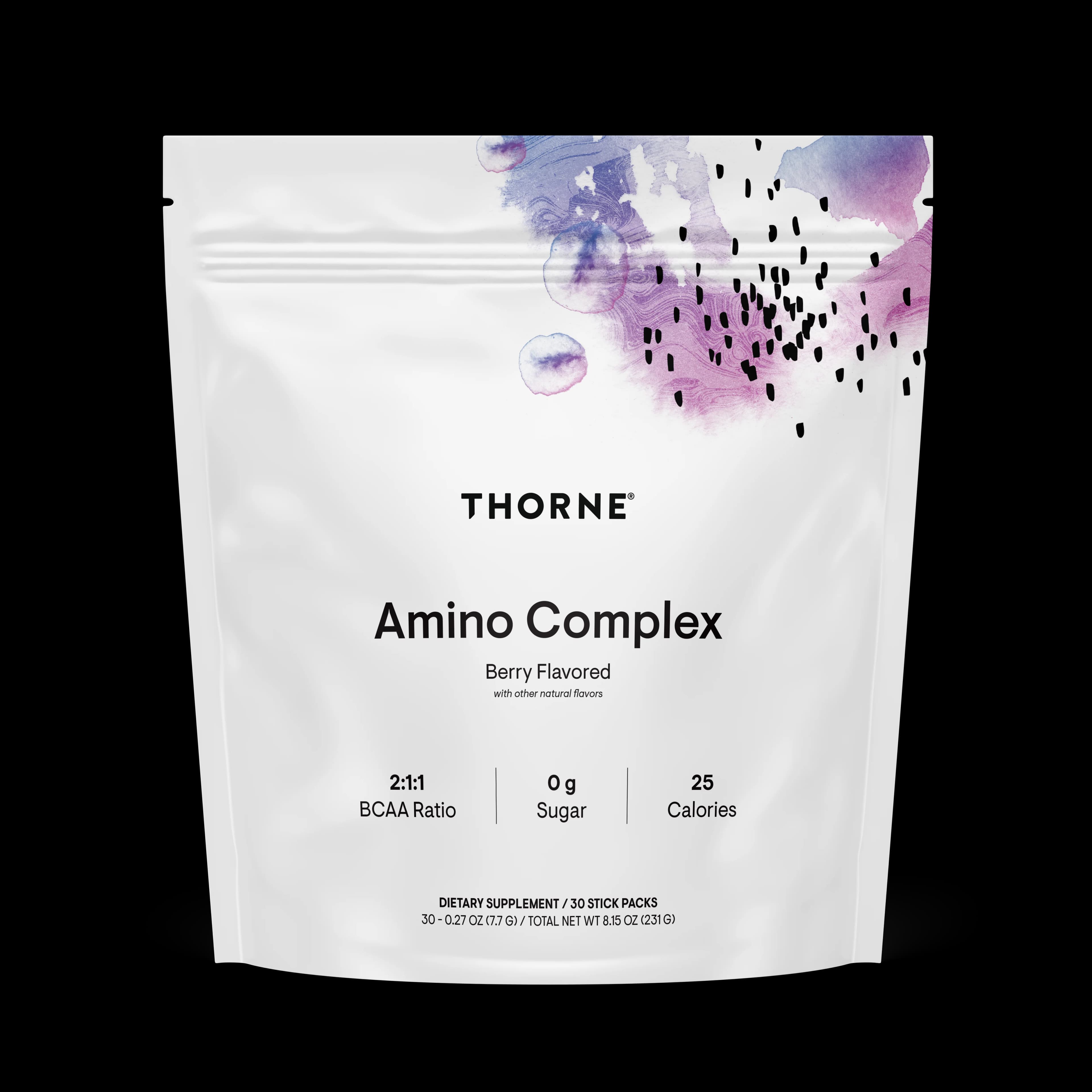
For patients living with ME/CFS and Long COVID, traditional advice to "exercise your way out of deconditioning" is not just unhelpful; it is actively harmful due to the reality of PEM. Patients must engage in strict pacing, which often requires significant periods of rest. However, prolonged inactivity naturally leads to muscle atrophy. Thorne Amino Complex provides a unique physiological workaround. By delivering a highly bioavailable dose of EAAs with a high concentration of BCAAs (particularly 1.25g of L-Leucine per serving), the formula acts as a powerful molecular signal to activate the mTORC1 pathway.
This activation stimulates muscle protein synthesis and helps preserve lean muscle mass without the metabolic cost of physical exertion. Essentially, the amino acids trick the muscles into an anabolic (building) state, helping to mitigate the severe deconditioning that accompanies necessary bedrest and pacing. By providing the exact building blocks the body needs, the formula helps halt the catabolic breakdown of muscle tissue, reducing muscle soreness and supporting overall musculoskeletal integrity.
Fueling the Krebs Cycle and Cellular Energy
Beyond structural support, Thorne Amino Complex directly addresses the "energy strain" state characteristic of complex chronic illnesses. The BCAAs in the formula—L-Isoleucine and L-Valine—are uniquely versatile. They are both glucogenic and ketogenic, meaning they can be converted directly into intermediates that feed the Krebs cycle, such as succinyl-CoA and acetyl-CoA. By providing these readily available metabolic substrates, the supplement offers the mitochondria an alternative fuel source to generate ATP, bypassing some of the damaged enzymatic pathways that hinder normal carbohydrate or fat metabolism.
This direct influx of cellular energy can help alleviate the profound, heavy physical fatigue that patients experience. Furthermore, by restoring circulating levels of BCAAs in the bloodstream, the formula helps re-establish the competitive balance at the blood-brain barrier. By preventing excess L-Tryptophan from flooding the central nervous system, targeted EAA supplementation may help mitigate the unregulated serotonin spikes that drive neurological exhaustion, thereby supporting cognitive clarity and reducing the severity of brain fog.
Supporting Autonomic Function and Neurotransmitter Balance
Dysautonomia, including postural orthostatic tachycardia syndrome (POTS), is a frequent comorbidity in this patient population, characterized by an inability of the autonomic nervous system to properly regulate heart rate and blood vessel constriction. This regulation relies heavily on catecholamine neurotransmitters. Thorne Amino Complex includes L-Tyrosine and L-Phenylalanine, which are the direct biochemical precursors to dopamine, norepinephrine, and epinephrine.
By supplying the raw materials needed for catecholamine synthesis, the formula supports the nervous system's ability to communicate effectively. Adequate norepinephrine is particularly crucial for patients with POTS, as it is required to signal the blood vessels in the lower extremities to constrict upon standing, preventing blood pooling and the subsequent rapid heart rate (tachycardia) that causes dizziness and fainting. Supporting this neurotransmitter pathway is a vital component of managing autonomic dysfunction.
Strengthening Connective Tissue in Hypermobility
There is a highly documented clinical overlap between Long COVID, POTS, MCAS, and hypermobility spectrum disorders (HSD), including hypermobile Ehlers-Danlos Syndrome (hEDS). Patients with these conditions often suffer from fragile connective tissue, leading to joint instability, chronic pain, and vascular issues. Thorne Amino Complex provides targeted support for connective tissue integrity through the inclusion of L-Lysine (650 mg) and L-Threonine (350 mg).
As previously discussed, these two essential amino acids are strictly required for the synthesis and cross-linking of collagen and elastin fibers. While supplementing amino acids cannot rewrite the mutated genetic blueprint of EDS, it ensures that the body has an abundant supply of the necessary building blocks to synthesize whatever connective tissue it can. Preventing a deficiency in lysine and threonine is critical for hypermobile patients, as a lack of these amino acids will rapidly compound existing joint instability and delay the repair of micro-tears in ligaments and tendons.

Symptoms Amino Complex May Help Manage
Muscle Wasting and Deconditioning: By providing a high concentration of L-Leucine to activate the mTORC1 pathway, the complex stimulates muscle protein synthesis, helping to preserve lean muscle mass during periods of necessary rest and pacing.
Post-Exertional Malaise (PEM) and Delayed Recovery: By supplying direct metabolic substrates (BCAAs) that feed the Krebs cycle, the formula offers alternative cellular energy, potentially reducing the severity of metabolic crashes and supporting faster tissue repair after exertion.
Brain Fog and Cognitive Fatigue: By restoring peripheral BCAA levels, the supplement helps regulate the entry of tryptophan into the brain, mitigating the excessive serotonin production that drives neurological exhaustion and cognitive slowing.
Autonomic Dysfunction (POTS/Dysautonomia): The inclusion of L-Tyrosine and L-Phenylalanine provides the necessary precursors for synthesizing norepinephrine and dopamine, supporting the autonomic nervous system's ability to regulate heart rate and blood vessel constriction.
Joint Instability and Connective Tissue Fragility: High doses of L-Lysine and L-Threonine provide the essential building blocks required for collagen cross-linking and elastin production, supporting joint stability in patients with hypermobility spectrum disorders.
Systemic Inflammation and Oxidative Stress: Amino acids like L-Cystine and L-Methionine support the body's methylation cycle and the production of glutathione, the master antioxidant required to neutralize the oxidative damage that drives chronic inflammation.
Practical Considerations: Forms, Dosing, and Absorption
The Advantage of Free-Form Amino Acids
When considering amino acid supplementation, the physical form of the nutrient dictates its clinical efficacy, especially for patients with complex chronic illnesses. Many patients with Long COVID, MCAS, and dysautonomia suffer from severe gastrointestinal dysmotility, gastroparesis, or low stomach acid. Consuming intact dietary protein (like a steak or a standard whey protein shake) requires a massive amount of digestive energy. The body must secrete stomach acid, pepsin, and pancreatic enzymes to break the complex protein structures down into individual amino acids before they can be absorbed in the small intestine.
Thorne Amino Complex bypasses this entirely by utilizing free-form amino acids. Because these amino acids are already isolated and unbound, they require virtually zero digestion. Upon ingestion, they are rapidly absorbed directly through the intestinal wall and into the bloodstream. This rapid absorption not only spares the body the metabolic energy cost of digestion but also ensures a swift, concentrated spike of amino acids in the blood, which is biochemically necessary to trigger the mTORC1 signaling pathway for muscle protein synthesis.
Optimal Timing and Synergistic Absorption
To maximize the therapeutic benefits of Thorne Amino Complex, timing and administration are key. Because amino acids compete for the same transport mechanisms in the gut and at the blood-brain barrier, it is generally recommended to take free-form amino acid supplements away from other heavy protein meals. Taking the supplement on an empty stomach or between meals ensures that the specific ratios of EAAs and BCAAs in the formula are absorbed exactly as intended, without interference from competing dietary amino acids.
For patients who are able to engage in light, paced activity, taking the complex immediately following exertion capitalizes on the body's natural "anabolic window," rapidly delivering the building blocks needed to repair micro-damage and replenish depleted cellular energy stores. Additionally, co-ingesting the amino acids with a small amount of carbohydrate can be beneficial. Carbohydrates trigger a mild insulin response, and insulin works synergistically with leucine to fully activate the mTORC1 pathway, maximizing the signal for muscle preservation.
Purity, Tolerability, and NSF Certification
For patients with mast cell activation syndrome (MCAS) or severe chemical sensitivities, the inactive ingredients in a supplement are just as important as the active ones. Thorne Amino Complex is formulated with tolerability in mind. It is lightly sweetened using flavors and sweeteners derived from natural sources, avoiding the artificial dyes, heavy synthetic sweeteners, and common allergens that frequently trigger mast cell degranulation or gastrointestinal distress.
Furthermore, the product holds the rigorous NSF Certified for Sport® designation. This certification guarantees that the product has been tested by an independent third party for over 290 banned substances, heavy metals, and contaminants, and verifies that the contents of the supplement actually match what is printed on the label. While generally safe, patients should always consult their healthcare provider before starting a new supplement, particularly those with a history of hypersensitivity to specific amino acids or those who are pregnant or nursing.

Follow the Science
Metabolomic Profiling in Long COVID and ME/CFS
The scientific understanding of chronic fatigue and post-viral illness has shifted dramatically from psychological models to hard, measurable metabolic dysfunction. A landmark 2024 metabolomic analysis published in Frontiers in Immunology examined the blood plasma of patients with persistent Long COVID and ME/CFS. The researchers found massive metabolomic separation between the chronically ill patients and healthy controls, specifically highlighting abnormally low levels of cellular ATP and heavily depleted neuro-protective amino acids like serine and aspartate. This data concretely validates the profound "energy strain" state patients experience daily.
Further solidifying this connection, a groundbreaking 2025 artificial intelligence multi-omics study mapped the intricate networks between the gut microbiome, the immune system, and circulating metabolites in ME/CFS patients. The AI models discovered a severe deficit in gut microbes responsible for synthesizing BCAAs. The study proved that this specific BCAA depletion breaks the body's immune regulatory network, causing inflammatory T-cells to aggressively release pro-inflammatory cytokines. This dynamic directly tracked with the patients' self-reported levels of debilitating fatigue, linking amino acid deficiency directly to immune hyperactivation.
The Hierarchy of Muscle Protein Synthesis
In the realm of muscle preservation and recovery, clinical data heavily supports the use of a complete essential amino acid profile over isolated ingredients. Research examining mTORC1 signaling in human muscle fibers demonstrates that while leucine alone can initiate the anabolic signal, it is insufficient for sustained muscle protein synthesis.
A comprehensive review of branched-chain amino acids and inflammation highlights that an optimal dose of 6 to 10 grams of EAAs, containing a high concentration of leucine, significantly upregulates S6K1 phosphorylation (the direct marker of mTOR activation) and enhances post-exertion recovery. The clinical consensus is clear: the body requires the full spectrum of all nine essential amino acids to physically complete the structure of newly synthesized proteins, making comprehensive formulas like Thorne Amino Complex the most evidence-based choice for supporting lean muscle mass and structural integrity.
The Path Forward
Validating the Metabolic Reality of Chronic Illness
Living with a complex chronic condition like Long COVID, ME/CFS, or dysautonomia is an exhausting, unpredictable journey. The profound fatigue, muscle weakness, and brain fog you experience are not in your head; they are the result of measurable, physiological disruptions in how your cells produce energy and communicate. Validating this metabolic reality is the first crucial step toward reclaiming your quality of life. Understanding that your body is operating in a state of chronic energy strain allows you to approach your symptoms with compassion rather than frustration.
While no single supplement can cure the intricate web of systemic dysfunction, providing your body with the precise molecular building blocks it desperately needs can make a meaningful difference. By utilizing a highly bioavailable formula like Thorne Amino Complex, you can help bypass damaged metabolic pathways, activate muscle preservation signals without the cost of exertion, and support the neurotransmitter balance required for autonomic stability.
A Comprehensive Approach to Management
It is important to remember that targeted supplementation is just one piece of a comprehensive, multidisciplinary management strategy. Amino acids work best when integrated with strict symptom tracking, autonomic rehabilitation, and careful pacing to avoid post-exertional malaise. We encourage you to learn more about maintaining your independence with chronic illness and explore strategies like our 5 Tips for Surviving the Holidays with a Chronic Illness for managing the unique demands of daily life.
If you are ready to support your cellular energy, preserve your lean muscle mass, and provide your body with the essential building blocks for recovery, we invite you to explore this targeted formula. Always consult with your healthcare provider before introducing new supplements to ensure they align with your specific medical history and current treatment plan.
Sources
Leveraging Explainable Automated Machine Learning (AutoML) and Metabolomics for ME/CFS (MDPI, 2024)
Systems Modeling Reveals Shared Metabolic Dysregulation in ME/CFS and Long COVID (MDPI, 2024)
BioMapAI: Artificial Intelligence Multi-Omics Modeling of ME/CFS (2025)
mTORC1 Signaling in Individual Human Muscle Fibers Following Resistance Exercise
Branched-Chain Amino Acids and Inflammation Management in Endurance Sports (MDPI)