Can Advanced Digestive Enzymes Relieve Gastrointestinal Symptoms in Long COVID and Dysautonomia?
March 6, 2026
Advanced Digestive EnzymesLong COVIDDysautonomia
Share:
Disclaimer: The information provided here is for educational purposes only and is not intended as medical advice. It should not be used to diagnose, treat, cure, or prevent any medical condition. Instead, use it as a starting point for discussion with your healthcare provider. Always consult with a qualified healthcare provider before starting any new medication, supplement, device, or making changes to your health regimen.
For many individuals living with complex chronic conditions like Long COVID, myalgic encephalomyelitis/chronic fatigue syndrome (ME/CFS), and dysautonomia, the daily battle extends far beyond profound fatigue and brain fog. Gastrointestinal distress—ranging from severe bloating and early satiety to unpredictable bowel habits and debilitating acid reflux—often becomes a central, yet deeply misunderstood, part of the illness experience. Patients frequently report that the simple act of eating triggers a cascade of systemic symptoms, leaving them malnourished, exhausted, and frustrated by a lack of medical answers. When routine structural gastroenterology tests come back "normal," patients are often left without actionable solutions, despite experiencing very real, life-altering digestive failures.
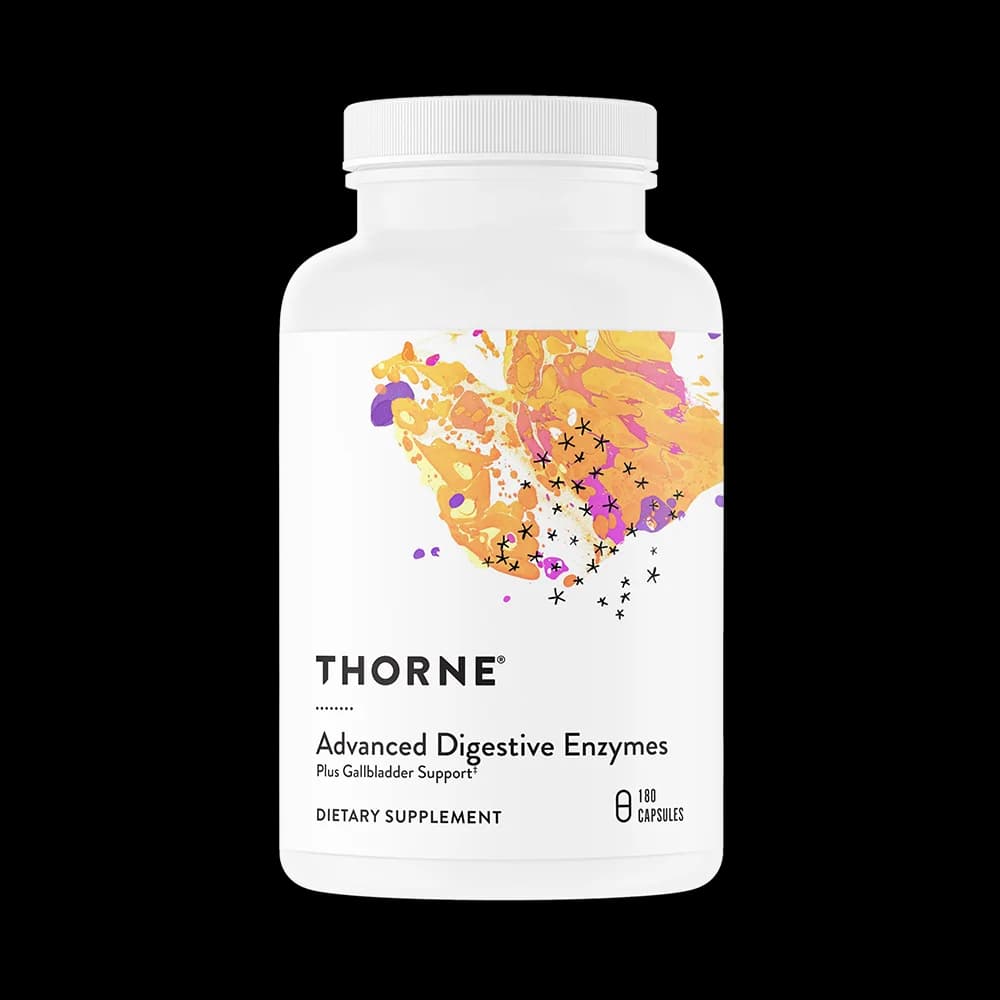
The reality is that digestion is one of the most energy-intensive and neurologically demanding processes in the human body. When the autonomic nervous system is compromised, or when chronic inflammation alters the body's baseline physiology, the fundamental chemical processes required to break down food begin to fail. This is where targeted nutritional support becomes a critical tool in the management of chronic illness. Advanced Digestive Enzymes by Thorne is a comprehensive formulation designed to address these functional deficits. By providing a precise combination of hydrochloric acid, proteolytic enzymes, pancreatic enzymes, and ox bile, this supplement aims to mechanically support the digestive cascade that chronic illness so often disrupts. In this article, we will explore the intricate biochemistry of digestion, how complex conditions dismantle these pathways, and how supplementing with targeted enzymes may help support gastrointestinal function and improve overall quality of life.
TL;DR
Chronic conditions can disrupt digestion, leading to malnutrition and severe gastrointestinal distress.
Advanced Digestive Enzymes provides HCl, pepsin, pancreatin, and ox bile to support nutrient breakdown.
Targeted enzyme supplementation may help support gastrointestinal function and improve energy extraction from food.
What is Advanced Digestive Enzymes?
The Role of Gastric Acid and Pepsin in Protein Digestion
To understand the utility of a comprehensive digestive supplement, we must first examine the natural mechanisms of a healthy gastrointestinal tract. Digestion is not merely a mechanical process of grinding food; it is a highly orchestrated biochemical cascade that begins in the stomach. The stomach lining is heavily populated with specialized epithelial cells, primarily parietal cells and chief cells. Parietal cells are responsible for secreting hydrochloric acid (HCl), a highly corrosive fluid that drops the resting pH of the stomach to an incredibly acidic range of 1.5 to 2.5. This extreme acidity is not a biological accident; it serves multiple vital functions, including sterilizing ingested food by neutralizing opportunistic pathogens and physically uncoiling, or denaturing, complex dietary proteins. Without this initial denaturation, the tightly folded protein structures would remain completely inaccessible to the body's digestive enzymes.
Working in tandem with hydrochloric acid is pepsin, the principal proteolytic (protein-digesting) enzyme of the stomach. Interestingly, the stomach's chief cells do not secrete active pepsin, as doing so would cause the stomach to digest its own cellular walls. Instead, they secrete an inactive precursor molecule known as pepsinogen. When pepsinogen encounters the highly acidic environment created by HCl, it undergoes a rapid conformational change, auto-catalytically cleaving off a specific sequence of amino acids to become active pepsin. Once activated, pepsin binds to peptide bonds within complex protein molecules, specifically targeting bonds adjacent to aromatic amino acids. Using aspartate residues located in its active site, pepsin facilitates the hydrolysis of these bonds, breaking massive protein structures down into smaller, manageable peptide fragments that can be further processed in the small intestine.
Advanced Digestive Enzymes includes both Betaine Hydrochloride (Betaine HCl) and porcine-derived pepsin to replicate this exact physiological environment. Betaine HCl is an acidic form of betaine that serves as a supplemental delivery system for hydrogen ions, directly acting as a gastric acidifier. When taken with a meal, it rapidly lowers the gastric pH to the optimal range required for protein digestion. This artificial re-acidification not only allows the supplemental pepsin included in the capsule to function effectively but also triggers the patient's own native pepsinogen to activate. This synergistic pairing ensures that the foundational first step of protein digestion is executed properly, helping to prevent large, undigested protein macromolecules from passing into the delicate environment of the small intestine.
Pancreatic Enzymes and Macronutrient Breakdown
While the stomach handles the initial breakdown of proteins, the vast majority of chemical digestion and nutrient absorption occurs in the duodenum, the first section of the small intestine. As the acidic, partially digested food mixture (known as chyme) exits the stomach, it triggers the release of hormones like secretin and cholecystokinin (CCK). These hormones signal the pancreas to release a flood of bicarbonate to neutralize the stomach acid, alongside a potent cocktail of digestive enzymes collectively known as pancreatin. Pancreatin is not a single entity, but rather a complex mixture containing three primary classes of enzymes: amylase, protease, and lipase. Each of these enzymes is highly specialized to target specific macronutrient structures, ensuring that carbohydrates, proteins, and fats are reduced to their most basic molecular building blocks.
Amylase is responsible for the hydrolysis of complex carbohydrates and starches, breaking them down into simpler sugars like maltose and dextrin, which can eventually be converted into glucose for cellular energy. Proteases, including trypsin and chymotrypsin, pick up where the stomach's pepsin left off. They further cleave the intermediate peptide fragments into individual amino acids, which are essential for tissue repair, neurotransmitter synthesis, and immune function. Finally, pancreatic lipase is tasked with the complex job of lipid digestion. Lipase chemically hydrolyzes large dietary triglycerides into free fatty acids and monoglycerides. However, because fats are hydrophobic (water-repelling) and the environment of the small intestine is aqueous (water-based), lipase cannot effectively access the fat molecules without assistance. This is where the biliary system becomes absolutely critical to the digestive process.
The Advanced Digestive Enzymes formula provides undiluted, lactose-free porcine pancreatin to directly support this intestinal phase of digestion. By supplying exogenous amylase, protease, and lipase, the supplement ensures that even if the pancreas is under-functioning or if the signaling pathways are disrupted, the chemical breakdown of macronutrients can still proceed. This is particularly crucial for individuals who experience profound fatigue, as the inability to properly extract glucose, amino acids, and fatty acids from food directly starves the mitochondria of the substrates they need to produce adenosine triphosphate (ATP), the body's primary energy currency.
Ox Bile and the Mechanics of Lipid Emulsification
The final, and arguably most complex, component of the digestive triad is bile. Produced by the liver and stored in the gallbladder, bile is a complex fluid composed of water, electrolytes, cholesterol, and, most importantly, bile salts. When fat enters the small intestine, the gallbladder contracts, releasing a concentrated bolus of bile into the duodenum. Bile salts are amphipathic molecules, meaning they possess both a water-loving (hydrophilic) side and a fat-loving (hydrophobic) side. This unique chemical structure allows them to act as powerful biological emulsifiers, functioning much like dish soap acts on a greasy pan. They surround large, coalesced fat globules and break them apart into microscopic droplets known as micelles.
This emulsification process is fundamentally necessary for fat digestion because it exponentially increases the surface area of the lipids. Pancreatic lipase, which is water-soluble, can only work on the surface of fat droplets. Without bile salts breaking the fat down into micelles, lipase would only be able to digest the outermost layer of a fat globule, leaving the vast majority of the dietary fat entirely undigested. This undigested fat then travels through the digestive tract, leading to a condition known as steatorrhea—foul-smelling, greasy, floating stools—and severe malabsorption of fat-soluble nutrients. Furthermore, bile salts are strictly required for the intestinal absorption of essential fat-soluble vitamins, including Vitamin A, Vitamin D, Vitamin E, and Vitamin K, as well as crucial anti-inflammatory compounds like omega-3 fatty acids.
To address this, Advanced Digestive Enzymes includes a concentrated form of ox bile. Biochemically, ox bile is remarkably similar to human bile, containing the exact bile salts necessary to facilitate micelle formation. By providing exogenous ox bile alongside pancreatin, the supplement ensures that the pancreatic lipase has the necessary surface area to effectively hydrolyze dietary fats. This combination is particularly vital for individuals who have undergone a cholecystectomy (gallbladder removal), as they no longer have a reservoir to store and release concentrated bile in response to a fatty meal. Instead, their bile continuously trickles into the intestine, often resulting in insufficient emulsification when a heavy meal is consumed.