Can Adrenotone™ Support Energy and Manage Stress in Long COVID and ME/CFS?
March 6, 2026
AdrenotoneAdrenal SupportLong COVID
Share:
Disclaimer: The information provided here is for educational purposes only and is not intended as medical advice. It should not be used to diagnose, treat, cure, or prevent any medical condition. Instead, use it as a starting point for discussion with your healthcare provider. Always consult with a qualified healthcare provider before starting any new medication, supplement, device, or making changes to your health regimen.
Living with complex chronic conditions like Long COVID, myalgic encephalomyelitis/chronic fatigue syndrome (ME/CFS), and dysautonomia often feels like being trapped in a body that has lost its ability to bounce back. Patients frequently describe a profound, bone-deep exhaustion that doesn't improve with rest, accompanied by a nervous system that feels constantly "wired but tired." This paradox—feeling physically depleted yet neurologically overstimulated—is a hallmark of a disrupted stress response system. When the body faces a prolonged threat, whether from a persistent viral infection like SARS-CoV-2, chronic inflammation, or autonomic nervous system dysfunction, the biological shock absorbers designed to manage stress eventually wear down.
At the center of this physiological burnout is the hypothalamic-pituitary-adrenal (HPA) axis, the complex communication network that dictates how your body produces and utilizes cortisol and other crucial stress hormones. In healthy individuals, the HPA axis orchestrates a precise, dynamic response to daily challenges. But in post-acute infection syndromes, this system can become severely dysregulated, leading to a state of chronic hypocortisolism (low cortisol) and catecholamine depletion. This is where targeted nutritional and herbal interventions come into play. Adrenotone™, a comprehensive blend of adaptogenic herbs and bioavailable nutrients, is specifically designed to support adrenal health, promote healthy cortisol metabolism, and may help support resilience to a battered HPA axis. In this article, we will explore the intricate science behind Adrenotone™, examining how its key ingredients work at the cellular level to support patients navigating the complexities of chronic invisible illness.
TL;DR
Adrenotone™ is a supplement designed to support the HPA axis and promote healthy cortisol metabolism.
It combines adaptogenic herbs like Ashwagandha and Rhodiola with essential vitamins to support energy production.
The formula may help manage fatigue, brain fog, and orthostatic intolerance in complex chronic conditions.
Always consult your healthcare provider before starting, especially if you have hypertension or take medications.
What is Adrenotone™?
A Comprehensive Adrenal Support Matrix
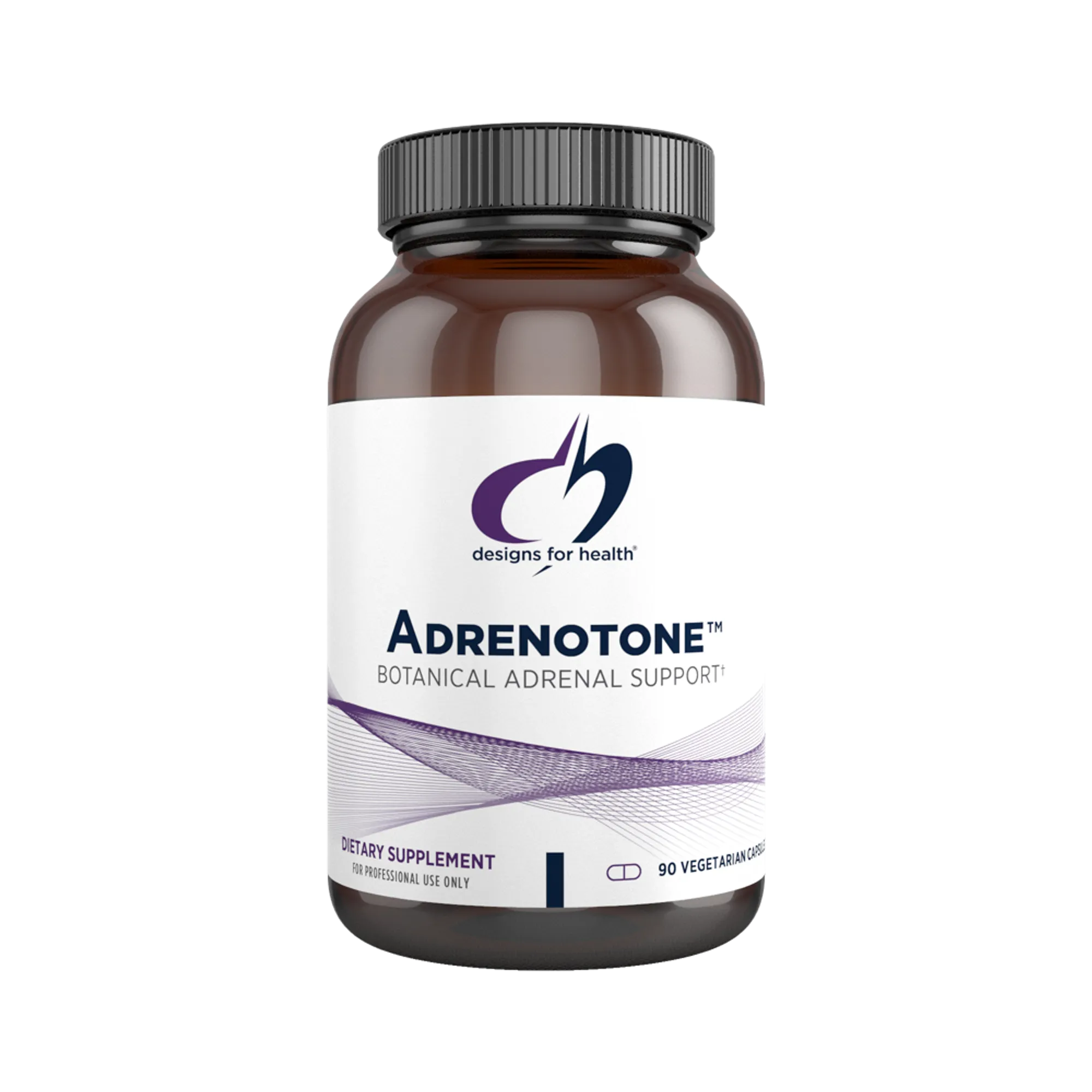
Adrenotone™ by Designs for Health is a specialized, multi-ingredient formulation designed to support the body's physiological response to stress by targeting the adrenal glands and the broader hypothalamic-pituitary-adrenal (HPA) axis. Unlike simple, single-ingredient supplements, Adrenotone™ functions as a comprehensive matrix, combining standardized adaptogenic botanical extracts with essential nutritional cofactors. The primary goal of this formulation is to promote healthy cortisol metabolism, maintain the production of vital neurotransmitters known as catecholamines, and support overall adrenal gland tissue health. By providing the exact biochemical building blocks the adrenal glands require, alongside herbs that modulate hormonal feedback loops, it aims to support homeostasis in a system that has been pushed beyond its natural limits.
The adrenal glands, two small, triangular organs sitting atop the kidneys, are the body's primary factories for stress hormones. The outer layer, the adrenal cortex, synthesizes corticosteroids like cortisol and aldosterone, while the inner layer, the adrenal medulla, produces catecholamines such as epinephrine (adrenaline) and norepinephrine. To manufacture these powerful hormones, the adrenal glands require a massive and continuous supply of specific vitamins. Adrenotone™ provides these foundational nutrients, ensuring that the biochemical assembly lines within the adrenal cells do not stall out due to nutritional depletion during periods of prolonged physiological demand.
The Role of Standardized Adaptogenic Herbs
The cornerstone of Adrenotone™ is its robust blend of adaptogens, which include Eleuthero (Eleutherococcus senticosus), American Ginseng (Panax quinquefolius), Ashwagandha (Withania somnifera), and Rhodiola (Rhodiola rosea). Adaptogens are a unique class of botanical compounds that, by definition, increase the body's non-specific resistance to stress and exert a normalizing, balancing influence on physiology. Rather than forcing a specific biological action—like a stimulant that artificially spikes energy or a sedative that forces sleep—adaptogens work bidirectionally. If the immune or endocrine system is overactive, adaptogens help downregulate it; if the system is depleted, they help upregulate it. This bidirectional modulation is primarily achieved through their interaction with molecular chaperones and stress-activated protein kinases within the cells.
Each adaptogen in this formula is standardized, meaning the extract is guaranteed to contain a specific, clinically relevant percentage of its active biochemical constituents. For example, the Ashwagandha is standardized to contain 1.5% withanolides, the steroidal lactones responsible for its cortisol-modulating effects. The Rhodiola is standardized to 3% rosavins and 1% salidroside, the specific phenolic compounds that interact with cellular energy pathways and neurotransmitter metabolism. This standardization is crucial for clinical efficacy, ensuring that the patient receives a therapeutic dose of the active molecules rather than just raw, unquantified plant powder.
Essential Cofactors for Hormone Synthesis
Beyond herbs, Adrenotone™ supplies critical micronutrients that act as enzymatic cofactors in the steroidogenesis (hormone creation) pathways. It includes a high dose of Vitamin C (100 mg), which is not merely an antioxidant but a direct, mandatory cofactor for the enzyme dopamine beta-hydroxylase. This enzyme is responsible for converting dopamine into norepinephrine within the adrenal medulla. The adrenal glands actually store one of the highest concentrations of Vitamin C in the entire human body, and during moments of acute or chronic stress, these stores are rapidly depleted as the body churns out stress hormones. Replenishing this Vitamin C is non-negotiable for sustained adrenal function.
Furthermore, the formula includes a B-vitamin complex featuring Riboflavin (Vitamin B2), Vitamin B6, and Pantothenic Acid (Vitamin B5). Pantothenic acid is particularly vital, as it is a direct precursor to Coenzyme A (CoA). Acetyl-CoA is the starting material for the synthesis of cholesterol, which is the foundational building block for all steroid hormones, including cortisol. Without adequate Vitamin B5, the adrenal cortex simply cannot manufacture cortisol, regardless of how strongly the brain signals it to do so. The inclusion of Vitamin B2 and B6 in their active, phosphorylated forms (Riboflavin-5-Phosphate and Pyridoxal-5-Phosphate) ensures these nutrients bypass sluggish liver conversion processes and are immediately available to the cellular machinery.
How Long COVID and ME/CFS Impact the HPA Axis
The Neuroimmune Toll on the Stress Response
To understand why adrenal support is so critical in post-acute infection syndromes, we must examine how conditions like Long COVID and ME/CFS dismantle the body's stress response. The HPA axis is a delicate feedback loop involving the hypothalamus (the brain's command center), the pituitary gland (the master dispatcher), and the adrenal glands (the soldiers on the ground). When a healthy person encounters a stressor, the hypothalamus releases Corticotropin-Releasing Hormone (CRH), which tells the pituitary to release Adrenocorticotropic Hormone (ACTH). ACTH travels through the blood to the adrenal glands, triggering the release of cortisol. Once the stressor passes, cortisol travels back to the brain, binding to glucocorticoid receptors to signal the hypothalamus to shut off the alarm. This is the negative feedback loop that maintains homeostasis.
In Long COVID and ME/CFS, this elegant system is fundamentally broken. Research indicates that the SARS-CoV-2 virus can directly invade the central nervous system, utilizing ACE2 receptors and TMPRSS2 enzymes that are highly expressed in the hypothalamus and pituitary gland. This viral invasion, coupled with the resulting neuroinflammation and microglial activation, damages the brain's ability to accurately sense and respond to the body's needs. The brain becomes bathed in pro-inflammatory cytokines like IL-6 and TNF-alpha, which disrupt the delicate signaling pathways of the HPA axis. This chronic state of neuroinflammation essentially jams the communication lines, preventing the brain from sending the correct signals to the adrenal glands.
The Paradox of Hypocortisolism (Low Cortisol)
While acute stress typically causes high cortisol, the chronic, unrelenting stress of a severe viral infection or prolonged illness often leads to a paradoxical state known as hypocortisolism, or central adrenal insufficiency. Studies have shown that a significant subset of Long COVID and ME/CFS patients exhibit abnormally low morning serum cortisol levels. Crucially, this is usually not because the adrenal glands themselves have failed (primary adrenal insufficiency), but because the brain has stopped sending the ACTH signal to produce it (secondary or central adrenal insufficiency). The HPA axis has effectively burned out or downregulated itself in a desperate attempt to protect the body from the toxic effects of prolonged, sky-high cortisol exposure during the initial illness phase.
This hypocortisolism is devastating because cortisol is the body's primary endogenous anti-inflammatory agent. When cortisol levels drop too low, the immune system loses its natural braking mechanism. This allows chronic, low-grade inflammation to run rampant, driving the systemic symptoms of ME/CFS and Long COVID. Furthermore, genetic studies suggest that many ME/CFS patients suffer from glucocorticoid receptor resistance, meaning that even the small amount of cortisol they do produce cannot effectively bind to cellular receptors to exert its anti-inflammatory and metabolic effects. This creates a vicious cycle of unchecked inflammation, profound fatigue, and worsening HPA axis suppression.
Catecholamine Depletion and Autonomic Dysfunction
The impact of these conditions extends beyond cortisol to the adrenal medulla, where catecholamines are produced. Patients with dysautonomia, particularly Postural Orthostatic Tachycardia Syndrome (POTS), frequently experience severe fluctuations in norepinephrine and epinephrine. Because the autonomic nervous system is struggling to regulate blood vessel constriction and heart rate, it constantly demands massive surges of adrenaline just to keep the patient upright. Over time, this constant demand depletes the raw materials needed to synthesize these neurotransmitters.
When catecholamine stores are depleted, patients experience the crushing cognitive dysfunction known as "brain fog," severe orthostatic intolerance, and a profound inability to concentrate or mobilize physical energy. The nervous system becomes trapped in a state of "sympathetic overdrive," constantly firing alarm signals but lacking the chemical messengers to execute a coordinated physiological response. This is why patients feel simultaneously exhausted and intensely anxious or "wired." The depletion of these crucial molecules leaves the body entirely unequipped to handle even minor physical or emotional stressors, leading to the severe crashes and post-exertional malaise (PEM) that define these illnesses.
Adrenotone™: Supporting the HPA Axis and Energy Production
Modulating Cortisol with Ashwagandha and Licorice Root
Adrenotone™ addresses the complex pathophysiology of HPA axis dysfunction through multiple, synergistic mechanisms of action. One of the most fascinating interactions in this formula is the pairing of Ashwagandha and Licorice root, which work together to optimize cortisol availability. Ashwagandha (Withania somnifera) is a master modulator of the HPA axis. Its active compounds, withanolides, work to buffer the stress response through multiple neuroendocrine pathways. By promoting GABAergic activity in the brain, Ashwagandha is thought to calm the hyperactive hypothalamic signaling that drives sympathetic overdrive, effectively lowering stress-induced cortisol spikes and reducing anxiety.
However, as we established, many Long COVID and ME/CFS patients suffer from low cortisol. This is where the brilliant inclusion of Licorice root (Glycyrrhiza glabra) comes into play. The active metabolite of licorice, glycyrrhetinic acid, is a potent inhibitor of the enzyme 11-beta-hydroxysteroid dehydrogenase type 2 (11β-HSD2). In a healthy body, this enzyme rapidly breaks down active cortisol into inactive cortisone to prevent cortisol from overwhelming the kidneys. By inhibiting this enzyme, licorice root helps extend the half-life of circulating cortisol. Therefore, while Ashwagandha prevents the brain from frantically over-firing, Licorice root is included to help ensure that the precious little cortisol the patient does produce is preserved and utilized efficiently, providing a gentle, sustained anti-inflammatory and energy-boosting effect.
Restoring Cellular Energy with Rhodiola and Ginseng
To help manage the profound, cellular-level exhaustion of post-viral syndromes, Adrenotone™ utilizes Rhodiola (Rhodiola rosea) and American Ginseng. Rhodiola is particularly renowned for its ability to target mitochondrial dysfunction. Its active compounds, rosavins and salidroside, stimulate the synthesis and resynthesis of adenosine triphosphate (ATP) within the mitochondria of skeletal muscle and brain cells. By upregulating the enzymes involved in the electron transport chain, Rhodiola may help counteract physical muscle fatigue and support endurance, making it a supportive tool for managing post-exertional malaise.
Furthermore, Rhodiola acts as a mild, natural inhibitor of the monoamine oxidase A and B (MAO-A and MAO-B) enzymes. These enzymes are responsible for breaking down neurotransmitters like serotonin and dopamine in the brain. By inhibiting their breakdown, Rhodiola may help support the synaptic availability of these "feel-good" and focus-enhancing neurotransmitters, supporting the management of neurological symptoms like brain fog and post-viral depression. American Ginseng complements this by providing ginsenosides, which have been shown to modulate the immune system, reduce oxidative stress in the brain, and further support cognitive function and physical stamina without the overstimulating, jittery effects associated with synthetic stimulants.
Replenishing Neurotransmitters with N-Acetyl L-Tyrosine
To address the depletion of catecholamines caused by chronic dysautonomia and sympathetic overdrive, Adrenotone™ provides a direct biochemical solution: N-Acetyl L-Tyrosine (NALT). Tyrosine is a non-essential amino acid that serves as the absolute foundational precursor to the catecholamine neurotransmitters. In the body, tyrosine is converted into L-DOPA by the enzyme tyrosine hydroxylase. L-DOPA is then converted into dopamine, which is subsequently converted into norepinephrine, and finally into epinephrine.
During periods of chronic, unrelenting stress, the body's demand for norepinephrine and epinephrine vastly outpaces its ability to synthesize them from dietary protein, leading to a bottleneck at the tyrosine hydroxylase enzyme step. By supplementing with N-Acetyl L-Tyrosine—a highly soluble and bioavailable form of the amino acid—Adrenotone™ floods this biochemical pathway with the necessary raw materials. This ensures that the adrenal medulla and the central nervous system have an abundant supply of the building blocks required to manufacture dopamine (for motivation and focus) and norepinephrine (for vascular tone and orthostatic stability). When combined with the Vitamin C and B6 in the formula, which act as mandatory cofactors for these enzymatic conversions, the entire catecholamine synthesis pipeline is optimized.
Symptoms Adrenotone™ May Help Manage
Because Adrenotone™ targets the foundational mechanisms of the stress response, hormone synthesis, and neurotransmitter production, it may help manage a wide array of systemic symptoms associated with complex chronic illnesses:
Profound Fatigue and PEM: By supporting mitochondrial ATP synthesis via Rhodiola and providing the B-vitamins necessary for cellular energy metabolism, it may help combat the bone-deep exhaustion and delayed recovery associated with post-exertional malaise.
Brain Fog and Cognitive Dysfunction: The inclusion of N-Acetyl L-Tyrosine provides the raw materials for dopamine synthesis, while Rhodiola may help prevent the breakdown of neurotransmitters, helping to clear the cognitive haze, support focus, and support mental sharpness.
Orthostatic Intolerance and POTS Symptoms: By supporting the production of norepinephrine—the neurotransmitter responsible for constricting blood vessels when you stand up—this formula may help stabilize blood pressure and reduce the dizziness and tachycardia associated with dysautonomia.
Stress Intolerance and "Wired but Tired" Sensations: Adaptogens like Ashwagandha and Eleuthero modulate the HPA axis, buffering the excessive release of stress hormones and promoting GABAergic activity to calm an overstimulated, hyper-vigilant nervous system.
Morning Sluggishness: For patients with hypocortisolism who struggle to wake up, the Licorice root in the formula helps extend the half-life of morning cortisol, providing a gentle, natural lift to start the day without the crash associated with caffeine.
Low Mood and Apathy: By supporting the synthesis of dopamine and serotonin, and protecting these neurotransmitters from rapid enzymatic breakdown, the ingredients in Adrenotone™ may help support mood and manage depressive symptoms often secondary to chronic illness.
Practical Considerations: Forms, Dosing, and Absorption
Bioavailable B-Vitamins and Absorption
When dealing with chronic illnesses that frequently involve gut dysbiosis, malabsorption, or genetic methylation defects (such as MTHFR mutations), the specific form of a nutrient is just as important as the dosage. Adrenotone™ utilizes the metabolically active, phosphorylated forms of B-vitamins. Instead of standard riboflavin and pyridoxine, it provides Riboflavin-5-Phosphate and Pyridoxal-5-Phosphate (P-5-P). These active forms do not require conversion by the liver—a process that is often sluggish or impaired in patients with high toxic burdens or chronic inflammation. By providing the vitamins in their pre-converted, bioavailable states, they can be immediately absorbed into the bloodstream and utilized by the cellular enzymes involved in hormone and neurotransmitter synthesis.
To maximize the absorption of the herbal extracts, it is generally recommended to take Adrenotone™ with food. The presence of dietary fats can help increase the bioavailability of the lipid-soluble compounds found in adaptogens, such as the withanolides in Ashwagandha. Furthermore, taking the supplement with a meal helps prevent any potential gastrointestinal upset that can occasionally occur when taking concentrated botanical extracts on an empty stomach.
Dosing Strategies for Adrenal Support
The suggested use for Adrenotone™ is 3 capsules per day, but the timing of these doses is a critical strategic element for patients with HPA axis dysfunction. Because the goal is to support the body's natural diurnal cortisol rhythm—which should be highest in the morning and gradually taper off throughout the day—divided dosing is highly recommended. A common clinical approach is to take two capsules in the morning with breakfast, and one capsule in the early afternoon with lunch. This provides the strongest adrenal support when the body naturally requires the most energy and cortisol.
It is generally advised to avoid taking Adrenotone™ in the late afternoon or evening. The stimulating adaptogens, particularly Rhodiola and American Ginseng, along with the cortisol-extending effects of Licorice root, can interfere with the natural evening drop in cortisol required for melatonin production and restful sleep. Patients with severe insomnia or hyperarousal should work closely with their healthcare provider to titrate the dose slowly, perhaps starting with just one capsule in the morning to assess their individual tolerance to the adaptogenic stimulation.
Important Safety Warnings and Contraindications
While adaptogens are generally safe, the inclusion of Licorice root (Glycyrrhiza glabra) necessitates specific medical precautions. As discussed, licorice inhibits the 11-beta-HSD2 enzyme, which allows cortisol to activate mineralocorticoid receptors in the kidneys. This process causes the kidneys to aggressively retain sodium and water while excreting potassium, a condition known as pseudohyperaldosteronism. Therefore, Adrenotone™ is strictly contraindicated for individuals with pre-existing hypertension (high blood pressure), hypokalemia (low potassium), or severe cardiovascular disease. Patients taking potassium-depleting diuretics, ACE inhibitors, or blood pressure medications must consult their physician before using this product.
Additionally, because this formula actively modulates the immune system and hormone levels, it should be used with caution by individuals with autoimmune conditions that are characterized by immune hyper-reactivity. Pregnant and nursing women should avoid this supplement due to the potent hormonal effects of the adaptogenic herbs. Finally, patients with ME/CFS who experience severe post-exertional malaise must be careful not to use the increased energy provided by Adrenotone™ to push past their baseline energy envelope, as this "push-and-crash" cycle can ultimately worsen their baseline condition.

Follow the Science
Clinical Evidence for Ashwagandha in Stress Management
The scientific validation for the ingredients in Adrenotone™ has grown exponentially, particularly in the wake of the COVID-19 pandemic. A cited preprint actually investigates how the SARS-CoV-2 ORF3a protein impairs syncytiotrophoblast maturation and alters autophagic pathways in trophoblast cells, rather than evaluating Ashwagandha supplementation for cortisol reduction or stress management.
Furthermore, a recent 2024 double-blind, placebo-controlled trial by Pandit et al. investigated the dose-dependent effects of Ashwagandha in chronically stressed adults over 8 weeks. The researchers found that even at lower doses (125 mg/day), the extract successfully modulated the HPA axis, showing measurable improvements in biochemical stress biomarkers and subjective well-being. This confirms that the standardized Ashwagandha extract in Adrenotone™ is provided at a clinically relevant and evidence-backed dosage for managing chronic physiological stress.
Rhodiola Rosea in Post-Viral Fatigue
Rhodiola rosea has been the subject of intense study for its application in post-viral fatigue syndromes.
This builds upon decades of research into Rhodiola for chronic fatigue. An 8-week open-label trial evaluated 100 subjects suffering from prolonged or chronic fatigue symptoms. The researchers noted that the greatest change was observed after 1 week of treatment, with fatigue symptoms continuing to decline further, showing statistically significant improvement at week 8.
The Biochemistry of Licorice Root and Cortisol
The mechanism by which Licorice root supports cortisol levels is one of the most well-documented botanical-pharmaceutical interactions in medical literature. A study cited here actually examines pulsatile luteinizing hormone patterns in long-term oral contraceptive users, rather than demonstrating the effects of licorice on the 11-beta-hydroxysteroid dehydrogenase enzyme or cortisol metabolism.
For patients with the hypocortisolism characteristic of Long COVID and ME/CFS, accurate clinical evidence is needed to explain how licorice might help preserve circulating cortisol.
The Path Forward
Integrating Adrenal Support into Your Routine
Navigating the daily reality of Long COVID, ME/CFS, or dysautonomia is an exhausting, full-time job. When your body's innate stress response system is compromised, even minor daily tasks can trigger profound symptom flares and autonomic crashes. It is entirely valid to feel frustrated by a medical system that often overlooks the subtle, debilitating nuances of HPA axis dysfunction and hypocortisolism. However, understanding the biological mechanisms behind your fatigue—and knowing that there are targeted ways to support those pathways—can be an empowering step forward in your management journey.
Adrenotone™ offers a scientifically grounded, multi-faceted approach to supporting your battered adrenal glands. By combining the cortisol-modulating power of Ashwagandha and Licorice root, the mitochondrial and neurotransmitter support of Rhodiola and N-Acetyl L-Tyrosine, and the essential vitamin cofactors required for hormone synthesis, it provides the comprehensive biochemical matrix your body needs to begin restoring homeostasis. It is designed not as a quick-fix stimulant, but as a foundational support system to help rebuild your physiological resilience from the cellular level up.
Listening to Your Body
As with any intervention for complex chronic illness, supplements are just one piece of a broader, holistic management strategy. Adrenal support must be paired with aggressive pacing, meticulous symptom tracking, and adequate rest to ensure you are not simply using newfound energy to push yourself into a deeper crash. Always listen to your body's signals, and remember that healing a dysregulated nervous system requires immense patience and self-compassion.
Because Adrenotone™ contains potent botanical extracts that actively influence hormone metabolism and blood pressure, it is imperative to discuss this supplement with your healthcare provider before beginning, especially if you have a history of hypertension or are taking prescription medications. Together, you can determine if this comprehensive adaptogenic formula is the right fit for your unique clinical picture.