Can Unmethylated B12 Support Energy and Nerve Health in Long COVID and ME/CFS?
March 5, 2026
Adenosyl/Hydroxy B12Long COVIDME/CFS
Share:
Disclaimer: The information provided here is for educational purposes only and is not intended as medical advice. It should not be used to diagnose, treat, cure, or prevent any medical condition. Instead, use it as a starting point for discussion with your healthcare provider. Always consult with a qualified healthcare provider before starting any new medication, supplement, device, or making changes to your health regimen.
When you are living with complex chronic conditions like Long COVID, Myalgic Encephalomyelitis/Chronic Fatigue Syndrome (ME/CFS), dysautonomia, or Mast Cell Activation Syndrome (MCAS), the search for answers can feel like navigating a labyrinth in the dark. You might be dealing with debilitating fatigue that leaves you bedbound after a simple trip to the grocery store, or a racing heart that makes standing up feel like running a marathon. Often, standard blood tests come back "normal," leaving you frustrated and without a clear path forward. However, emerging research into cellular metabolism and neuroinflammation is shedding light on why these symptoms occur and how specific, targeted nutrients can help.
One of the most critical areas of focus is mitochondrial health and nervous system integrity. This is where specialized forms of Vitamin B12, specifically adenosylcobalamin and hydroxycobalamin, come into play. Unlike the standard, synthetic B12 found in most over-the-counter multivitamins, these unmethylated, highly active forms work directly at the cellular level to reignite energy production, scavenge toxic byproducts of inflammation, and repair damaged nerves. In this comprehensive guide, we will explore the intricate biochemistry of Adenosyl/Hydroxy B12 Liquid, how chronic illness disrupts these vital pathways, and why this specific formulation may be a crucial piece of your symptom management puzzle.
TL;DR
Targeted B12 forms (adenosylcobalamin and hydroxycobalamin) support mitochondrial energy and nervous system health.
Unmethylated B12 is ideal for sensitive individuals, avoiding overmethylation symptoms like anxiety or rapid heart rate.
Liquid sublingual formulations bypass gut absorption issues, delivering nutrients directly to the bloodstream.
Research suggests B12 may help manage fatigue, brain fog, and autonomic dysfunction in chronic conditions.
What is Adenosyl/Hydroxy B12 Liquid?
The Dual Nature of Vitamin B12
Vitamin B12, scientifically known as cobalamin, is a highly complex, water-soluble vitamin that is absolutely essential for human survival. It is responsible for a vast array of physiological processes, including red blood cell formation, DNA synthesis, and the maintenance of the central and peripheral nervous systems. Structurally, cobalamin consists of a rare corrin ring surrounding a central cobalt atom. However, Vitamin B12 is not a single, uniform chemical; it exists in several different forms, known as "vitamers," depending on the specific molecule attached to that central cobalt atom. While the mainstream supplement market is flooded with cyanocobalamin—a cheap, synthetic form that requires the body to expend energy to detoxify a cyanide molecule—functional medicine and chronic illness management rely on naturally occurring, bioidentical forms.
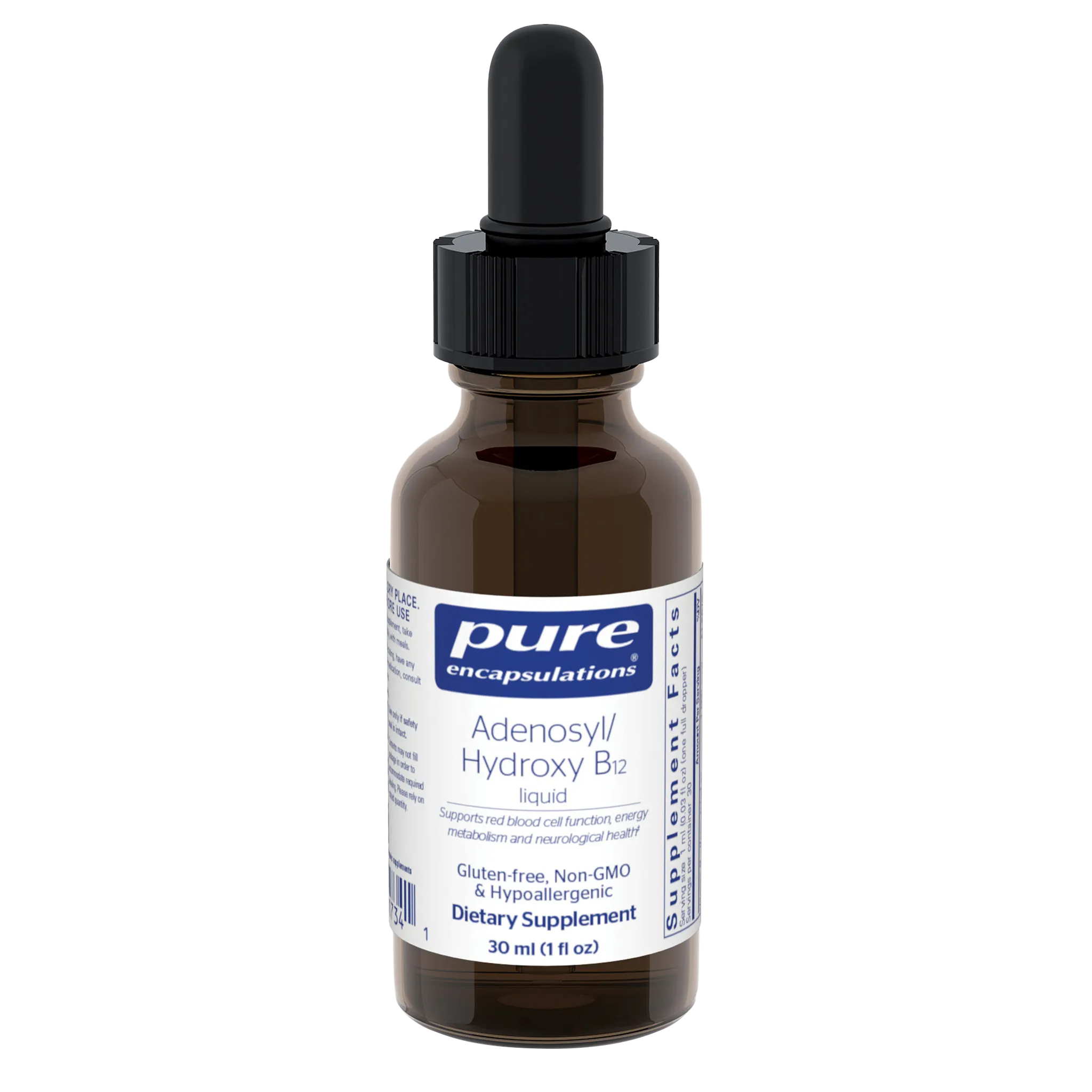
Adenosylcobalamin and hydroxycobalamin represent two vital, yet functionally distinct, forms of Vitamin B12. They are often blended together in liquid formulations to provide comprehensive cellular support without relying on methylation. To understand why this specific combination is so powerful, we must look at how each form operates at the molecular level. They do not simply float in the bloodstream; they are actively transported into specific cellular compartments where they act as essential coenzymes—the biological "keys" that turn on critical enzymatic engines.
Adenosylcobalamin: The Mitochondrial Engine
Adenosylcobalamin (where the ligand attached to the cobalt atom is a 5'-deoxyadenosyl group) is one of the two biologically active coenzyme forms of Vitamin B12 in the human body. Its primary domain is inside the mitochondria, the microscopic powerhouses responsible for generating adenosine triphosphate (ATP), which is the energy currency of the cell. Within the mitochondria, adenosylcobalamin serves as an absolute, non-negotiable requirement for the function of an enzyme called methylmalonyl-CoA mutase (MUT).
The MUT enzyme plays a critical role in the catabolic breakdown of odd-chain fatty acids, cholesterol, and certain branched-chain amino acids (like isoleucine and valine). Adenosylcobalamin facilitates a complex biochemical reaction that converts L-methylmalonyl-CoA into succinyl-CoA. This conversion is a major metabolic checkpoint. Succinyl-CoA is a crucial intermediate that feeds directly into the tricarboxylic acid (TCA) cycle, also known as the Krebs cycle. When the Krebs cycle spins efficiently, the cell produces abundant ATP, giving your muscles the energy to move and your brain the energy to think clearly.
When the body lacks intracellular adenosylcobalamin, this entire mitochondrial assembly line grinds to a halt. L-methylmalonyl-CoA cannot be converted, leading to a massive cellular buildup of methylmalonic acid (MMA). Not only does this bottleneck starve the cell of ATP, but the accumulating MMA is highly neurotoxic. The nervous system erroneously incorporates these abnormal, branched fatty acids into neuronal lipids, which destabilizes the myelin sheath—the protective coating around your nerves. Therefore, adenosylcobalamin is not just an energy producer; it is a fundamental protector of neurological structural integrity.
Hydroxycobalamin: The Systemic Scavenger
Hydroxycobalamin (or hydroxocobalamin) is a naturally occurring precursor form of Vitamin B12, where a hydroxyl group is attached to the central cobalt atom. While it must be converted by the body into active coenzyme forms, its unique molecular structure makes it incredibly valuable in its own right. Hydroxycobalamin is highly prized in clinical medicine for its excellent bioavailability, strong binding affinity to plasma proteins, and exceptionally long retention time in the body. In fact, it is the standard, first-line injectable therapy used globally to manage severe neurological B12 deficiencies and pernicious anemia.
Beyond its role as a nutrient precursor, hydroxycobalamin acts as a potent systemic scavenger. The central cobalt atom in hydroxycobalamin has a high affinity for toxic compounds. It is famously used in emergency medicine as an FDA-approved, life-saving antidote for acute cyanide poisoning. When administered, it directly binds to toxic cyanide ions, forming harmless cyanocobalamin, which is then safely excreted in the urine.
In the context of chronic illness, this scavenging ability takes on a different, yet equally vital, role. Hydroxycobalamin is uniquely capable of binding to and neutralizing excess nitric oxide (NO) and peroxynitrite radicals. As we will explore, the overproduction of nitric oxide is a hallmark of post-viral neuroinflammation and autonomic dysfunction. By acting as a molecular "sponge" for these inflammatory toxins, hydroxycobalamin helps to calm the cellular environment, reduce oxidative stress, and pave the way for mitochondrial recovery.
How Chronic Illness Impacts Cellular Energy and Nerves
The Mitochondrial Energy Crisis in ME/CFS and Long COVID
To understand why targeted B12 supplementation is so relevant, we must examine the underlying pathophysiology of conditions like Long COVID and ME/CFS. If you are wondering What Causes Long COVID?, current research points heavily toward a profound, systemic "energy crisis." Following a viral infection, the immune system can become locked in a state of chronic activation. This relentless immune response generates massive amounts of oxidative stress and inflammatory cytokines, which directly assault the mitochondria.
Groundbreaking research into ME/CFS has demonstrated that the mitochondria in these patients are often fragmented, sluggish, and unable to meet the body's energy demands. When the mitochondria are damaged, they cannot efficiently process the raw materials needed for the Krebs cycle. If intracellular adenosylcobalamin is depleted by this oxidative stress, the crucial conversion of methylmalonyl-CoA to succinyl-CoA fails. The result is a catastrophic drop in ATP production. This is the biochemical reality behind post-exertional malaise (PEM)—the debilitating "crash" that occurs when patients exceed their broken energy envelope. Your cells literally run out of battery power, and the toxic buildup of metabolic waste products causes profound muscle weakness and cognitive dysfunction.
Nitric Oxide Toxicity and the NO/ONOO- Cycle
Another major piece of the chronic illness puzzle is the NO/ONOO- (Nitric Oxide/Peroxynitrite) cycle, a mechanism heavily researched in the context of ME/CFS and post-viral fatigue. When the body is fighting an infection, it naturally produces nitric oxide (NO) as a defense mechanism. However, in post-viral syndromes, this production doesn't shut off. The excess nitric oxide reacts with superoxide radicals to form peroxynitrite, a highly destructive oxidant that damages cellular membranes, proteins, and DNA.
This vicious cycle of oxidative stress directly paralyzes the mitochondrial electron transport chain. Furthermore, nitric oxide is a potent vasodilator—it causes blood vessels to widen and relax. When nitric oxide levels are chronically elevated, it can lead to inappropriate blood pooling in the lower extremities, a primary driver of orthostatic intolerance. The body is essentially suffocating its own energy production while simultaneously disrupting normal blood flow, creating a perfect storm of fatigue, brain fog, and dizziness.
Myelin Degradation and Autonomic Neuropathy in POTS
Dysautonomia, particularly Postural Orthostatic Tachycardia Syndrome (POTS), frequently co-occurs with Long COVID and ME/CFS. A significant driver of dysautonomia is small fiber neuropathy—damage to the tiny, unmyelinated or thinly myelinated nerve fibers that control involuntary autonomic functions like heart rate, blood pressure, and digestion. When these nerves are damaged, they fail to send the proper signals to constrict blood vessels when you stand up. To compensate for the dropping blood pressure, the brain triggers a massive release of adrenaline, causing the hallmark rapid heart rate (tachycardia) of POTS.
Vitamin B12 is absolutely critical for the synthesis and maintenance of the myelin sheath that protects these delicate nerves. As mentioned earlier, a lack of adenosylcobalamin leads to the accumulation of toxic methylmalonic acid (MMA), which forces the body to build weak, abnormal fatty acids into the nerve sheaths. Over time, this chronic neurotoxicity and demyelination lead directly to autonomic neuropathy. For patients wondering Can Long COVID Trigger ME/CFS? Unraveling the Connection, the shared pathway of neuroinflammation and myelin degradation is a major connecting factor. Without adequate, bioavailable B12, the nervous system cannot repair the damage inflicted by the initial viral trigger.
Adenosyl/Hydroxy B12: Supporting Energy, Nerves, and Mast Cells
Reigniting the Krebs Cycle for ATP Production
Supplementing with Adenosyl/Hydroxy B12 Liquid provides a direct, targeted intervention for the specific biochemical roadblocks seen in chronic illness. By supplying bioavailable adenosylcobalamin, you are directly delivering the exact coenzyme the mitochondria need to restart the MUT enzyme pathway. This allows the toxic backlog of methylmalonyl-CoA to be successfully converted into succinyl-CoA, which then flows smoothly into the Krebs cycle.
This mechanism is crucial for addressing the profound, cellular-level fatigue of ME/CFS and Long COVID. By restoring the flow of the Krebs cycle, the mitochondria can begin to produce ATP more efficiently. While it is not a cure-all, providing the mitochondria with their necessary fuel can help expand a patient's energy envelope, potentially reducing the severity and duration of post-exertional malaise (PEM) crashes. It shifts the cellular environment from a state of toxic stagnation back toward functional energy metabolism.
Scavenging Nitric Oxide to Restore Vascular Tone
The inclusion of hydroxycobalamin in this liquid blend offers a powerful therapeutic angle for managing the NO/ONOO- cycle. Hydroxycobalamin is thought by some to bind to and neutralize the excess NO and peroxynitrite radicals that are paralyzing the mitochondria and causing excessive vasodilation.
For patients with POTS and dysautonomia, this scavenging effect is particularly beneficial. By reducing systemic nitric oxide levels, hydroxycobalamin helps restore proper vascular tone, allowing blood vessels to constrict more effectively upon standing. This can significantly reduce blood pooling in the legs, improve oxygen delivery to the brain, and lessen the compensatory adrenaline surges that cause tachycardia and heart palpitations. It is a mechanistic approach to calming the dysregulated autonomic nervous system.
Supporting Histamine Clearance in MCAS
Mast Cell Activation Syndrome (MCAS) is a frequent companion to Long COVID and dysautonomia. In MCAS, mast cells inappropriately release massive amounts of histamine and other inflammatory mediators, causing widespread allergic-type symptoms, brain fog, and gastrointestinal distress. To clear histamine from the body, particularly in the central nervous system, the body relies on an enzyme called Histamine N-Methyltransferase (HNMT).
The function of HNMT is entirely dependent on the body's methylation cycle, which strictly requires Vitamin B12 to operate. However, many MCAS patients are highly sensitive to standard methylated B12 (methylcobalamin), which can trigger severe symptom flares. By providing an unmethylated blend of adenosylcobalamin and hydroxycobalamin, this supplement supports the underlying methylation cycle—ensuring the HNMT enzyme has what it needs to break down histamine—without forcing the aggressive, rapid methylation that causes mast cells to degranulate. It is a gentle, supportive approach to histamine clearance.
Repairing the Myelin Sheath for Autonomic Function
Finally, the combination of these two B12 forms provides the foundational building blocks for neurological repair. By clearing out toxic methylmalonic acid (MMA) through the adenosylcobalamin pathway, the body can stop incorporating abnormal fatty acids into the nervous system. Simultaneously, the hydroxycobalamin is slowly converted by the body into the exact amounts of methylcobalamin needed to support the synthesis of healthy myelin basic protein.
This dual action is essential for healing the small fiber neuropathy that drives dysautonomia. Over time, providing the nervous system with adequate, bioavailable B12 allows for the gradual repair of the myelin sheath. As the nerves heal, their ability to transmit accurate signals to the cardiovascular and gastrointestinal systems improves, leading to a reduction in orthostatic intolerance, nerve pain, and autonomic instability.

Symptoms Adenosyl/Hydroxy B12 May Help Manage
Based on its mechanisms of action, Adenosyl/Hydroxy B12 Liquid targets a variety of complex symptoms associated with chronic post-viral and neuro-immune conditions:
Profound Fatigue and PEM: By supplying adenosylcobalamin directly to the mitochondria, it supports the Krebs cycle and ATP production, helping to alleviate cellular energy depletion and potentially expanding the energy envelope to reduce post-exertional malaise.
Orthostatic Intolerance and Dizziness: Hydroxycobalamin acts as a nitric oxide scavenger, helping to reduce excessive vasodilation and improve blood vessel constriction, which can minimize blood pooling and dizziness upon standing.
Brain Fog and Cognitive Dysfunction: By clearing neurotoxic methylmalonic acid (MMA) and supporting healthy myelin synthesis, it protects neuronal integrity and improves the speed of electrical signaling in the brain.
Nerve Pain and Tingling (Neuropathy): Adequate B12 is required to repair the damaged myelin sheaths in small fiber neuropathy, which can help reduce sensations of numbness, burning, and tingling in the extremities.
Histamine Intolerance and MCAS Flares: It provides the essential B12 needed for the HNMT enzyme to break down systemic histamine, without using methyl-donors that can trigger anxiety or mast cell degranulation in sensitive individuals.
Tachycardia and Palpitations: By supporting autonomic nerve repair and improving vascular tone, it helps the body regulate blood pressure naturally, reducing the compensatory adrenaline surges that cause a racing heart.
Practical Considerations: Forms, Dosing, and Absorption
The Overmethylation Dilemma: COMT and MTHFR
One of the most critical practical considerations when choosing a B12 supplement is your individual genetic makeup, specifically regarding the MTHFR and COMT genes. The MTHFR gene dictates how well you process folate and drive the methylation cycle, while the COMT gene controls how quickly you break down excitatory neurotransmitters like dopamine and adrenaline. Many patients with chronic illness are advised to take highly active "methylated" vitamins (like methylcobalamin) to support their MTHFR pathways.
However, if you have a "Slow COMT" mutation or a highly sensitive nervous system (common in MCAS and dysautonomia), taking methylated B12 can be disastrous. The sudden influx of methyl groups rapidly speeds up the production of neurotransmitters. Because the Slow COMT enzyme cannot clear these chemicals fast enough, the brain becomes flooded with adrenaline and dopamine. This leads to a state known in functional medicine as "overmethylation," characterized by severe anxiety, panic attacks, insomnia, heart palpitations, and a "wired but tired" feeling. Adenosyl/Hydroxy B12 is entirely unmethylated, making it the safest, most effective choice for individuals who need B12 support but cannot tolerate methyl donors.
Bypassing the Gut: Sublingual Absorption and Passive Diffusion
Patients with dysautonomia and Long COVID frequently suffer from gastrointestinal issues, such as gastroparesis, low stomach acid, or autoimmune gastritis, which severely impair nutrient absorption. Standard B12 pills rely on a protein called Intrinsic Factor (IF) in the stomach for active absorption. However, IF receptors max out at absorbing only about 1 to 2 micrograms per dose, making standard pills highly inefficient for correcting severe cellular deficiencies.
Liquid B12 formulations offer a significant advantage. By holding the liquid under the tongue (sublingually) for 30 to 60 seconds, a portion of the vitamin is absorbed directly through the highly vascularized oral mucosa, bypassing the digestive tract entirely. Furthermore, the high dosage (typically 1,000 mcg or more per serving) allows for passive diffusion in the gut. Even if Intrinsic Factor is lacking, the sheer concentration of the liquid forces approximately 1-2% of the dose directly into the bloodstream, ensuring adequate delivery to the tissues.
Safety, Tolerability, and Drug Interactions
Both adenosylcobalamin and hydroxycobalamin are generally considered highly safe and well-tolerated, as they are water-soluble vitamins and excess amounts are easily excreted in the urine. However, there are important drug interactions to consider. Medications that alter stomach acid, such as proton pump inhibitors (PPIs) and H2 blockers, as well as the diabetes medication Metformin, can significantly impair the absorption of B12 in the digestive tract. If you are taking these medications, a high-dose sublingual liquid is often recommended to bypass this interference.
Additionally, while rare, high doses of B12 can sometimes cause a temporary drop in potassium levels (hypokalemia) as the body ramps up the production of new red blood cells. It is also important to note that taking large doses of folic acid can sometimes mask the hematological signs of a B12 deficiency, allowing neurological damage to progress unnoticed. Therefore, it is crucial to work with a healthcare provider to monitor your blood levels, specifically looking at Methylmalonic Acid (MMA) and Homocysteine, which provide a more accurate picture of your intracellular B12 status than standard serum B12 tests.

Follow the Science
Clinical Evidence in Post-Viral Fatigue and ME/CFS
The scientific literature strongly supports the use of targeted B12 therapies for post-viral fatigue syndromes. Groundbreaking research into ME/CFS has consistently highlighted the role of mitochondrial dysfunction and nitric oxide toxicity. A notable study by Regland et al. (2015), based on 15 years of clinical observation, concluded that frequent, high-dose administrations of vitamin B12 injections, in combination with oral folic acid, may respond favorably in alleviating the profound fatigue and cognitive dysfunction seen in ME/CFS patients. The researchers noted that patients who were "responders" required significantly higher doses than standard deficiency protocols to maintain their clinical improvements, suggesting a high cellular demand for the nutrient in the face of chronic oxidative stress.
Furthermore, open-label trials utilizing high-dose hydroxycobalamin have shown marked clinical improvements in ME/CFS patients, specifically correlating with the vitamin's ability to act as a nitric oxide scavenger. By neutralizing the NO/ONOO- cycle, hydroxycobalamin helps protect the mitochondrial electron transport chain, allowing for the resumption of ATP production. This aligns with the clinical consensus that bypassing the gut and forcing high concentrations of unmethylated B12 into the tissues is a necessary intervention for overcoming post-viral energy crises.
Linking B12 Deficiency to POTS and Dysautonomia
The connection between B12 deficiency and autonomic dysfunction is well-documented. A pivotal prospective study published in Pediatrics (2014) investigated the association between Vitamin B12 levels and POTS in pediatric and adolescent patients. The researchers found that Vitamin B12 levels were significantly lower in the fainting patient group compared to healthy controls (47.2% vs. 18%, p < 0.001). Moreover, within the patient group, those who exhibited the specific POTS pattern during tilt-table testing had significantly lower B12 levels than those who did not. The study concluded that B12 deficiency disrupts catecholamine degradation and sympathetic nervous system function, directly contributing to orthostatic intolerance.
Epigenetics and Neuroinflammation in Long COVID
Recent research is also beginning to categorize Vitamin B12 as an "epidrug" capable of modulating gene expression and immune responses post-infection. A 2023 study by Cassiano et al. investigated Long COVID patients experiencing neurocognitive impairments (brain fog and visuoconstructive deficits) months after their initial infection. The researchers found these cognitive deficits were correlated with the continued upregulation of inflammatory markers. Crucially, they demonstrated that Vitamin B12 supplementation successfully regulates this hyperinflammation through epigenetic mechanisms, showing immense promise for reversing Long COVID-induced neuroinflammation and cognitive decline. This underscores the importance of B12 not just as a nutrient, but as a powerful modulator of the post-viral immune response.
The Path Forward
Validating the Invisible Struggle
Living with conditions like Long COVID, ME/CFS, POTS, and MCAS is an exhausting, often invisible struggle. The profound fatigue, the unpredictable heart rate, and the cognitive fog are very real, physiological symptoms rooted in complex biochemical disruptions. If you have been told that your standard lab results are "normal" while you continue to suffer, it is important to know that functional, cellular-level deficiencies—like a lack of intracellular adenosylcobalamin—are rarely caught on standard tests. Your experience is valid, and the scientific understanding of these conditions is rapidly catching up to what patients have known for years.
A Comprehensive Approach to Healing
While Adenosyl/Hydroxy B12 Liquid offers a powerful, targeted mechanism for supporting mitochondrial energy, scavenging toxic nitric oxide, and repairing damaged nerves, it is not a standalone cure. Managing complex chronic illness requires a holistic, multi-layered approach. Supplements must be paired with aggressive pacing strategies to avoid PEM, careful symptom tracking, dietary modifications for MCAS, and ongoing medical supervision. If you are exploring What Drugs Are Used for COVID Long Haulers?, it is crucial to discuss how targeted nutraceuticals like unmethylated B12 can complement your overall management protocol.
Always consult with your healthcare provider before starting any new supplement, especially if you have genetic mutations like MTHFR or COMT, or if you are taking medications that may interact with B12 absorption. By understanding the intricate biochemistry of your body and utilizing highly bioavailable, scientifically backed nutrients, you can begin to rebuild your cellular foundation and take meaningful steps toward improving your quality of life.