Can 5-HTP and Vitamin B6 Support Brain Fog and Sleep in Long COVID and ME/CFS?
March 5, 2026
5-HTPVitamin B6Long COVID
Share:
Disclaimer: The information provided here is for educational purposes only and is not intended as medical advice. It should not be used to diagnose, treat, cure, or prevent any medical condition. Instead, use it as a starting point for discussion with your healthcare provider. Always consult with a qualified healthcare provider before starting any new medication, supplement, device, or making changes to your health regimen.
For many individuals living with complex chronic conditions like Long COVID, Myalgic Encephalomyelitis/Chronic Fatigue Syndrome (ME/CFS), and dysautonomia, the cognitive and neurological symptoms can be the most debilitating part of the illness. You might describe it as a thick, unyielding "brain fog," a sudden inability to remember simple words, or a profound disruption in your sleep-wake cycle that leaves you exhausted no matter how many hours you spend in bed. These symptoms are often invisible to the outside world, leading to frustration when standard blood tests come back "normal." However, as we explore the intersection of Long COVID and Mental Health, emerging research is finally validating what patients have known all along: these neurological symptoms are rooted in measurable, physiological disruptions.
Recent landmark studies have illuminated a fascinating connection between the gut microbiome, chronic viral inflammation, and the severe depletion of a crucial neurotransmitter: serotonin. When the body is locked in a state of chronic immune activation, the pathways responsible for creating serotonin and melatonin become fundamentally hijacked. This is where targeted nutritional support comes into play. 5-HTP Supreme™ by Designs for Health is a specialized formula combining 5-Hydroxytryptophan (5-HTP) and the active form of Vitamin B6 (Pyridoxal-5-Phosphate). In this comprehensive guide, we will explore the intricate biochemistry of serotonin synthesis, how chronic illness disrupts this vital pathway, and how supplementing with 5-HTP and its essential cofactors may help support neurological function, mood, and restorative sleep.
TL;DR
5-HTP is a direct precursor to serotonin, supporting mood, sleep, and cognitive function in chronic illness.
Chronic inflammation can disrupt serotonin production, leading to brain fog and sleep disturbances.
Supplementing with 5-HTP and Vitamin B6 (P5P) may help bypass metabolic roadblocks and restore serotonin.
Always consult your healthcare provider before starting 5-HTP, especially if taking SSRIs or other medications.
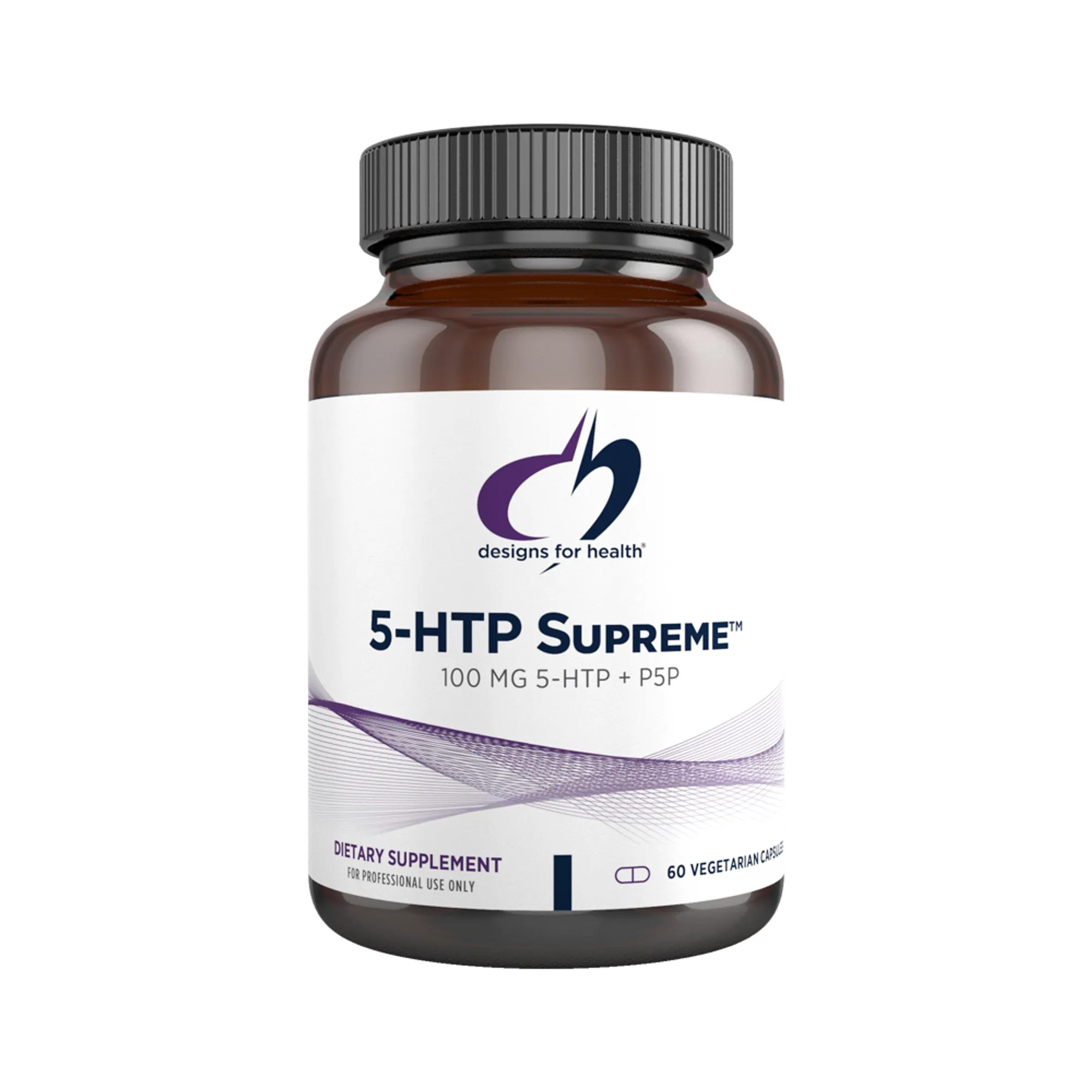
What is 5-HTP Supreme™?
The Serotonin Synthesis Pathway
To understand the therapeutic value of 5-HTP Supreme™, we must first look at how the body naturally produces serotonin, a neurotransmitter that governs mood, sleep, appetite, and cognitive processing. The journey begins with L-tryptophan, an essential amino acid that we must obtain through our diet from protein-rich foods. Once absorbed, L-tryptophan undergoes a two-step biochemical conversion to become serotonin. The first step is the conversion of L-tryptophan into 5-Hydroxytryptophan (5-HTP) by an enzyme called tryptophan hydroxylase (TPH). In the world of biochemistry, this is known as the "rate-limiting step." This means it is the strictest bottleneck in the entire production line. The TPH enzyme is highly sensitive and can be easily inhibited by chronic stress, systemic inflammation, insulin resistance, or deficiencies in essential minerals like magnesium.
Because of this strict bottleneck, the body heavily regulates how much L-tryptophan actually becomes 5-HTP. In fact, under normal conditions, only a tiny fraction (about 5%) of the L-tryptophan you consume is dedicated to the serotonin pathway. The vast majority is shunted away to synthesize proteins, produce niacin (Vitamin B3), or fuel other metabolic pathways. Furthermore, L-tryptophan must actively compete with other Large Neutral Amino Acids (LNAAs)—such as tyrosine, leucine, and valine—to cross the blood-brain barrier. This competition acts like a traffic jam, severely limiting the amount of raw material that reaches the central nervous system. By the time L-tryptophan navigates these hurdles, very little is left to support brain serotonin levels.
The Crucial Role of Vitamin B6 (P5P)
Once 5-HTP is successfully created (or ingested via supplementation), it must undergo the second step of the pathway: conversion into active serotonin (5-hydroxytryptamine, or 5-HT). This reaction is catalyzed by an enzyme known as aromatic L-amino acid decarboxylase (AADC). However, enzymes are not entirely self-sufficient; they require "helper molecules" called cofactors to function. For the AADC enzyme, the absolute, non-negotiable cofactor is Vitamin B6, specifically in its biologically active coenzyme form known as Pyridoxal-5'-Phosphate (P5P). Without adequate P5P, the AADC enzyme is essentially paralyzed, and the conversion of 5-HTP to serotonin comes to a grinding halt.
At a molecular level, the interaction between P5P and the AADC enzyme is a marvel of biochemistry. During the conversion process, P5P covalently binds to the AADC enzyme via a Schiff-base linkage—a specific type of chemical bond involving a lysine residue in the enzyme's active site. When a molecule of 5-HTP enters this active site, P5P acts as an "electron sink." It stabilizes the chemical structure, allowing the enzyme to cleave off a carboxyl group from the 5-HTP molecule, releasing it as carbon dioxide. What remains after this precise molecular surgery is active serotonin. Vitamin B6 is a vital cofactor in the synthesis of several neurotransmitters, including dopamine and GABA, making an adequate supply of P5P foundational for maintaining a balanced and functional nervous system.
How Chronic Illness Impacts Serotonin and Tryptophan
Viral Persistence and the Gut-Brain Axis in Long COVID
For patients navigating the complexities of Long COVID, the profound cognitive deficits—often described as "brain fog"—can feel entirely disconnected from a respiratory virus. However, when asking What Causes Long COVID?, recent breakthroughs have mapped a direct physiological pathway connecting the gut, the immune system, and the brain. In a landmark 2023 study published in the journal Cell, researchers at Penn Medicine discovered that in a subset of Long COVID patients, fragments of the SARS-CoV-2 virus (viral RNA) remain hidden in the gastrointestinal tract long after the acute infection has passed. This "viral reservoir" continuously triggers the local immune system, causing it to pump out inflammatory proteins called interferons. This chronic, localized inflammation in the gut lining creates a cascade of devastating downstream effects.
The persistent gut inflammation severely impairs the intestinal lining's ability to absorb dietary L-tryptophan. Simultaneously, the viral presence causes dysbiosis—an imbalance in the gut microbiome—which further reduces the natural microbial biosynthesis of tryptophan. Because over 90% of the body's serotonin is produced in the gastrointestinal tract by enterochromaffin cells, this drastic drop in tryptophan absorption directly leads to a systemic depletion of circulating serotonin. This is where the gut-brain axis breaks down. Peripheral serotonin plays a critical role in activating the vagus nerve, the massive neural superhighway that transmits signals from the gut to the brain's hippocampus (the center for memory and learning). When serotonin levels plummet, vagus nerve signaling is blunted, resulting in the memory loss, confusion, and cognitive fatigue that characterize Long COVID brain fog.
The "Tryptophan Steal" and Kynurenine Pathway in ME/CFS
In the context of Myalgic Encephalomyelitis/Chronic Fatigue Syndrome (ME/CFS), the disruption of serotonin synthesis takes a slightly different, but equally destructive, path. Understanding this is especially crucial for those wondering Can Long COVID Trigger ME/CFS? Unraveling the Connection. ME/CFS is frequently characterized by chronic immune activation and an overproduction of pro-inflammatory cytokines, particularly Interferon-gamma (IFN-γ). These inflammatory signals heavily upregulate an enzyme called IDO1 (Indoleamine 2,3-dioxygenase). Under normal circumstances, IDO1 helps regulate the immune response, but in ME/CFS, it becomes hyperactive. IDO1 acts like a metabolic vacuum, rapidly sucking L-tryptophan away from the serotonin pathway and shunting it down an alternative route known as the kynurenine pathway. This phenomenon is frequently referred to in medical literature as the "tryptophan steal."
Because tryptophan is hoarded by the kynurenine pathway, the production of serotonin and melatonin drops precipitously, explaining the severe sleep disturbances, mood changes, and gut dysmotility seen in ME/CFS. But the damage does not stop at serotonin depletion. Once forced down the kynurenine pathway, the metabolism splits into neuroprotective and neurotoxic branches. In the highly inflammatory environment of ME/CFS, the pathway skews heavily toward the production of neurotoxic metabolites, such as quinolinic acid. Quinolinic acid is a potent agonist of NMDA receptors in the brain, leading to excitotoxicity, severe neuroinflammation, oxidative stress, and central sensitization (heightened pain perception). This toxic shift not only starves the brain of serotonin but actively bathes it in inflammatory compounds, contributing to the profound post-exertional malaise (PEM) and neurological crashing experienced by patients.
5-HTP Supreme™: Supporting Neurotransmitter Metabolism
Bypassing the Tryptophan Bottleneck
When chronic inflammation, viral persistence, or genetic factors disrupt the normal absorption and metabolism of L-tryptophan, trying to restore serotonin levels simply by eating more protein or taking standard L-tryptophan supplements is often ineffective. The body will simply continue to malabsorb it or shunt it down the inflammatory kynurenine pathway. This is where 5-HTP Supreme™ offers a distinct biochemical advantage. By providing 5-Hydroxytryptophan directly, this formula completely bypasses the broken TPH enzyme bottleneck. 5-HTP is the intermediate metabolite that exists after the rate-limiting step. Once 5-HTP is in the system, it cannot be hijacked by the IDO1 enzyme and forced into the neurotoxic kynurenine pathway. It is committed almost exclusively to the production of serotonin.
Furthermore, 5-HTP possesses unique pharmacokinetic properties that make it highly efficient at reaching the central nervous system. Unlike L-tryptophan, which must actively fight for transport across the blood-brain barrier against other Large Neutral Amino Acids (LNAAs), 5-HTP freely and easily crosses the barrier without requiring a specific transport molecule. This means that 5-HTP does not need to be carefully timed around meals or carbohydrate intake to ensure absorption. It delivers the necessary precursor directly to the serotonergic neurons in the brain, where it is most desperately needed to support cognitive function, mood stability, and neurological repair.
Activating the AADC Enzyme with P5P
The inclusion of Vitamin B6 in the form of Pyridoxal-5-Phosphate (P5P) is what elevates 5-HTP Supreme™ from a standard precursor supplement to a synergistic, metabolically complete formula. As we explored earlier, flooding the body with 5-HTP is only half the battle; the brain must still convert that 5-HTP into active serotonin using the AADC enzyme. If a patient is marginally deficient in Vitamin B6—a remarkably common occurrence, especially in chronic illness where nutrient burn rates are high—the AADC enzyme cannot function optimally. The 5-HTP may pool in the system, unable to cross the final biochemical finish line.
By supplying 20 mg of P5P alongside the 100 mg of 5-HTP, this formula ensures that the AADC enzyme is fully saturated with its mandatory cofactor. P5P provides the immediate "electron sink" required to cleave the carboxyl group from 5-HTP, facilitating a smooth, rapid, and efficient conversion into serotonin. This synergistic pairing prevents metabolic bottlenecks and ensures that the body has both the raw materials and the enzymatic tools necessary to rebuild its depleted neurotransmitter stores. This is particularly vital for patients with dysautonomia or ME/CFS, whose enzymatic pathways are often sluggish or impaired by cellular energy deficits.
Restoring the Vagus Nerve and Melatonin Production
The downstream effects of restoring serotonin production extend far beyond simply improving mood. In the context of the gut-brain axis, replenishing peripheral serotonin helps to reactivate the vagus nerve. Serotonin binds to specific receptors (such as 5-HT3 and 5-HT4) in the gastrointestinal tract, which send strong afferent signals up the vagus nerve to the brain. This signaling is crucial for regulating autonomic nervous system functions, including heart rate variability, digestion, and the transition from a "fight or flight" sympathetic state to a "rest and digest" parasympathetic state. For patients with Postural Orthostatic Tachycardia Syndrome (POTS) and Long COVID, supporting vagal tone is a cornerstone of symptom management.
Additionally, serotonin is the direct, mandatory precursor to melatonin, the master hormone responsible for regulating the circadian rhythm and initiating sleep. In the pineal gland, serotonin undergoes a further enzymatic conversion to become melatonin as daylight fades. When serotonin levels are chronically low due to the "tryptophan steal" or viral gut reservoirs, melatonin production inevitably plummets, leading to the severe, unrefreshing sleep and inverted circadian rhythms commonly seen in ME/CFS. By robustly supporting the serotonin pathway with 5-HTP and P5P, patients are simultaneously providing the exact building blocks needed to restore natural melatonin synthesis, promoting deeper, more restorative sleep architectures.

Symptoms 5-HTP May Help Manage
Targeted Symptom Relief
Because serotonin is a foundational neurotransmitter that influences multiple systemic functions, supporting its synthesis with 5-HTP and P5P can have a wide-ranging impact on the complex symptom clusters seen in chronic illness. While supplements are not cures, 5-HTP is known to increase serotonin levels, which may help manage the following specific symptoms:
Cognitive Dysfunction ("Brain Fog"): By supporting peripheral serotonin levels, 5-HTP helps facilitate proper vagus nerve signaling to the hippocampus, potentially improving memory recall, focus, and mental clarity disrupted by Long COVID.
Sleep Onset and Maintenance: As the direct precursor to melatonin, elevated serotonin levels in the evening provide the pineal gland with the raw materials needed to regulate the circadian rhythm, promoting faster sleep onset and more restorative, deep sleep phases.
Mood Instability and Anxiety: Serotonin is the primary neurotransmitter responsible for emotional regulation and a sense of well-being. Restoring depleted levels can help buffer the nervous system against the chronic stress, anxiety, and depressive symptoms that frequently accompany long-term illness.
Gastrointestinal Dysmotility: Over 90% of serotonin is utilized in the gut to regulate peristalsis (the muscle contractions that move food through the digestive tract). Supporting serotonin synthesis may help alleviate the sluggish digestion, bloating, and motility issues common in dysautonomia and ME/CFS.
Appetite Regulation and Cravings: Serotonin plays a key role in signaling satiety to the brain. Low serotonin often triggers intense cravings for carbohydrates (as the body attempts to force more tryptophan across the blood-brain barrier). 5-HTP can help normalize appetite and reduce these compensatory cravings.
Pain Perception: Serotonin is heavily involved in the brain's descending pain inhibitory pathways. By supporting central serotonin levels, 5-HTP may help modulate central sensitization, potentially reducing the severity of widespread muscle pain and chronic headaches associated with fibromyalgia and ME/CFS.
Practical Considerations: Forms, Dosing, and Absorption
5-HTP vs. L-Tryptophan Bioavailability
When considering serotonin support, patients often wonder about the differences between 5-HTP and standard L-tryptophan. The distinction lies in their pharmacokinetic profiles and bioavailability. Orally administered 5-HTP has an impressive mean bioavailability. Because it does not require a competitive active transport molecule to cross the blood-brain barrier, it is absorbed rapidly and efficiently. It typically reaches peak blood plasma concentrations (Tmax) within 1.5 to 3 hours. This rapid absorption means that 5-HTP acts much faster than L-tryptophan, making it highly effective for targeted, immediate support.
In contrast, L-tryptophan is highly bound to albumin in the blood (up to 85%), and only the free, unbound fraction can attempt to cross into the brain. Because it must compete with other amino acids, only a tiny percentage of ingested L-tryptophan actually reaches the central nervous system. While L-tryptophan provides a slower, more gradual rise in serotonin, 5-HTP is generally preferred when a more potent, direct, and reliable increase in neurotransmitter precursors is required, particularly in patients whose metabolic pathways are already compromised by chronic inflammation.
Dosing and Timing for Sleep vs. Mood
5-HTP Supreme™ provides 100 mg of 5-HTP per capsule, which is considered a robust, clinical-grade serving compared to lower-dose synergistic formulas. Because of its rapid absorption, the timing of your dose can be tailored to your specific symptom goals. If your primary objective is to support a healthy mood, reduce anxiety, or manage carbohydrate cravings throughout the day, taking one capsule in the morning or early afternoon is often recommended. Because 5-HTP does not compete with other amino acids, it can be taken with or without food, though taking it with a small carbohydrate snack may further enhance its uptake.
Conversely, if your primary goal is to support restorative sleep and manage sleep difficulties, it is generally best to take 5-HTP Supreme™ approximately 30 to 60 minutes before bedtime. This timing aligns with the natural circadian shift, allowing the newly synthesized serotonin to be efficiently converted into melatonin by the pineal gland just as you are trying to fall asleep. Some patients with severe ME/CFS or Long COVID may find that splitting the dose (if directed by a practitioner) provides both daytime autonomic support and nighttime sleep regulation.
Safety, Contraindications, and Serotonin Syndrome
While 5-HTP is a naturally occurring amino acid and generally well-tolerated, it is a powerful biochemical precursor and must be used with respect for its mechanisms. Because 5-HTP directly and effectively raises serotonin levels, it must not be combined with prescription medications that also alter serotonergic activity. This includes Selective Serotonin Reuptake Inhibitors (SSRIs like Lexapro or Prozac), Serotonin-Norepinephrine Reuptake Inhibitors (SNRIs like Cymbalta), Monoamine Oxidase Inhibitors (MAOIs), and certain tricyclic antidepressants. Combining these agents can lead to an excess accumulation of serotonin in the nervous system, resulting in a potentially dangerous and life-threatening condition known as Serotonin Syndrome. Symptoms of Serotonin Syndrome include confusion, rapid heart rate, shivering, muscle rigidity, and hyperreflexia.
Additionally, because the AADC enzyme is abundant in the gastrointestinal tract, some of the 5-HTP may convert to serotonin in the gut before reaching the brain. This sudden localized spike in gut serotonin can cause mild gastrointestinal side effects, such as nausea, heartburn, or loose stools, particularly when starting the supplement. Taking the capsule with food can help mitigate these effects. As always, it is imperative to discuss the addition of 5-HTP with your healthcare provider, especially if you are taking medications for dysautonomia, MCAS, or psychiatric conditions, or exploring What Drugs Are Used for COVID Long Haulers?, to ensure there are no contraindications.
Follow the Science
The Landmark Penn Medicine Study on Long COVID
The scientific understanding of serotonin's role in chronic post-viral illness took a massive leap forward with a 2023 landmark study published in the journal Cell by researchers at the University of Pennsylvania. The research team analyzed blood and stool samples from human clinical cohorts of Long COVID patients and validated their findings using animal models. They discovered that patients suffering from severe Long COVID neurocognitive symptoms had traces of SARS-CoV-2 RNA persisting in their gut microbiome. This viral reservoir drove chronic inflammation that severely impaired the intestinal absorption of tryptophan, leading to a profound, systemic depletion of circulating serotonin.
The researchers demonstrated that this serotonin deficiency directly blunted vagus nerve signaling to the hippocampus, providing a clear physiological mechanism for Long COVID "brain fog" and memory impairment. Most importantly, the study tested therapeutic interventions. When the researchers treated serotonin-deficient animal models with serotonin precursors (such as 5-HTP and tryptophan) or SSRIs, they successfully restored peripheral serotonin levels, reactivated the vagus nerve, and reversed the memory and cognitive impairments. This study provides powerful, objective validation for the use of targeted serotonergic support in post-viral syndromes.
ME/CFS, Microbiome, and Tryptophan Metabolism
In the realm of ME/CFS, the disruption of tryptophan metabolism is equally well-documented. Numerous studies have focused on the "tryptophan steal" phenomenon, where inflammatory cytokines upregulate the IDO1 enzyme, shunting tryptophan away from serotonin production and into the kynurenine pathway. Research examining the metabolomics of ME/CFS patients frequently reveals a decreased Kynurenic Acid to Quinolinic Acid (KA/QA) ratio, indicating a clear shift toward neurotoxicity and oxidative stress. This metabolic diversion not only starves the brain of serotonin but also impairs the production of NAD+, a crucial molecule for cellular energy, perfectly mirroring the profound fatigue and post-exertional malaise seen in the disease.
Furthermore, emerging research is highlighting the critical role of the gut microbiome in these processes, including studies demonstrating that modulating the gut microbiome in ME/CFS patients could significantly improve tryptophan metabolism. By reducing the inflammatory drive in the gut, researchers were able to downregulate the toxic branches of the kynurenine pathway and restore neuroprotective capacity. These findings underscore the interconnectedness of gut health, immune function, and neurotransmitter synthesis, reinforcing the rationale for using highly bioavailable precursors like 5-HTP to bypass metabolic roadblocks and directly support the central nervous system.
The Path Forward
A Comprehensive Approach to Healing
Living with the cognitive dysfunction, sleep disturbances, and mood instability of Long COVID, ME/CFS, or dysautonomia can be an incredibly isolating and exhausting experience. It is easy to feel disconnected from your own mind and body when the fundamental neurotransmitters that govern your perception of the world are depleted. However, understanding the precise biochemical mechanisms behind these symptoms—such as the tryptophan steal, viral gut reservoirs, and the kynurenine pathway—offers a profound sense of validation. Your symptoms are not in your head; they are in your biochemistry, your gut lining, and your enzymatic pathways.
While no single supplement can cure complex chronic illnesses, targeted nutritional interventions like 5-HTP Supreme™ can be a powerful tool in a comprehensive management strategy. By providing the highly bioavailable 5-HTP precursor alongside its mandatory P5P cofactor, you are giving your body the exact raw materials it needs to bypass inflammatory roadblocks and rebuild its serotonin and melatonin stores. When combined with aggressive pacing, nervous system regulation, and medical guidance to address underlying root causes, supporting your neurotransmitter metabolism can help lift the fog. For more strategies on How Can You Live with Long-Term COVID, remember that stabilizing your mood and restoring deep sleep are necessary for true cellular healing.
Always consult with your healthcare provider before introducing new supplements, especially those that influence neurotransmitter pathways, to ensure they fit safely within your broader treatment plan.